
 Source:
 Daylily (Hemerocallis ‘Autumn Red’) short overview
Hemerocallis 'Autumn Red' is a historic 1941 diploid daylily with large, velvety dark red flowers and glowing golden throats. Its arching, dormant foliage forms a durable clump, while tall scapes carry a midseason display with some rebloom. Grow it in full sun or partial shade in ordinary, well-drained soil. This adaptable perennial suits borders, mass plantings, containers and pollinator-friendly gardens, but it is dangerous to cats if eaten.
Taxonomic classification
Daylily (Hemerocallis ‘Autumn Red’) care guide
Light and placement
Give full sun for the strongest flowering, especially in northern areas; light afternoon shade can protect dark blooms from scorching in hot Southern gardens. East, southeast or west-facing beds are suitable. Too little light produces fewer scapes and looser flowering, while excessive reflected heat may bleach or scorch petals.
Watering and humidity
Water deeply when the upper few inches of soil dry, especially during establishment and flowering. Maintain even moisture during dry spells rather than frequent shallow sprinkling. Established plants tolerate short dry periods, but drought can reduce flowering and make foliage look ragged. Water at the soil line when possible.
Soil and growing medium
Use average, fertile soil that drains freely yet holds moderate moisture. Daylilies tolerate sandy, clay and loamy ground, but growth is strongest in deep loam enriched with organic matter. A slightly acidic to slightly alkaline reaction is acceptable; avoid persistently waterlogged sites, where crowns and roots may decline.
Feeding
Apply compost or a balanced slow-release perennial fertilizer in spring as growth begins. A second light application may be useful after the first flowering flush in poor soil, but avoid heavy nitrogen feeding, which can produce lush leaves with fewer flowers. Do not fertilize drought-stressed or newly divided plants until they begin active growth.
Growth and habit
Forms a dense, slowly broadening clump of basal foliage with upright flowering scapes. Divide when the clump becomes crowded or flowering weakens. Removing spent scapes improves appearance but is not essential to plant health.
Planting and repotting
Plant bare-root or divided clumps in spring or fall. Set the crown so it is covered by about 1 inch of soil, spread the roots outward, firm gently and water thoroughly. Space plants about 18–30 inches apart, allowing room for the clump to broaden and for air movement around the foliage.
Divide and replant container-grown clumps in fall or early spring when roots are less stressed. Move to a container only slightly larger than the root mass, use a free-draining potting mix, and keep the crown at the same level as before.
Propagation and pruning
Propagation
Division is the reliable method and is best done in fall or early spring. Lift the clump, separate fans with healthy roots and replant promptly. Seed may be produced after pollination, but seedlings will not reproduce the named cultivar faithfully.
Pruning
Deadhead spent flowers for tidiness and cut completed scapes to the base. Remove declining dormant foliage in late fall or early spring before new growth resumes; avoid cutting healthy green leaves unnecessarily.
Overwintering
This dormant daylily generally overwinters outdoors without lifting in its hardiness range. After foliage dies back, remove loose debris and apply only a light mulch where winters are severe or snow cover is unreliable. Do not keep the crown wet under heavy winter mulch.
Uses
Useful for borders, edging, mass planting, slopes, containers and cut-flower arrangements. Daylily flowers are edible at the genus level, but cultivar-specific flavor and safety are not established here; avoid consumption from treated plants and never offer plant material to cats.
Appearance
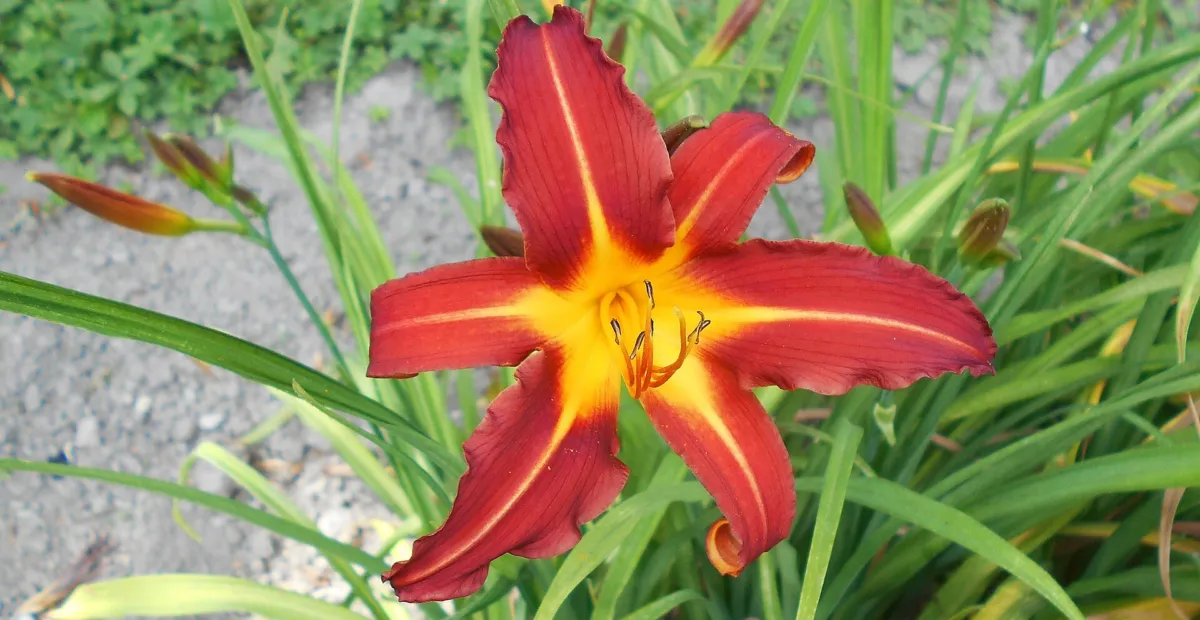
The plant has arching, strap-like deep-green leaves arising from the crown and naked scapes that rise above the foliage. Flowers are large, single and dark red, with velvety texture, golden throats and lighter midrib accents. The cultivar has dormant rather than evergreen foliage.
Flowering
This diploid cultivar was registered by Nesmith in 1941. It is a dormant-foliage daylily with single, diurnal flowers: individual blooms generally open for about one day, with successive buds extending the display. It is listed as midseason and may rebloom later in the season.
Pollination and visitors
Daylily flowers provide nectar and are documented as attracting butterflies; broader visitor lists for this exact cultivar are limited. Pollinator activity is most likely during open daytime flowers in the summer display.
Hemerocallis 'Autumn Red' photos
Click any photo for a larger view. Source, author and license are shown separately.
Diseases and pests
Diseases
Usually trouble-free, but daylily rust can occur where conditions favor it. Remove heavily affected foliage, improve air circulation, avoid wetting leaves late in the day and dispose of infected debris. Good drainage and avoiding stressed, overcrowded clumps help reduce disease pressure.
Pests
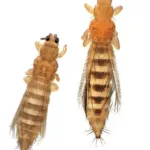
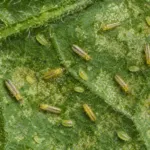
Aphids, thrips and mites may occasionally appear; inspect young growth and flower scapes. Daylily rust is more serious than most pests in susceptible regions. Use water sprays for light infestations, encourage beneficial insects and reserve labeled treatments for persistent problems.
Related diseases and pests
Only Plant Doctor profiles whose host data indicate this plant may be affected are shown here.



Toxicity and pollen
ASPCA lists Hemerocallis species as toxic to cats and associated with vomiting, lethargy, kidney failure and death. Evidence is generalized to the genus rather than specifically tested on 'Autumn Red', so keep this cultivar away from cats and seek urgent veterinary advice after exposure. Human toxicity evidence for this exact cultivar is insufficient; do not treat ornamental plants with chemicals as edible.
- Typical season
- During summer flowering
- Pollination / pollen
- Primarily insect-dispersed
The cultivar is insect-pollinated, so its pollen is not typically released in large windborne clouds. Airborne exposure is expected to be low, but individual sensitivity cannot be ruled out, and pollen or plant contact may still irritate some people.
Native habitat
Hemerocallis hybrids are garden plants derived from Asian and central European daylily species rather than a naturally occurring wild habitat. They perform across a broad range of temperate garden soils and tolerate heat, moderate drought once established and urban conditions.
Interesting fact
The cultivar dates to 1941 and was introduced by Elizabeth Nesmith. Its registered ploidy is diploid. Each flower lasts about one day, but many buds open in succession. The foliage type is dormant, so leaves typically die back in fall.
Frequently asked questions (FAQ)
The most relevant questions about this plant, with short and direct answers.
🌱Quick care
What is Hemerocallis 'Autumn Red' commonly called?⌄
Hemerocallis 'Autumn Red' is commonly called the Autumn Red daylily. It is an herbaceous perennial known for dark red flowers with gold throats and midribs.
How much sun does Hemerocallis 'Autumn Red' need?⌄
Hemerocallis 'Autumn Red' grows best in full sun to partial shade. Provide at least 6 hours of direct sun for the strongest flowering, although it can tolerate some afternoon shade.
How often should I water Hemerocallis 'Autumn Red'?⌄
Water Hemerocallis 'Autumn Red' moderately, keeping the soil evenly moist while it establishes. Once mature, it tolerates short dry periods but benefits from deep watering during prolonged summer drought.
What USDA hardiness zones are suitable for Hemerocallis 'Autumn Red'?⌄
Hemerocallis 'Autumn Red' is generally suitable for USDA Zones 3 through 9. Local performance can vary with winter exposure, drainage, and whether the plant is grown in the ground or in a container.
🌤️Environment and placement
How large does Hemerocallis 'Autumn Red' get?⌄
Hemerocallis 'Autumn Red' typically forms a clump about 2.5 to 3 feet tall and 1.5 to 2.5 feet wide. Its flower scapes can rise to roughly 39 inches.
What type of soil does Hemerocallis 'Autumn Red' prefer?⌄
Hemerocallis 'Autumn Red' prefers fertile, well-drained loam but also grows in sandy or clay soil. Improve very heavy or compacted ground with organic matter and avoid locations that stay waterlogged.
Can Hemerocallis 'Autumn Red' grow in clay soil?⌄
Hemerocallis 'Autumn Red' can grow in clay soil if drainage is adequate. Incorporate compost and plant slightly high if necessary, because consistently saturated roots can reduce vigor and increase disease problems.
Can Hemerocallis 'Autumn Red' grow in partial shade?⌄
Hemerocallis 'Autumn Red' can grow in partial shade, but flowering is usually stronger in full sun. Too much shade may produce attractive foliage while reducing the number and quality of flowers.
Is Hemerocallis 'Autumn Red' drought tolerant?⌄
Hemerocallis 'Autumn Red' has some drought tolerance after establishment. Extended dryness can reduce flower size and bud production, so water deeply during prolonged hot or dry weather.
💧Care and problems
Is Hemerocallis 'Autumn Red' easy to grow?⌄
Hemerocallis 'Autumn Red' is generally easy to grow and requires low maintenance. Good drainage, adequate sunlight, and occasional deep watering during drought are usually sufficient for reliable performance.
Why is Hemerocallis 'Autumn Red' not blooming?⌄
Insufficient sunlight is a common reason Hemerocallis 'Autumn Red' fails to bloom. Other possibilities include drought stress, excessive nitrogen, overcrowding, or a recently divided plant that is still reestablishing.
Should I deadhead Hemerocallis 'Autumn Red'?⌄
Deadhead Hemerocallis 'Autumn Red' by removing spent flowers for a tidier appearance. Deadheading is optional for plant health, but it can prevent seed formation and direct more energy toward the clump.
When should I cut back Hemerocallis 'Autumn Red'?⌄
Cut the flower scapes of Hemerocallis 'Autumn Red' back after blooming finishes. Remove yellow or dead foliage as needed, while leaving healthy leaves in place until they naturally decline.
What pests affect Hemerocallis 'Autumn Red'?⌄
Hemerocallis 'Autumn Red' may occasionally be affected by aphids, thrips, mites, slugs, or snails. Inspect new growth and flower buds regularly, and remove heavily damaged plant material.
What diseases can affect Hemerocallis 'Autumn Red'?⌄
Hemerocallis 'Autumn Red' can be affected by leaf spot, rust, or rot, especially in crowded or poorly drained conditions. Improve air circulation, water at the soil surface, and remove diseased foliage.
🪴Planting and repotting
When is the best time to plant Hemerocallis 'Autumn Red'?⌄
Plant Hemerocallis 'Autumn Red' in spring or early fall. Spring planting is preferable in regions with severe winters, while early fall planting gives roots time to establish before freezing weather.
How far apart should I plant Hemerocallis 'Autumn Red'?⌄
Space Hemerocallis 'Autumn Red' about 18 to 24 inches apart. This allows the clumps to expand while preserving airflow and reducing overcrowding as the plants mature.
How deep should I plant Hemerocallis 'Autumn Red'?⌄
Plant Hemerocallis 'Autumn Red' with the crown about 1 inch below the soil surface. Spread the roots outward, backfill firmly, and water thoroughly after planting.
Can Hemerocallis 'Autumn Red' be grown in a container?⌄
Hemerocallis 'Autumn Red' can be grown in a large, wide container with drainage holes. Choose a pot that allows room for the clump and protect the root ball from extreme winter freezing.
✂️Propagation and pruning
How do I divide Hemerocallis 'Autumn Red'?⌄
Divide Hemerocallis 'Autumn Red' by lifting the clump and separating it into smaller sections, each with roots and several fans. Replant the divisions promptly in well-drained soil and water them thoroughly.
When should I divide Hemerocallis 'Autumn Red'?⌄
Divide Hemerocallis 'Autumn Red' in early spring or early fall. Spring is generally safer in colder climates, while fall division should be completed early enough for roots to establish before the ground freezes.
How often should Hemerocallis 'Autumn Red' be divided?⌄
Divide Hemerocallis 'Autumn Red' about every 3 to 4 years when the clump becomes crowded or flowering declines. Healthy plants can remain undivided longer if they continue blooming well.
Can Hemerocallis 'Autumn Red' be grown from seed?⌄
Hemerocallis 'Autumn Red' can produce seeds, but seedlings will not reliably reproduce the named cultivar. Divide the clump instead when you want new plants that match the parent.
⚠️Toxicity and safety
Is Hemerocallis 'Autumn Red' toxic to cats?⌄
Yes, Hemerocallis 'Autumn Red' is toxic to cats. All parts should be kept away from cats because ingestion can cause serious poisoning, and suspected exposure requires immediate veterinary advice.
🌸Flowering and special interest
When does Hemerocallis 'Autumn Red' bloom?⌄
Hemerocallis 'Autumn Red' usually blooms in midseason, commonly from June through August in much of the United States. Exact timing varies with climate, weather, and growing conditions.
What color are the flowers of Hemerocallis 'Autumn Red'?⌄
Hemerocallis 'Autumn Red' produces dark red to velvety red flowers with gold throats and lighter midribs. The flowers are typically single and about 5 inches across.
Does Hemerocallis 'Autumn Red' rebloom?⌄
Hemerocallis 'Autumn Red' may rebloom lightly after its main midseason display. Reblooming is influenced by sunlight, moisture, plant maturity, and regional growing conditions, so it is not equally strong every year.
How long does each Hemerocallis 'Autumn Red' flower last?⌄
Each flower of Hemerocallis 'Autumn Red' usually lasts for one day, occasionally two. Because many buds open in succession, the entire clump can remain attractive for an extended flowering period.
Does Hemerocallis 'Autumn Red' attract pollinators?⌄
Hemerocallis 'Autumn Red' can attract butterflies and other flower-visiting insects. Its succession of showy red blooms makes it useful in perennial borders and pollinator-friendly garden plantings.
Similar plants
 Azure Monkshood (Aconitum carmichaelii) care guideAconitum carmichaelii
 Monkshood (Aconitum ‘Stainless Steel’)Aconitum 'Stainless Steel'
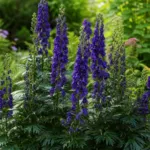 Monkshood (Aconitum ‘Bressingham Spire’)Aconitum 'Bressingham Spire'
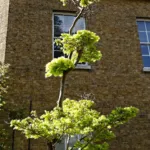 Golden full moon maple (Acer shirasawanum ‘Aureum’)Acer shirasawanum 'Aureum'
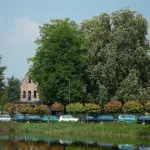 Globosum (Acer platanoides ‘Globosum’)Acer platanoides 'Globosum'
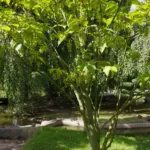 Striped maple (Acer pensylvanicum) care guideAcer pensylvanicum