 Source:
 Dahlia ‘Karma Fuchsiana’ short overview
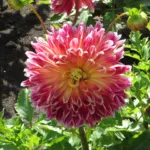
Dahlia ‘Karma Fuchsiana’ is a decorative dahlia prized for large, fully double blooms in an intense fuchsia-pink that may show yellow, orange, or lime tones toward the center. The clump-forming plant reaches about 3 feet tall, flowers from summer into fall, and makes a strong cut flower. Grow it in full sun and fertile, well-drained soil; in most US gardens, lift and store the tubers before hard frost.
Taxonomic classification
Dahlia ‘Karma Fuchsiana’ care guide
Light and placement
Give the plant full sun, ideally at least 6 hours of direct light daily, in a sheltered south- or west-facing border or container. Strong light supports sturdy stems and abundant flowering. Too little light produces weak, stretched growth and fewer blooms; excessively hot reflected heat can scorch foliage or increase water stress, especially in containers.
Watering and humidity
Water deeply when the upper layer of soil begins to dry, keeping the root zone evenly moist but never saturated. Newly planted tubers need regular watering during establishment; mature plants need more during hot, dry weather and less after flowering declines. Water at soil level where possible and allow excess water to drain freely.
Soil and growing medium
Use fertile, humus-rich soil that drains freely yet holds even moisture. Loam amended with compost is suitable; heavy clay should be improved before planting to reduce the risk of tuber rot. The cultivar tolerates acidic, neutral, and alkaline soils according to horticultural references, but a slightly acidic to neutral garden soil is a practical target.
Feeding
Incorporate compost before planting, then feed when shoots are actively growing with a balanced or slightly low-nitrogen fertilizer at label strength. A second light application around midsummer can support continued flowering in poor soil. Avoid heavy nitrogen feeding, which can produce lush foliage and weaker flowering, and stop routine feeding as the plant prepares for dormancy.
Growth and habit
This is a clump-forming, tuberous perennial with upright flowering stems. Pinching the growing tips when plants are young encourages branching and a fuller plant; staking is useful where wind or heavy flowerheads could bend stems. Regular cutting and deadheading encourage continued production.
Planting and repotting
Plant outdoors in spring after the local frost risk has passed and the soil has begun to warm. Set the tuber horizontally with the growing eye uppermost and cover with about 2–3 inches of soil initially, adding more as shoots develop if needed. Space plants about 18–24 inches apart and stake early if the site is exposed.
Container-grown tubers can be moved into a larger pot in spring when shoots begin active growth. Use fresh, free-draining potting mix and a container with ample drainage holes. Avoid disturbing established roots unnecessarily during the growing season.
Propagation and pruning
Propagation
Propagate by dividing stored tubers so each division includes a healthy bud, or by taking softwood cuttings from actively sprouting tubers in spring. Keep cuttings warm and bright while rooting, and label divisions carefully because seed will not reproduce the cultivar faithfully.
Pruning
Pinch young shoots once or twice to encourage branching. Deadhead spent flowers to prolong bloom. After the first killing frost blackens the foliage, cut stems close to the ground before lifting the tubers, or leave them briefly in mild climates if storage is not required.
Overwintering
Dahlias are frost-tender in most of the United States. After frost blackens the foliage, cut stems back, lift tubers carefully, let them dry briefly, and store them in a cool, dark, frost-free place in barely moist vermiculite, peat, or similar packing material. Recheck during winter and remove rotting sections.
Uses
A high-value ornamental for sunny borders, cutting gardens, patio containers, and informal cottage-style plantings. Its strong stems and reported vase life make it useful for cut flowers. The fully double flower form is less accessible to pollinators than single or open-centered dahlias, so it should not be selected as a primary pollinator plant.
Appearance
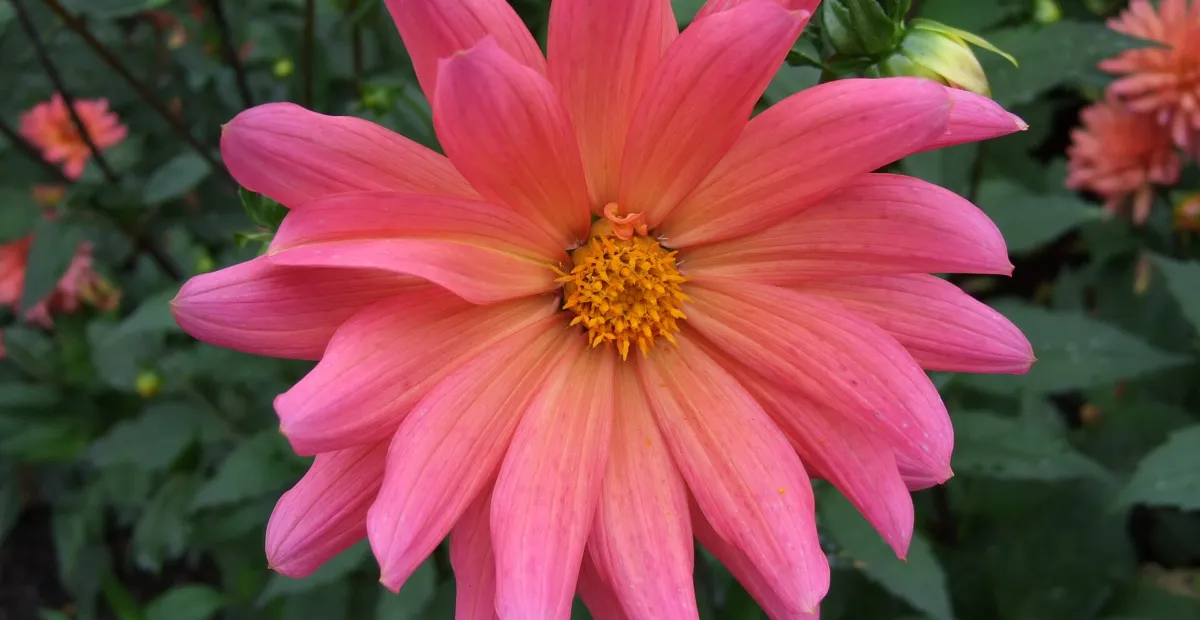
The plant has dark green, pinnately divided leaves and upright, relatively strong stems that carry large rounded flowerheads. The defining feature is the saturated fuchsia-pink to fuchsia-red coloration combined with a contrasting yellow, orange, or lime-toned center. The cultivar is a clump-forming decorative dahlia rather than an open-centered type.
Flowering
This cultivar produces large, fully double decorative flowerheads on strong upright stems. Blooms are typically bright fuchsia-pink or fuchsia-red, with yellow, orange, or fluorescent lime tones toward the center. Flowering is expected from summer into fall, with deadheading helping extend the display.
Pollination and visitors
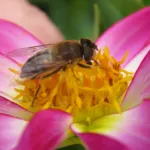
The RHS notes that multi-petalled dahlias generally provide less access to pollen than open-centered forms. As a fully double decorative dahlia, ‘Karma Fuchsiana’ may receive occasional visits from bees and bumblebees, but its pollinator value is expected to be limited compared with single-flowered dahlias.
Diseases and pests
Diseases
Powdery mildew may develop under dry, poorly ventilated conditions, while gray mold and other rots are favored by wet weather or poor drainage. Viruses can cause mottled or distorted foliage and stunting. Improve air circulation, avoid overhead watering, remove badly affected material, and discard suspect tubers rather than propagating from them.
Pests
Aphids, leaf miners, spider mites, slugs, earwigs, caterpillars, and capsid-type bugs may occur. Inspect young shoots and flower buds regularly, hand-pick larger pests, reduce hiding places for slugs, and use targeted controls only when damage is significant.
Toxicity and pollen
ASPCA lists Dahlia species as toxic to dogs and cats, with the toxic principle unspecified and mild gastrointestinal signs or mild dermatitis reported. The exact response of this cultivar has not been separately studied, so prevent pets from chewing the plant and seek veterinary advice after ingestion or skin reactions.
- Typical season
- During flowering, usually summer to early fall in the United States
- Pollination / pollen
- Mostly retained within insect-visited flowerheads
The cultivar is insect-pollinated and has no strong evidence of producing a major airborne pollen burden. Its double flower structure can restrict pollen access, so allergy risk is conservatively rated low rather than absent. Sensitive individuals should still avoid handling flowers if personal reactions occur.
Native habitat
Dahlias originate from the highlands of Mexico and Central America, but ‘Karma Fuchsiana’ is a cultivated hybrid selection rather than a wild population. In gardens it prefers warm, sunny conditions, fertile soil, and reliable moisture without winter waterlogging.
Interesting fact
‘Karma Fuchsiana’ belongs to the Karma line bred and selected for cut-flower traits. The cultivar was reportedly named a dahlia queen at Mainau in 1999. Its unusual fuchsia coloration with a fluorescent-looking center is one reason it has remained distinctive in dahlia collections.
Frequently asked questions (FAQ)
The most relevant questions about this plant, with short and direct answers.
🌱Quick care
What is Dahlia 'Karma Fuchsiana'?⌄
Dahlia 'Karma Fuchsiana' is a clump-forming, tuberous dahlia with dark green foliage and large, fully double, bright pink flowers with yellow-orange tones toward the center. It is grown as a summer-flowering perennial and is especially valued as a cut flower.
How tall does Dahlia 'Karma Fuchsiana' grow?⌄
Dahlia 'Karma Fuchsiana' typically grows about 30–36 inches tall, although final height varies with soil, sunlight, moisture, and growing season. It generally forms a moderately upright, bushy clump.
How wide does Dahlia 'Karma Fuchsiana' get?⌄
Allow roughly 18–24 inches of space for Dahlia 'Karma Fuchsiana' to develop well. Good spacing improves airflow and helps reduce problems caused by persistently damp foliage.
When does Dahlia 'Karma Fuchsiana' bloom?⌄
Dahlia 'Karma Fuchsiana' usually blooms from midsummer until the first frost. Regular deadheading and cutting encourage additional flowers throughout the season.
Is Dahlia 'Karma Fuchsiana' a perennial?⌄
Dahlia 'Karma Fuchsiana' is a tender, tuberous perennial, but it is often grown as an annual in colder parts of the United States. The tubers must be protected from freezing if they are to survive winter.
🌤️Environment and placement
How much sun does Dahlia 'Karma Fuchsiana' need?⌄
Dahlia 'Karma Fuchsiana' grows best in full sun, with at least 6 hours of direct sunlight daily. In very hot climates, some light afternoon shade can help protect flowers and foliage from heat stress.
What is the best soil for Dahlia 'Karma Fuchsiana'?⌄
Use fertile, humus-rich, well-drained soil enriched with compost or other organic matter. The soil should retain consistent moisture without staying soggy, because excess water can cause tuber rot.
Can Dahlia 'Karma Fuchsiana' grow in clay soil?⌄
Dahlia 'Karma Fuchsiana' can grow in clay soil if it is improved with organic matter and drains freely. Avoid planting where water collects after rain, and consider raised beds if drainage remains poor.
Can Dahlia 'Karma Fuchsiana' grow in a container?⌄
Yes, Dahlia 'Karma Fuchsiana' can be grown in a large container with drainage holes and fertile, well-drained potting mix. Use a container large enough for the tuberous root system and support the stems as the plant grows.
What USDA zones can grow Dahlia 'Karma Fuchsiana'?⌄
Dahlia 'Karma Fuchsiana' can be grown outdoors during the frost-free season across much of the United States. In USDA Zones 8–10, tubers may sometimes overwinter in the ground with excellent drainage and mulch, while colder zones generally require lifting and storing them.
💧Care and problems
How often should I water Dahlia 'Karma Fuchsiana'?⌄
Water Dahlia 'Karma Fuchsiana' when the soil begins to dry, providing moderate and consistent moisture rather than frequent shallow watering. Increase watering during hot, dry weather, but let excess water drain away between waterings.
Should Dahlia 'Karma Fuchsiana' be fertilized?⌄
Feed Dahlia 'Karma Fuchsiana' with compost or a balanced flower fertilizer according to the product label. Avoid excessive nitrogen, which can produce lush foliage with fewer flowers and weaker stems.
Does Dahlia 'Karma Fuchsiana' need staking?⌄
Dahlia 'Karma Fuchsiana' may need staking, especially in windy locations or when large blooms become heavy. Install a stake or support early in the season so the tubers and roots are not disturbed later.
Should I pinch Dahlia 'Karma Fuchsiana'?⌄
Pinch the growing tip when the plant is about 12–18 inches tall to encourage branching and a bushier habit. This can increase the number of flowering stems, although it may delay the first blooms slightly.
How do I deadhead Dahlia 'Karma Fuchsiana'?⌄
Remove spent flowers by cutting the stem back to a strong pair of leaves or a branching point. Deadheading prevents seed production and encourages Dahlia 'Karma Fuchsiana' to keep producing flowers.
What pests affect Dahlia 'Karma Fuchsiana'?⌄
Common pests include aphids, slugs, earwigs, caterpillars, leaf miners, and spider mites. Inspect new growth and flower buds regularly, and use the least-toxic control appropriate for the pest and local label directions.
What diseases affect Dahlia 'Karma Fuchsiana'?⌄
Dahlia 'Karma Fuchsiana' can be affected by powdery mildew, gray mold, fungal rots, and viral disorders. Improve airflow, avoid prolonged wet foliage, remove diseased material, and discard tubers showing serious rot or persistent virus-like symptoms.
🪴Planting and repotting
When should I plant Dahlia 'Karma Fuchsiana' tubers?⌄
Plant Dahlia 'Karma Fuchsiana' tubers outdoors after the danger of hard frost has passed and the soil has warmed. In colder areas, you can start tubers indoors several weeks earlier and transplant them carefully after frost risk decreases.
How deep should I plant Dahlia 'Karma Fuchsiana' tubers?⌄
Plant the tuber with the growing eye facing upward and cover it with about 2–4 inches of soil. Add more soil gradually as the shoots emerge if needed, but do not leave the tuber in cold, waterlogged soil.
How far apart should I plant Dahlia 'Karma Fuchsiana'?⌄
Space Dahlia 'Karma Fuchsiana' about 18–24 inches apart for good airflow and room to branch. Wider spacing can be useful in humid areas or when plants are grown for cutting.
Can I grow Dahlia 'Karma Fuchsiana' from a potted plant?⌄
Yes, transplant a potted Dahlia 'Karma Fuchsiana' after frost danger has passed and gradually acclimate it to outdoor conditions. Keep the root ball intact and water it well after planting without leaving the soil saturated.
When should I dig up Dahlia 'Karma Fuchsiana' for winter?⌄
In areas where the ground freezes, dig up Dahlia 'Karma Fuchsiana' after frost blackens the foliage or before a severe freeze is forecast. Cut back the stems, lift the clump carefully, and allow the tubers to dry before storing them.
How do I store Dahlia 'Karma Fuchsiana' tubers over winter?⌄
Store clean, dry tubers in a cool, dark, frost-free location, packed in a slightly breathable medium such as vermiculite or dry wood shavings. Check them periodically and remove any soft, rotting sections before rot spreads.
✂️Propagation and pruning
How do I propagate Dahlia 'Karma Fuchsiana'?⌄
Propagate Dahlia 'Karma Fuchsiana' by dividing tubers or rooting softwood cuttings from actively growing shoots. Every tuber division must include a healthy piece of crown with at least one viable eye.
Can Dahlia 'Karma Fuchsiana' be grown from seed?⌄
It can be grown from seed, but seedlings will not reliably reproduce the exact flower color, form, or growth habit of Dahlia 'Karma Fuchsiana'. Use tuber division or cuttings when maintaining this specific cultivar is important.
When should I divide Dahlia 'Karma Fuchsiana' tubers?⌄
Divide the tubers in late winter or early spring, just before planting, when the eyes are visible and beginning to swell. Make clean cuts and allow wounds to dry briefly before planting or storing the divisions.
⚠️Toxicity and safety
Is Dahlia 'Karma Fuchsiana' toxic to pets?⌄
Dahlia 'Karma Fuchsiana' is considered to have low toxicity to pets, but eating plant material may still cause stomach upset or skin irritation in some animals. Contact a veterinarian or animal poison service if a pet develops symptoms after ingestion.
🌸Flowering and special interest
What color are Dahlia 'Karma Fuchsiana' flowers?⌄
The flowers are predominantly bright fuchsia-pink, with yellow or orange coloring toward the center. Color intensity can vary with weather, light, plant maturity, and the individual bloom.
How large are Dahlia 'Karma Fuchsiana' flowers?⌄
Dahlia 'Karma Fuchsiana' commonly produces large double flowers about 4–6 inches across. Flower size can be smaller when the plant is stressed by drought, excessive shade, or poor nutrition.
Is Dahlia 'Karma Fuchsiana' good for cut flowers?⌄
Yes, Dahlia 'Karma Fuchsiana' is well suited to cutting because it produces strong stems and attractive, long-lasting blooms. Harvest when the flowers are mostly open and place the cut stems in water immediately.
How can I make Dahlia 'Karma Fuchsiana' produce more flowers?⌄
Grow it in full sun, maintain even moisture, pinch the growing tip early, and harvest or deadhead flowers frequently. Removing spent blooms encourages the plant to direct energy into new flowering stems.