 AI-generated illustration
 Dahlia ‘Mingus Randy’ short overview
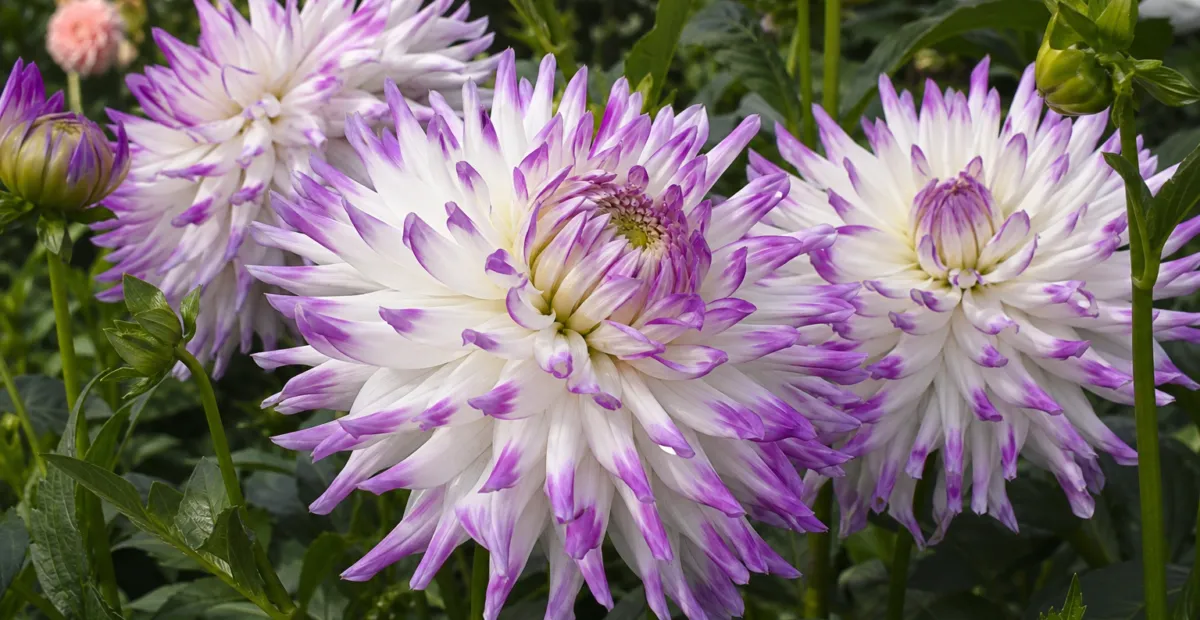
Dahlia ‘Mingus Randy’ is a striking semi-cactus dinnerplate dahlia valued for large, sharply pointed blooms in white and lavender. The bushy, tuberous perennial reaches roughly 3–4 feet in a productive garden and flowers from midsummer into fall, often continuing until frost. Plant tubers after danger of frost in a sunny, sheltered position, keep the soil evenly moist but well drained, and support the stems before heavy blooms open.
Taxonomic classification
Dahlia ‘Mingus Randy’ care guide
Light and placement
Provide at least 6 hours of direct sun, with a south- or west-facing position preferred. Shelter tall stems from strong wind, especially where dinnerplate blooms are exposed. Too little light produces lankier growth, fewer flowers, and weaker stems; harsh heat combined with reflected afternoon sun may scorch foliage or shorten bloom life, so provide afternoon protection in very hot climates if needed.
Watering and humidity
Water deeply when the upper few inches of soil begin to dry, directing water to the root zone rather than wetting the foliage. Maintain even moisture during active growth and flowering, but never leave tubers in saturated soil. Reduce watering after frost has blackened the foliage and the plant is entering dormancy. Average outdoor humidity is adequate when spacing allows good airflow.
Soil and growing medium
Use fertile, crumbly soil that drains freely yet retains enough moisture for sustained growth. Loam amended with compost is suitable; heavy clay should be loosened and improved rather than left waterlogged. Dahlia performs across a broad pH range from acidic through alkaline, with near-neutral soil generally easiest to manage. Avoid persistently wet sites, which encourage tuber rot.
Feeding
Before planting, incorporate a moderate amount of mature compost. Once plants are actively growing, use a balanced or slightly lower-nitrogen fertilizer according to the product label, repeating during the season only if growth or flowering indicates a need. Avoid excessive nitrogen, which can produce lush foliage and weaker flowering. Stop routine feeding late in the season as plants prepare for dormancy.
Growth and habit
Growth begins from a tuber in warm soil and develops into a leafy, branching plant with flower stems that benefit from staking or caging. Regular deadheading and harvesting encourage continued production. In cold-winter regions, the tubers are lifted after frost and stored dormant for the next season.
Planting and repotting
Plant outdoors in the United States after the local danger of frost has passed and the soil has warmed. Set the tuber clump about 4–6 inches deep, with the growing eye facing upward, and space plants about 18–24 inches apart. Water lightly until shoots emerge, then increase watering as foliage develops. Install support at planting time so later root disturbance is minimized.
For container plants, transplant rooted cuttings or stored tubers into a large pot once active growth begins. Use a rich but sharply draining potting mix and move up only when roots fill the container. Repotting is usually unnecessary during the growing season; refresh the mix when bringing overwintered plants back into growth.
Propagation and pruning
Propagation
Propagate from overwintered tuber clumps by division, taking care that each section retains a viable eye. Softwood cuttings can be rooted from actively growing shoots in spring. Seed is not a reliable way to reproduce this named cultivar because seedlings will not come true to type.
Pruning
Pinch the main shoot when plants are about 12 inches tall to encourage branching if a bushier plant is desired. Remove spent flowers regularly by cutting back to a strong leaf joint. For storage, cut frost-blackened stems down to a few inches after the foliage collapses, then lift the tubers after the soil has dried slightly.
Overwintering
After the first killing frost, cut stems back and allow the tuber clump to dry for several days before lifting in cold climates. Store clean, undamaged tubers in a cool, dark, frost-free place, packed in barely moist vermiculite, peat-free material, or similar medium. Check periodically for rot or shriveling. In mild Zones 8–10, outdoor overwintering may work in exceptionally well-drained soil with mulch, but it remains climate dependent.
Uses
Use ‘Mingus Randy’ in sunny mixed borders, large containers, cutting gardens, and late-season pollinator plantings. Its large semi-cactus blooms are especially effective for floral arrangements. It is an ornamental cultivar, not a documented edible or medicinal plant; do not consume it, particularly because Dahlia species are reported as toxic to dogs and cats.
Appearance
The plant forms a bushy clump of dark green, pinnately divided leaves with serrated leaflets. Flower stems rise above the foliage and carry large, double heads made of narrow, pointed florets that curl or roll toward their tips. The distinctive cool white and lavender coloration and spiky outline help separate this cultivar from rounded ball or formal decorative dahlias.
Flowering
This cultivar produces large, double, semi-cactus flowerheads with pointed, partly rolled florets. Blooms are typically produced from midsummer through fall, and regular cutting can encourage additional flowering. In colder regions, flowering ends with the first hard frost; in long-season areas, plants may continue blooming into October or November.
Pollination and visitors
The open spaces between the pointed florets can be visited by bees, bumblebees, hoverflies, and some beetles seeking pollen or nectar. Attraction depends on how fully open the flower is and whether pollen-bearing structures are accessible; dense double blooms may offer less access than single dahlias.
Diseases and pests
Diseases
Watch for powdery mildew, gray mold, crown or tuber rot, and virus symptoms such as mottled or distorted foliage. Give plants good air circulation, water at the soil surface, remove diseased material promptly, and avoid planting into cold, saturated soil. Do not save tubers from plants showing persistent virus-like symptoms.
Pests
Common problems include aphids, thrips, spider mites, earwigs, slugs, and snails. Inspect young growth and flower buds regularly, encourage beneficial insects, remove heavily infested foliage, and use targeted, least-toxic controls only when needed. Good sanitation and avoiding stressed, overcrowded plants reduce pest pressure.
Toxicity and pollen
ASPCA lists Dahlia species as toxic to dogs and cats, with the toxic principle unspecified and mild gastrointestinal upset or mild dermatitis reported. Evidence is not cultivar-specific, so treat ‘Mingus Randy’ as potentially harmful if eaten. Prevent pets from chewing leaves, flowers, or tubers; wash skin after handling if irritation occurs.
- Typical season
- Typically July through October in much of the United States
- Pollination / pollen
- Heavy, insect-carried pollen
Dahlias are insect-pollinated, so their pollen is not generally released in large windborne clouds. However, flowering plants can still expose sensitive people through direct contact, cut flowers, or pollen transferred indoors by insects. Avoid rubbing the eyes after handling and remove spent flowers if indoor exposure is a concern.
Native habitat
Dahlia species originate mainly in the highlands of Mexico and Central America, where they grow in seasonally moist but well-drained conditions. The named cultivar is a modern garden selection rather than a wild-habitat plant. It performs best with warm summers, full sun, fertile soil, and a pronounced winter dormant period in colder climates.
Interesting fact
‘Mingus Randy’ was bred by P. R. Mingus and is part of the well-known Mingus dahlia series. The cultivar is listed in the International Dahlia Register as ‘Mingus Randy’. Its semi-cactus florets create a spiky, starburst effect rather than a smooth rounded outline. The large blooms are useful as cut flowers when harvested as the outer petals begin to open.
Frequently asked questions (FAQ)
The most relevant questions about this plant, with short and direct answers.
🌱Quick care
What is Dahlia 'Mingus Randy'?⌄
Dahlia 'Mingus Randy' is a frost-tender, tuberous dahlia cultivar classified as a semi-cactus type. It produces large, fully double blooms with pointed petals in white to lavender-purple tones.
How tall does Dahlia 'Mingus Randy' grow?⌄
Dahlia 'Mingus Randy' typically grows about 3 to 4 feet tall. Height can vary with soil fertility, moisture, growing season length, and whether the plant is pinched.
How large are the flowers on Dahlia 'Mingus Randy'?⌄
The flowers are commonly described as large or dinner-plate size, often about 8 to 10 inches across, although bloom size varies. Removing side buds can encourage fewer but larger exhibition-style flowers.
What color are Dahlia 'Mingus Randy' flowers?⌄
Dahlia 'Mingus Randy' has pale white to cool lavender blooms with deeper lavender or purple-tipped petals. Color intensity may change with weather, soil conditions, and flower maturity.
🌤️Environment and placement
How much sun does Dahlia 'Mingus Randy' need?⌄
Grow Dahlia 'Mingus Randy' in full sun, ideally with at least 6 hours of direct sunlight daily. In very hot climates, light afternoon shade can reduce heat stress without sacrificing flowering.
What soil is best for Dahlia 'Mingus Randy'?⌄
Use fertile, humus-rich, well-drained loam for Dahlia 'Mingus Randy'. Heavy or poorly drained soil increases the risk of tuber rot, so improve drainage with organic matter or grow the plant in a raised bed.
Can Dahlia 'Mingus Randy' grow in a container?⌄
Yes, Dahlia 'Mingus Randy' can grow in a large container with drainage holes and fertile, well-drained potting mix. Choose a container at least 12 inches wide and provide a stake because the tall stems and large flowers can become top-heavy.
Is Dahlia 'Mingus Randy' hardy in the United States?⌄
Dahlia 'Mingus Randy' is frost tender and is usually grown as a summer plant in the United States. In USDA Zones 7 and warmer, tubers may sometimes overwinter in the ground with excellent drainage and heavy mulch, but lifting is safer in colder or wet regions.
Where should I plant Dahlia 'Mingus Randy' in the garden?⌄
Plant Dahlia 'Mingus Randy' in a sunny, sheltered location with good air circulation and protection from strong winds. Its tall growth and large blooms suit borders, cutting gardens, cottage gardens, and containers.
💧Care and problems
How often should I water Dahlia 'Mingus Randy'?⌄
Water Dahlia 'Mingus Randy' deeply when the soil surface begins to dry, maintaining moderate moisture during active growth. Avoid frequent shallow watering and never leave the tubers in saturated soil.
Does Dahlia 'Mingus Randy' need fertilizer?⌄
Dahlia 'Mingus Randy' benefits from fertile soil and moderate feeding during active growth. Apply a balanced or lower-nitrogen flower fertilizer according to the product label, since excessive nitrogen can produce foliage at the expense of flowers.
Does Dahlia 'Mingus Randy' need staking?⌄
Yes, staking is recommended for Dahlia 'Mingus Randy' because its 3- to 4-foot stems and large blooms can bend or break. Install a sturdy stake or support at planting time and tie stems as they grow.
Should I deadhead Dahlia 'Mingus Randy'?⌄
Deadhead Dahlia 'Mingus Randy' as soon as flowers fade to encourage continued blooming. Cut the spent flower stem back to a strong set of leaves or a branching point rather than removing only the flower head.
When should I pinch Dahlia 'Mingus Randy'?⌄
Pinch the growing tip of Dahlia 'Mingus Randy' when the plant is about 12 to 16 inches tall or has several sets of leaves. This encourages branching and more stems, although it may delay the first flowers slightly.
What pests affect Dahlia 'Mingus Randy'?⌄
Aphids, slugs, earwigs, caterpillars, and leaf-feeding insects may damage Dahlia 'Mingus Randy'. Inspect new growth and flower buds regularly, and use the least-toxic control appropriate for the pest identified.
What diseases can affect Dahlia 'Mingus Randy'?⌄
Dahlia 'Mingus Randy' can develop powdery mildew, gray mold, fungal rots, or virus-related distortion under stressful conditions. Good air circulation, careful watering, clean tools, and well-drained soil help reduce these problems.
🪴Planting and repotting
When should I plant Dahlia 'Mingus Randy' tubers in the United States?⌄
Plant Dahlia 'Mingus Randy' tubers outdoors after the danger of frost has passed and the soil has warmed. In colder areas, start tubers indoors several weeks early, then transplant them after nighttime temperatures are reliably mild.
How deep should I plant Dahlia 'Mingus Randy' tubers?⌄
Plant Dahlia 'Mingus Randy' tubers about 2 to 4 inches deep, with the crown or eyes facing upward. Avoid planting too deeply because cool, wet soil can delay sprouting and encourage rot.
How far apart should Dahlia 'Mingus Randy' plants be spaced?⌄
Space Dahlia 'Mingus Randy' about 18 to 24 inches apart to allow for its height, branching, and large flowers. Wider spacing is useful in humid climates because it improves air circulation.
Can I start Dahlia 'Mingus Randy' indoors?⌄
Yes, start Dahlia 'Mingus Randy' indoors in a pot several weeks before outdoor planting time. Give emerging shoots bright light, water sparingly until growth begins, and harden the plant off before transplanting.
How do I overwinter Dahlia 'Mingus Randy' tubers?⌄
After frost blackens the foliage, cut the stems back, lift the tubers carefully, and let them dry under cover for about a day. Store them in a cool, dark, frost-free place around 40 to 50°F in barely moist packing material, checking periodically for rot or shriveling.
Can Dahlia 'Mingus Randy' stay in the ground over winter?⌄
Dahlia 'Mingus Randy' may remain in the ground in mild, well-drained locations, especially USDA Zones 7 and warmer, if covered with a thick mulch layer. Lifting is safer in colder zones, wet soils, or areas with repeated hard freezes.
✂️Propagation and pruning
How do I divide Dahlia 'Mingus Randy' tubers?⌄
Divide Dahlia 'Mingus Randy' tubers with a clean, sharp knife so every division includes part of the crown and at least one viable eye. Divisions without an eye generally will not produce a new plant.
Can Dahlia 'Mingus Randy' be grown from cuttings?⌄
Yes, Dahlia 'Mingus Randy' can be propagated from softwood cuttings taken from actively sprouting tubers in spring. Cuttings should be rooted in a clean, well-drained medium and kept warm and evenly moist.
Can Dahlia 'Mingus Randy' be grown from seed?⌄
Dahlia 'Mingus Randy' can produce seed, but seedlings will not reliably reproduce the named cultivar. To preserve the exact flower color and form, propagate it by tuber division or rooted cuttings.
⚠️Toxicity and safety
Is Dahlia 'Mingus Randy' toxic to dogs and cats?⌄
Yes, Dahlia 'Mingus Randy' should be treated as potentially toxic to dogs and cats because the ASPCA lists Dahlia species as toxic. Possible effects include mild gastrointestinal upset and dermatitis, so contact a veterinarian if a pet chews or ingests the plant.
🌸Flowering and special interest
When does Dahlia 'Mingus Randy' bloom?⌄
Dahlia 'Mingus Randy' generally begins flowering in midsummer and can continue through fall until hard frost. Earlier planting, full sun, regular moisture, and frequent deadheading support a longer display.
Is Dahlia 'Mingus Randy' good for cut flowers?⌄
Yes, Dahlia 'Mingus Randy' is well suited to cutting gardens and floral arrangements because of its large, dramatic blooms and strong stems. Cut when the flowers are beginning to open, preferably during the cool part of the day.
How can I get larger flowers on Dahlia 'Mingus Randy'?⌄
For larger flowers, remove competing side buds and allow one main bud per stem to develop. Consistent moisture, adequate fertility, full sun, and strong support also help the plant produce high-quality blooms.
Why is Dahlia 'Mingus Randy' not flowering?⌄
Dahlia 'Mingus Randy' may fail to flower because of insufficient sunlight, late planting, excessive nitrogen, drought, overcrowding, or immature tubers. Move container plants into brighter light, maintain steady moisture, and avoid heavy nitrogen feeding.