 AI-generated illustration
 Dahlia ‘Roxy’ short overview
Dahlia ‘Roxy’ is a compact, single-flowered bedding dahlia valued for its vivid magenta-pink blooms and dark bronze, finely divided foliage. It flowers over a long summer-to-fall season and works especially well in sunny containers, front-of-border plantings, and informal pollinator gardens. Plant tubers after the danger of frost has passed, provide fertile, well-drained soil, and lift and store them indoors where winters are cold.
Taxonomic classification
Dahlia ‘Roxy’ care guide
Light and placement
Give full sun, ideally at least 6 hours of direct light daily, with a sheltered south- or west-facing placement. Morning-to-afternoon sun supports stronger stems and better flowering. Too little light causes stretched growth, fewer blooms, and weaker stems; excessive reflected heat may scorch foliage or increase water stress, especially in dark containers.
Watering and humidity
Water deeply when the upper inch of soil begins to dry, then allow excess water to drain. Keep plants evenly moist during active growth and flowering, increasing frequency during hot, dry weather or when grown in containers. Reduce watering after frost damages the foliage and stop watering stored dormant tubers. Water at the soil line to reduce foliar disease.
Soil and growing medium
Use fertile, humus-rich soil or a quality container mix that drains freely while retaining even moisture. Loam, sandy loam, or improved clay can work if drainage is good. A slightly acidic to neutral pH is suitable; the cultivar is also reported across a broad pH range, so prioritize structure and drainage over precise adjustment.
Feeding
Before planting, incorporate finished compost or a modest amount of balanced fertilizer into the soil. Once growth is established, feed regularly according to the product label, especially in containers or poor soil. Avoid excessive high-nitrogen fertilizer, which can produce lush foliage with weaker flowering. Stop heavy feeding late in the season as the plant prepares for dormancy.
Growth and habit
A compact, upright, clump-forming dahlia that develops quickly in warm weather from tubers. Pinching young shoots encourages branching and a fuller bedding habit. Deadheading redirects energy toward new flowerheads, while staking may be useful in exposed sites or after heavy rain.
Planting and repotting
Plant tubers outdoors in spring after frost danger has passed and the soil has warmed. Set the crown close to soil level, with the tubers covered by roughly 3–4 inches of soil; avoid deep planting, which can encourage rot. Space plants about 18–24 inches apart, or closer for a denser bedding display. Water after planting and keep evenly moist as shoots establish.
For container-grown plants, move dormant tubers into fresh, well-drained potting mix in late winter or spring. Choose a container large enough for the mature plant and tuber clump, and avoid burying the crown deeply. Repot only when the stored clump has outgrown its container or the mix has degraded.
Propagation and pruning
Propagation
Propagate by dividing stored tubers in spring, ensuring every division includes a viable bud, or by rooting softwood cuttings from actively sprouting tubers. Division is practical for home gardeners; cuttings produce genetic duplicates but require clean stock and careful humidity management.
Pruning
Pinch the growing tip when plants are established to encourage branching. Remove spent flowerheads regularly to extend bloom. After frost blackens the foliage, cut stems back near ground level before lifting the tubers. Disinfect cutting tools when moving between plants with suspected virus symptoms.
Overwintering
In Zones 7 and colder, lift tubers after frost blackens the foliage. Cut stems back, dry the clump briefly, then store it in a cool, dark, frost-free place in barely moist peat, vermiculite, sawdust, or similar packing material. Inspect periodically for rot or shriveling. In mild climates, tubers may remain in the ground under a thick, dry mulch, though winter wet can still cause losses.
Uses
Use ‘Roxy’ in sunny bedding schemes, patio containers, balcony planters, cottage gardens, wildlife-friendly borders, and informal cut-flower plantings. Single blooms are more useful to flower-visiting insects than densely double forms. The plant is ornamental rather than a supported culinary or medicinal crop, and its flowers and tubers should not be eaten.
Appearance
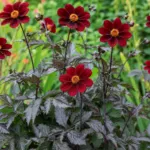
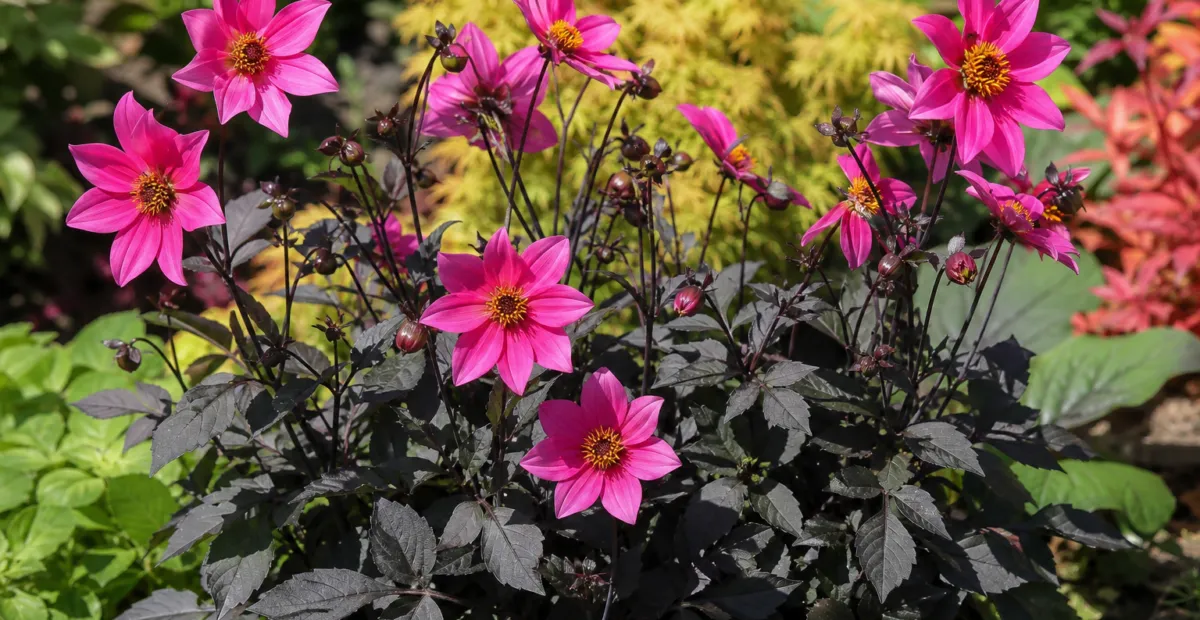
The plant forms an upright clump of herbaceous stems carrying pinnately divided leaves in dark bronze to bronzy-green tones. Its defining floral feature is the open single bloom: vivid magenta-pink ray florets surround a conspicuous yellow-gold disc. The contrast between dark foliage and bright flowers makes it particularly effective in containers and front-border displays.
Flowering
This is a single-flowered dahlia with one ring of ray florets around a visible central disc. The open structure exposes pollen and nectar more readily than highly double dahlia forms. Flowering begins in early summer or midsummer, depending on climate and planting date, and can continue into early fall or until the first damaging frost with regular deadheading.
Pollination and visitors
The open, single flowerheads expose pollen and nectar and are documented as useful to bees and other insect visitors. The RHS specifically recognizes ‘Roxy’ as a plant for pollinators. No reliable evidence supports assigning a particular pollinator species to this cultivar.
Diseases and pests
Diseases
Watch for powdery mildew, gray mold and tuber rots, especially where foliage stays wet or air circulation is poor. Dahlia viruses can cause mottled, distorted or stunted growth. Space plants well, water at the base, remove badly affected material, and store dormant tubers dry with good ventilation. Avoid planting damaged or suspicious tubers.
Pests
Aphids, caterpillars, earwigs, slugs and spider mites may damage shoots, leaves or flowers. Inspect new growth regularly, remove larger pests by hand, protect young plants from slugs, and encourage natural predators. Use targeted treatments only when damage is significant, following the product label and avoiding open flowers when pollinators are active.
Toxicity and pollen
ASPCA lists Dahlia species as toxic to dogs and cats, with the toxic principle unspecified and expected signs including mild gastrointestinal upset and mild dermatitis. Treat this cultivar cautiously because cultivar-specific toxicology is not available. Prevent pets from chewing plants or stored tubers, and seek veterinary advice if ingestion causes symptoms.
- Typical season
- During flowering, usually June through October in much of the United States
- Pollination / pollen
- Insect-presented pollen from exposed disc florets
Dahlia ‘Roxy’ produces pollen within its exposed central disc, but no cultivar-specific evidence indicates high airborne pollen release. Because the pollen is presented in open flowers and may be contacted directly, sensitive people should avoid handling flowers if they notice irritation. This low airborne-allergy assessment is cautious rather than a guarantee of zero risk.
Native habitat
Dahlias are derived from plants native to the highlands of Mexico and Central America, where tuberous perennials grow in seasonally warm conditions. Garden cultivars perform best in fertile, moisture-retentive but well-drained soils with a long frost-free season. In colder regions, the tubers require lifting and dry storage.
Interesting fact
‘Roxy’ is classified as a single-flowered dahlia, a form valued for exposing its central disc to insects. Its dark bronze foliage creates strong contrast with the bright magenta-pink flowers. It is short enough for containers and front-border use, unlike many taller dahlias that require staking. The cultivar is also listed in horticultural collections and specialist nursery catalogs under the dwarf bedding type.
Frequently asked questions (FAQ)
The most relevant questions about this plant, with short and direct answers.
🌱Quick care
What is Dahlia 'Roxy'?⌄
Dahlia 'Roxy' is a compact, early-flowering dahlia cultivar grown for vivid pinkish-red to carmine flowers and dark bronze foliage. It typically reaches about 18–30 inches tall, depending on growing conditions.
How much sun does Dahlia 'Roxy' need?⌄
Dahlia 'Roxy' needs full sun, ideally at least 6 hours of direct sunlight daily. More light generally supports sturdier growth and heavier flowering.
How often should I water Dahlia 'Roxy'?⌄
Water Dahlia 'Roxy' whenever the soil surface begins to dry, keeping the root zone evenly moist but never waterlogged. Container plants and plants in hot, dry weather may need watering more frequently.
How tall does Dahlia 'Roxy' grow?⌄
Dahlia 'Roxy' usually grows about 18–30 inches tall and has a relatively compact habit. Height can vary with fertility, sunlight, and whether the plant is grown in a container or in the ground.
🌤️Environment and placement
Where should I plant Dahlia 'Roxy'?⌄
Plant Dahlia 'Roxy' in a sunny, sheltered location with fertile, humus-rich, well-drained soil. A border edge, raised bed, patio container, or other warm site is suitable.
Can Dahlia 'Roxy' grow in a container?⌄
Yes, Dahlia 'Roxy' is well suited to containers because of its compact size. Use a container with drainage holes and quality potting mix, and expect to water more often than plants growing in the ground.
What USDA zones can grow Dahlia 'Roxy' outdoors?⌄
Dahlia 'Roxy' can be grown outdoors as a perennial where dahlia tubers survive winter, generally USDA Zones 8–11 with suitable protection. In colder zones, grow it as a summer annual or lift and store the tubers before hard frost.
Can Dahlia 'Roxy' tolerate shade?⌄
Dahlia 'Roxy' may survive in partial shade, but it flowers best in full sun. Excessive shade can produce weaker stems, fewer flowers, and less intense foliage color.
💧Care and problems
What soil is best for Dahlia 'Roxy'?⌄
Use fertile, humus-rich, well-drained loam or a high-quality container mix for Dahlia 'Roxy'. Improve heavy or compacted soil with organic matter, but avoid sites that remain wet after watering.
Should I fertilize Dahlia 'Roxy'?⌄
Yes, feed Dahlia 'Roxy' with compost or a balanced flower fertilizer during active growth. Avoid excessive nitrogen, which can encourage leafy growth at the expense of flowers.
Why is my Dahlia 'Roxy' not blooming?⌄
Dahlia 'Roxy' may fail to bloom because of insufficient sunlight, excess nitrogen, drought, waterlogged soil, or a short growing season. Move containers into full sun, maintain even moisture, and avoid heavy nitrogen feeding.
How do I deadhead Dahlia 'Roxy'?⌄
Deadhead Dahlia 'Roxy' by cutting spent flower stems back to a strong set of leaves or a branching point. Regular removal of faded flowers encourages continued blooming through summer and into fall.
Does Dahlia 'Roxy' need staking?⌄
Dahlia 'Roxy' often has a compact habit and may not need staking, but support can help in windy locations or after heavy rain. Add a small stake early if the stems appear weak or the plant is heavily flowered.
What pests affect Dahlia 'Roxy'?⌄
Dahlia 'Roxy' can be affected by aphids, caterpillars, earwigs, slugs, and spider mites. Inspect new growth and flower buds regularly, and use hand removal or a suitable labeled treatment when needed.
What diseases can affect Dahlia 'Roxy'?⌄
Common problems include powdery mildew, gray mold, tuber rot, and viral symptoms such as distorted or mottled leaves. Good air circulation, well-drained soil, careful watering, and removing diseased growth reduce risk.
🪴Planting and repotting
When should I plant Dahlia 'Roxy' tubers in the United States?⌄
Plant Dahlia 'Roxy' tubers outdoors in spring after the danger of frost has passed and the soil has begun to warm. In colder regions, start tubers indoors several weeks earlier and transplant them after hardening off.
How deep should I plant Dahlia 'Roxy' tubers?⌄
Plant Dahlia 'Roxy' tubers with the crown or growing eyes near soil level and cover them with roughly 2–4 inches of soil. Avoid planting too deeply, because cool, wet soil can encourage tuber rot.
How far apart should I plant Dahlia 'Roxy'?⌄
Space Dahlia 'Roxy' plants about 18–24 inches apart to allow airflow and room for the clumps to develop. Container-grown plants can be planted singly in a suitably sized pot.
Should I water Dahlia 'Roxy' immediately after planting?⌄
Water Dahlia 'Roxy' after planting to settle the soil, then water cautiously until shoots emerge. Once active growth begins, maintain more consistent moisture without saturating the tubers.
✂️Propagation and pruning
How do I propagate Dahlia 'Roxy'?⌄
Propagate Dahlia 'Roxy' by dividing tubers or taking softwood cuttings from actively growing shoots. Each tuber division must include a viable eye or bud to produce a new plant.
Should I pinch Dahlia 'Roxy'?⌄
Pinch the growing tip of Dahlia 'Roxy' when the plant is about 12–18 inches tall to encourage branching and a bushier shape. This can increase the number of flower stems, although it may slightly delay the first blooms.
How do I overwinter Dahlia 'Roxy' tubers?⌄
After frost blackens the foliage, cut the stems back, lift the tubers, let them dry briefly, and store them in a cool, dark, frost-free place in a slightly dry packing material. Check periodically and discard any tubers showing rot.
⚠️Toxicity and safety
Is Dahlia 'Roxy' toxic to dogs?⌄
Dahlia 'Roxy' is considered toxic to dogs and may cause mild gastrointestinal or skin-related effects if eaten or handled by a sensitive animal. Keep tubers and plant material away from pets and contact a veterinarian if ingestion occurs.
Is Dahlia 'Roxy' toxic to cats?⌄
Dahlia 'Roxy' is considered toxic to cats and may cause mild effects if plant material is eaten. Prevent access to the plant, particularly the tubers, and seek veterinary advice if your cat chews or swallows it.
Is Dahlia 'Roxy' safe for children?⌄
Keep Dahlia 'Roxy' away from young children who may chew plant parts or tubers, even though serious human poisoning is not commonly associated with dahlias. Wash hands after handling and contact poison-control services if ingestion causes concern.
🌸Flowering and special interest
When does Dahlia 'Roxy' bloom?⌄
Dahlia 'Roxy' generally flowers from early summer through early fall, continuing until stopped by frost when conditions are favorable. Deadheading, full sun, and consistent moisture help extend the display.
What color are Dahlia 'Roxy' flowers?⌄
Dahlia 'Roxy' produces vivid pinkish-red to carmine flowers, often contrasted with dark bronze or plum-toned foliage. Color intensity can vary with light, temperature, and growing conditions.
Are Dahlia 'Roxy' flowers good for cutting?⌄
Yes, Dahlia 'Roxy' flowers can be used in small bouquets and informal arrangements. Cut stems when the flowers are freshly open and place them in water immediately for the best vase life.