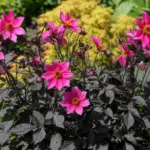
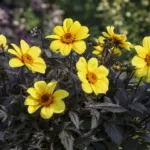
 AI-generated illustration
 Dahlia ‘Mexican Star’ short overview
Dahlia 'Mexican Star' is a distinctive single-flowered cultivar with dark chocolate-red to brownish-red petals, a bright golden center, dark stems, and lightly bronzed foliage. It forms a tall, clump-forming plant for sunny borders and cutting gardens, flowering from midsummer until frost. The tuberous perennial prefers fertile, well-drained soil and regular moisture, but its tubers usually need lifting and frost-free storage in much of the United States.
Taxonomic classification
Dahlia ‘Mexican Star’ care guide
Light and placement
Give full sun, ideally at least 6 hours of direct light, with a sheltered south- or west-facing position. Morning-to-afternoon sun supports sturdy stems and abundant flowering. Excessive shade produces weak, stretched growth and fewer flowers; intense reflected heat can increase wilting, so provide consistent water and airflow in hot sites.
Watering and humidity
Water deeply when the upper soil begins to dry, keeping moisture even during active growth and flowering. Avoid shallow daily watering and saturated soil, both of which encourage weak growth or tuber rot. Increase frequency during hot, dry weather and reduce watering after frost damages the foliage and the plant enters dormancy.
Soil and growing medium
Use fertile, humus-rich soil that drains freely after watering. Clay, loam, and sandy soils can work if improved with organic matter and not left waterlogged. The cultivar tolerates a broad pH range, from acidic through alkaline, but near-neutral, well-structured soil is a practical target for vigorous growth.
Feeding
Incorporate finished compost before planting, then apply a balanced, low-to-moderate strength fertilizer after active growth begins. Feed according to the product label and avoid excessive nitrogen, which can produce lush foliage with fewer flowers. Stop routine feeding as the plant enters dormancy and before long-term tuber storage.
Growth and habit
This is a tall, clump-forming dahlia with sturdy but potentially wind-sensitive stems. Pinching early shoots encourages branching, while staking prevents stems from leaning as flowers develop. Regular deadheading redirects energy toward continued flowering rather than seed production.
Planting and repotting
Plant outdoors after the last expected frost, once soil has warmed. Set the tuber horizontally about 2 inches deep, with the eyes facing upward, and space plants about 24 inches apart. Water thoroughly after planting, then keep the soil evenly moist while shoots establish. Stake at planting time to avoid disturbing mature roots later.
Start stored tubers in containers in late winter or spring if an earlier display is desired. Use a free-draining potting mix and transplant outdoors after frost danger has passed. Move container plants carefully because the fleshy tubers and new shoots can be damaged by rough handling.
Propagation and pruning
Propagation
Divide dormant tuber clumps in spring, ensuring every division has a viable eye. Softwood cuttings can be taken in spring from shoots produced by stored tubers. Keep cut surfaces clean and avoid planting damaged or rotting tuber sections.
Pruning
Pinch growing tips early to encourage a bushier framework. Deadhead faded flower heads throughout the season to prolong bloom. After frost blackens the foliage, cut stems near ground level before lifting the tubers, taking care not to injure the crown.
Overwintering
Dahlias are frost-tender. After frost damages the foliage, cut stems back, lift tubers carefully, allow them to cure briefly in a dry, shaded, ventilated place, and store them cool and frost-free in a barely moist packing medium. Inspect periodically and remove rotting tissue. In mild climates, deep mulch may work, but survival is not assured.
Uses
Useful in sunny perennial borders, cottage-style plantings, wildlife gardens, containers, and cut-flower beds. The single flowers provide accessible central discs for insect visitors and are more pollinator-friendly than densely packed double forms. Do not market the plant as edible or medicinal; keep plant material away from pets.
Appearance
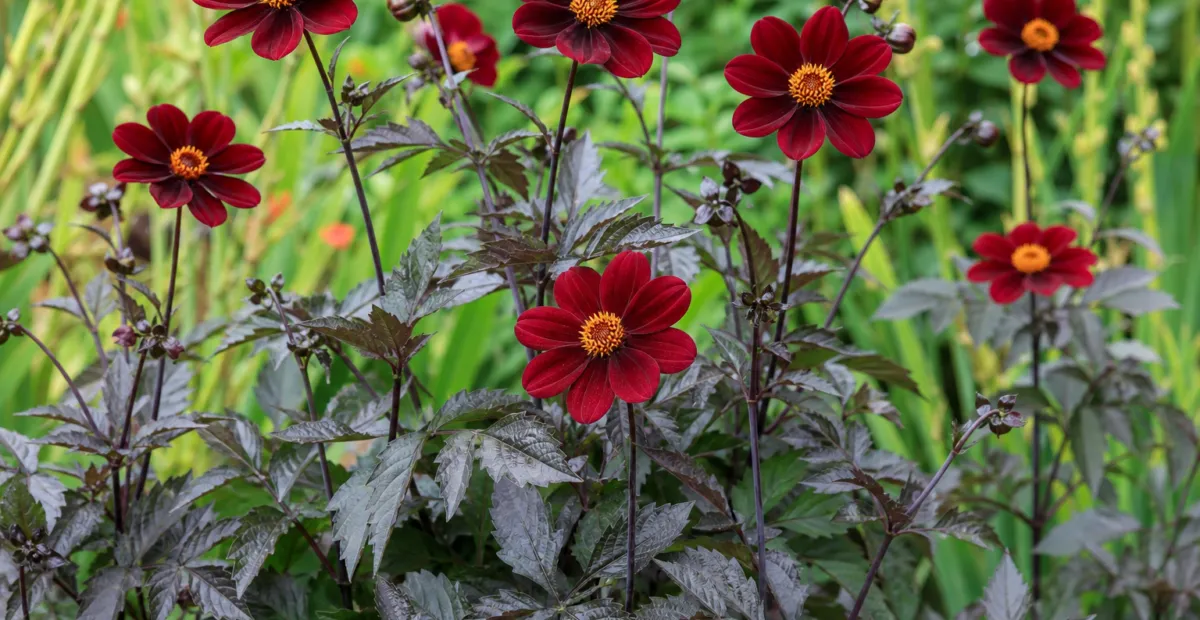
Identification features include dark stems, lightly bronzed dark-green foliage, and pinnately divided leaves with ovate leaflets. The open, single flower heads show a conspicuous golden center surrounded by rounded dark brownish-red ray florets. The overall effect resembles a larger, more substantial chocolate cosmos.
Flowering
Single flower heads appear from midsummer and continue until the first killing frost when spent blooms are removed. The flower has a ring of rounded, dark brownish-red to chocolate-red ray florets around a prominent yellow central disc. Flowers may be somewhat nodding and are held on long, dark stems.
Pollination and visitors
The exposed yellow central disc and single flower structure are reported to attract pollinating insects and garden visitors. Bees, bumblebees, hoverflies, and beetles are plausible documented visitor groups for open dahlia flowers; no specific pollinator species was sufficiently documented for this exact cultivar.
Diseases and pests
Diseases
Watch for powdery mildew in dry conditions, gray mold and other rots in persistently wet soil or poorly stored tubers, and dahlia viruses that may cause mottling, distortion, or stunting. Improve air circulation, avoid wetting foliage late in the day, remove badly affected material, and inspect tubers before storage.
Pests
Aphids, caterpillars, earwigs, slugs, capsid bugs, and spider mites may damage shoots or flowers. Inspect new growth regularly, remove pests by hand or with a strong water spray where practical, protect young plants from slugs, and encourage beneficial insects before considering a labeled treatment.
Toxicity and pollen
ASPCA lists Dahlia species as toxic to dogs and cats, with the toxic principle unidentified and generally mild gastrointestinal signs or mild dermatitis reported. This cultivar-specific evidence is limited, so prevent pets from chewing the plant and seek veterinary advice after ingestion or significant skin exposure.
- Typical season
- Midsummer through fall
- Pollination / pollen
- Insect-presented pollen; limited airborne relevance
Dahlia pollen is not generally regarded as a major airborne allergen, but Asteraceae plants can cause sensitization or contact reactions in susceptible people. Flower handling may be more relevant than ordinary garden-air exposure. People with known plant allergies should use gloves and avoid rubbing eyes after handling.
Native habitat
Dahlias are native to Mexico and associated with warm, seasonally growing conditions rather than freezing winters. This cultivated selection is grown in fertile, moisture-retentive but well-drained garden soil and performs best during the frost-free season. It is not reliably winter-hardy across most of the United States.
Interesting fact
The cultivar resembles an oversized chocolate cosmos in flower shape and color. Its registration description records dark purple-red outer florets, purple stems, and purple-tinged leaves. The RHS lists it as an accepted name and places it in the Single-flowered Group. Single blooms expose the central disc more openly than many double dahlias.
Frequently asked questions (FAQ)
The most relevant questions about this plant, with short and direct answers.
🌱Quick care
What is Dahlia 'Mexican Star'?⌄
Dahlia 'Mexican Star' is a single-flowered dahlia with dark red to brownish-red petals and a yellow central disc. It is grown from a frost-tender tuber and is valued for its abundant, open-centered blooms.
How much sun does Dahlia 'Mexican Star' need?⌄
Grow Dahlia 'Mexican Star' in full sun, ideally with at least 6 hours of direct light daily. Less light can produce weaker stems and fewer flowers.
How often should I water Dahlia 'Mexican Star'?⌄
Water Dahlia 'Mexican Star' regularly so the soil stays moderately moist but never waterlogged. Let the surface begin to dry between waterings, especially when the tuber is first planted.
Is Dahlia 'Mexican Star' an annual or perennial?⌄
Dahlia 'Mexican Star' is a tender perennial in climates where its tubers do not freeze. In much of the United States, it is grown as an annual outdoors unless the tubers are lifted and stored for winter.
🌤️Environment and placement
What USDA zones can grow Dahlia 'Mexican Star'?⌄
Dahlia 'Mexican Star' can be grown during the warm season in all U.S. areas, but its tubers are not reliably winter-hardy where the ground freezes. In colder USDA zones, lift the tubers after frost and store them indoors.
Can Dahlia 'Mexican Star' grow in a container?⌄
Yes, Dahlia 'Mexican Star' grows well in a large container with drainage holes. Choose a pot at least 12 inches wide and deep, use a fertile well-drained mix, and water more often during hot weather.
Where should I plant Dahlia 'Mexican Star' in the garden?⌄
Plant it in a sunny, sheltered location with fertile, humus-rich, well-drained soil. Protection from strong wind is useful because the stems can become top-heavy when flowering.
How tall does Dahlia 'Mexican Star' get?⌄
Dahlia 'Mexican Star' is commonly listed at roughly 2 to 2½ feet tall, although growing conditions can affect its final size. Plants grown in rich soil with ample moisture may need support.
💧Care and problems
Why is my Dahlia 'Mexican Star' not blooming?⌄
Insufficient sunlight, planting too early in cold soil, drought, or excessive nitrogen can delay blooming. Move container plants to full sun, keep moisture consistent, and avoid high-nitrogen feeding once growth is established.
Should I stake Dahlia 'Mexican Star'?⌄
Stake Dahlia 'Mexican Star' if it is exposed to wind or develops long, heavily flowering stems. Install the support at planting time so the tuber is not damaged later.
Should I deadhead Dahlia 'Mexican Star'?⌄
Yes, remove faded flowers regularly to encourage Dahlia 'Mexican Star' to produce more blooms. Cut the spent flower stem back to a developing side shoot or leaf pair.
Should I fertilize Dahlia 'Mexican Star'?⌄
Feed Dahlia 'Mexican Star' lightly in fertile soil with a balanced or bloom-oriented fertilizer during active growth. Avoid excessive nitrogen, which can favor leaves over flowers and may contribute to weak growth.
Why are the leaves of my Dahlia 'Mexican Star' turning yellow?⌄
Yellow leaves can result from overwatering, poor drainage, natural late-season aging, or nutrient stress. Check that excess water drains freely and inspect the plant for pests or damaged roots before adding fertilizer.
What pests commonly attack Dahlia 'Mexican Star'?⌄
Aphids, slugs, snails, thrips, and earwigs may feed on Dahlia 'Mexican Star' or its flowers. Inspect new growth regularly and use the least-toxic control appropriate for the pest and garden setting.
🪴Planting and repotting
When should I plant Dahlia 'Mexican Star' tubers?⌄
Plant the tubers outdoors after the danger of frost has passed and the soil has warmed. In cooler parts of the United States, starting them indoors several weeks earlier can provide a longer flowering season.
How deep should I plant Dahlia 'Mexican Star' tubers?⌄
Plant the tuber about 2 to 4 inches deep with the eye or emerging shoot facing upward. Avoid burying it too deeply, because cold, wet soil around the tuber can encourage rot.
How far apart should I space Dahlia 'Mexican Star' plants?⌄
Space Dahlia 'Mexican Star' plants about 18 to 24 inches apart for airflow and room to develop. Container plants can be grown singly in a suitably large pot.
Can I start Dahlia 'Mexican Star' indoors?⌄
Yes, start the tubers indoors in a container several weeks before your local last frost date. Keep them warm and bright, and transplant only after outdoor temperatures and soil conditions are safe.
What soil is best for Dahlia 'Mexican Star'?⌄
Use fertile, humus-rich, well-drained soil amended with compost or other organic matter. Heavy, poorly drained soil should be improved before planting because dahlia tubers are prone to rot in saturated conditions.
Can Dahlia 'Mexican Star' tolerate clay soil?⌄
It can grow in improved clay soil, but the site must drain well. Incorporate organic matter and consider raised beds or containers if water remains around the tubers after rain.
✂️Propagation and pruning
How do I overwinter Dahlia 'Mexican Star' tubers?⌄
After frost blackens the foliage, cut the stems back, lift the tubers, let them dry briefly, and store them in a cool, dark, frost-free place in a slightly ventilated packing material. Check them occasionally and discard any tubers that become soft or rotten.
Can I leave Dahlia 'Mexican Star' tubers in the ground over winter?⌄
You can leave them in the ground only where winters are mild and the soil remains well drained and largely frost-free. In areas with hard freezes or wet winter soil, lifting and storing the tubers is safer.
Can Dahlia 'Mexican Star' be grown from seed?⌄
It may produce viable seed, but seedlings will not reliably reproduce the named cultivar. To preserve the characteristics of Dahlia 'Mexican Star', propagate by dividing tubers or rooting cuttings.
Can I divide Dahlia 'Mexican Star' tubers?⌄
Yes, divide the stored tuber clump so each section retains a healthy crown piece and at least one visible eye. Make clean cuts and plant the divisions only after frost danger has passed.
Should I pinch Dahlia 'Mexican Star'?⌄
Pinch the growing tip when the plant has several sets of leaves to encourage branching and more stems. Pinching may delay the first flowers slightly, while leaving the plant unpinched can produce earlier blooms.
⚠️Toxicity and safety
Is Dahlia 'Mexican Star' toxic to dogs and cats?⌄
Dahlia 'Mexican Star' should be treated as toxic to dogs and cats, with ingestion potentially causing mild gastrointestinal or skin-related effects. Keep tubers and plant material away from pets and contact a veterinarian if ingestion occurs.
Is Dahlia 'Mexican Star' poisonous to people?⌄
Dahlia 'Mexican Star' is not intended for consumption, and sensitive people may experience skin irritation from plant contact. Wear gloves when handling tubers or foliage and keep the plant away from children who may chew garden plants.
🌸Flowering and special interest
When does Dahlia 'Mexican Star' bloom?⌄
Dahlia 'Mexican Star' generally blooms from midsummer until the first fall frost when grown in suitable conditions. Starting tubers indoors can help extend the display in regions with short summers.
What do Dahlia 'Mexican Star' flowers look like?⌄
The flowers are single and open-faced, with dark red, burgundy, or brownish-red petals surrounding a prominent yellow center. Reported flower size varies, but blooms are typically small to medium rather than dinner-plate sized.
Is Dahlia 'Mexican Star' good for cut flowers?⌄
Yes, Dahlia 'Mexican Star' can be used as a cut flower, especially when stems are harvested as blooms begin to open. Regular cutting also encourages the plant to produce additional flowers.
Does Dahlia 'Mexican Star' attract bees and butterflies?⌄
Its open, single flowers provide accessible pollen and nectar and may attract bees and butterflies. The exact amount of wildlife activity depends on local pollinator populations and the surrounding garden.
Does Dahlia 'Mexican Star' have a fragrance?⌄
Fragrance reports for Dahlia 'Mexican Star' are inconsistent, so it is safer to grow it primarily for its flower form and color rather than scent. Any fragrance may be subtle and noticeable only in warm conditions.