 Source:
 Dahlia ‘Cafe Au Lait’ short overview
Dahlia 'Cafe Au Lait' is a celebrated decorative dahlia with exceptionally large, softly layered blooms that blend creamy beige, blush pink, peach, and muted coffee tones. Plants form leafy clumps from underground tubers and flower from midsummer into fall when given full sun, fertile soil, steady moisture, and support. It is frost-tender: gardeners in much of the United States lift and store the tubers after the first hard frost.
Taxonomic classification
Dahlia ‘Cafe Au Lait’ care guide
Light and placement
Give full sun, ideally at least 6–8 hours of direct light with morning and afternoon exposure. An open, south- or west-facing bed produces stronger stems and better flowering; provide some late-afternoon protection in extremely hot climates if plants wilt despite adequate water. Too little light causes weak, stretched growth and fewer blooms, while excessive heat and reflected light can scorch foliage or fade flowers.
Watering and humidity
Water deeply when the upper inch of soil begins to dry, aiming for steady moisture rather than repeated shallow sprinkles. Increase frequency during hot, windy weather and while plants are actively flowering; reduce sharply after frost and during dormant tuber storage. Keep foliage as dry as practical and ensure excess water drains quickly to reduce rot.
Soil and growing medium
Use fertile, humus-rich soil that drains freely while retaining even moisture. Loam is ideal; improve compact clay with organic matter and avoid sites that stay waterlogged. A slightly acidic to neutral soil reaction is suitable. Good drainage is especially important for dormant tubers and newly planted divisions.
Feeding
Incorporate mature compost before planting, then use a balanced, relatively low-nitrogen fertilizer according to the product label after active growth begins. A light side-dressing can support flowering in poor soil. Avoid heavy nitrogen feeding, which promotes soft leafy growth and fewer useful stems. Stop feeding late in the season as plants prepare for dormancy.
Growth and habit
A vigorous seasonal plant develops from tubers into a leafy clump and sends up tall, branching flowering stems. Taller growth benefits from staking before stems become heavy. Pinching the central shoot when plants are established encourages branching; regular harvesting or deadheading helps maintain productive flowering.
Planting and repotting
Plant outdoors after the local frost risk has passed and soil has warmed. Set the tuber horizontally about 4–6 inches deep with the eye facing upward, then cover gradually as shoots develop if needed. Allow roughly 12–18 inches between plants, stake early, and water after planting without saturating the bed.
For container plants, move dormant tubers into fresh, free-draining potting mix in spring. Choose a heavy container with drainage holes and enough volume for the mature root system. Repot only when needed, handling brittle shoots and tubers carefully; do not keep the container constantly wet.
Propagation and pruning
Propagation
Divide dormant tubers in spring, ensuring every piece has a viable eye, or take softwood cuttings from shoots emerging from stored tubers. Division preserves the cultivar. Cuttings are useful for multiplying clean, vigorous stock but require careful timing and hygiene.
Pruning
Pinch the growing tip when the plant is about 12 inches tall to encourage branching. Remove spent flowers regularly to extend the display. After frost blackens the top growth, cut stems back near ground level before lifting and storing the tubers.
Overwintering
In USDA Zones 8–11, tubers may remain in the ground where winter drainage is excellent and hard freezes are uncommon. Elsewhere, wait until frost blackens the foliage, cut stems back, lift tubers carefully, let them dry briefly, and store them cool, dark, and frost-free in slightly dry packing material. Inspect periodically for rot or shriveling.
Uses
Excellent for flower borders, cutting gardens, containers, cottage-style plantings, and event or florist work. Large blooms are especially valuable as statement cut flowers. Do not use as food or medicine; pet exposure should be managed because dahlias are listed as toxic to dogs and cats.
Appearance
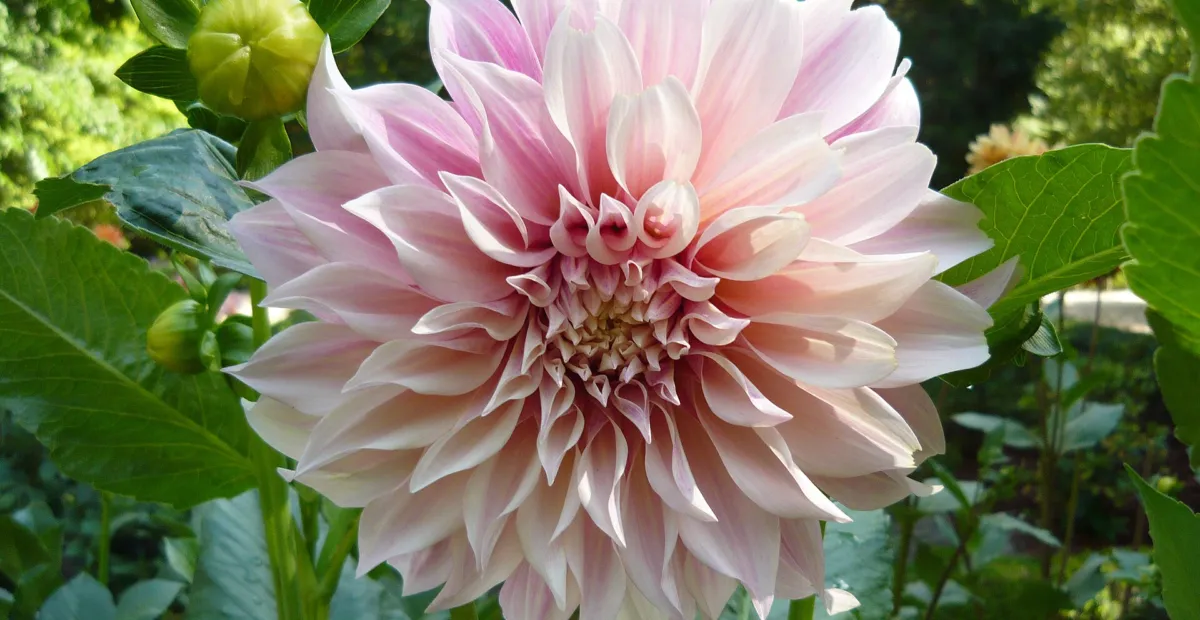
The plant has toothed, pinnately divided dark green leaves on green stems. It forms a leafy clump with upright, branching flowering stems. The defining feature is the exceptionally large, rounded, fully double flowerhead made of broad overlapping florets, typically blending cream, blush, peach, and muted brownish-pink tones.
Flowering
This cultivar produces very large, fully double informal decorative flowerheads with many broad, overlapping florets and no prominent central disc. In much of the United States, flowering begins around midsummer and continues into fall, often until frost. Individual blooms vary naturally in the balance of cream, blush, peach, and pink.
Pollination and visitors
Reliable documentation for animal visitors to this exact double cultivar is limited. Because dense double flowerheads can restrict access to reproductive parts, it should not be marketed as a strongly pollinator-supporting plant without local observation. Open-centered dahlias generally provide more accessible floral resources than this form.
Dahlia 'Cafe Au Lait' photos
Click any photo for a larger view. Source, author and license are shown separately.
Diseases and pests
Diseases
Prevent problems with good spacing, air circulation, clean planting material, and watering at the soil rather than over the foliage. Watch for powdery mildew in dry conditions and gray mold or tuber rot during prolonged wet weather. Remove affected tissue, avoid storing damaged tubers, and discard severely diseased material.
Pests
Inspect new growth for aphids and foliage for leaf miners, slugs, and spider mites. Earwigs and caterpillars may damage buds or flowers. Use hand removal, barriers, sanitation, and targeted controls only when necessary; avoid broad-spectrum insecticides during bloom when visitors may be present.
Toxicity and pollen
Dahlia plants are listed by the ASPCA as toxic to dogs and cats, with mild gastrointestinal upset and mild dermatitis reported. The toxic principle is not clearly identified. Keep pets from chewing foliage, flowers, or tubers, and wash skin after handling if irritation occurs. Human ingestion evidence for this cultivar is insufficient; do not eat it.
- Typical season
- Not well documented for this exact cultivar
- Pollination / pollen
- Insect-associated pollen; airborne relevance uncertain
This is an insect-pollinated flowering plant, but the airborne-allergy importance of pollen from this exact cultivar has not been established. The very full double flowerheads may limit pollen release and access, yet that does not prove zero allergy risk. People with known Asteraceae sensitivity should avoid direct contact if symptoms occur.
Native habitat
Dahlia cultivars are cultivated garden plants derived from a genus native mainly to Mexico and Central America. This cultivar is not a wild-habitat plant. In cultivation it prefers warm summers, fertile soils, full sun, and reliable moisture, while prolonged winter freezing damages or kills the tubers.
Interesting fact
The cultivar is classified as an informal decorative dahlia and is widely grown for oversized cut flowers. Its blooms can show noticeable color variation from flower to flower and as they mature. The cultivar has also produced named sports, including 'Cafe au Lait Rose' and 'Cafe au Lait Royal'.
Frequently asked questions (FAQ)
The most relevant questions about this plant, with short and direct answers.
🌱Quick care
How do you care for Dahlia 'Cafe Au Lait'?⌄
Grow Dahlia 'Cafe Au Lait' in full sun, fertile well-drained soil, and regular, even moisture. Support its tall stems, remove spent flowers, and protect or lift the frost-tender tubers before freezing weather.
Is Dahlia 'Cafe Au Lait' a perennial?⌄
Dahlia 'Cafe Au Lait' is a tuberous perennial in warm climates but is usually grown as a tender annual in colder parts of the United States. Where the ground freezes, lift and store the tubers for winter.
How tall does Dahlia 'Cafe Au Lait' get?⌄
Dahlia 'Cafe Au Lait' commonly reaches about 4 feet tall, although height varies with climate, soil, tuber quality, and season length. Its large flowers can make the stems top-heavy, so install support early.
How big are Dahlia 'Cafe Au Lait' flowers?⌄
Dahlia 'Cafe Au Lait' is known for very large, informal decorative blooms that can approach 8 inches across under good growing conditions. Flower size is influenced by sunlight, moisture, nutrition, and the plant’s overall vigor.
🌤️Environment and placement
How much sun does Dahlia 'Cafe Au Lait' need?⌄
Dahlia 'Cafe Au Lait' performs best with at least 6–8 hours of direct sun daily. A site with less light may produce taller, weaker growth and fewer or smaller flowers.
What soil is best for Dahlia 'Cafe Au Lait'?⌄
Use fertile, humus-rich, well-drained loam for Dahlia 'Cafe Au Lait'. Improve heavy clay with organic matter and drainage rather than planting the tubers in soil that stays saturated, which can cause rot.
Can Dahlia 'Cafe Au Lait' grow in a container?⌄
Yes, Dahlia 'Cafe Au Lait' can grow in a large container, but it needs strong support, excellent drainage, and consistent watering. Choose a container roughly 15 gallons or larger so the tall plant has enough root room and stability.
What USDA zones can grow Dahlia 'Cafe Au Lait'?⌄
Dahlia 'Cafe Au Lait' can be grown outdoors during the warm season across much of the United States, but it is not reliably winter-hardy where the ground freezes. In colder USDA zones, grow it as a summer plant and store the tubers indoors.
Can Dahlia 'Cafe Au Lait' tolerate heat?⌄
Dahlia 'Cafe Au Lait' can grow in hot regions, but extreme heat may slow growth, reduce flowering, or alter the blush in its flowers. Provide afternoon protection in the hottest climates while maintaining bright light and even moisture.
💧Care and problems
How often should you water Dahlia 'Cafe Au Lait'?⌄
Water Dahlia 'Cafe Au Lait' deeply when the soil begins to dry, keeping moisture even while the plant is actively growing and flowering. Avoid frequent shallow watering and do not keep newly planted tubers wet before shoots emerge.
Should Dahlia 'Cafe Au Lait' be fertilized?⌄
Yes, feed Dahlia 'Cafe Au Lait' lightly in fertile soil after active growth begins, using a balanced or relatively low-nitrogen flower fertilizer according to the label. Excess nitrogen can encourage foliage at the expense of flowers and sturdy stems.
Does Dahlia 'Cafe Au Lait' need staking?⌄
Yes, staking is strongly recommended for Dahlia 'Cafe Au Lait' because its plants are tall and its dinnerplate-sized flowers are heavy. Place a stake, cage, or other support at planting time to avoid damaging the tubers later.
Should you pinch Dahlia 'Cafe Au Lait'?⌄
Pinching the main shoot of Dahlia 'Cafe Au Lait' when the plant is about 12–18 inches tall can encourage branching and more usable stems. Do not pinch a stressed plant, and expect flowering to be delayed slightly after pinching.
How do you deadhead Dahlia 'Cafe Au Lait'?⌄
Deadhead Dahlia 'Cafe Au Lait' by cutting spent flower heads back to a strong leaf joint or side shoot. Regular removal prevents seed formation and helps redirect energy toward continued flowering.
Why is Dahlia 'Cafe Au Lait' not blooming?⌄
Dahlia 'Cafe Au Lait' may bloom late because it is a large, relatively slow-growing cultivar, but insufficient sun, excess nitrogen, drought, or planting too early can also delay flowers. Give it warmth, full sun, even moisture, and patience.
Why are Dahlia 'Cafe Au Lait' stems flopping?⌄
Flopping usually results from the cultivar’s tall growth and heavy blooms, especially in wind, shade, or overly lush nitrogen-fed plants. Tie the stems to a stake or cage and keep the plant in full sun with balanced nutrition.
Why are Dahlia 'Cafe Au Lait' leaves turning yellow?⌄
Yellow leaves on Dahlia 'Cafe Au Lait' can indicate normal aging, overwatering, poor drainage, nutrient stress, or root damage. Check soil moisture and drainage first, then inspect the plant for pests, disease, or declining stems.
🪴Planting and repotting
When should you plant Dahlia 'Cafe Au Lait' tubers?⌄
Plant Dahlia 'Cafe Au Lait' tubers outdoors after the last expected spring frost, when the soil has warmed and is not cold and waterlogged. In short-season areas, start tubers indoors about 4–6 weeks earlier and harden plants before transplanting.
How deep should Dahlia 'Cafe Au Lait' tubers be planted?⌄
Plant Dahlia 'Cafe Au Lait' tubers about 4–6 inches deep with the eye or crown facing upward. Avoid heavy watering until shoots appear, because cool, wet soil can cause dormant tubers to rot.
How far apart should Dahlia 'Cafe Au Lait' be planted?⌄
Space Dahlia 'Cafe Au Lait' plants about 18–24 inches apart, allowing additional room for air circulation and support. Wider spacing can be useful in humid areas or where plants receive less than ideal airflow.
Can you start Dahlia 'Cafe Au Lait' indoors?⌄
Yes, start Dahlia 'Cafe Au Lait' tubers indoors 4–6 weeks before outdoor planting in a well-drained potting medium. Give emerging plants strong light, avoid overwatering, and harden them outdoors for about a week before transplanting.
✂️Propagation and pruning
How do you propagate Dahlia 'Cafe Au Lait'?⌄
Propagate Dahlia 'Cafe Au Lait' by dividing healthy tubers so each division has a piece of crown and at least one viable eye. Stem cuttings can also produce clones, but seed will not reliably reproduce this named cultivar.
Can you grow Dahlia 'Cafe Au Lait' from seed?⌄
You can grow dahlias from seed, but seed from Dahlia 'Cafe Au Lait' will not reliably produce the same flower form or color. Use a correctly labeled tuber or vegetative cutting when an exact clone is important.
When should Dahlia 'Cafe Au Lait' tubers be divided?⌄
Divide Dahlia 'Cafe Au Lait' tubers in late winter or early spring, shortly before planting, when the eyes are visible and the crown can be cut cleanly. Discard soft, diseased, or badly damaged sections.
How do you overwinter Dahlia 'Cafe Au Lait' tubers?⌄
After frost blackens the foliage, cut the stems back, lift the tuber clump carefully, let it dry for a few days, and store it in a cool, dark, frost-free place in a breathable packing material. Inspect periodically and remove any rotting tissue.
⚠️Toxicity and safety
Is Dahlia 'Cafe Au Lait' toxic to dogs and cats?⌄
Yes, Dahlia 'Cafe Au Lait' should be treated as toxic to dogs and cats because the species is listed as toxic by the ASPCA. Reported effects are generally mild gastrointestinal upset or skin irritation, but contact a veterinarian if a pet chews or eats it.
Is Dahlia 'Cafe Au Lait' poisonous to humans?⌄
Human toxicity for Dahlia 'Cafe Au Lait' is uncertain, so do not eat the flowers, leaves, or tubers. Wear gloves if the plant irritates your skin, keep it away from children, and seek medical advice after ingestion or a serious reaction.
🌸Flowering and special interest
When does Dahlia 'Cafe Au Lait' bloom?⌄
Dahlia 'Cafe Au Lait' usually begins blooming from midsummer and continues until frost when grown in a sufficiently long, warm season. It may flower later than smaller dahlia cultivars, especially when planted outdoors soon after cold weather.
What color are Dahlia 'Cafe Au Lait' flowers?⌄
Dahlia 'Cafe Au Lait' produces large creamy flowers washed with peach, blush pink, tan, or soft coffee tones. Color can vary between blooms and may shift with temperature, light, plant maturity, and growing conditions.
Is Dahlia 'Cafe Au Lait' good for cut flowers?⌄
Yes, Dahlia 'Cafe Au Lait' is highly valued for cutting because its oversized, softly colored blooms are useful in bouquets and event arrangements. Harvest when the flowers are open but not fully aged, then place the stems immediately in clean water.
How long do Dahlia 'Cafe Au Lait' flowers last in a vase?⌄
Dahlia 'Cafe Au Lait' flowers commonly last about 4–5 days in a vase with clean tools, fresh water, and proper conditioning. Its very large blooms may have a shorter vase life than some smaller dahlia forms.
How can you get more flowers from Dahlia 'Cafe Au Lait'?⌄
To encourage more flowers, grow Dahlia 'Cafe Au Lait' in full sun, maintain even moisture, feed without excess nitrogen, pinch early for branching, deadhead regularly, and harvest blooms often. This cultivar may still produce fewer flowers than more prolific dahlias.