Prunus necrotic ringspot virus
Prunus necrotic ringspot virusPrunus necrotic ringspot virus overview
Prunus necrotic ringspot virus is a systemic viral disease of stone fruits and some ornamental hosts, including roses. Symptoms vary widely by virus strain, host, cultivar, season, and mixed infections. Young leaves may develop chlorotic rings, line patterns, mosaics, necrotic spots, or shot holes; affected trees can show stunting, twig or bud death, delayed fruit ripening, reduced vigor, and greater winter injury.
Typical conditions
Overview
Prunus necrotic ringspot virus (PNRSV) is a widespread viral pathogen of stone fruits and selected ornamental or other hosts. It occurs as genetically and biologically variable strains, so the same virus may produce different symptoms in sweet cherry, sour cherry, peach, nectarine, plum, apricot, almond, or rose.
Symptoms alone are not sufficiently specific for confirmation. Similar rings, mosaics, shot holes, chlorosis, and leaf distortion can result from other viruses, fungal shot-hole diseases, herbicide injury, nutritional stress, or mixed infections. Laboratory testing is recommended when plant replacement, propagation, or orchard-management decisions depend on a diagnosis.
Symptoms and identification
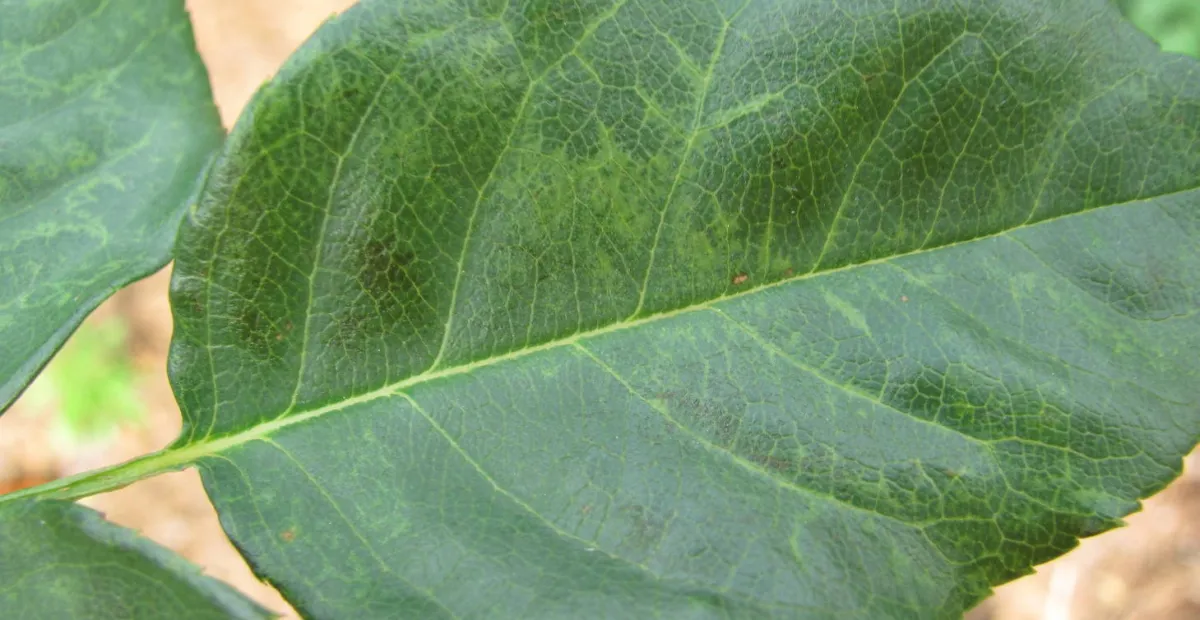
Symptoms may appear on young expanding leaves in spring and can later fade or become intermittent. Depending on host and strain, look for:
- yellow or pale-green rings, arcs, bands, line patterns, or mosaic patches;
- brown necrotic spots that may fall out and leave shot-hole symptoms;
- leaf distortion, puckering, ragged margins, downward curling, or small leaflike growths on the underside near the midrib;
- premature leaf drop, reduced shoot growth, blind wood, twig or bud death, and general stunting;
- deformed fruit, delayed ripening, reduced yield, and poorer fruit quality in susceptible stone-fruit combinations;
- on roses, yellow mosaic, rings, vein banding, or line patterns, often as part of a virus complex.
Infection may be systemic even when visible symptoms are absent. Symptom severity changes with cultivar, virus strain, plant age, temperature, season, and co-infection with viruses such as prune dwarf virus or apple mosaic virus.
Causes and spread
PNRSV is most efficiently introduced and maintained through infected propagation material, including budwood, scions, cuttings, grafts, and rootstocks. Pollen transmission is important in Prunus orchards, and seed transmission can occur, although its frequency varies by host and cultivar. In some cherry production situations, thrips moving between flowers may carry infected pollen and contribute to local spread.
Do not assume that every report of insect transmission applies to PNRSV. Unlike many aphid-transmitted viruses, PNRSV is not generally managed as a conventional, persistently insect-vectored disease. Root contact or root grafting may contribute to spread in some perennial plantings, while evidence for particular mite or nematode vectors is inconsistent and should not be treated as a routine US diagnostic assumption.
Life cycle and persistence
After entering a susceptible plant through infected grafting material, pollen, seed, or experimentally demonstrated transmission routes, the virus establishes a systemic infection and moves through living plant tissues. Infected mother plants can therefore produce infected propagules for years.
Leaf symptoms are often most visible during cool to moderate spring conditions or on newly expanding foliage. Some trees show symptoms during one season and appear normal later, while others express symptoms repeatedly. Flowering creates opportunities for pollen-mediated movement, and propagation operations create especially efficient opportunities for long-distance spread. The virus does not reproduce independently in soil or on dead plant debris.
Treatment and control
There is no curative field treatment that eliminates PNRSV from an established infected tree. First confirm the diagnosis through a qualified plant diagnostic laboratory, especially because symptoms overlap with other viruses, fungal shot-hole disease, herbicide injury, and nutrient or environmental disorders.
For home landscapes, tolerate mild symptoms when the plant remains vigorous, or replace severely affected plants with clean, tested stock. In orchards and nurseries, remove confirmed infected mother plants and consider removing chronically poor-performing trees when they threaten propagation blocks or production uniformity. Do not use infected material for grafting, budding, cuttings, or seed production. Heat therapy and meristem-based sanitation may be used by specialized certification and propagation programs, not as a practical homeowner cure.
Low-impact and biological control
Organic practices cannot cure an infected plant, but they can reduce introduction and secondary spread:
- source certified virus-tested plants and maintain strict propagation sanitation;
- sterilize grafting and pruning tools between plants using an appropriate disinfectant and clean procedure;
- remove symptomatic plants from propagation areas and dispose of them rather than composting infected woody material;
- mow flowering weeds before stone-fruit bloom to reduce thrips activity around infected pollen sources;
- maintain balanced irrigation, nutrition, and winter protection to reduce stress and improve tolerance of infected trees;
- use physical isolation and careful plant movement to prevent infected stock from entering clean blocks.
Biological or organic insecticide programs are not reliable virus cures. Insect management should be used only for documented thrips or aphid problems and as part of an integrated program, not as a substitute for clean planting material.
Prevention
- Purchase certified virus-tested nursery stock, rootstocks, scions, and budwood from reputable US suppliers.
- Do not propagate from symptomatic or untested trees, roses, or other possible mother plants.
- Use clean, documented propagation material and maintain records of source plants and grafting lots.
- Inspect new stone-fruit trees and roses during cool spring weather, when mosaic and ringspot symptoms may be easier to see.
- Remove and dispose of confirmed infected propagation sources and, where economically justified, affected orchard trees; do not chip them for scion or budwood production.
- Before stone-fruit bloom, mow or remove flowering weeds in orchard groundcover where thrips-mediated pollen movement is a concern.
- Control root contact and avoid replanting valuable virus-sensitive trees with untested stock in locations containing old infected roots.
Interesting facts
- PNRSV belongs to the genus Ilarvirus and has a multipartite positive-sense RNA genome.
- The virus was first recognized from ring and chlorotic leaf symptoms in US peach orchards, but symptoms differ substantially among hosts and strains.
- All major cultivated stone-fruit groups may be affected, including cherries, peaches, nectarines, plums, apricots, and almonds.
- PNRSV is one of the viruses that can contribute to rose mosaic disease, often together with apple mosaic virus.
- Some infected plants remain symptomless, which is why visual inspection alone cannot guarantee virus-free propagation material.
- Mixed infections, particularly with prune dwarf virus, can increase disease severity and production losses in stone fruits.
No pesticide cures or eradicates Prunus necrotic ringspot virus. Use chemicals only for a separately diagnosed insect or weed problem, and only products legally authorized for that crop and problem in the United States; follow the current product label, worker-protection requirements, and state restrictions. Prioritize certified clean stock, sanitation, removal of infected propagation sources, and other cultural IPM measures.
Affected plants
The plants below are linked to this problem by structured host-plant data. The list updates automatically as new plant profiles are added.