
Shade stress (low-light stress)
Shade stress (low-light stress) overview
Shade stress is a noninfectious disorder caused by light levels too low for a plant’s species, cultivar, growth stage, or recent growing conditions. Affected plants commonly become thin, elongated, pale or weak, with slower growth, reduced flowering, premature leaf drop and greater vulnerability to drought, poor aeration, pests and disease. Symptoms often improve only after light and moisture conditions are corrected.
Typical conditions
Overview
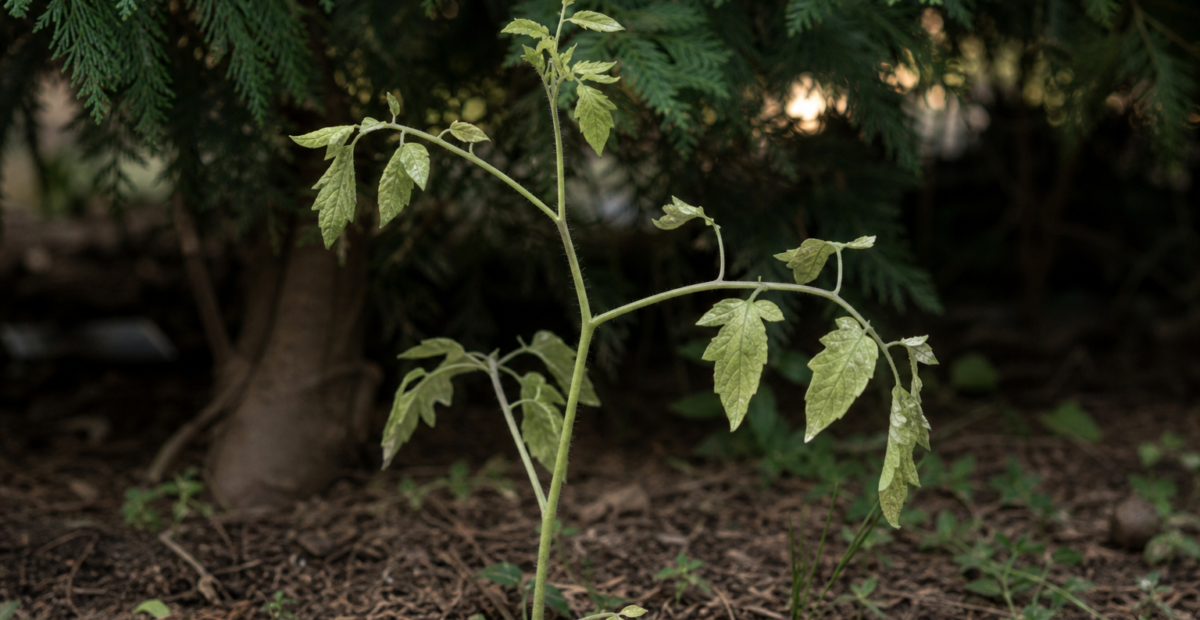
Plants need adequate light to produce carbohydrates and maintain normal shoot, leaf and root development. When a plant receives less light than it requires, growth may slow and the plant may redirect growth toward available light. This commonly produces etiolation: elongated, thin stems, long internodes, pale foliage and weak structure.
Shade is not automatically harmful. Many woodland and indoor plants are adapted to low or dappled light. Shade stress occurs when the light level is below the plant’s requirement, changes abruptly, or is combined with root competition, dry soil, excessive moisture or poor air movement.
Symptoms and identification
- Long, thin, weak or leaning stems and unusually long spaces between leaves.
- Pale, yellow-green or otherwise abnormal foliage; leaves may be larger, thinner or less fully expanded than normal.
- Slow growth, fewer shoots, reduced branching and poor flowering or fruit production.
- Premature drop of the most shaded leaves, especially inside dense canopies.
- Weak turf with reduced density, upright elongated blades, shortened roots and poor wear tolerance.
- Greater susceptibility to drought, root-zone problems, pests and disease because overall vigor is reduced.
Symptoms can resemble nutrient deficiency, overwatering, root damage or disease. Look for a consistent relationship with the shaded side, canopy, window position or time of day.
Causes and spread
The immediate cause is inadequate light quantity, duration or quality for the plant. Common causes include dense tree or shrub canopies, buildings and fences, north-facing or obstructed windows, overcrowded containers, seasonal canopy development and planting a full-sun crop in part or full shade.
Shade stress does not spread biologically because it has no infectious agent. However, it may appear progressively as trees grow, leaves emerge, neighboring plants enlarge, or a container is moved farther from a light source. In outdoor sites, tree roots may simultaneously compete for water and nutrients, while shaded soil may remain wet longer or receive less rainfall beneath a canopy.
Life cycle and persistence
There is no pathogen, pest or disease life cycle. The disorder begins when available light falls below the plant’s functional requirement and continues while the imbalance remains. New growth develops under the current light conditions; already elongated stems generally do not return to normal length, although later growth can be stronger after correction.
Plants moved suddenly from bright conditions into shade may show stress because they have not acclimated. Conversely, a plant adapted to shade can suffer leaf scorch if moved abruptly into intense direct sun. Changes in light should therefore be gradual.
Treatment and control
- Confirm the light pattern and rule out root rot, nutrient deficiency, pests, disease and water stress. Affected plants often occur on the shaded side or in the darkest part of a planting.
- Increase usable light gradually where practical by relocating containers, opening a canopy selectively, reducing crowding or choosing a brighter planting site.
- Acclimate plants moved toward stronger light over several days to reduce sunburn and leaf scorch.
- Prune or cut back severely leggy herbaceous plants to encourage stronger replacement growth after light is corrected. Do not expect old elongated stems to shorten.
- Adjust watering downward if reduced light has slowed water use, while checking soil moisture before irrigation.
- Use a soil test before applying fertilizer. Extra nitrogen does not correct inadequate light and can produce weak, overly lush growth.
- Replace plants that cannot tolerate the site with species adapted to its measured light and moisture conditions.
Low-impact and biological control
Because shade stress is environmental, organic control means correcting the growing conditions rather than applying a pesticide. Select shade-adapted plants, thin competing vegetation where appropriate, improve soil structure without damaging existing roots, mulch to moderate soil moisture and hand-water only when the root zone is dry enough to require it. Remove badly weakened or dead tissue with clean tools, and improve spacing and air circulation to reduce secondary disease pressure.
In shade-prone lawns, reduce traffic, mow at the appropriate height for the grass, avoid excessive nitrogen, and consider a shade-tolerant alternative when the site cannot provide enough light.
Prevention
- Choose plants and cultivars rated for the site’s actual light level: full sun, part shade, dappled shade or full shade.
- Observe the site through the growing season. In U.S. garden terminology, part shade is often about 3–6 hours of sunlight, while full shade generally means less than 3 hours, but intensity and timing also matter.
- Measure or compare light at plant height rather than assuming that a bright outdoor location or room is suitable.
- Thin selected branches when appropriate and permitted, without damaging tree structure or removing excessive canopy.
- Space containers and landscape plants so foliage is not unnecessarily self-shaded.
- Maintain well-drained soil and water according to plant need; do not compensate for low light with excessive fertilizer or irrigation.
- For turf, use shade-tolerant grasses or replace persistently failing lawn with an appropriate groundcover, mulch or planting.
Interesting facts
- Low light commonly produces etiolation, characterized by elongated shoots and reduced chlorophyll.
- Leaves in prolonged shade may become larger and thinner, but this response varies by species and does not necessarily indicate a disease.
- Shade can reduce water use while simultaneously increasing competition from tree roots, so shaded soil may be either persistently wet or unexpectedly dry.
- A plant can be shade-tolerant yet still become stressed after an abrupt move from bright light to deep shade.
- Light imbalance can make plants more vulnerable to secondary pests and diseases even though shade stress itself is not infectious.
No pesticide treats shade stress. Use only products legally authorized for the specific crop and problem in the United States, and follow the current product label. Do not use plant growth regulators, fertilizers or fungicides as substitutes for correcting inadequate light; apply them only when a separately diagnosed problem and the current label support their use.