
Bacterial Canker of Stone Fruits
Pseudomonas syringae pv. morsprunorumBacterial Canker of Stone Fruits overview
Pseudomonas syringae pv. morsprunorum is a bacterial pathogen associated mainly with bacterial canker, blossom blast, bud death and shoot dieback in cherry and other Prunus crops. Symptoms are favored by cool, wet weather, frost injury and wounds. Accurate diagnosis can require laboratory testing because several Pseudomonas pathovars and noninfectious injuries produce similar cankers.
Typical conditions
Overview
This disease is commonly called bacterial canker of stone fruits, or bacterial canker of cherry when cherry is the principal host. The pathogen can colonize apparently healthy plant surfaces and remain associated with buds, leaves and bark before entering susceptible tissue through natural openings, leaf scars, frost injury, pruning cuts or other wounds.
On susceptible trees, infections may kill flower buds, cause blossom blast, produce leaf spots and develop into perennial cankers on twigs, limbs or trunks. Cankers that enlarge around a branch can interrupt water and nutrient movement, resulting in shoot or limb dieback and, in severe cases, tree death.
Symptoms and identification
Symptoms vary with host, cultivar, pathovar race, infection site and weather. Typical signs include:
- Sunken, elongated, water-soaked or darkened lesions on twigs, branches or the trunk.
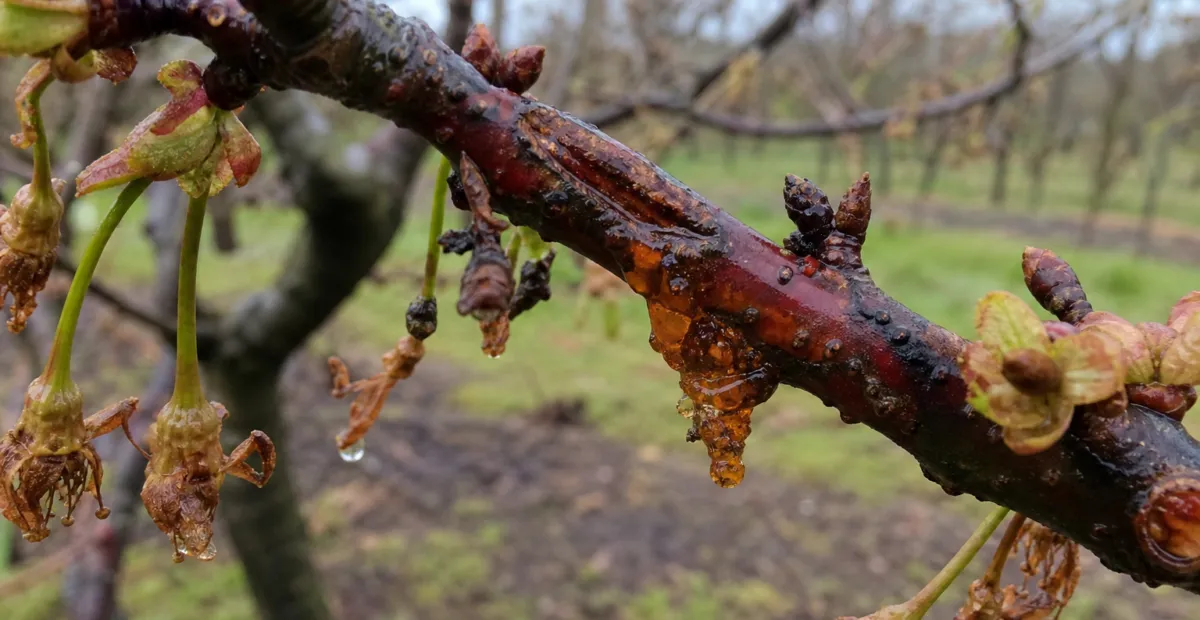
- Amber to brown gummy exudate from active cankers, especially during cool, wet periods.
- Dead or blighted flower buds, blossom blast and dieback of short fruiting spurs.
- Small brown to black leaf spots, sometimes surrounded by yellow tissue or followed by shot-hole-like loss of dead tissue.
- Wilted shoots and branch dieback beyond a canker that has girdled conductive tissues.
- Brown to reddish discoloration beneath the bark at the canker margin.
Fungal fruiting structures, concentric brown-rot lesions or a sharply defined frost pattern suggest alternative or additional causes. Confirmation generally requires isolation, pathogenicity testing or molecular identification by a qualified plant diagnostic laboratory.
Causes and spread
The bacterium is favored by cool, wet conditions, prolonged leaf wetness, frequent rain, high humidity and tissue damaged by freezing temperatures. Common entry points include frost cracks, pruning wounds, leaf scars, bud bases, lenticels, insect or mechanical injuries and damaged bark.
Rain and overhead irrigation can move bacteria from infected cankers, buds and leaf surfaces to susceptible tissue. Contaminated pruning tools may spread bacteria between cuts. Young trees and trees weakened by poor drainage, drought, excessive nitrogen, root damage, unsuitable rootstocks, nematodes or other stresses are often more vulnerable.
Life cycle and persistence
The disease cycle generally alternates between a winter or cool-season parasitic phase and a warmer-season epiphytic phase. Bacteria can persist in cankers, dormant buds, bark and on the surfaces of apparently healthy leaves and shoots. During autumn and winter, wet weather and leaf fall create opportunities for infection through leaf scars and bark injuries.
In late winter and spring, bacteria multiply on wet plant surfaces and may enter buds, blossoms, stomata or wounds. Cool rain and frost can intensify blossom blast and canker development. Populations may decline during hot, dry summer weather, then increase again as temperatures fall and rainfall returns in autumn.
Treatment and control
There is no reliably curative treatment once a canker has extensively entered the trunk or a major limb. On small trees or accessible branches, prune out infected tissue during a dry period, cutting well below the visible canker margin into apparently healthy wood. Disinfect pruning tools between cuts and do not leave diseased prunings beneath the tree.
Remove and replace trees with extensive trunk cankers, repeated whole-tree decline or infections that cannot be removed without destabilizing the tree. Have ambiguous cases tested because bacterial canker can resemble frost injury, fungal cankers, brown rot blossom blight and damage from other Pseudomonas pathovars.
Management is primarily preventive and integrated: reduce stress, protect wounds, improve drying and sanitation, and monitor young trees and susceptible cultivars closely from leaf fall through spring bloom.
Low-impact and biological control
Organic management relies mainly on sanitation and cultural practices rather than a dependable curative product. Remove infected branches in dry weather, disinfect tools, destroy or remove diseased wood, reduce overhead wetting and maintain balanced irrigation and nutrition.
Where permitted by the applicable organic certification program and product label, certain copper-based products may provide preventive suppression, but performance is variable and repeated use can injure foliage or accumulate in soil. Biological products based on beneficial microorganisms may be available in some markets, but efficacy is inconsistent and should not replace sanitation, wound prevention and site management.
Prevention
- Purchase clean, inspected nursery stock and avoid planting trees with suspicious bark lesions, dead buds or unexplained gumming.
- Select cultivars and rootstocks with improved local performance where reliable resistance or tolerance information is available.
- Plant in well-drained soil and avoid low, cold sites that remain wet after rain.
- Use drip or microsprinkler irrigation that keeps trunks, foliage and pruning wounds dry; avoid overhead irrigation during cool, wet periods.
- Prune to improve airflow, but make cuts during dry weather and avoid unnecessary fall or winter pruning when infection risk is high.
- Remove dead or clearly infected branches several inches below visible cankers when feasible. Disinfect tools between cuts and remove infected wood from the orchard or landscape.
- Prevent trunk injury from mowers, string trimmers, ties and staking materials. Protect young trees from sunscald and winter injury where appropriate.
- Avoid excessive nitrogen, which promotes soft succulent growth, and correct drainage, irrigation, root and nematode problems.
Interesting facts
- The name morsprunorum reflects the pathogen’s historical association with stone fruits, especially cherry and plum.
- Pathogen populations can live epiphytically on apparently healthy leaves and buds, so visible cankers are not the only source of inoculum.
- Some Pseudomonas syringae strains have ice-nucleation activity, which can intensify frost-related injury and create infection courts; this trait is not sufficient by itself to identify the pathovar.
- P. syringae pv. morsprunorum and pv. syringae can produce overlapping symptoms on stone fruits, making laboratory confirmation important when regulatory, nursery or orchard decisions depend on the diagnosis.
- Host-range records commonly emphasize Prunus avium, P. cerasus, P. domestica and, in some references, apricot and other stone fruits; susceptibility and disease importance vary by strain and region.
Use only products legally authorized for bacterial diseases of the specific crop and use site in the United States. Follow the current product label for crop, timing, rate, reentry interval, preharvest interval, worker protection and environmental precautions. Copper products are preventive rather than reliably curative, and repeated applications can cause phytotoxicity, especially on sensitive cultivars or foliage. Check current state recommendations and consult a county Extension office or licensed crop adviser before treatment.