
 Source:
 Sulfur cosmos and yellow cosmos (Cosmos sulphureus) short overview
Cosmos sulphureus, known in the United States as sulfur cosmos and yellow cosmos, is a fast-growing annual with sunny yellow, orange, or red daisy-like flowers. It performs best in full sun and lean, well-drained soil, tolerates heat and moderate drought once established, and flowers from summer into fall. Direct sowing is simple, and the plant suits borders, cutting gardens, containers, and pollinator-friendly spaces.
Taxonomic classification
Sulfur cosmos and yellow cosmos (Cosmos sulphureus) care guide
Light and placement
Give at least 6–8 hours of direct sun, ideally in an open south- or west-facing position away from shade cast by buildings or trees. Too little light produces lanky stems and reduced flowering; excessive heat is usually tolerated if roots are not waterlogged. Shelter tall plants from strong winds and provide support if needed.
Watering and humidity
Keep newly sown seed evenly moist for the first 5–10 days and through emergence. After seedlings establish, water deeply when the soil has begun to dry rather than maintaining constant moisture. Established plants tolerate relatively dry conditions; overwatering and frequent feeding can reduce flowering. Improve airflow in humid weather.
Soil and growing medium
Use loose, well-drained soil with average to low fertility. Sandy, loamy, and even clay soils can work if drainage is adequate. A neutral to slightly alkaline reaction is well tolerated, although the species also grows across a broader pH range. Avoid heavily enriched soil, which can encourage weak, leafy growth and fewer flowers.
Feeding
Fertilizer is usually unnecessary. Grow in ordinary or lean soil and add only a thin layer of compost if the bed is extremely poor. High-nitrogen feeding can produce weak stems, delayed flowering, and abundant foliage, so do not fertilize routinely once plants are established.
Growth and habit
This quick annual develops branching stems and can become open or floppy, particularly in rich soil, shade, or crowded conditions. Early pinching encourages branching, while nearby plants or light staking can help support taller growth. It may self-sow where seed is allowed to mature.
Planting and repotting
Sow outdoors after the danger of frost has passed and soil has warmed to about 65°F. Scatter seed on prepared soil and rake it in lightly; deep burial reduces germination. Keep the seedbed evenly moist until emergence, then thin or space plants about 12–24 inches apart.
Usually unnecessary because this is an annual normally grown from seed. If started in cells, transplant young seedlings before they become root-bound, disturbing the roots as little as possible.
Propagation and pruning
Propagation
Propagate by seed. Direct sow after frost when soil is warm, barely covering or lightly raking seed into the surface. Germination commonly takes about 7–21 days. Allowing some mature seed heads to remain can produce volunteer seedlings the following season.
Pruning
Pinch young plants once or twice to encourage branching. Deadhead regularly to extend the display, or leave selected heads to mature if volunteer seedlings are wanted. Cut plants back after flowering or frost and remove diseased debris.
Overwintering
Treat as an annual outdoors. Frost kills the plants. In mild climates, leave a few seed heads to mature for self-sowing, then remove spent stems after seed dispersal. Container plants are generally more practical to replace from seed than to overwinter indoors.
Uses
Useful for sunny borders, mass plantings, cottage gardens, cutting gardens, containers, and pollinator gardens. The flowers provide nectar and pollen to several insect groups. Flower heads have also been used as a yellow dye source. Do not make medicinal or food-use assumptions from ethnobotanical references.
Appearance
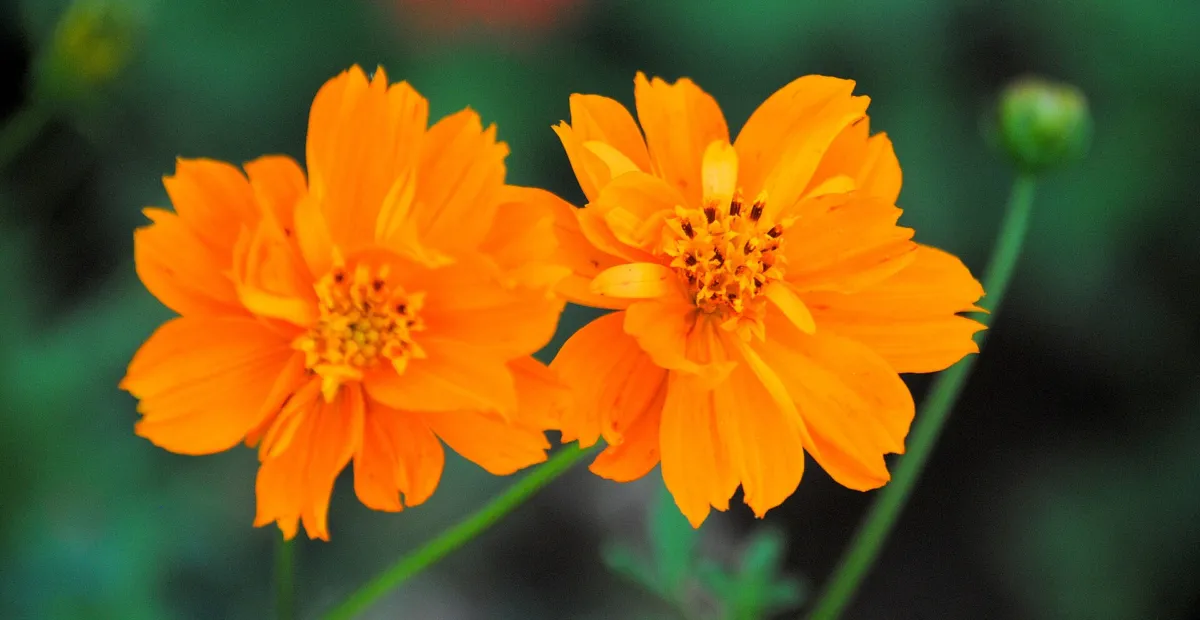
The plant has slender, branching, usually smooth to sparsely hairy stems and opposite, finely divided leaves with narrow lobes. Long peduncles carry open terminal flower heads. Yellow discs contrast with yellow, orange, scarlet, or reddish-yellow rays, making the species distinct from pink- and white-flowered garden cosmos.
Flowering
Flower heads are produced singly on long, slender stalks and combine a yellow central disc with surrounding ray florets. Depending on the population or cultivar, rays may be yellow, orange, scarlet, or reddish yellow. In much of the United States, flowering begins in summer and continues until frost, especially when spent flowers are removed or plants self-seed.
Pollination and visitors
Open flower heads provide accessible floral resources for bees, including honeybees, solitary bees, and carpenter bees, as well as butterflies and other visiting insects. Research documents both nectar and pollen collection. Visitor abundance will depend on local insect communities and weather.
Cosmos sulphureus photos
Click any photo for a larger view. Source, author and license are shown separately.
Diseases and pests
Diseases
Watch for powdery mildew, leaf spots, bacterial wilt, and stem or plant cankers, especially where foliage stays crowded or wet. Provide sun, air movement, and well-drained soil; remove badly affected plants and avoid overhead irrigation. Most problems are occasional rather than persistent.
Pests
Aphids are the most commonly noted pest. Inspect shoot tips and flower stems, encourage beneficial insects, and use a strong water spray for light infestations. Avoid unnecessary broad-spectrum insecticides during bloom. Crowded, stressed plants may also attract additional sap-feeding insects.
Related diseases and pests
Only Plant Doctor profiles whose host data indicate this plant may be affected are shown here.
 DiseaseAster yellows‘Candidatus Phytoplasma asteris’
 DiseaseSouthern blightAthelia rolfsii
 DiseaseBacterial WiltRalstonia solanacearum species complex
 DiseaseMaple powdery mildewSawadaea bicornis
 DiseaseBacterial blight and cankerPseudomonas syringae pv. syringae
 DiseaseBacterial Canker of Stone FruitsPseudomonas syringae pv. morsprunorum
 DiseaseCucurbit Powdery MildewPodosphaera xanthii (Castagne) U. Braun & Shishkoff
 DiseaseRose powdery mildewPodosphaera pannosa
Toxicity and pollen
No strong authoritative evidence was found establishing Cosmos sulphureus as poisonous to people, dogs, or cats. The plant is nevertheless not a confirmed edible garden crop in this profile; discourage consumption of ornamental plants treated with pesticides, and seek medical or veterinary advice after a substantial or symptomatic ingestion.
- Typical season
- Usually summer to fall in the United States
- Pollination / pollen
- Exposed insect-presented pollen
The species produces pollen in its exposed central disc florets, but reliable United States-specific clinical evidence for significant airborne allergy risk was not located. Because insect visitors commonly collect the pollen, exposure is generally more localized than with strongly wind-pollinated plants, but sensitive individuals may still react.
Native habitat
In its native range, Cosmos sulphureus occurs in warm, seasonally dry tropical and subtropical environments, including disturbed ground, fields, and open vegetation. It favors sun and soils that drain readily, and it can appear as an escape from cultivation outside its native range.
Interesting fact
The species is native from Mexico through Central America and is widely cultivated elsewhere. Its flower heads have historically supplied yellow to orange dye. Shorter days can promote flowering, while rich soil may produce floppy plants with fewer blooms.
Frequently asked questions (FAQ)
The most relevant questions about this plant, with short and direct answers.
🌱Quick care
Is Cosmos sulphureus easy to grow?⌄
Yes, Cosmos sulphureus is an easy-care annual that grows quickly from seed. It performs best with full sun, well-drained soil, moderate water while young, and little or no fertilizer.
Is Cosmos sulphureus an annual or perennial?⌄
Cosmos sulphureus is usually grown as a frost-tender annual in the United States. The plant dies after a hard freeze, but it may return from self-sown seed in suitable gardens.
How much sun does Cosmos sulphureus need?⌄
Cosmos sulphureus needs full sun, ideally at least 6 hours of direct light daily. More sun generally produces sturdier plants and better flowering.
How often should I water Cosmos sulphureus?⌄
Water Cosmos sulphureus moderately while seedlings establish, then reduce watering and allow the soil to dry somewhat between deep waterings. Avoid constantly wet soil, which can encourage weak growth and root problems.
🌤️Environment and placement
What kind of soil is best for Cosmos sulphureus?⌄
Use well-drained, lean to average soil for Cosmos sulphureus. It tolerates relatively poor soil, while excessively rich soil can produce tall, floppy plants with fewer flowers.
Can Cosmos sulphureus tolerate drought?⌄
Established Cosmos sulphureus has good drought tolerance and usually needs only occasional deep watering. Water more during prolonged heat, drought, or container growing.
Can Cosmos sulphureus grow in partial shade?⌄
Cosmos sulphureus can survive with some afternoon shade, but full sun is preferable. Insufficient light may cause lanky growth and fewer flowers.
Can Cosmos sulphureus grow in containers?⌄
Yes, Cosmos sulphureus grows well in containers that have drainage holes and enough room for its roots. Choose a sunny location and avoid overly rich potting mix or frequent fertilizing, which can encourage flopping.
How much space does Cosmos sulphureus need?⌄
Space Cosmos sulphureus about 12 to 24 inches apart, depending on the variety and desired effect. Closer spacing can help plants support one another, while wider spacing improves air circulation.
💧Care and problems
Does Cosmos sulphureus need fertilizer?⌄
Usually, Cosmos sulphureus does not need fertilizer when grown in average soil. High-nitrogen fertilizer and heavily amended soil can cause excessive leafy growth, weak stems, delayed flowering, and flopping.
Why is my Cosmos sulphureus tall and floppy?⌄
Cosmos sulphureus commonly becomes floppy when it receives too little sun, grows in rich soil, or is exposed to wind and heavy rain. Provide full sun, avoid excess fertilizer, space plants properly, and stake tall varieties if needed.
Should I deadhead Cosmos sulphureus?⌄
Yes, removing faded flowers from Cosmos sulphureus can prolong blooming and reduce unwanted reseeding. Stop deadheading near the end of the season if you want the plant to produce seed.
Can I cut back Cosmos sulphureus to make it bloom again?⌄
Yes, cutting back an overgrown Cosmos sulphureus to about 12 to 18 inches can encourage fresh branching and another flush of flowers. Keep the plant watered during recovery, but avoid heavy fertilizer.
What pests commonly affect Cosmos sulphureus?⌄
Aphids, Japanese beetles, and slugs may occasionally affect Cosmos sulphureus. Healthy plants usually tolerate minor damage, so monitor regularly and use the least disruptive control appropriate for the problem.
What diseases affect Cosmos sulphureus?⌄
Cosmos sulphureus generally has few serious disease problems, but bacterial wilt, canker, gray mold, or other issues can occur in stressful or excessively wet conditions. Improve drainage, provide air circulation, and remove severely diseased plants.
🪴Planting and repotting
When should I plant Cosmos sulphureus seeds outdoors?⌄
Sow Cosmos sulphureus outdoors after the danger of frost has passed and the soil has warmed to about 65°F. In much of the United States, this means waiting until late spring, with timing adjusted for local frost dates.
How deep should Cosmos sulphureus seeds be planted?⌄
Plant Cosmos sulphureus seeds on the soil surface or cover them only lightly, about 1/8 inch deep. Seeds planted too deeply may germinate poorly because they need light and easy access to the surface.
How long do Cosmos sulphureus seeds take to germinate?⌄
Cosmos sulphureus seeds commonly germinate in about 7 to 21 days when the soil is warm and kept lightly moist. Germination is slower or less reliable in cold, waterlogged soil.
Can I start Cosmos sulphureus indoors?⌄
Yes, start Cosmos sulphureus indoors about 4 to 6 weeks before the expected last spring frost. Transplant carefully after hardening seedlings off, because direct sowing usually causes less root disturbance.
✂️Propagation and pruning
How do I propagate Cosmos sulphureus?⌄
Propagate Cosmos sulphureus primarily by seed. Sow fresh or properly stored seed directly outdoors after frost, or start it indoors in individual cells several weeks before planting out.
How do I collect Cosmos sulphureus seeds?⌄
Allow Cosmos sulphureus flower heads to dry on the plant, then collect the mature seeds before they drop. Store completely dry seeds in a labeled paper envelope in a cool, dry place.
Does Cosmos sulphureus self-seed?⌄
Yes, Cosmos sulphureus can self-seed readily in warm climates and favorable garden conditions. Remove spent flower heads before seeds mature if you want to limit volunteer seedlings, and avoid encouraging it near sensitive natural areas.
Can Cosmos sulphureus survive winter indoors?⌄
Cosmos sulphureus is generally not worth overwintering indoors because it is grown as a tender annual and needs strong light. Saving seed and resowing it the following spring is usually the more reliable approach.
⚠️Toxicity and safety
Is Cosmos sulphureus toxic to people or pets?⌄
No established toxicity is documented for Cosmos sulphureus, but it should not be intentionally eaten by people or pets. Prevent pets and children from ingesting plant material, seeds, or unknown garden plants.
Is Cosmos sulphureus invasive in the United States?⌄
Cosmos sulphureus can reseed and become weedy in some gardens, but invasive status varies by location and it is not broadly treated as invasive across the United States. Check local guidance and avoid allowing it to spread into nearby natural areas.
🌸Flowering and special interest
When does Cosmos sulphureus bloom?⌄
Cosmos sulphureus generally blooms from summer until frost, with timing influenced by sowing date, variety, heat, and local climate. Full sun and regular removal of spent flowers can help maintain flowering.
What colors do Cosmos sulphureus flowers come in?⌄
Cosmos sulphureus flowers are commonly yellow, orange, or reddish-orange, depending on the variety. Flower heads are typically daisy-like and may be single, semi-double, or double in cultivated selections.
Why is my Cosmos sulphureus not flowering?⌄
The most common causes are insufficient sun, excessive fertilizer, overly rich soil, or immature plants. Move container plants to full sun, avoid high-nitrogen feeding, and allow time for flowering as the season progresses.
Does Cosmos sulphureus attract pollinators?⌄
Yes, Cosmos sulphureus attracts bees, butterflies, and other pollinating insects with its open flowers. Growing it without unnecessary insecticides provides the greatest benefit to visiting pollinators.
Is Cosmos sulphureus good for cut flowers?⌄
Yes, Cosmos sulphureus is useful as a cut flower, especially when stems are harvested as the blooms open. Regular cutting can encourage the plant to produce additional stems and flowers.
Similar plants
 Azure Monkshood (Aconitum carmichaelii) care guideAconitum carmichaelii
 Monkshood (Aconitum ‘Stainless Steel’)Aconitum 'Stainless Steel'
 Monkshood (Aconitum ‘Bressingham Spire’)Aconitum 'Bressingham Spire'
 Golden full moon maple (Acer shirasawanum ‘Aureum’)Acer shirasawanum 'Aureum'
 Globosum (Acer platanoides ‘Globosum’)Acer platanoides 'Globosum'
 Striped maple (Acer pensylvanicum) care guideAcer pensylvanicum