
 Source:
 Citrus Green Mold
Penicillium digitatum (Pers.) Sacc.Citrus Green Mold overview
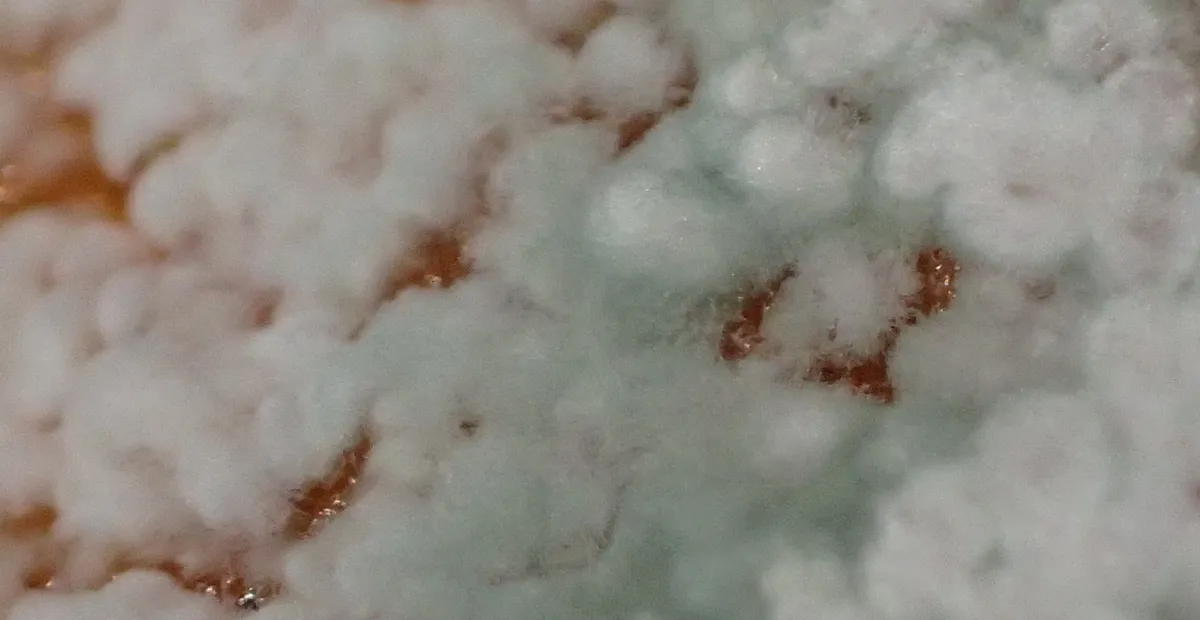
Citrus green mold is a destructive postharvest fruit rot caused by the fungus Penicillium digitatum. Infection usually begins when airborne spores enter cuts, punctures, abrasions, or other injuries in the peel. A small, soft, water-soaked spot enlarges rapidly, then becomes covered with white fungal growth and dusty green spores. Careful harvesting, sanitation, rapid cooling, and removal of decayed fruit are central to management.
Typical conditions
Overview
Citrus green mold is caused by Penicillium digitatum, an important postharvest pathogen of citrus in the United States and worldwide. It is especially damaging during harvesting, packing, shipping, retail handling, and home storage. The disease is most often seen on oranges, lemons, mandarins, and related citrus fruit.
Early infections may be mistaken for mechanical damage because the first visible sign is a circular, soft, water-soaked or slightly sunken area in the rind. Under favorable conditions, the lesion expands quickly and becomes covered with white fungal growth, followed by abundant dusty green spores. Green mold and blue mold caused by P. italicum may occur together, but their spore colors and disease progression differ.
Symptoms and identification
- Small circular, soft, water-soaked or translucent spots on the peel, often centered on a wound.
- Rapid enlargement of the lesion and watery, soft decay of the rind and underlying fruit.
- White cottony mycelium appears first, followed by a dense green layer of conidia.
- Advanced fruit may collapse, develop an unpleasant or musty odor, and contaminate neighboring fruit and containers with spores.
- Symptoms are usually most conspicuous after harvest, although injured fruit can decay on the tree.
Green mold is distinguished from blue mold primarily by the mature green spore mass; laboratory examination may be needed when symptoms are young, mixed, or atypical.
Causes and spread
Penicillium digitatum produces large numbers of airborne spores that are common in citrus orchards, packinghouses, storage areas, containers, and discarded fruit. Spores generally require an injury to penetrate the peel. Harvest cuts, punctures, abrasions, thorn scratches, stem removal, impact bruises, frost injury, and rough grading or packing create infection sites.
Spread is favored when decayed fruit remains in bins, cartons, picking bags, packing equipment, or storage rooms. Direct contact between rotting and healthy fruit can transfer spores, particularly when healthy fruit has small injuries. Poor sanitation, prolonged wetness, warm handling conditions, and delayed cooling increase losses.
Life cycle and persistence
The pathogen survives and sporulates on infected citrus fruit and other decaying organic material. Airborne conidia land on fruit surfaces and germinate when moisture and temperature are suitable. They usually penetrate through fresh wounds rather than intact, healthy peel. After colonizing the wound, the fungus secretes enzymes that break down rind and fruit tissues, producing soft watery decay.
White mycelium develops on the lesion surface, then produces the characteristic green conidia. These spores are readily dispersed by air movement, handling, vibration, splashing, insects, and contact with adjacent fruit. Wound healing can reduce susceptibility, but it does not eliminate risk when injuries are severe or fruit are infected soon after damage.
Treatment and control
Discard fruit with established soft decay and visible green sporulation; do not place it in a compost pile intended for use around citrus unless the composting process is reliably hot and managed. Handle affected fruit carefully because disturbing spore masses can spread contamination. Clean and sanitize reusable containers, tools, shelves, and storage surfaces after removing diseased fruit.
For small household quantities, prioritize sound fruit selection, dry handling, prompt refrigeration appropriate to the citrus type, and frequent inspection. Once a lesion is soft and actively sporulating, cutting away the affected area is not a dependable rescue method because decay may extend beneath apparently healthy peel.
Commercial operations may combine injury reduction, sanitation, curing or conditioning, temperature management, and legally registered postharvest treatments. Treatment timing and efficacy depend on citrus species, cultivar, harvest condition, storage temperature, and local regulations.
Low-impact and biological control
Nonchemical and lower-risk measures are the foundation of management. Remove and destroy decayed fruit, sanitize equipment, minimize peel injuries, and improve temperature and humidity management. Research has supported the use of sodium bicarbonate or carbonate-based postharvest treatments in some citrus systems, but results depend on concentration, water quality, fruit condition, application method, and crop safety.
Biological control organisms, including selected yeasts and bacteria, have shown potential against P. digitatum in research and commercial postharvest settings. Use only products that are currently labeled and legally permitted for the specific citrus crop and use pattern in the United States. Biological treatments work best as part of an integrated program and are not a substitute for sanitation or careful handling.
Prevention
- Harvest gently and avoid dropping, squeezing, scraping, or pulling fruit from the tree.
- Keep fingernails, clippers, picking bags, bins, cartons, and packing surfaces clean and in good repair.
- Remove visibly decayed fruit promptly from trees, harvest containers, storage areas, and cull piles.
- Separate injured, overripe, or suspect fruit from sound fruit before storage.
- Cool and store fruit promptly at a temperature appropriate for the citrus type, while avoiding condensation and prolonged free water on the peel.
- Use clean water and properly managed sanitation in commercial washing and packing systems.
- Reduce thorn damage, insect injury, frost injury, and other field conditions that create peel wounds.
Interesting facts
- The green color is produced by masses of asexual spores, not by a change in the citrus peel itself.
- P. digitatum is strongly associated with citrus fruit and is particularly important as a postharvest pathogen.
- Green mold usually needs a wound, which makes harvesting and packing practices major determinants of disease incidence.
- Blue mold of citrus, caused by Penicillium italicum, often occurs alongside green mold but develops blue rather than green spores.
- Resistance to some postharvest fungicides has been documented in citrus populations, making sanitation, treatment rotation, and integrated management important.
Only use fungicides, sanitizers, or postharvest treatments that are legally authorized and currently labeled for the specific citrus crop, site, application method, and disease in your state or country. Follow the current label exactly, including rates, worker-protection requirements, preharvest or postharvest intervals, residue restrictions, and resistance-management directions. Do not assume that a product registered on one citrus crop, in another state, or for another Penicillium disease is legal or effective for this use. Rotate labeled modes of action when appropriate and rely first on sanitation, injury prevention, and temperature management.