Take-All Root Rot
Gaeumannomyces graminis group; wheat take-all is commonly associated with Gaeumannomyces graminis var. tritici, also treated in current taxonomy as Gaeumannomyces triticiTake-All Root Rot overview
Take-all root rot is a soilborne disease of grasses and cereal crops caused by members of the Gaeumannomyces graminis group. In the United States, the wheat-associated form is most often linked with G. graminis var. tritici, now frequently treated taxonomically as Gaeumannomyces tritici. Infected roots turn dark and decay, restricting water and nutrient uptake and sometimes producing stunted plants, dying tillers, and premature whiteheads.
Typical conditions
Overview
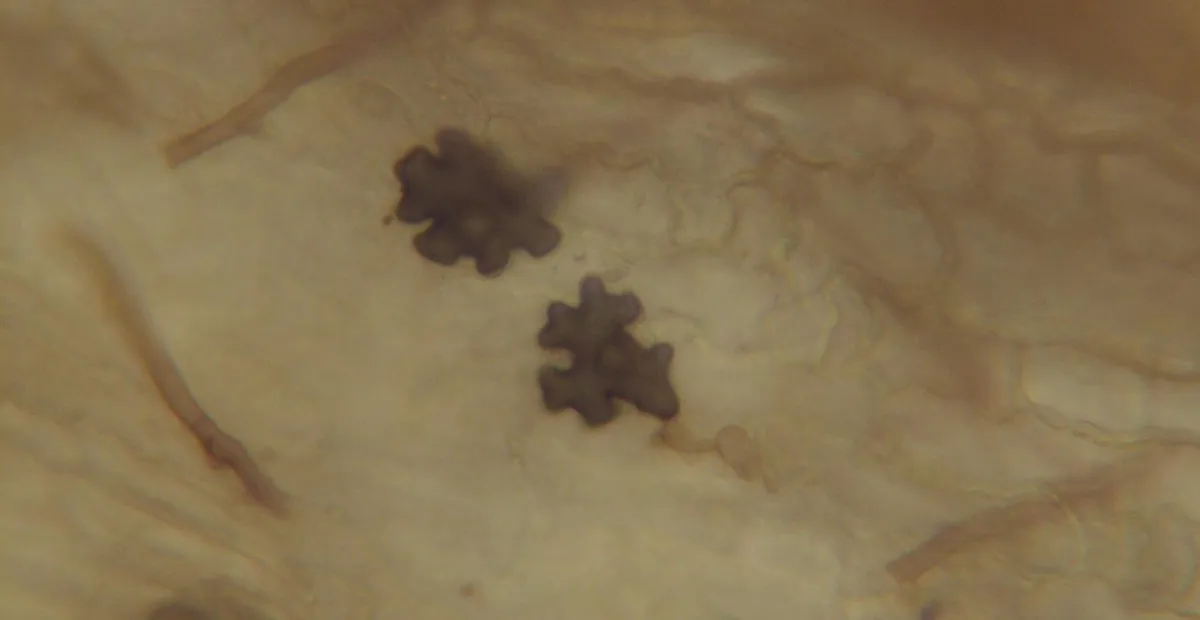
Take-all root rot attacks roots, crowns, and sometimes lower stem tissues of grasses. The fungus grows externally along roots as dark runner hyphae, forms specialized attachment structures called hyphopodia, and then colonizes internal root tissues. Damaged roots lose their ability to absorb water and nutrients, causing uneven patches, stunting, yellowing, poor tillering, premature maturity, and yield loss.
In U.S. wheat production, the wheat-associated form is particularly important in the Pacific Northwest and can also occur in other cereal-growing regions, including the Southeast. The name Gaeumannomyces graminis covers a group of closely related, host-associated forms, so host range and symptom expression vary by lineage.
Symptoms and identification
- Roots become brown to black, brittle, shortened, and rotted; severe infections may leave a thin, dark “rat-tail” root system.
- Dark discoloration may extend into the crown and lower stem base.
- Aboveground symptoms include pale or yellow foliage, weak growth, reduced tillering, and stunting.
- Diseased areas commonly appear as irregular patches that expand through a field or turf stand.
- Severely infected cereal plants may ripen prematurely and produce bleached heads or “whiteheads” containing shriveled grain or little grain.
- Symptoms can be confused with Fusarium, Pythium, Rhizoctonia, nematode injury, drought, nutrient stress, or other crown and root diseases; inspect roots and crowns rather than diagnosing from leaf color alone.
Causes and spread
The pathogen survives mainly as mycelium in infected roots, crowns, and cereal residue, and in roots of susceptible volunteer cereals or grass weeds. Primary infection occurs when susceptible roots contact infested soil or infected residue. Dark hyphae then grow from root to root, especially when soil moisture is adequate. Infested soil and residue can be moved by tillage, planters, harvest equipment, vehicles, animals, irrigation water, runoff, and contaminated footwear.
Continuous or closely repeated cereal production increases inoculum. Grass weeds and volunteer cereals can bridge rotations by maintaining living roots between crops. Seed transmission is not usually the main route of spread, although contaminated soil and residue associated with seed lots or equipment can contribute locally.
Life cycle and persistence
The fungus persists between crops in infected root and crown debris and in living roots of susceptible grasses. When new cereal or grass roots grow near inoculum, runner hyphae develop over the root surface and attach with hyphopodia. The pathogen penetrates the root, colonizes the cortex and vascular-associated tissues, and progressively destroys the root system.
Secondary spread occurs directly from infected roots to nearby roots. As the season advances, infection may move toward crown roots and stem bases. Warm, moist soil generally favors disease development; activity is commonly reported when soil temperatures are above approximately 50–54°F (10–12°C). Sexual fruiting bodies may form under some conditions, but they are generally less important than mycelium in disease development and field spread.
Treatment and control
There is no dependable curative treatment for plants already showing severe root and crown damage. Remove or isolate affected turf plants when feasible, correct drainage problems, and avoid moving infested soil to healthy areas. In cereal fields, management is primarily preventive and begins with rotation, volunteer-grass control, cultivar selection, residue and equipment sanitation, and balanced crop nutrition.
Where take-all is suspected, examine several plants from healthy, advancing-edge, and severely affected areas. Wash roots gently and compare root color, crown integrity, and root loss. Submit representative samples to a university or commercial plant diagnostic laboratory when the result will influence rotation or replanting decisions. Fungicide seed treatments or other registered products may provide variable, crop- and region-dependent suppression but should not be expected to rescue established infections.
Low-impact and biological control
Integrated and biologically based management is more reliable than attempting to eradicate the pathogen. Rotate with nonhost or less-susceptible crops where agronomically suitable, remove volunteer cereals and grass weeds, improve drainage, and maintain balanced fertility. In some long-term wheat systems, naturally suppressive soils develop as beneficial rhizosphere bacteria accumulate and inhibit the pathogen; this phenomenon, called take-all decline, is valuable but unpredictable and should not be assumed to occur in every field.
Commercial microbial products, composts, or biocontrol inoculants should be used only when they are legally registered or exempt for the intended use and have credible local performance data. Avoid transporting infested soil, and clean tools and machinery between areas.
Prevention
- Use a rotation that interrupts susceptible cereal and grass hosts. Avoid planting wheat immediately after a heavily affected wheat or cereal crop when practical.
- Control volunteer wheat, barley, rye, and susceptible grass weeds during the interval between crops.
- Use locally adapted cultivars with documented relative tolerance where such information is available; resistance is partial and lineage-specific rather than absolute.
- Maintain balanced fertility, especially adequate nitrogen based on soil testing, while avoiding excessive fertilizer applications.
- Improve drainage and avoid unnecessary irrigation or prolonged soil saturation.
- Clean soil and residue from tillage, planting, harvesting, and mowing equipment before moving from infested areas to clean fields.
- Use certified, clean planting material and inspect cereal stands early, particularly in fields with a history of take-all.
- Do not rely on soil solarization or residue burning as routine controls in field-scale U.S. cereal production; these approaches have limited practicality and may create environmental or regulatory concerns.
Interesting facts
- Take-all is one of the classic examples of disease-suppressive soil and naturally occurring biological control.
- The pathogen’s dark runner hyphae can grow along the outside of roots and bridge directly to neighboring roots.
- “Whiteheads” are not a primary leaf symptom; they result when severe root and crown damage prevents adequate water and nutrient uptake during grain filling.
- The broad name Gaeumannomyces graminis has historically included several host-associated varieties or forms, and modern taxonomic treatments may use separate species names such as Gaeumannomyces tritici.
- Oat susceptibility depends on the pathogen lineage: some take-all forms are associated mainly with wheat, while other forms affect oats and grasses.
Do not use a pesticide solely from this diagnosis. In the United States, use only products legally authorized for the specific crop, site, pathogen, and application method in your state, and follow the current EPA-approved label and all state requirements. Because established take-all infections are difficult to cure and product performance varies by crop and region, prioritize rotation, sanitation, host management, drainage, and other integrated practices. Confirm current labels through the product label and state extension or regulatory resources before application.
Affected plants
The plants below are linked to this problem by structured host-plant data. The list updates automatically as new plant profiles are added.