
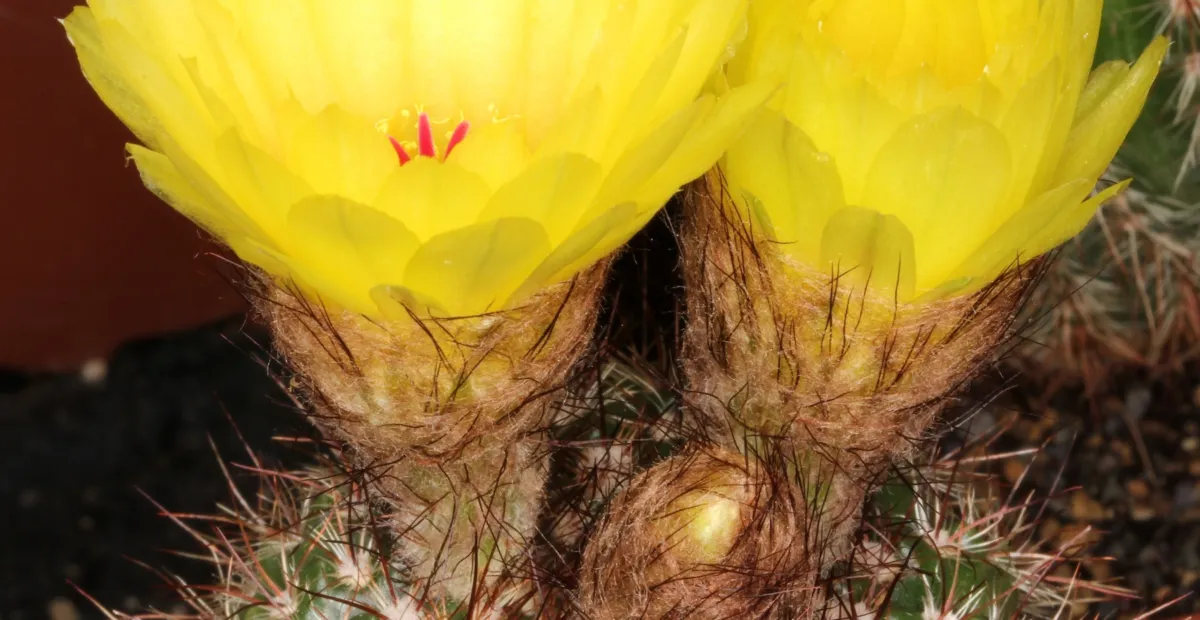
 Source:
 Parodia werdermanniana short overview
Parodia werdermanniana is a small, globose cactus native to rocky areas of southern Brazil and Uruguay. Its ribbed green stem is covered with fine spines, while the woolly crown can produce colorful funnel-shaped flowers in cultivation. Give it strong light, a gritty cactus mix, and thorough but infrequent watering. Keep the pot almost dry in winter and protect the plant from frost, cold rain, and poorly drained soil.
Taxonomic classification
Parodia werdermanniana care guide
Light and placement
Provide several hours of strong direct light, ideally near a south- or southeast-facing window, or use bright filtered light behind glass during the hottest part of summer. Acclimate gradually to intense sun. Too little light causes pale, stretched growth and weak spines; sudden intense exposure can scorch the stem.
Watering and humidity
Water thoroughly only after the mix has dried completely, allowing excess water to drain away. During active growth, the interval may be shorter in bright, warm conditions; reduce sharply in fall and keep nearly dry during a cool winter rest. Never water on a fixed schedule if the substrate remains damp, and avoid wetting the crown in cool weather.
Soil and growing medium
Use a very porous cactus substrate dominated by mineral components such as pumice, grit, coarse sand, or crushed rock, with only a modest organic fraction. The container must drain freely and never sit in a saucer of water. A mildly acidic to near-neutral mix is suitable; avoid heavy, water-retentive garden soil.
Feeding
Feed only during active growth, typically in spring and summer, using a balanced or low-nitrogen cactus fertilizer diluted to about one-quarter to one-half of the label rate. Apply to already moist soil and do not fertilize a stressed, dormant, recently repotted, or winter-dry plant.
Growth and habit
A slow-growing, compact cactus that generally remains solitary or may form offsets with age. Strong light and a pronounced dry winter rest help maintain firm growth and support flowering. Excess water, shade, or rich soil can produce weak, elongated tissue and increase rot risk.
Planting and repotting
Plant outdoors only in a frost-free, sharply drained site or keep it in a container. Set the stem at the same depth as before and keep the root collar above surrounding soil. Establish with restrained watering after roots have recovered; protect from prolonged rain during cool weather.
Repot in spring or early summer, preferably when new growth is beginning. Handle with thick gloves or folded newspaper, remove damaged roots, and use a pot only slightly larger than the root system. Let any disturbed roots dry for several days before the first light watering.
Propagation and pruning
Propagation
Propagate from seed in warm, bright conditions using a sterile, gritty medium; keep seedlings lightly and evenly moist until established, then gradually increase drying intervals. Offsets may be separated when present, allowing cut surfaces to dry before planting. Species-specific propagation difficulty is moderately documented.
Pruning
No routine pruning is required. Remove only dead, damaged, or rotting tissue with a sterile blade, then keep the wound dry until fully callused. Handle carefully because the spines can cause punctures.
Overwintering
Keep frost-free, bright, and cool-to-moderate in winter. Reduce watering to a minimum once growth slows, and keep the substrate dry during cold spells. In the United States, container plants outside USDA Zone 10b should generally be overwintered indoors or in a protected greenhouse.
Uses
Primarily an ornamental collector’s cactus for containers, greenhouse benches, windowsills, and protected rock-garden displays. Its small scale and architectural spines suit mineral-style succulent plantings. Do not present it as edible, medicinal, or safe for unsupervised handling.
Appearance
The plant has a compact, globose to short cylindrical green stem divided into many ribs and areoles. Fine spines cover the areoles, and the crown may be woolly. It is identified horticulturally by its small rounded body, ribbed surface, spine pattern, and crown-borne flowers.
Flowering
This species has funnel-shaped flowers produced near the crown, with documented flowers showing pink to reddish inner tepals and a pale base. Flowering is most likely from a mature, well-lit plant after a cool, dry rest, but an exact United States flowering calendar is not reliably documented for this species.
Pollination and visitors
Animal pollinators or flower visitors have not been reliably documented for this exact species in the sources reviewed, so no visitor group is assigned.
Diseases and pests
Diseases
The main risk is root or stem rot caused by persistently wet media, especially in cool conditions. Use a porous mix, disinfect tools, remove soft tissue promptly, and improve ventilation. Isolate affected plants and repot only after cutting away all diseased roots or tissue.
Pests
Watch for mealybugs, scale, and spider mites, especially on indoor plants or in crowded collections. Inspect the crown, areoles, and roots during repotting. Remove isolated pests mechanically or use a labeled houseplant treatment according to its instructions; avoid unnecessary spraying in hot, bright conditions.
Related diseases and pests
Only Plant Doctor profiles whose host data indicate this plant may be affected are shown here.
 DiseaseRhizopus soft rotRhizopus stolonifer
 DiseaseBacterial soft rotPectobacterium carotovorum
 DiseaseTake-All Root RotGaeumannomyces graminis group; wheat take-all is commonly associated with Gaeumannomyces graminis var. tritici, also treated in current taxonomy as Gaeumannomyces tritici
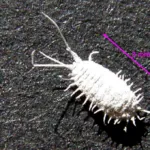 PestObscure mealybugPseudococcus viburni
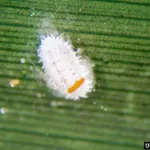 PestCitrus mealybugPlanococcus citri
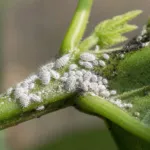 PestCotton mealybugPhenacoccus solenopsis Tinsley
Toxicity and pollen
No authoritative species-specific toxicity assessment was located. The plant should not be treated as edible or medicinal. The principal established hazard is mechanical injury from spines; keep it away from children and pets and seek medical advice for embedded spines or unusual reactions.
- Pollination / pollen
- Pollen produced within insect-associated flowers; airborne relevance not established
Species-specific airborne-pollen and allergy studies were not located. As a cactus with conspicuous flowers, pollen exposure is likely limited compared with strongly wind-pollinated plants, but that is not sufficient to classify allergy risk as zero. Avoid handling flowers if a personal sensitivity is known.
Native habitat
Kew records the species from southern Brazil and Uruguay, where it grows in subtropical environments. Additional habitat accounts describe open, rocky or sandstone-associated sites. These conditions indicate strong drainage, periodic drought, and exposure to bright light rather than dense, humid forest conditions.
Interesting fact
Kew treats this name as an accepted species in Parodia. It was originally described under Notocactus werdermannianus. The documented native range extends from southern Brazil to Uruguay, and plants occur in rocky, open subtropical settings.
Frequently asked questions (FAQ)
The most relevant questions about this plant, with short and direct answers.
🌱Quick care
What is Parodia werdermanniana?⌄
Parodia werdermanniana is a small, ribbed cactus in the Cactaceae family, native to southern Brazil and Uruguay. It is often encountered under older names such as Notocactus werdermannianus.
How much light does Parodia werdermanniana need?⌄
Give Parodia werdermanniana bright sun to bright filtered light. Indoors, place it near a sunny south- or west-facing window, while acclimating it gradually to stronger outdoor sun.
How often should I water Parodia werdermanniana?⌄
Water Parodia werdermanniana only after its potting mix has dried fully. During winter dormancy, water sparingly or not at all if the plant is kept cool.
Is Parodia werdermanniana easy to grow?⌄
Parodia werdermanniana is generally manageable for cactus growers when it receives strong light, fast drainage, and a dry rest period. Overwatering and poor air circulation are the main avoidable problems.
🌤️Environment and placement
Can Parodia werdermanniana grow outdoors in the United States?⌄
Parodia werdermanniana can grow outdoors year-round only in frost-free parts of the United States. Elsewhere, grow it in a container and move it under cover before freezing weather.
What USDA hardiness zone is suitable for Parodia werdermanniana?⌄
Parodia werdermanniana is best treated as a frost-tender cactus rather than assigned a dependable outdoor hardiness zone. In most U.S. gardens, protect it from temperatures near or below 32°F.
Can Parodia werdermanniana tolerate frost?⌄
No, Parodia werdermanniana should be protected from frost and freezing temperatures. Cold combined with wet soil can cause rapid, irreversible rot.
Should Parodia werdermanniana be grown indoors or outdoors?⌄
It can be grown either indoors or outdoors, provided it receives very bright light and excellent drainage. Outdoor plants need shelter from prolonged rain, frost, and sudden exposure to intense sun.
What temperature does Parodia werdermanniana prefer?⌄
Parodia werdermanniana prefers warm growing conditions and a cooler, dry winter rest. Keep it above freezing and avoid placing it against a cold window or near a heat source.
Does Parodia werdermanniana need humidity?⌄
Parodia werdermanniana does not need high humidity and usually performs better with good air movement. Avoid enclosed, damp conditions, especially when the potting mix is wet.
💧Care and problems
Why is my Parodia werdermanniana turning soft?⌄
Softness usually indicates excess moisture, root damage, or rot rather than thirst. Remove it from the pot, inspect the roots and base, and keep any healthy tissue dry while correcting the drainage problem.
Why is Parodia werdermanniana turning yellow?⌄
Yellowing can result from overwatering, root stress, intense sun after sudden exposure, or natural aging. Check the roots and soil moisture before increasing water, because additional watering can worsen the problem.
Why is my Parodia werdermanniana stretching?⌄
Stretching or a narrow, pale shape usually means insufficient light. Move it gradually into brighter light rather than exposing a shade-grown plant to full sun all at once.
What causes brown spots on Parodia werdermanniana?⌄
Brown spots may be caused by sunburn, physical injury, corking, pests, or fungal damage. A dry, firm spot that does not spread is less concerning than a soft or expanding lesion.
How do I prevent root rot in Parodia werdermanniana?⌄
Prevent root rot by using a gritty, sharply drained cactus mix, a pot with a drainage hole, and thorough watering followed by complete drying. Do not leave the container standing in water.
Can I water Parodia werdermanniana from the bottom?⌄
Bottom-watering is possible, but the pot must be removed once the mix is evenly moistened and allowed to drain completely. Do not use it as a way to keep the soil constantly damp.
Does Parodia werdermanniana need fertilizer?⌄
It can benefit from a light feeding during active growth, but fertilizer is not essential if the plant is potted in a suitable cactus mix. Use a diluted, low-nitrogen cactus fertilizer and avoid feeding during winter rest.
What pests attack Parodia werdermanniana?⌄
Common cactus pests such as mealybugs, scale, and spider mites can affect Parodia werdermanniana. Inspect the areoles, spines, roots, and pot rim regularly, especially on indoor plants.
🪴Planting and repotting
What soil is best for Parodia werdermanniana?⌄
Use a gritty, sharply drained cactus mix with substantial mineral material such as pumice, perlite, coarse sand, or fine gravel. The mix should drain quickly and not remain wet for long periods.
What type of pot is best for Parodia werdermanniana?⌄
Choose a pot with a drainage hole that is only slightly larger than the root system. Unglazed clay can help the mix dry faster, but any well-drained container is suitable with careful watering.
When should I repot Parodia werdermanniana?⌄
Repot Parodia werdermanniana in spring or early summer when it is beginning active growth. Repot sooner if the soil stays wet, roots fill the container, or the plant shows signs of root disease.
How do I repot Parodia werdermanniana safely?⌄
Allow the soil to dry, remove the plant carefully, and inspect the roots before placing it in fresh dry cactus mix. Wait several days before watering so damaged roots can recover.
How deep should Parodia werdermanniana be planted?⌄
Plant Parodia werdermanniana at the same depth it was previously growing, keeping the stem base above the soil line. Burying the lower body can trap moisture and encourage rot.
✂️Propagation and pruning
How is Parodia werdermanniana propagated?⌄
Propagation is primarily by seed because plants are commonly solitary and do not reliably produce offsets. Sow fresh seed in a sterile, well-drained medium and provide warmth, light, and controlled moisture.
Can Parodia werdermanniana be grown from cuttings?⌄
Cuttings are not usually the practical propagation method for Parodia werdermanniana because it is generally a solitary, rounded cactus. Seed propagation is the more appropriate approach unless a damaged plant produces a suitable piece.
Does Parodia werdermanniana produce offsets?⌄
Parodia werdermanniana is usually solitary, so offsets are not expected as a regular means of propagation. An occasional offset may occur, but it should not be assumed that every plant will produce one.
Should I prune Parodia werdermanniana?⌄
Routine pruning is unnecessary for Parodia werdermanniana. Remove only dead, diseased, or severely damaged tissue with a sterile tool, and keep the wound dry until it has sealed.
⚠️Toxicity and safety
Is Parodia werdermanniana toxic to cats or dogs?⌄
No species-specific toxicity classification is established for Parodia werdermanniana. Nevertheless, its spines can injure pets or people, so keep it out of reach and do not allow chewing.
Is Parodia werdermanniana safe to handle?⌄
Parodia werdermanniana is not considered dangerous because of known toxins, but its spines can puncture skin. Handle it with thick gloves, folded cardboard, or cactus tongs.
🌸Flowering and special interest
Does Parodia werdermanniana flower?⌄
Yes, mature Parodia werdermanniana can produce large yellow to sulfur-yellow flowers near the crown. Flowering is more likely when the plant receives strong light and a cool, dry winter rest.
When does Parodia werdermanniana bloom?⌄
Parodia werdermanniana commonly blooms during the warmer growing season, often in spring or summer under cultivation. The exact timing depends on light, temperature, plant maturity, and winter conditions.
Why is my Parodia werdermanniana not blooming?⌄
Insufficient light, a lack of winter rest, immature age, or excessive nitrogen can prevent flowering. Provide brighter light, keep the plant cooler and drier in winter, and avoid forcing growth with frequent watering.
How large are Parodia werdermanniana flowers?⌄
The flowers can reach roughly 2.4 inches long and about 2.8 inches across. Their bright yellow coloration can contrast strongly with the cactus’s ribbed, spiny body.
Similar plants
 Azure Monkshood (Aconitum carmichaelii) care guideAconitum carmichaelii
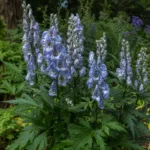 Monkshood (Aconitum ‘Stainless Steel’)Aconitum 'Stainless Steel'
 Monkshood (Aconitum ‘Bressingham Spire’)Aconitum 'Bressingham Spire'
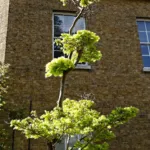 Golden full moon maple (Acer shirasawanum ‘Aureum’)Acer shirasawanum 'Aureum'
 Globosum (Acer platanoides ‘Globosum’)Acer platanoides 'Globosum'
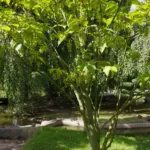 Striped maple (Acer pensylvanicum) care guideAcer pensylvanicum