
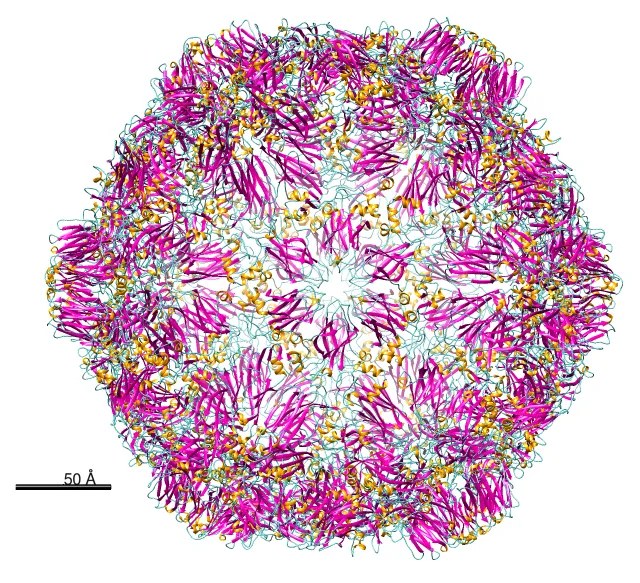
Grapevine Fanleaf Virus
Nepovirus foliumflabelli (syn. Grapevine fanleaf virus; GFLV)Grapevine Fanleaf Virus overview
Grapevine fanleaf virus causes a destructive degeneration disease of grapevines, with distorted fan-shaped leaves, yellow mosaic or vein banding, shortened internodes, poor fruit set, uneven berry development and reduced vine vigor. It spreads mainly through infected propagation material and the dagger nematode Xiphinema index, so prevention depends on clean planting stock, site testing and sanitation.
Typical conditions
Overview
Grapevine fanleaf virus causes grapevine fanleaf degeneration, one of the most damaging virus diseases of Vitis. The disease may appear as infectious malformation, yellow mosaic or vein banding. Symptoms vary with grape cultivar, virus strain, climate and mixed infections; white-fruited cultivars may show less obvious symptoms than red-fruited cultivars.
In the United States, diagnosis is especially important in vineyards established with propagation material of uncertain health status or on sites previously planted to grapes. Visual symptoms are suggestive but not definitive. Confirm suspected infections with a qualified plant diagnostic laboratory using appropriate molecular or serological testing.
Symptoms and identification
- Leaves may be asymmetric, deeply distorted and fan-shaped, with elongated marginal teeth and closely spaced main veins.
- Yellow mosaic or bright yellow chlorosis may occur across leaves or in irregular patches, often more conspicuously during cool spring weather.
- Vein banding appears as yellow to whitish discoloration along major veins, commonly becoming noticeable from early to midsummer.
- Shoots may have shortened or irregularly spaced internodes, abnormal branching, double nodes, fasciation and a clustered, bushy appearance.
- Vines may be stunted or generally weak, with reduced canopy development.
- Clusters may be small, fruit set may be poor, berries may vary greatly in size, and shot berries may be seedless or fail to ripen uniformly.
These signs overlap with other nepoviruses, grapevine leafroll and other virus complexes, herbicide injury, nutritional disorders and root problems.
Causes and spread
The causal virus is commonly introduced through infected cuttings, buds, grafts or nursery stock. The principal vector is the ectoparasitic dagger nematode Xiphinema index, which acquires virus while feeding on infected grapevine roots and transmits it during feeding on healthy roots. Virus movement is therefore strongly associated with infested vineyard soil and surviving grapevine roots.
Grafting and budding can spread the virus mechanically through infected plant tissue. Routine contact between healthy vines does not appear to be the primary field pathway. Mixed infections are common in grapevines, and symptoms attributed to fanleaf degeneration may sometimes involve additional viruses.
Life cycle and persistence
Grapevine fanleaf virus replicates systemically in infected grapevine tissues and can move into shoots, leaves, clusters and roots. Xiphinema index feeds externally on roots and can acquire the virus after a short feeding period. The virus is retained in the nematode’s feeding apparatus between feedings but is generally lost during molting and is not passed through the egg stage; each new juvenile stage must reacquire it by feeding on an infected root.
After an infected vineyard is removed, living grapevine roots can remain in soil for years and may maintain both the virus source and nematode feeding site. Consequently, replanting immediately into infested ground can allow clean vines to become infected.
Treatment and control
There is no curative treatment that eliminates grapevine fanleaf virus from an infected vine. Remove and destroy confirmed infected vines where practical, particularly in young plantings or when they are serving as sources for grafting material. Remove regrowth and as much root material as feasible to reduce persistent virus reservoirs.
Management of the site is more effective than attempting to treat individual leaves. Test soil for Xiphinema index, consult local extension or a vineyard nematology specialist, and develop a replanting plan that may include root removal, fallowing, sanitation and site-specific nematode management. Avoid propagating from symptomatic or untested vines.
Low-impact and biological control
No organic input cures an infected grapevine or reliably eradicates grapevine fanleaf virus from soil. The most useful organic and low-input measures are exclusion and sanitation: virus-tested planting stock, clean grafting tools, removal of infected vines and roots, control of volunteer grapevines, and an extended fallow period where feasible.
Cover crops and organic amendments may support soil structure and vine resilience, but they should not be represented as dependable control of Xiphinema index or GFLV. Select cover crops only with local nematology guidance, because some plants can maintain or increase nematode populations.
Prevention
- Plant only certified or otherwise documented virus-tested grapevine stock from reputable nurseries.
- Before establishing or replanting a vineyard, test soil and roots through an appropriate laboratory for dagger nematodes, especially where grapes were previously grown.
- Remove abandoned vines and excavate as many major roots as practical; control volunteer grapevine regrowth.
- Where risk is high, consider an extended fallow period after thorough vine and root removal before replanting. A longer interval is more protective than immediate replanting.
- Use clean propagation and grafting practices, disinfecting tools between lots and avoiding questionable budwood.
- Choose planting sites and rootstocks with advice from local extension specialists; tolerance to nematodes does not necessarily mean resistance to the virus.
- Monitor new plantings for recurring patterns of fanleaf distortion, yellow mosaic, vein banding and poor fruit set, and submit representative samples for confirmation.
Interesting facts
- Grapevine fanleaf disease is among the oldest recognized diseases of cultivated grapevines.
- The discovery that a nematode could transmit a plant virus was a landmark in plant pathology.
- The virus is carried at the nematode’s feeding apparatus rather than multiplying inside the vector.
- Symptoms may be much less obvious in warm conditions or in some white-fruited cultivars.
- Fanleaf-like symptoms can be caused by more than one virus, making laboratory confirmation important.
No pesticide cures virus-infected vines. Any soil or nematode treatment must be considered only after professional diagnosis and must use a product legally authorized for grapevines and the specific use in the United States, in the state where it will be applied. Follow the current label exactly, including crop, site, rate, worker-protection, replanting and environmental restrictions; do not use an off-label or obsolete program.