
 Source:
 Water Avens (Geum rivale) short overview
Water Avens is a distinctive moisture-loving perennial for cool, damp sites. Its nodding, bell-shaped flowers combine a maroon-purple calyx with cream to pink-purple petals, while divided dark green leaves form a low clump. Native across much of northern North America and Eurasia, it grows naturally beside streams, in wet meadows, bogs, fens and moist woods. In cultivation, it performs best where soil stays consistently moist without becoming stagnant.
Taxonomic classification
Water Avens (Geum rivale) care guide
Light and placement
Grow in full sun to partial shade, choosing morning sun or filtered light and afternoon shade in hot-summer areas. A site beside a pond, rain garden, stream or north/east-facing woodland edge is suitable. Pale, sparse growth can indicate insufficient light or fertility; scorched leaves, wilting and premature dormancy usually signal excessive heat, sun or drying soil.
Watering and humidity
Keep the root zone evenly moist to wet throughout the growing season. Water deeply when the upper surface begins to lose moisture, and do not allow containers or newly planted divisions to dry. Reduce watering only after dormancy begins, while maintaining enough moisture to prevent complete desiccation. Humidity is beneficial in cool climates, but hot, stagnant humidity can reduce performance.
Soil and growing medium
Use fertile, humus-rich soil that remains consistently moist to wet. Loam or moisture-retentive garden soil is suitable, provided the site does not become stagnant. The species is associated with circumneutral to mildly alkaline soils, although it can tolerate some acidity in wet habitats. Improve very heavy clay with organic matter rather than sharp drainage, since drying is a greater problem than excessive moisture.
Feeding
Top-dress with compost or leaf mold in spring. If growth is weak, apply a balanced, slow-release perennial fertilizer at the label rate as growth begins. Avoid heavy nitrogen feeding, which can produce soft foliage and increase disease susceptibility. Do not fertilize drought-stressed, newly divided or heat-stressed plants until they have resumed active growth.
Growth and habit
This rhizomatous perennial forms a compact clump of leafy stems and can slowly broaden when conditions remain cool and moist. It is most persistent in wet soils and may become short-lived where summers are hot, humid or drought-prone. Deadheading helps maintain a tidy planting and may extend the display, while division can rejuvenate older clumps.
Planting and repotting
Plant in spring or early fall while temperatures are moderate. Set the crown at soil level and water thoroughly after planting. Space plants about 12–18 inches apart so clumps can expand without excessive crowding. Mulch with leaf mold or compost to conserve moisture, keeping mulch off the crown. Establishment is fastest in consistently damp soil with afternoon shade in hot-summer regions.
Repot container-grown plants in early spring, before vigorous growth begins. Move the plant into a slightly larger container with moisture-retentive, humus-rich mix and reliable drainage holes. Avoid allowing the root ball to dry during or after transplanting. Because this species dislikes heat and drought, containers may need more frequent watering than plants established in the ground.
Propagation and pruning
Propagation
Sow fresh seed in containers or nursery beds, ideally in fall or after a period of cold, moist stratification. Germination may be uneven. Established clumps can also be divided in spring or early fall; replant divisions promptly and keep them evenly moist. Division is generally more predictable for maintaining a selected garden plant.
Pruning
Remove spent flowering stems after the first flush to improve appearance and potentially encourage more bloom. Cut back yellowing or frost-damaged foliage in late fall or early spring. Avoid cutting the plant to the ground during active summer growth unless foliage is severely diseased, because the leaves support recovery and flowering.
Overwintering
Plants are generally hardy outdoors in USDA Zones 3–7. In colder regions, a light mulch of leaves or compost can protect the crown after the ground begins to freeze. Container plants are more exposed to winter temperature swings; place them in a sheltered location and keep the medium slightly moist, not waterlogged. In hot climates, summer protection is more important than winter protection.
Uses
Use Water Avens in cool wet borders, bog gardens, rain gardens, pond margins, streamside plantings and moist woodland edges. Its foliage can provide useful low groundcover in places where many perennials fail because of wet soil. It is primarily an ornamental and ecological plant; historical rhizome flavor references should not be interpreted as a modern edible or medicinal-use recommendation.
Appearance
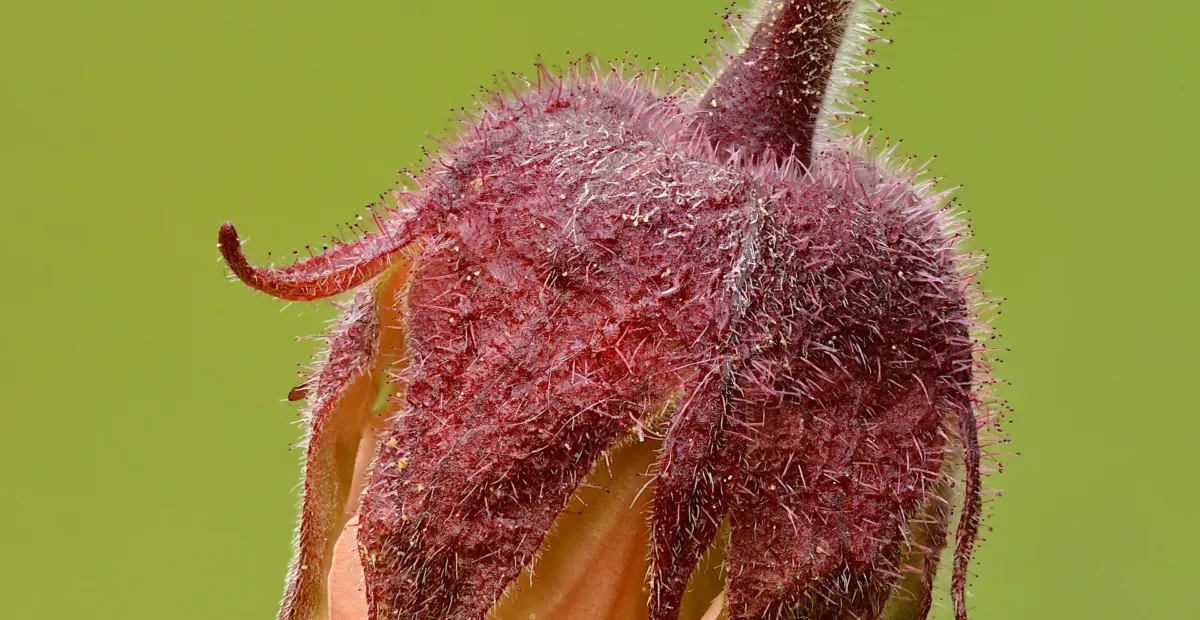
Water Avens has leafy, softly hairy stems rising from divided basal foliage. Leaves are interruptedly pinnate, with several smaller lateral leaflets and a noticeably larger terminal leaflet. Flower stalks carry nodding buds and blossoms with reddish-maroon sepals and paler, often purple-flushed petals. After flowering, hooked styles remain with the dry fruits and create a burr-like seed head.
Flowering
Flowers are borne in small, open clusters on leafy stems. The buds and blossoms nod, with a broad maroon to reddish-purple calyx surrounding five cream to yellowish petals that may be flushed or veined pink-purple. In the United States, flowering is typically concentrated from May through August, with the longest display in cool, moist conditions. Cutting back spent stems can encourage additional flowering.
Pollination and visitors
The flowers are documented as primarily bee-pollinated, with flies and beetles also reported as visitors. Their open, nodding structure exposes reproductive parts to small insects. As flowers mature, the reproductive organs can promote self-fertilization if cross-pollination has not occurred. Avoid insecticides during bloom to protect visiting insects.
Geum rivale photos
Click any photo for a larger view. Source, author and license are shown separately.
Diseases and pests
Diseases
Usually trouble-free, but prolonged humidity and poor air movement can encourage powdery mildew or downy mildew. Remove badly affected foliage, avoid overhead irrigation when practical, and provide adequate spacing. Reduce disease pressure by clearing dead leaves in autumn and avoiding excessive nitrogen. Plants may decline in hot climates or dense, poorly structured clay.
Pests
No major pest problems are consistently reported. Inspect young foliage for chewing insects, aphids or slug damage, especially in dense, wet plantings. Hand-pick slugs where practical, improve access and airflow, and remove heavily damaged leaves. Avoid routine broad-spectrum insecticides because the flowers provide resources for visiting insects.
Related diseases and pests
Only Plant Doctor profiles whose host data indicate this plant may be affected are shown here.

Toxicity and pollen
No authoritative species-specific human, dog, cat or child toxicity assessment was located in the reviewed sources. Do not treat the absence of a listing as proof of safety. Prevent ingestion of unidentified plant material, supervise children and pets around garden plants, and seek medical or veterinary advice if a substantial amount is eaten or symptoms develop.
- Typical season
- May–August
- Pollination / pollen
- Insect-dispersed pollen; airborne-allergy significance not established
Water Avens is an insect-pollinated flowering plant, but insect pollination does not demonstrate zero allergy risk. Reliable U.S.-specific airborne pollen or clinical allergy data for this species were not located. People with known plant allergies should avoid rubbing the eyes after handling flowers or foliage and should monitor their own response during bloom.
Native habitat
Native populations occur across Europe, northern and central Asia, and broad parts of Canada and the northern and north-central United States. It occupies bogs, fens, swamps, wet meadows, stream banks, lake shores, moist rich woods and other riparian or palustrine habitats. Sites are typically cool, moist and slow-draining, with soils ranging from circumneutral to mildly alkaline.
Interesting fact
The specific epithet rivale refers to streamside or brook-associated habitat. Its nodding flowers have a maroon calyx that remains visually prominent around the paler petals. The hooked styles on the achenes help the fruits attach to passing animals. Geum rivale can hybridize with the closely related Geum urbanum where their ranges overlap. Boiled rhizomes have historically been associated with a faint chocolate-like flavor, but this is not a recommendation for home use.
Frequently asked questions (FAQ)
The most relevant questions about this plant, with short and direct answers.
🌱Quick care
What is Geum rivale commonly called?⌄
Geum rivale is commonly called Water Avens in the United States. It is a clump-forming herbaceous perennial in the rose family, Rosaceae, and is also grouped with avens.
Is Water Avens perennial?⌄
Yes, Water Avens is a herbaceous perennial that returns from rhizomes each year. It typically forms a compact clump of foliage with upright flowering stems.
What USDA hardiness zones can grow Water Avens?⌄
Water Avens is generally hardy in USDA Zones 3 through 7, tolerating winter temperatures to about -40°F. In warmer areas, summer heat and humidity can be more limiting than winter cold.
🌤️Environment and placement
Does Water Avens grow in full sun or shade?⌄
Water Avens grows best in full sun to partial shade. In hot or humid climates, afternoon shade can help prevent heat stress, provided the soil remains consistently moist.
How much water does Water Avens need?⌄
Water Avens needs consistently moist to wet soil and has low drought tolerance in garden conditions. Water it whenever the surface begins to dry, especially during hot weather.
What soil is best for Geum rivale?⌄
Plant Geum rivale in moist, fertile, humus-rich soil, preferably loam or another soil with abundant organic matter. It tolerates boggy conditions but should not be placed where stagnant water completely submerges the crown.
Can Water Avens grow beside a pond or stream?⌄
Yes, Water Avens is well suited to the moist margins of ponds, streams, bog gardens, and wet meadows. Position it in damp soil near the water rather than fully underwater.
Is Water Avens native to the United States?⌄
Yes, Geum rivale is native to parts of the northern United States and Canada, including wet meadows, stream margins, swamps, and cool open woodlands. Its native range is not continuous across every U.S. region.
Can Water Avens tolerate clay soil?⌄
Water Avens can grow in heavy clay, but it may become short-lived if the clay stays compacted and poorly aerated. Improve the planting area with organic matter and avoid placing the crown in stagnant winter water.
💧Care and problems
How do you care for Water Avens?⌄
Keep Water Avens evenly moist, provide full sun or partial shade, and remove damaged or spent growth as needed. It generally needs little special care when planted in cool, fertile soil that does not dry out.
Does Water Avens need fertilizer?⌄
Water Avens usually does not need heavy fertilization when grown in fertile, humus-rich soil. A spring layer of compost is generally more appropriate than repeated applications of high-nitrogen fertilizer.
Why is my Water Avens wilting?⌄
Water Avens most often wilts because the soil is drying, the plant is exposed to excessive summer heat, or its roots are damaged. Restore consistent moisture and provide afternoon shade in hot climates, while checking that the crown is not permanently waterlogged.
What problems affect Water Avens?⌄
Water Avens has no major pest or disease problems that are consistently reported for the species. Poor performance is more commonly linked to summer heat, dry soil, compacted clay, or unsuitable winter drainage.
Is Water Avens deer resistant?⌄
Water Avens may receive some deer resistance, but it should not be considered reliably deer-proof. Deer pressure varies by location, season, and available food.
🪴Planting and repotting
When should you plant Water Avens?⌄
Plant Water Avens in spring or early fall when the soil is workable and naturally moist. Spring planting is often preferable in colder climates or areas with harsh winters.
How far apart should Water Avens be planted?⌄
Space Water Avens about 12 to 18 inches apart, adjusting for the mature clump size of the specific plant. This spacing allows the foliage to knit together without excessive crowding.
Can Water Avens be grown in containers?⌄
Yes, Water Avens can be grown in a container if the pot is large enough to support its rhizomes and the potting mix stays consistently moist. Use a container with drainage and expect to water frequently during warm weather.
✂️Propagation and pruning
How do you propagate Water Avens?⌄
Water Avens can be propagated by seed or division. Division is usually the faster way to produce established plants, while seed may require a period of cold, moist stratification for more uniform germination.
How do you divide Geum rivale?⌄
Divide Geum rivale in spring or early fall by lifting the clump and separating sections with healthy roots and rhizomes. Replant the divisions immediately at the original depth and keep them consistently moist while they establish.
How do you grow Water Avens from seed?⌄
Sow Water Avens seeds in a moist growing medium and give them cold, moist stratification before spring germination. Keep the seedbed evenly moist, and transplant seedlings after they have developed a strong root system.
Should Water Avens be deadheaded?⌄
Deadhead Water Avens to encourage additional flowering and keep the planting tidy. Leave some spent flowers if you want the ornamental fluffy seed heads or wish to allow self-seeding.
When should Water Avens be cut back?⌄
Cut Water Avens back after flowering or in late fall once the foliage has declined. In cold climates, leaving some spent stems until late winter can provide modest habitat value and protect the crown from abrupt temperature changes.
⚠️Toxicity and safety
Is Water Avens toxic to dogs, cats, or people?⌄
No reliable species-specific toxicity classification was found for Geum rivale. Because definitive safety data are limited, do not allow pets or children to ingest the plant, and contact a veterinarian or poison-control service if ingestion occurs.
🌸Flowering and special interest
When does Water Avens bloom?⌄
Water Avens generally blooms from late spring into summer, often from May through August depending on climate. The nodding flowers have purple-brown sepals and cream, pink, or purplish petals.
What do Water Avens flowers look like?⌄
Water Avens produces small, nodding, bell-shaped flowers on slender stems. The contrasting purple-brown calyx and pale pink to cream petals give the blooms a distinctive two-tone appearance.
Does Water Avens attract pollinators?⌄
Yes, Water Avens attracts bees and other insect pollinators. Its flowers are especially suitable for cool, damp wildlife gardens and native-plant plantings.
Can Water Avens bloom in shade?⌄
Water Avens can bloom in partial shade, but flowering is usually strongest with several hours of sun. Too much shade, especially combined with wet or overly rich soil, may produce more foliage and fewer flowers.
Similar plants
 Wood Avens (Geum urbanum) care guideGeum urbanum
 Large-leaf Avens (Geum macrophyllum) care guideGeum macrophyllum
 Prairie smoke (Geum triflorum) care guideGeum triflorum
 Geum ‘Coccineum’Geum 'Coccineum'
 Creeping avens (Geum reptans) care guideGeum reptans
 Yellow Avens (Geum aleppicum) care guideGeum aleppicum