
 Source:
 Phalaenopsis equestris short overview
Phalaenopsis equestris is a compact tropical epiphytic orchid native from southern Taiwan, including Orchid Island, southward to the Philippines. It forms a small monopodial plant with thick, leathery green leaves and branching sprays of long-lasting pink, rose-purple, or occasionally white flowers. In the United States it is best grown as a warm indoor or greenhouse orchid in bright filtered light, an airy orchid medium, steady moisture, and good humidity.
Taxonomic classification
Phalaenopsis equestris care guide
Light and placement
Place near an east window, or a bright south or west window behind a sheer curtain. A few hours of gentle morning sun can be useful, but strong midday rays may scorch the leaves. Olive-green foliage generally indicates suitable light; very dark green leaves and weak flowering suggest too little, while yellowing or reddish leaves and bleached patches suggest excess light.
Watering and humidity
Water thoroughly with lukewarm water when the upper part of the medium is approaching dryness, then let the pot drain completely. A mature plant in bark often needs watering about weekly indoors, but frequency varies with pot size, heat, light, and humidity. Keep the roots from remaining waterlogged, and keep water out of the crown overnight to reduce rot risk.
Soil and growing medium
Use a porous, airy orchid medium based on medium-grade fir or similar bark, optionally combined with perlite and a small amount of horticultural charcoal. Avoid standard potting soil, which holds too much water around epiphytic roots. The medium should drain rapidly while retaining enough moisture to prevent the roots from staying completely dry for extended periods.
Feeding
Feed during active growth with a balanced orchid fertilizer at about half the label strength, preferably after watering. Many growers fertilize weekly or three weeks out of four, then flush the pot with plain water monthly to reduce salt accumulation. Use a weaker schedule in winter or whenever growth and root activity slow; do not fertilize a severely dehydrated or freshly damaged plant.
Growth and habit
This is a small monopodial orchid: it grows upward from one central crown rather than producing pseudobulbs. New leaves emerge from the top while older basal leaves gradually age. Mature plants can produce several flower spikes and may form keikis on spikes or nodes under favorable conditions, so stable support and space for arching inflorescences are useful.
Planting and repotting
Choose a pot only slightly larger than the root mass with generous drainage holes. Spread healthy roots through the airy medium and keep the crown above the surface. A clear plastic orchid pot can help monitor roots and moisture, while a stable outer pot or hanging basket can support the plant and its cascading spikes.
Repot about every two years, or sooner when bark has decomposed, drainage has declined, or roots have outgrown the container. Remove the old medium, trim only dead or rotted roots with sterilized tools, and use fresh porous orchid mix. Repot after flowering when possible, keep the crown above the medium, and water thoroughly before returning the plant to normal care.
Propagation and pruning
Propagation
Commercial production is commonly by sterile seed culture, while home growers may sometimes separate established keikis once they have several leaves and a useful root system. Division is limited because the species has a single monopodial crown. Seed propagation requires sterile technique and orchid-associated fungal or laboratory culture, making it difficult for hobbyists.
Pruning
After flowering, remove a completely dry or brown spike at its base with sterilized tools. A still-green spike may be retained, as it can branch or produce additional flowers or a keiki. Remove only dead, diseased, or badly damaged leaves and roots; do not cut healthy aerial roots for appearance alone.
Overwintering
Grow indoors before temperatures approach 50°F. Keep the plant away from cold glass, drafts, heaters, and sudden temperature changes. Maintain bright filtered light, moderate humidity, and slightly reduced feeding while growth slows, but do not allow the roots to remain continuously wet or the medium to become bone-dry for long periods.
Uses
Primarily grown as an ornamental species for indoor collections, warm greenhouses, orchid displays, containers, and hanging baskets. It is also important horticulturally as a species used in Phalaenopsis breeding. It is not documented here as a culinary or medicinal plant.
Appearance
The plant has thick, smooth, leathery, strap-shaped green leaves arranged in a basal fan. Its roots are fleshy and adapted to life exposed on trees, often appearing silvery when dry and green when wet. Upright to arching branched inflorescences carry numerous small rounded orchid flowers with a contrasting lip, giving the species a delicate but floriferous appearance.
Flowering
The species is noted for a long bloom season and flowers that remain attractive for an extended period. Inflorescences may branch and carry many small blooms. Color varies from pink and rose-purple to white forms, and flowering performance depends strongly on adequate light, healthy roots, mature plant size, and stable warm-growing conditions.
Pollination and visitors
Reliable species-specific documentation identifying the principal animal pollinator or visitor was not located in the reviewed sources. Orchid flowers commonly use specialized pollinia and floral structures, but a visitor group should not be assigned to this exact species without stronger evidence.
Phalaenopsis equestris photos
Click any photo for a larger view. Source, author and license are shown separately.
Diseases and pests
Diseases
The main risks are crown or root rot from stagnant moisture, and botrytis blight on flowers in cool, damp, poorly ventilated conditions. Water in the morning, keep water out of the crown, provide air circulation, and use a clean, fast-draining medium. Remove affected tissue with sterilized tools and isolate symptomatic plants; avoid persistently wet foliage and flowers.
Pests
Watch for thrips, false spider mites, hemispherical scale, and Boisduval scale. Inspect leaf undersides, roots, crowns, and flower spikes regularly, especially on greenhouse plants. Isolate infested specimens, remove small scale populations manually when practical, and use a labeled orchid-safe treatment according to its directions rather than applying repeated unnecessary pesticides.
Related diseases and pests
Only Plant Doctor profiles whose host data indicate this plant may be affected are shown here.
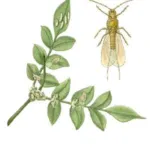 PestLong-tailed mealybugPseudococcus longispinus
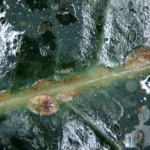 PestBrown Soft ScaleCoccus hesperidum
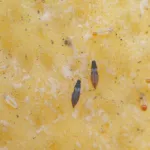 PestGreenhouse thripsHeliothrips haemorrhoidalis
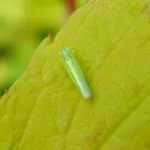 PestSmaller green leafhopperEmpoasca vitis
 DiseasePhytophthora root and crown rotPhytophthora nicotianae
 DiseaseStemphylium Leaf BlightStemphylium vesicarium (Wallr.) E.G. Simmons
 DiseaseFire BlightErwinia amylovora
 DiseaseChestnut blightCryphonectria parasitica (Murrill) M.E. Barr
Toxicity and pollen
ASPCA lists Phalaenopsis orchids as non-toxic to dogs and cats. The available listing applies to Phalaenopsis at genus level rather than proving a feeding study for this exact species, so normal precautions still apply: prevent pets or children from chewing the plant, potting medium, or fertilizer, and contact a clinician or veterinarian if unusual symptoms follow ingestion.
- Typical season
- During flowering indoors or in a greenhouse
- Pollination / pollen
- Pollen is packaged in orchid pollinia rather than released as loose airborne grains.
Orchid pollen is packaged into sticky pollinia rather than dispersed as a fine airborne cloud. This suggests a lower airborne-allergen potential than wind-pollinated plants, but it does not establish zero risk for sensitive individuals. Direct handling of flowers or pollinia may still cause irritation in susceptible people.
Native habitat
Phalaenopsis equestris is an epiphyte of wet tropical environments. It grows attached to trees rather than rooted in ordinary ground soil, with exposed roots adapted to rapid drainage, intermittent wetting, and abundant air movement. Its natural range extends from southern Taiwan to the Philippines, including lowland tropical settings.
Interesting fact
The species is a compact member of a genus widely known for moth-like flowers. Kew accepts Phalaenopsis equestris as the current species name and treats numerous named forms and varieties as synonyms. It has also been important in Phalaenopsis breeding and orchid genomic research.
Frequently asked questions (FAQ)
The most relevant questions about this plant, with short and direct answers.
🌱Quick care
How do you care for Phalaenopsis equestris indoors?⌄
Grow Phalaenopsis equestris in bright filtered light, a chunky orchid-bark mix, warm temperatures, and evenly moist but well-drained conditions. Water thoroughly when the mix is nearly dry, then let excess water drain completely.
Is Phalaenopsis equestris easy to grow?⌄
Yes, Phalaenopsis equestris is generally considered an adaptable, relatively easy species orchid for indoor culture. It is especially forgiving when provided with warmth, humidity, filtered light, and an airy potting medium.
🌤️Environment and placement
How much light does Phalaenopsis equestris need?⌄
Phalaenopsis equestris needs bright filtered or indirect light, typically near an east- or shaded west-facing window. Protect it from strong midday sun, which can scorch the leaves.
Can Phalaenopsis equestris grow under artificial lights?⌄
Yes, Phalaenopsis equestris can grow under artificial lights if the light is bright but not hot. Keep the fixture far enough away to prevent leaf overheating and provide a consistent daily light period.
What temperature is best for Phalaenopsis equestris?⌄
Keep Phalaenopsis equestris warm, with indoor temperatures around 65–85°F generally suitable. Avoid cold drafts, frost, and prolonged temperatures below about 60°F, especially when the plant is wet.
Does Phalaenopsis equestris need high humidity?⌄
Yes, moderate to high humidity supports healthy growth, especially in heated or air-conditioned homes. Use good air circulation and avoid leaving water trapped in the leaf crown.
Can Phalaenopsis equestris grow outdoors in the United States?⌄
Phalaenopsis equestris can grow outdoors year-round only in frost-free, warm climates with filtered shade. In most of the United States, grow it indoors and move it outside only when nights remain safely warm.
💧Care and problems
How often should you water Phalaenopsis equestris?⌄
Water Phalaenopsis equestris when the potting mix is nearly dry, rather than following a fixed calendar. Watering may be about weekly in a warm, bright home but should be less frequent in cooler or darker conditions.
Should Phalaenopsis equestris be watered with ice cubes?⌄
No, ice cubes are not recommended for Phalaenopsis equestris because cold water can chill the roots and provide too little moisture. Use room-temperature water and thoroughly wet the potting medium before draining it.
How can you tell when Phalaenopsis equestris needs water?⌄
Water Phalaenopsis equestris when the bark is nearly dry, the pot feels light, or the roots appear pale silver rather than green. Do not wait until the leaves become severely limp or wrinkled.
Why are the roots of my Phalaenopsis equestris turning brown or mushy?⌄
Brown, mushy roots usually indicate overwatering, poor drainage, or stagnant conditions. Remove damaged roots with sterilized tools, repot into fresh airy bark, and water only when the medium is nearly dry.
Why are Phalaenopsis equestris leaves turning yellow?⌄
An older bottom leaf may yellow naturally, but widespread yellowing can result from overwatering, root damage, or excessive light. Check the roots and move the plant to bright filtered light if the leaves feel hot or show scorch.
Why are the leaves of Phalaenopsis equestris wrinkled?⌄
Wrinkled leaves usually mean the plant is not taking up enough water because of underwatering, damaged roots, or severe environmental stress. Check the roots first, then correct watering without keeping the medium constantly soggy.
Should you mist Phalaenopsis equestris?⌄
Misting is optional and is not a substitute for watering or adequate humidity. If you mist, do so early in the day and keep water out of the crown and leaf axils to reduce rot risk.
What fertilizer is best for Phalaenopsis equestris?⌄
Use a complete orchid fertilizer diluted according to its label during active growth. Apply it to an already damp root system and occasionally flush the medium with plain water to reduce fertilizer-salt buildup.
🪴Planting and repotting
What potting mix is best for Phalaenopsis equestris?⌄
Use a chunky, fast-draining orchid mix based on bark, with optional perlite, pumice, or a small amount of sphagnum. Ordinary potting soil is too dense and can suffocate the roots.
Does Phalaenopsis equestris need a clear orchid pot?⌄
No, a clear pot is not essential, but it makes it easier to inspect the roots and moisture level. Any clean pot with excellent drainage and a size only slightly larger than the root system can work.
When should you repot Phalaenopsis equestris?⌄
Repot Phalaenopsis equestris when the bark has decomposed, drainage has declined, or the plant has outgrown its container. Repotting after flowering or when new roots are beginning to grow usually minimizes stress.
Can Phalaenopsis equestris be mounted instead of potted?⌄
Yes, Phalaenopsis equestris can be grown mounted because it is an epiphytic orchid. A mounted plant needs more frequent monitoring and watering than one in bark, particularly in a dry indoor environment.
✂️Propagation and pruning
How is Phalaenopsis equestris propagated?⌄
Phalaenopsis equestris is most practically propagated from keikis, or plantlets, that develop on flower spikes. Propagation from seed requires controlled laboratory conditions because orchid seeds need specialized germination support.
Does Phalaenopsis equestris produce keikis?⌄
Yes, Phalaenopsis equestris is notably prone to producing keikis on its flower spikes. Leave a keiki attached until it has several leaves and multiple healthy roots before separating it.
When can you remove a Phalaenopsis equestris keiki?⌄
Separate a Phalaenopsis equestris keiki only after it has several established leaves and roots roughly 2–3 inches long. Cut the connecting spike with sterilized tools and pot the keiki in a small, airy orchid mix.
Should you cut the flower spike of Phalaenopsis equestris after blooming?⌄
Do not automatically cut a healthy green spike because Phalaenopsis equestris can rebloom or produce keikis from older spikes. Remove a spike only when it has turned completely brown and dry, or when it is damaged or diseased.
⚠️Toxicity and safety
Is Phalaenopsis equestris toxic to cats and dogs?⌄
Phalaenopsis equestris is generally regarded as non-toxic to cats and dogs, consistent with the ASPCA listing for Phalaenopsis orchids. Pets may still experience stomach upset from eating plant material, potting media, or fertilizer.
🌸Flowering and special interest
How often does Phalaenopsis equestris bloom?⌄
Phalaenopsis equestris can flower repeatedly and may continue extending or branching an older spike under good conditions. Blooming frequency varies with plant maturity, light, temperature, nutrition, and overall health.
What do Phalaenopsis equestris flowers look like?⌄
Phalaenopsis equestris is a small-flowered species with flowers commonly showing white to pink coloring and a contrasting purple or magenta lip. Flower size and color can vary among forms and cultivated selections.
How can you get Phalaenopsis equestris to bloom?⌄
Provide strong filtered light, steady nutrition during growth, and a modest cooler nighttime period in fall without exposing the plant to cold or drafts. A healthy mature plant is more likely to flower than one recovering from root loss.
Why is my Phalaenopsis equestris not flowering?⌄
Insufficient light is a common reason Phalaenopsis equestris fails to flower, although immaturity, weak roots, excessive warmth, or recent stress can also be responsible. Increase filtered light gradually and maintain stable care rather than forcing a stressed plant to bloom.
Similar plants
 Yellow lantern chili (Capsicum chinense) care guideCapsicum chinense
 Capsicum baccatum care guideCapsicum baccatum
 Serrano (Capsicum annuum ‘Serrano’)Capsicum annuum 'Serrano'
 Purple Beauty (Capsicum annuum ‘Purple Beauty’)Capsicum annuum 'Purple Beauty'
 Numex Twilight (Capsicum annuum ‘Numex Twilight’)Capsicum annuum 'Numex Twilight'
 Explosive Ember Chili Pepper (Capsicum annuum ‘Explosive Ember’)Capsicum annuum 'Explosive Ember'