
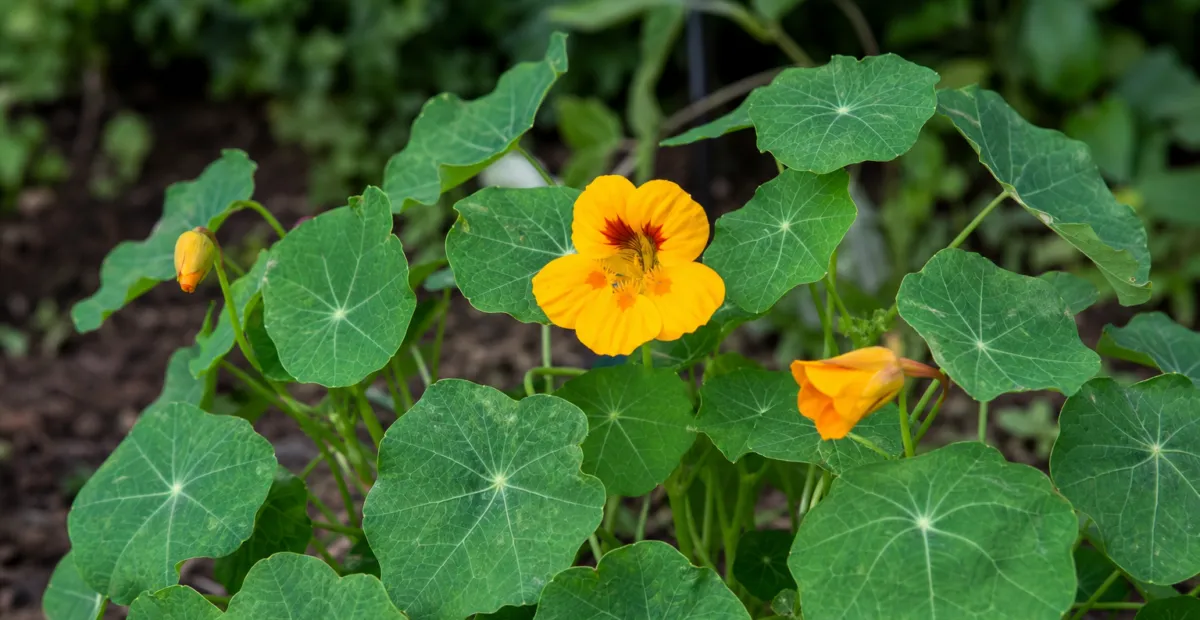
 AI-generated illustration
Mashua (Tropaeolum tuberosum) short overview
Mashua (Tropaeolum tuberosum) is a climbing, tuber-forming perennial from the high Andes of South America. It is grown primarily for its edible underground tubers, which are commonly cooked or roasted, while its rounded, lobed leaves and vividly colored, long-spurred flowers give it ornamental value. In the United States, mashua is best treated as a frost-tender crop, planted early enough to develop through a long, cool growing season and lifted before hard frost.
Taxonomic classification
Mashua (Tropaeolum tuberosum) care guide
Light and placement
Give mashua full sun for the strongest flowering and tuber production, preferably with morning or afternoon sun and protection from the hottest reflected heat in warm climates. A site with bright light and light afternoon shade can work where summers are intense. Thin, pale growth and sparse flowering usually indicate insufficient light; scorched foliage or rapid midday wilt suggests excessive heat, root restriction, or inadequate moisture rather than a need for deeper shade.
Watering and humidity
Water when the upper inch of soil begins to dry, then soak the root zone thoroughly. Keep growth steady during vine development and tuber formation, but do not leave the soil waterlogged. Reduce watering as foliage naturally declines in fall. Container plants may need more frequent checks because their root zones dry faster. Humidity is not usually a special requirement when air circulation is good.
Soil and growing medium
Use fertile soil that holds consistent moisture without becoming saturated. A loam enriched with finished compost is suitable, while dense clay should be loosened with organic matter and improved drainage. In containers, use a high-quality potting mix amended with compost rather than heavy garden soil. Slightly acidic to neutral conditions are appropriate; the main practical requirement is reliable drainage around the tubers.
Feeding
Incorporate a modest amount of finished compost before planting. Once vines are established, feed only if growth is weak or the soil is poor, using a balanced vegetable fertilizer at label strength. Avoid repeated high-nitrogen applications, which can encourage lush vines at the expense of tuber development. Stop routine feeding late in the season as the plant begins to senesce.
Growth and habit
Mashua produces a vigorous, twining or scrambling vine from underground tubers. Its petioles help the plant climb through surrounding vegetation or a support, although it may also spread across the ground. Provide a trellis, fence, or sturdy framework early, and allow adequate room for the vine to cover neighboring plants. Tubers enlarge late in the season as day length shortens and the foliage matures.
Planting and repotting
Plant dormant tubers outdoors after frost danger has passed and the soil is workable. Set them 2–4 inches deep in loose soil, with the growing point upward, and water well after planting. In short-season areas, begin tubers in containers several weeks ahead of outdoor planting, then transplant with minimal root disturbance. Install support at planting so the developing vines do not sprawl through neighboring crops.
Grow one tuber or a small group in a deep container with drainage holes and a sturdy support. Transplant or pot up before vigorous vine growth begins, using fresh, fertile potting mix. At the end of the season, remove the senescing plant and harvest or store the tubers rather than keeping the container outdoors through hard frost.
Propagation and pruning
Propagation
Propagate most reliably by planting dormant tubers or tuber pieces with viable eyes in spring. Seed is also possible and can be useful for breeding, but seedlings may vary and generally require a long season to mature. Start seed or tubers early in containers when the outdoor growing season is short.
Pruning
Guide young stems onto their support and remove only damaged, diseased, or badly tangled growth during the season. After frost kills the foliage, cut the stems back to ground level before lifting or storing the tubers. Avoid heavy summer pruning, which can reduce leaf area needed for tuber development.
Overwintering
In regions with freezing winters, lift tubers after the foliage has died back or before hard frost. Let surface soil dry briefly, then store sound tubers in a cool, dark, frost-free place in slightly dry packing material. Check periodically and discard any that become soft or diseased. In very mild climates, a thick mulch may help, but outdoor survival is not dependable.
Uses
Mashua is principally a food crop for its edible tubers, which are traditionally cooked or roasted and can have a peppery, cabbage-like flavor. It is also useful as an unusual ornamental climber because of its lobed foliage and vivid spurred flowers. Use only correctly identified, cleanly grown plant material for food, and do not treat traditional medicinal references as established medical advice.
Appearance
The plant has smooth, rounded leaves that are distinctly peltate and shallowly to deeply lobed, carried on long petioles. Stems are soft and twining rather than woody. Flowers are conspicuous, tubular and spurred, often combining warm red, orange, and yellow tones. The underground storage organs are irregularly shaped edible tubers, distinguishing mashua from non-tuberous garden nasturtiums.
Flowering
Flowers are borne singly in the leaf axils and have the prominent nectar spur characteristic of Tropaeolum. In temperate United States gardens, bloom is most likely late in the season after a sufficiently long growing period, often beginning in early fall. Flowering can be reduced when plants are started late or exposed to heat, drought, or an early frost.
Pollination and visitors
The red-orange, deep, nectar-bearing, fragrance-free flowers have been described as consistent with hummingbird pollination. A specific pollinator species is not sufficiently documented here for a Latin-name entry. Visits and seed set may vary with local pollinator communities, flower color, climate, and whether compatible plants are flowering together.
Tropaeolum tuberosum photos
Click any photo for a larger view. Source, author and license are shown separately.
Diseases and pests
Diseases
Avoid saturated soil, damaged tubers, and dense, stagnant growth, which can encourage rots and foliar disease. Use clean planting stock, provide air circulation, water at the soil line, and remove diseased foliage promptly. Rotate the planting area when practical, especially if tuber or soil-borne problems have occurred.
Pests
Watch for aphids, slugs, snails, and caterpillars on young foliage and tender stems. Inspect plants regularly, remove larger pests by hand, and use barriers or an appropriate labeled control when necessary. Encourage beneficial insects and avoid broad-spectrum insecticides during flowering. Do not allow damaged or rotting tubers to remain in storage.
Related diseases and pests
Only Plant Doctor profiles whose host data indicate this plant may be affected are shown here.


Toxicity and pollen
Mashua has a long history as a traditional food crop, especially for cooked tubers, but accessible safety evidence is not sufficient to establish a complete toxicity profile for every plant part, cultivar, or preparation. Eat only correctly identified, properly grown and prepared tubers from a trustworthy source. Avoid making medicinal claims, and seek professional advice before using large amounts or serving unfamiliar preparations to children or pets.
- Typical season
- Typically late summer to fall when flowering occurs in the United States
- Pollination / pollen
- Pollen is presented within insect- or bird-visited flowers rather than dispersed primarily by wind.
No reliable United States-specific airborne pollen measurements were located for mashua. Its flowers are not primarily wind-pollinated, so widespread airborne pollen exposure is likely lower than for wind-pollinated grasses or trees, but that is not evidence of zero allergy risk. People with strong plant or pollen sensitivities should avoid handling flowers closely and monitor individual reactions.
Native habitat
Mashua is native to the cool, seasonally variable Andean highlands of western South America. It grows as a climbing tuberous geophyte in subtropical mountain environments and cultivated highland fields, where soils are generally well drained but not persistently dry. Its crop cycle is adapted to cool conditions and changing day length rather than prolonged heat.
Interesting fact
Mashua is one of the principal traditional Andean tuber crops alongside oca and ulluco. The species flowers more freely than several other minor Andean tubers. Its storage organs are underground tubers, while the above-ground stems climb using flexible petioles. Long-day conditions can influence the timing of flowering and tuber formation.
Frequently asked questions (FAQ)
The most relevant questions about this plant, with short and direct answers.
🌱Quick care
What is mashua?⌄
Mashua is the edible, tuber-forming species Tropaeolum tuberosum, a climbing perennial nasturtium native to the Andes. It is grown for its underground tubers and also produces attractive flowers and ornamental foliage.
Is mashua easy to grow?⌄
Mashua is moderately easy to grow when given a long, cool growing season, fertile soil, steady moisture, and support for its climbing stems. It can be challenging in areas with hot summers or short autumns.
Is mashua perennial or annual?⌄
Mashua is a tender perennial that grows from underground tubers. In colder parts of the United States, it is usually grown as an annual unless the tubers are lifted and protected from freezing.
🌤️Environment and placement
How much sun does mashua need?⌄
Grow mashua in full sun to partial shade. In regions with hot summers, afternoon shade can help reduce heat stress while still providing enough light for flowering and tuber development.
What climate is best for growing mashua?⌄
Mashua performs best in cool to mild conditions with a long growing season and relatively cool nights. It is better suited to cooler USDA zones or high-elevation-style climates than to hot, humid summer conditions.
Can mashua grow in the United States?⌄
Mashua can grow in the United States if the planting site provides a long frost-free season and protection from extreme heat. Gardeners in colder areas can start tubers early and lift them before hard freezes.
Can mashua tolerate frost?⌄
Mashua should be protected from frost, especially while actively growing. Light frost may damage the foliage, and freezing temperatures can injure or kill the tubers if they remain in the ground.
Does mashua need a trellis?⌄
Mashua benefits from a trellis, fence, or other sturdy support because its stems are climbing or scrambling. Providing support improves air circulation and keeps the foliage and flowers off the ground.
How much space does mashua need?⌄
Give mashua enough room to climb and spread across its support, with spacing determined by the strength and size of the trellis. Avoid overcrowding because dense growth can make watering, harvesting, and disease monitoring more difficult.
💧Care and problems
How often should I water mashua?⌄
Water mashua when the soil surface begins to dry, maintaining moderate and consistent moisture. Do not keep the soil saturated, because poorly drained conditions can encourage tuber and root problems.
What soil is best for mashua?⌄
Mashua grows best in loamy, fertile, well-drained soil. Incorporating finished compost can improve fertility and moisture retention, while heavy clay should be amended or grown in raised beds to improve drainage.
Should mashua be fertilized?⌄
Mashua benefits from fertile soil and usually needs only moderate feeding during active growth. Avoid excessive nitrogen, which can produce lush vines at the expense of tuber formation.
Why is my mashua not forming tubers?⌄
Mashua may not form sizable tubers if the growing season is too short, temperatures are too hot, the plant receives excessive nitrogen, or it is harvested too early. Tuber production generally improves as days shorten and the plant continues growing into fall.
What pests affect mashua?⌄
Mashua can be affected by common garden pests that feed on tender foliage, including aphids, slugs, and snails. Inspect plants regularly and use the least-toxic control appropriate for the pest and growing conditions.
What diseases affect mashua?⌄
Poor drainage and persistently wet foliage can contribute to root, tuber, or fungal problems in mashua. Use well-drained soil, avoid overwatering, provide air circulation, and remove badly damaged plant material.
🪴Planting and repotting
When should I plant mashua tubers?⌄
Plant mashua tubers in spring after the danger of hard frost has passed and the soil has begun to warm. In short-season regions, start the tubers indoors or in a protected space several weeks before outdoor planting.
How deep should mashua tubers be planted?⌄
Plant mashua tubers a few inches deep in loose, well-drained soil, with the growth points oriented upward when visible. Cover them completely and keep the soil evenly but moderately moist during establishment.
Can mashua be grown in containers?⌄
Mashua can be grown in a large container if it has ample drainage, fertile potting mix, and a sturdy trellis. Choose a container deep enough for tuber development and large enough to support vigorous climbing growth.
Can mashua be grown in raised beds?⌄
Raised beds are suitable for mashua and can be especially helpful where native soil is heavy or poorly drained. Use fertile, loamy soil and install the climbing support before the vines become vigorous.
How long does mashua take to mature?⌄
Mashua commonly needs about six to nine months from planting to harvest under favorable conditions. The exact timing varies with day length, temperature, cultivar, planting date, and local growing conditions.
When is mashua ready to harvest?⌄
Harvest mashua after the foliage begins to decline and the tubers have had a long growing period, typically in late fall before the ground freezes. Carefully dig around the plant because the tubers can spread away from the original planting point.
Can mashua tubers be left in the ground over winter?⌄
Mashua tubers can remain in the ground only where winter soil temperatures stay safely above freezing and drainage is excellent. In colder U.S. climates, harvest them before hard frost and store the sound tubers in a cool, dark, frost-free place.
✂️Propagation and pruning
How do you propagate mashua?⌄
Mashua is most reliably propagated from healthy tubers or tuber pieces that contain viable buds. Seed propagation is possible but less predictable and may produce plants that differ from the parent.
Can mashua be grown from cuttings?⌄
Mashua is generally propagated from tubers rather than ordinary stem cuttings. Stem pieces may root under specialized conditions, but tuber propagation is the more dependable method for home gardeners.
How should I store mashua tubers for replanting?⌄
Store healthy, undamaged mashua tubers in a cool, dark, frost-free location with moderate humidity and good air circulation. Check them periodically and discard any that become soft, moldy, or rotten.
Should mashua be pruned?⌄
Mashua usually does not require routine pruning. Tie or guide the vines onto their support, and remove dead, diseased, or badly damaged growth as needed without cutting away healthy foliage prematurely.
⚠️Toxicity and safety
Are mashua tubers edible?⌄
Mashua tubers are traditionally eaten as a cooked food crop, but preparation and palatability can vary among types. Because species-specific safety information is limited, consume only correctly identified, properly prepared tubers from a reliable source.
Are mashua leaves and flowers edible?⌄
Although mashua is related to edible garden nasturtiums, reliable species-specific guidance for eating its leaves and flowers is limited. Do not assume that every plant part is safe; use the tuber as the recognized food part unless authoritative local guidance says otherwise.
Is mashua toxic to dogs or cats?⌄
There is insufficient species-specific toxicity data to confirm mashua as safe or toxic for dogs and cats. Keep pets from chewing the plant or tubers, and contact a veterinarian or poison-control service if ingestion occurs.
🌸Flowering and special interest
Does mashua flower?⌄
Mashua produces showy flowers, often in warm colors such as yellow, orange, or red depending on the form. Flowering usually occurs during active growth, while tuber development continues later in the season.
When does mashua bloom?⌄
Mashua typically blooms during the growing season and may flower more heavily as plants mature. In many U.S. gardens, flowering can continue into late summer or fall if frost does not arrive early.
Why is my mashua not flowering?⌄
Mashua may fail to flower when it is too young, receives insufficient light, experiences excessive heat, or is stressed by drought or poor fertility. Provide bright light, steady moisture, support, and a long growing season.
Is mashua related to nasturtiums?⌄
Yes, mashua belongs to the genus Tropaeolum and the nasturtium family, Tropaeolaceae. It is related to familiar ornamental nasturtiums but differs by producing edible underground tubers.
Similar plants
 Azure Monkshood (Aconitum carmichaelii) care guideAconitum carmichaelii
 Monkshood (Aconitum ‘Stainless Steel’)Aconitum 'Stainless Steel'
 Monkshood (Aconitum ‘Bressingham Spire’)Aconitum 'Bressingham Spire'
 Golden full moon maple (Acer shirasawanum ‘Aureum’)Acer shirasawanum 'Aureum'
 Globosum (Acer platanoides ‘Globosum’)Acer platanoides 'Globosum'
 Striped maple (Acer pensylvanicum) care guideAcer pensylvanicum