
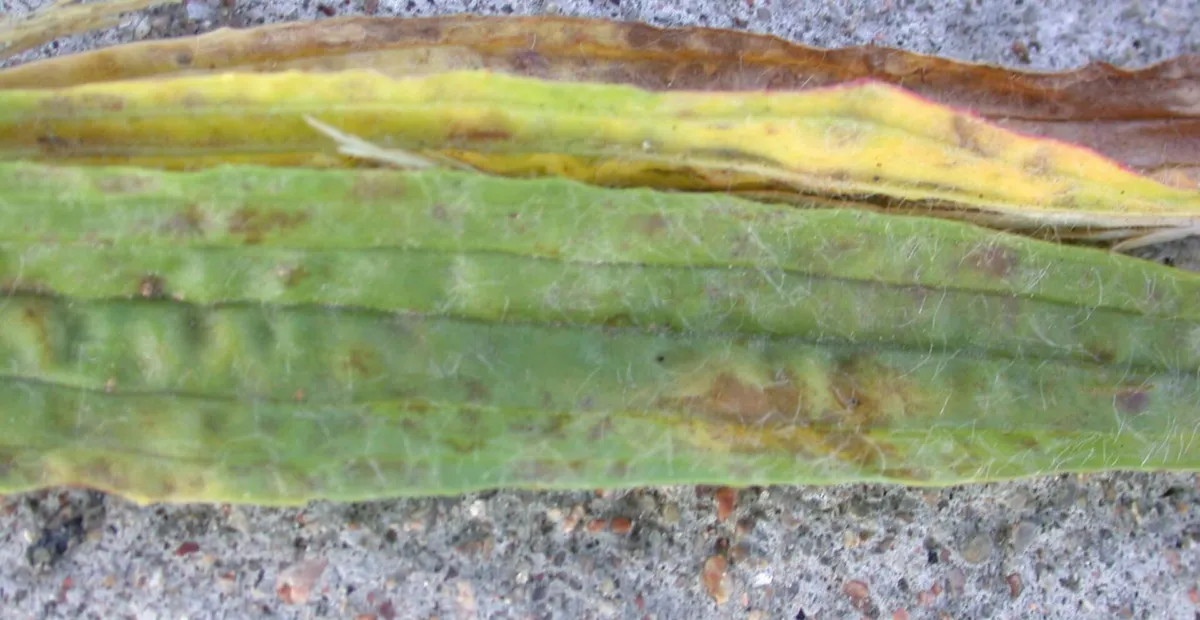
Stem and Bulb Nematode
Ditylenchus dipsaciStem and Bulb Nematode overview
Stem and bulb nematode, also called bloat nematode, is a microscopic plant-parasitic roundworm that attacks garlic, onions, leeks and other crops. Infested plants may become yellow, stunted and distorted, while bulbs swell, split, soften or rot. It spreads mainly in infected planting material, contaminated soil, crop debris, tools and irrigation water, and diagnosis should be confirmed by a nematode laboratory.
Typical conditions
Overview
Ditylenchus dipsaci is commonly known in the United States as the stem and bulb nematode or bloat nematode. It is a plant-parasitic roundworm rather than a fungal or bacterial disease. Garlic, onion and related Allium crops are among the most vulnerable hosts, although different nematode populations can vary considerably in host preference.
Infected plants may occur in irregular patches. Aboveground symptoms can resemble drought, nutrient stress, bulb rot or other root problems, so visual diagnosis is not reliable. Confirmation requires microscopic examination of symptomatic plant tissue, bulbs, planting material or soil by a qualified diagnostic laboratory.
Symptoms and identification
Symptoms depend on the host, nematode population, crop age and environmental conditions.
- Garlic and onion leaves become pale green or yellow, wilt, twist, swell, collapse or die back prematurely.
- Plants may be stunted, uneven in size and concentrated in distinct patches.
- Garlic bulbs may be lightweight, brown, soft, distorted or cracked, with damaged roots and a weakened or separating basal plate.
- Onion leaves can develop swollen, blister-like or distorted areas, while bulb scales may show brown, soft tissues in concentric layers.
- Leek, chive and ornamental bulb symptoms may include swelling, distortion, poor growth and basal-plate injury.
- Secondary bacteria and fungi often enter damaged bulbs and increase decay during storage.
Causes and spread
The nematodes feed within plant tissues, using their stylets to puncture cells. Infestations are most often introduced or spread by infected cloves, bulbs, transplants, seed, crop debris, contaminated soil, equipment, footwear, tools, irrigation water and volunteer plants.
Even apparently healthy garlic bulbs can carry small nematode populations. Dried nematodes can persist for years in dry plant debris, soil and seed material, then become active after moisture returns. Host range is not uniform: biological races or local populations may reproduce well on some crops but poorly or not at all on others.
Life cycle and persistence
Eggs hatch into juveniles, which develop through several juvenile stages before becoming adults. Under suitable cool, moist conditions, nematodes move through water films in soil and enter young plant tissue, often through roots, basal plates, leaf bases or other openings. They feed and reproduce inside stems, bulbs, roots and growing points.
Several generations may develop during a growing season. As host tissue dries, nematodes can aggregate and survive in a desiccated state in bulbs, seed pieces, debris and soil. They rehydrate and resume movement when moisture is available. Development rate and reproduction vary with temperature, host and population; cool, wet conditions favor activity in many vegetable systems.
Treatment and control
There is no reliable curative treatment for plants already carrying stem and bulb nematode. Remove symptomatic plants and prevent their movement. Do not save cloves or bulbs from an affected planting, even when some appear sound.
After confirmation, use a long rotation with documented poor hosts for the local population, control susceptible weeds and volunteers, and consider a nonhost cover or green-manure strategy suited to the region. Mustard, rapeseed, radish and sorghum-sudangrass green manures may reduce nematode populations when properly incorporated, but results depend on crop, timing, incorporation and local conditions. Hot-water treatment of garlic planting stock is not a dependable eradication method and can injure cloves.
Low-impact and biological control
Organic management should center on exclusion and sanitation: certified or tested clean planting material, strict tool and soil hygiene, removal of infested debris, weed control and extended rotation.
- Use mustard, rapeseed or related brassica green manures where locally appropriate, incorporating actively growing material according to extension guidance.
- Use sorghum-sudangrass or other locally suitable rotation crops only after verifying that they are poor hosts for the suspected population.
- Improve field drainage and avoid unnecessary irrigation or prolonged saturation, while maintaining adequate moisture for crop establishment.
- Do not rely on homemade hot-water treatments, untested biological products or compost applications as stand-alone controls.
Prevention
Prevention is the most dependable strategy because established infestations are difficult to eradicate.
- Plant only reputable, laboratory-tested, nematode-free cloves, bulbs, seed or transplants; do not use planting stock from a symptomatic field.
- Do not move soil, cull bulbs, crop debris, tools, footwear or equipment from an infested area to clean beds.
- Remove and destroy severely infested plants and bulbs; do not compost or bury suspect culls where they can return to production soil.
- Clean soil from tools and equipment before leaving an infested area, and manage volunteers and susceptible weeds.
- Rotate garlic, onion and other susceptible hosts out of the affected bed for several years. Choose rotation crops only after considering the local nematode population, because host status varies.
- Use laboratory soil and plant testing when symptoms occur, especially before saving planting material.
Interesting facts
Ditylenchus dipsaci is often called the bloat nematode because swelling and distortion can occur in infected stems, leaves and bulbs. It has been reported from hundreds of plant species worldwide, but susceptibility is strongly influenced by the nematode population or biological race.
Some populations associated with garlic and onion reproduce poorly or not at all on crops such as corn, barley, soybean, alfalfa, mustard, carrot or lettuce in particular host-range tests. These results should be treated as local evidence rather than a universal guarantee. The nematode is present in parts of the continental United States, and confirmed detections should be managed carefully to avoid spreading infested planting material and soil.
No pesticide program is prescribed here. Use only nematicides or other products legally authorized for the specific crop and problem in the United States, and follow the current product label, state requirements, application restrictions, worker-protection rules and preharvest intervals. Chemical options may be limited, crop-specific and unsuitable for home gardens; integrated sanitation and rotation remain central.
Affected plants
The plants below are linked to this problem by structured host-plant data. The list updates automatically as new plant profiles are added.
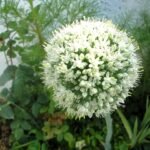 Onion (Allium cepa) care guideAllium cepa
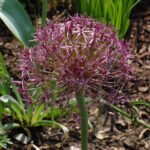 Allium christophii care guideAllium christophii
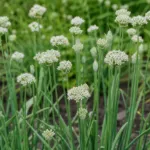 Bunching onion (Allium fistulosum) care guideAllium fistulosum
 Giant Allium (Allium giganteum) care guideAllium giganteum
 Ornamental onion (Allium) care guideAllium
 Garlic (Allium sativum) care guideAllium sativum
 Chives (Allium schoenoprasum) care guideAllium schoenoprasum
 Ransoms (Allium ursinum) care guideAllium ursinum
 Wild leek or broadleaf wild leek (Allium ampeloprasum) care guideAllium ampeloprasum
 Shallot (Allium cepa Aggregatum Group)Allium cepa Aggregatum Group
 Cepa Group (Allium cepa Group)Allium cepa Cepa Group
 Rakkyo (Allium chinense) care guideAllium chinense