
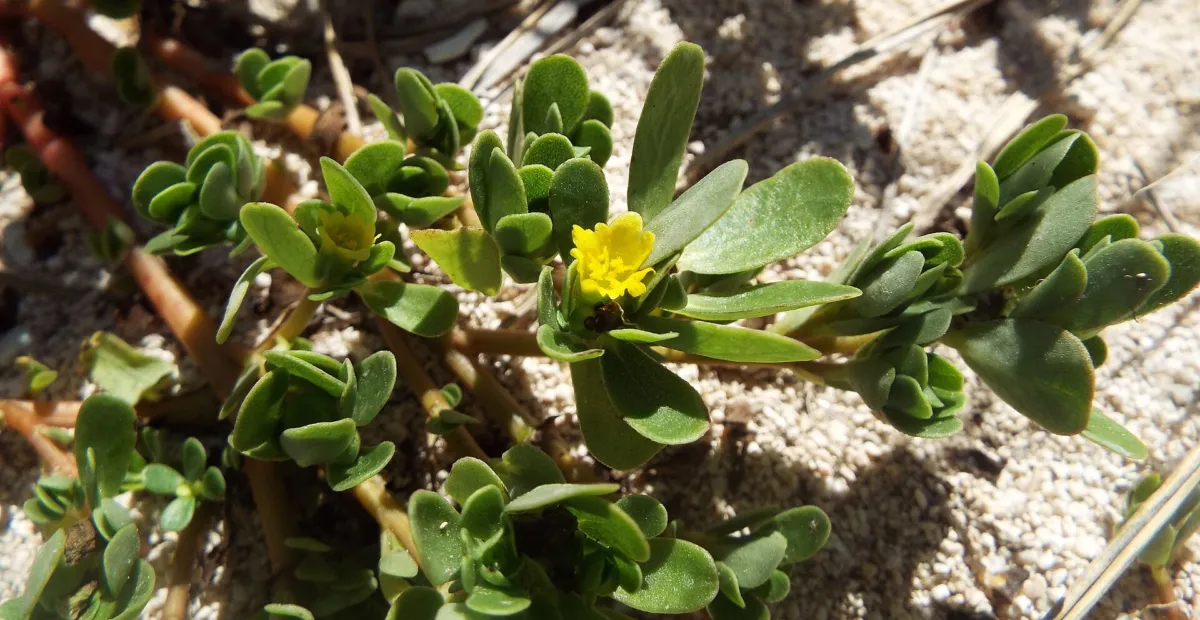
 Source:
 Little Hogweed (Portulaca oleracea) short overview
Little Hogweed, Portulaca oleracea, is a low-growing summer annual with smooth reddish stems and thick, succulent green leaves. Its small yellow flowers open briefly on sunny mornings, often appearing from late spring through early fall in the United States. It tolerates heat, drought, compacted ground and poor soil, and is grown or gathered as a leafy green. Because the plant contains soluble oxalates, it should be eaten in moderation.
Taxonomic classification
Little Hogweed (Portulaca oleracea) care guide
Light and placement
Give Little Hogweed at least 6 hours of direct sun, preferably in an open south- or west-facing bed, raised bed, patio container or rock garden. Strong light keeps stems compact and leaves thick. In too much shade, growth becomes thinner and flowering declines. Scorched, bleached foliage or persistent midday wilt can indicate extreme reflected heat combined with inadequate root moisture, although established plants usually tolerate hot exposures well.
Watering and humidity
Water deeply after planting, then allow the upper soil to dry before watering again. Once established, it usually needs only occasional irrigation; water more often in containers, prolonged heat or sandy soil. Avoid frequent shallow watering and saturated soil, which encourage weak growth and stem or root rot. Humidity generally needs no special treatment, but spacing plants for airflow is useful during wet periods.
Soil and growing medium
Use a loose, rapidly draining soil or container mix. The plant tolerates sandy loam, average garden soil and even compacted ground, but drainage is important because succulent stems and roots can rot in persistently wet conditions. A slightly acidic through mildly alkaline reaction is acceptable. Avoid enriching the bed heavily with water-retentive organic matter unless drainage is excellent.
Feeding
Little Hogweed performs well in low-fertility soil and usually needs no routine fertilizer once established. Mix a modest amount of finished compost into poor soil before planting, or apply a weak, balanced liquid feed once during active growth in a container. Avoid high-nitrogen feeding, which can produce lush, soft stems and more unwanted spread without improving its compact habit.
Growth and habit
This annual forms branching, ground-hugging mats from a central taproot and fibrous lateral roots. Stems root readily when they contact moist soil, and detached pieces can survive if they remain hydrated. Remove plants before seed capsules mature if spread is unwanted; even small pieces left on damp soil may re-establish.
Planting and repotting
Sow directly into prepared soil after frost danger has passed and the soil has warmed. Firm the seedbed gently, keep the surface evenly moist until emergence, and avoid burying the very small seeds deeply. Thin crowded seedlings so leaves dry quickly after rain. For a container, choose a pot with drainage holes and use a gritty, free-draining mix.
Repot only when a container-grown plant has filled its pot or the mix has become compacted. Move it into a slightly wider container with drainage holes and a gritty, well-drained mix. Handle stems gently, and do not bury them deeply. Container plants may be more productive when harvested frequently rather than allowed to become congested.
Propagation and pruning
Propagation
Sow seed directly onto the soil surface or with only a dusting of fine soil in warm conditions. Keep the surface moist until seedlings emerge, then reduce watering. Stem cuttings are also easy: place fresh, hydrated stem pieces on or just in moist, well-drained soil and keep them lightly watered until rooted.
Pruning
Cut or hand-pull unwanted plants before capsules mature. Remove all stem fragments from moist soil because they may root. For edible production, harvest young stem tips regularly to keep plants compact and delay flowering, while avoiding repeated severe disturbance that scatters mature seeds.
Overwintering
In frost-prone areas, expect the plant to die back after freezing temperatures and collect seed before winter if it is wanted the following year. In frost-free climates it may persist. An indoor overwintering attempt requires a very bright, warm window, sparse watering and excellent drainage, but restarting from seed is usually simpler.
Uses
The young leaves and tender stems are used raw in salads or cooked like spinach, and the plant can be grown as a leafy green in beds or containers. Its succulent, spreading habit also suits dry borders, rock gardens and informal groundcover plantings. Harvest only from clean, correctly identified plants that have not been exposed to herbicides or contaminated soil. Because it contains soluble oxalates, moderate portions are prudent, especially for people prone to calcium-oxalate kidney stones.
Appearance
Identification features include smooth, hairless, round succulent stems that range from green to reddish or purplish, plus shiny, thick oval to oblong leaves. Leaves are alternate but often clustered near stem joints and tips. Small yellow flowers sit among the terminal leaves, and mature plants produce small capsules that open to release numerous dark brown to nearly black seeds.
Flowering
Flowers are small, yellow and usually open for only a short period during sunny morning conditions. They are produced singly in leaf clusters and may appear repeatedly through the warm season when plants have sufficient heat. The species has both open flowers visited by insects and cleistogamous flowers capable of self-pollination, so seed production does not depend entirely on visitors.
Pollination and visitors
Open flowers can receive visits from bees, syrphid flies and small beetles. Pollinator visitation varies among forms and cultivars, and the brief morning opening limits the daily visitor window. Some flowers are cleistogamous and self-pollinate, so animal visitation is helpful but not always necessary for seed production.
Portulaca oleracea photos
Click any photo for a larger view. Source, author and license are shown separately.
Diseases and pests
Diseases
The main risk is stem or root rot in waterlogged soil, especially during cool, wet weather. Prevent problems with drainage, restrained irrigation and good spacing. Remove collapsed stems promptly and discard affected material. Avoid repeatedly working wet beds, which can spread fragments and compact the root zone.
Pests
Aphids, fungus gnat larvae, snails and slugs may occur, particularly in containers or consistently moist beds. Inspect new growth and the undersides of leaves, improve airflow, reduce excess moisture and hand-pick larger pests. Use the least-disruptive control appropriate to the crop and follow all product labels if treatment is necessary.
Toxicity and pollen
The leaves and stems are edible, but the plant contains soluble oxalates. Large quantities may cause oxalate-related problems, and concentrated consumption is a concern for susceptible people and livestock. Use only correctly identified plants from clean sites, eat moderate portions, and exercise extra caution with a history of calcium-oxalate kidney stones or kidney disease.
- Typical season
- Late spring through fall during warm-season flowering
- Pollination / pollen
- Pollen exposed briefly by open morning flowers; some flowers can self-pollinate without opening fully.
The small flowers release pollen during brief morning openings, and insect visitation is documented. This biology generally limits airborne dispersal compared with strongly wind-pollinated weeds, but it does not make allergy risk impossible. People with known plant-pollen sensitivity should avoid handling large flowering patches when symptomatic.
Native habitat
Little Hogweed is characteristic of warm, disturbed habitats including cultivated beds, vegetable fields, roadsides, cracks, paths and compacted soils. It favors open, sunny sites and can persist under drought, heat and moderate salinity. Its global distribution reflects a long history of cultivation, trade and human movement, making the precise original range difficult to establish.
Interesting fact
The species combines succulent drought adaptation with prolific seed production. Its flowers may open only briefly in sunny mornings, while cleistogamous flowers can self-pollinate when open-flower conditions are unfavorable. Broken stems can root in soil, which explains why careless hoeing or leaving pulled fragments on damp ground may spread it.
Frequently asked questions (FAQ)
The most relevant questions about this plant, with short and direct answers.
🌱Quick care
What is Little Hogweed (Portulaca oleracea)?⌄
Little Hogweed is the annual succulent commonly known as purslane, with fleshy leaves, reddish stems, low spreading growth, and small yellow flowers. It is often grown as an edible plant but also appears as a common garden weed.
Is Little Hogweed easy to grow?⌄
Yes, Little Hogweed is very easy to grow because it tolerates heat, drought, poor soil, and compacted ground. Its main management challenge is preventing it from spreading by seed.
🌤️Environment and placement
How much sun does Little Hogweed need?⌄
Little Hogweed grows best in full sun, meaning at least 6 hours of direct sunlight daily, but it can tolerate light shade. Plants may become less compact and flower less in lower light.
Can Little Hogweed grow in shade?⌄
Little Hogweed can survive in light shade, but full sun produces stronger, more compact growth and better flowering. Deep shade usually results in weak, stretched plants.
What soil is best for Little Hogweed?⌄
Little Hogweed grows in well-drained sandy, loamy, rocky, or even compacted soil. Avoid constantly wet soil, which can cause stem and root rot.
Can Little Hogweed grow in containers?⌄
Yes, Little Hogweed grows well in containers with drainage holes and a fast-draining potting mix. Choose a container at least 6 inches wide for one plant and avoid letting water collect in a saucer.
Is Little Hogweed drought tolerant?⌄
Yes, Little Hogweed is highly drought tolerant because its fleshy leaves and stems store water. Water it during prolonged dry periods, especially while seedlings are becoming established.
What USDA zones can grow Little Hogweed?⌄
Little Hogweed can grow during the warm season across much of the United States, but it is generally treated as a frost-sensitive annual. In USDA Zones 10 and 11 it may persist longer or behave as a short-lived perennial in suitable conditions.
💧Care and problems
How often should I water Little Hogweed?⌄
Water Little Hogweed only when the soil has dried, then water thoroughly and allow excess moisture to drain. Established plants usually need supplemental water only during extended hot, dry weather.
Why is my Little Hogweed turning yellow?⌄
Yellow leaves on Little Hogweed most often indicate excessive moisture, poor drainage, or insufficient light. Let the soil dry between waterings and move container plants to a brighter, better-drained location.
Why is my Little Hogweed wilting?⌄
Little Hogweed may wilt from severe drought, root damage, or waterlogged soil. Check the soil before watering, because adding water to already soggy soil can worsen root or stem rot.
Does Little Hogweed need fertilizer?⌄
Little Hogweed usually needs little or no fertilizer when grown in ordinary soil. Excess fertilizer can produce softer, more sprawling growth without improving its drought tolerance.
How do I control Little Hogweed in my garden?⌄
Hand-pull or hoe Little Hogweed before it flowers and produces seed, removing as much of the root and stem base as possible. A roughly 3-inch layer of mulch can reduce new seedlings, but disturbed soil may still expose existing seed.
Can Little Hogweed regrow from pieces left on the soil?⌄
Yes, detached stems can sometimes root again when left on moist soil, especially in warm conditions. Remove pulled plants from garden beds rather than leaving them on the ground.
🪴Planting and repotting
When should I plant Little Hogweed seeds?⌄
Sow Little Hogweed seeds outdoors after the soil has warmed in late spring, since germination is favored by warm soil. In many U.S. areas, this is after the last spring frost when soil temperatures are around 60°F or warmer.
How do you plant Little Hogweed seeds?⌄
Scatter the tiny seeds on the soil surface and press them in lightly without covering them deeply, because light can aid germination. Keep the surface lightly moist until seedlings appear, then thin crowded plants.
How far apart should Little Hogweed plants be spaced?⌄
Space Little Hogweed plants about 12 inches apart where you want individual plants to spread naturally. Allow more room if you want a broad groundcover effect, but tighter spacing may increase moisture-related problems.
Can Little Hogweed grow in clay soil?⌄
Little Hogweed can tolerate clay soil, including compacted ground, provided water does not remain stagnant around its roots. Improve drainage with a raised planting area or a container if the clay stays wet.
✂️Propagation and pruning
How do you propagate Little Hogweed?⌄
Little Hogweed is propagated most reliably from seed, which it produces abundantly in small capsules. Stem pieces may also root in warm conditions, although seed propagation is the standard approach.
Can you grow Little Hogweed from cuttings?⌄
Yes, place healthy stem cuttings on or just in well-drained, lightly moist soil and keep them warm and bright. Allow the cut surface to dry briefly before planting to reduce the risk of rot.
Does Little Hogweed self-seed?⌄
Yes, Little Hogweed readily self-seeds, and its small capsules release numerous black seeds as they mature. Remove plants before seed production if you do not want recurring volunteers.
Should I prune Little Hogweed?⌄
Routine pruning is not necessary, but trimming long stems can keep Little Hogweed compact and provide edible or propagation cuttings. Remove flowers or seed capsules if you want to limit reseeding.
⚠️Toxicity and safety
Is Little Hogweed edible?⌄
Little Hogweed is traditionally eaten as a vegetable, but it contains oxalates and should not be consumed in large amounts. Correct identification is essential, and people prone to kidney stones or with kidney disease should seek medical advice before eating it.
Is Little Hogweed toxic to dogs and cats?⌄
Yes, Little Hogweed is considered toxic to dogs and cats because it contains soluble calcium oxalates. Keep pets from eating substantial amounts and contact a veterinarian promptly if ingestion causes drooling, vomiting, weakness, or other concerning symptoms.
Is Little Hogweed safe for horses?⌄
Little Hogweed can be toxic to horses because of its soluble calcium oxalates. Prevent horses from consuming large quantities and contact a veterinarian if exposure is suspected.
Can people with kidney stones eat Little Hogweed?⌄
People who form calcium-oxalate kidney stones should be cautious with Little Hogweed and discuss it with a healthcare professional before eating it. Its oxalate content can be high, and heavy consumption has been associated with kidney injury in rare reports.
Is Little Hogweed the same as moss rose?⌄
No, Little Hogweed is Portulaca oleracea, while moss rose usually refers to Portulaca grandiflora or related ornamental portulacas. Do not assume an ornamental portulaca is edible simply because it resembles purslane.
🌸Flowering and special interest
When does Little Hogweed bloom?⌄
Little Hogweed usually blooms during the warm growing season, beginning several weeks after germination and continuing until fall frost. Its small yellow flowers often open in bright sunlight and may close later in the day.
What color are Little Hogweed flowers?⌄
Little Hogweed flowers are typically yellow and have five small petals. They are relatively inconspicuous compared with the large, brightly colored flowers of ornamental moss rose.
Why is my Little Hogweed not flowering?⌄
Insufficient sunlight, cool weather, excessive fertilizer, or severe stress can reduce flowering. Move container plants into full sun and avoid keeping the soil constantly wet.
How quickly does Little Hogweed produce seeds?⌄
Little Hogweed can flower within several weeks of germination and produce mature seeds soon afterward during warm weather. Regularly remove flowers or seed capsules if you want to prevent it from spreading.
Similar plants
 Water-celery (Oenanthe javanica) care guideOenanthe javanica
  Water spinach (Ipomoea aquatica) care guideIpomoea aquatica
  Redflower ragleaf (Crassocephalum crepidioides) care guideCrassocephalum crepidioides
  Moringa (Moringa oleifera) care guideMoringa oleifera
  Talinum fruticosum care guideTalinum fruticosum
  Spiderwisp (Gynandropsis gynandra) care guideGynandropsis gynandra