
 Source:
 Water-celery (Oenanthe javanica) short overview
Water-celery (Oenanthe javanica) is a spreading, moisture-loving perennial in the parsley family. It produces aromatic-looking, divided green leaves, hollow stems, and small white flowers in umbrella-shaped clusters. Young stems and leaves are eaten in several Asian cuisines, while the plant also suits contained wet gardens. In the United States, grow it cautiously: it can spread aggressively in saturated habitats and may be regulated or invasive in some regions.
Taxonomic classification
Water-celery (Oenanthe javanica) care guide
Light and placement
Provide full sun to partial shade, with morning sun and afternoon shade useful in hot climates. Full sun supports stronger growth where water is abundant; partial shade suits naturally wet margins. Pale, stretched growth suggests insufficient light, while scorched leaf edges or midday wilt despite wet soil suggest excessive heat or reflected sun.
Watering and humidity
Keep the root zone continuously saturated. In containers, check water levels frequently during hot weather and refill before the crown or stolons dry. Plants in full sun may need more frequent replenishment than those in partial shade. Use clean water for edible production and avoid polluted runoff or stagnant, foul-smelling conditions.
Soil and growing medium
Use fertile loam, clay-loam, or organically enriched wet soil that stays saturated without becoming stagnant. It tolerates a broad pH range, approximately 5.0–8.0, with a slight preference for mildly acidic to neutral conditions. In containers, use a moisture-retentive mix rather than a freely draining potting soil.
Feeding
Apply a thin layer of compost in spring or use a balanced, slow-release fertilizer at a conservative rate during active growth. Container plants may need a diluted liquid feed every few weeks if harvested repeatedly. Do not fertilize stagnant natural water or feed heavily near waterways, where nutrient runoff can damage water quality.
Growth and habit
A fast-growing, stolon-forming perennial that can create a dense patch under consistently wet conditions. Stems may root at nodes or spread outward across saturated ground and shallow water margins. The main maintenance issue is controlling fragments and runners, especially near drainage routes or natural wetlands.
Planting and repotting
Plant after the danger of hard frost has passed, setting rooted pieces or divisions at the same depth they were previously growing. Space plants about 12–18 inches apart, or grow one plant in a broad container. Establish with uninterrupted moisture and contain the planting where spread could affect natural waterways.
Repot container-grown plants in spring when roots and stolons fill the container. Use a wide, watertight pot with fresh moisture-retentive growing medium. Divide congested crowns during repotting and remove escaped stolons promptly.
Propagation and pruning
Propagation
The easiest methods are division and rooted stolon or stem cuttings taken during active growth. Seed is possible but less predictable and should not be used where unwanted spread is a concern. Keep divisions and cuttings continuously moist while roots establish.
Pruning
Cut back tired foliage after flowering or before winter in cold climates. Remove flower heads before seed release when practical, and regularly trim stolons that cross the container or intended planting boundary. Bag discarded fragments rather than composting them if spread is a concern.
Overwintering
In cold regions, leave rooted crowns in saturated soil or below the waterline where they are protected from repeated freezing and thawing. Container plants are more exposed and may be overwintered in a cool, bright location with the medium kept wet. Remove dead top growth after dormancy and prevent stored fragments from escaping.
Uses
Young stems and leaves are used as a leafy vegetable in several Asian cuisines and may be eaten raw or cooked when the plant is correctly identified and grown in clean conditions. It can provide foliage and seasonal umbels for contained bog gardens and water-garden margins. Because it spreads by stolons and stem fragments, avoid releasing it into natural waterways and check state or local restrictions.
Appearance
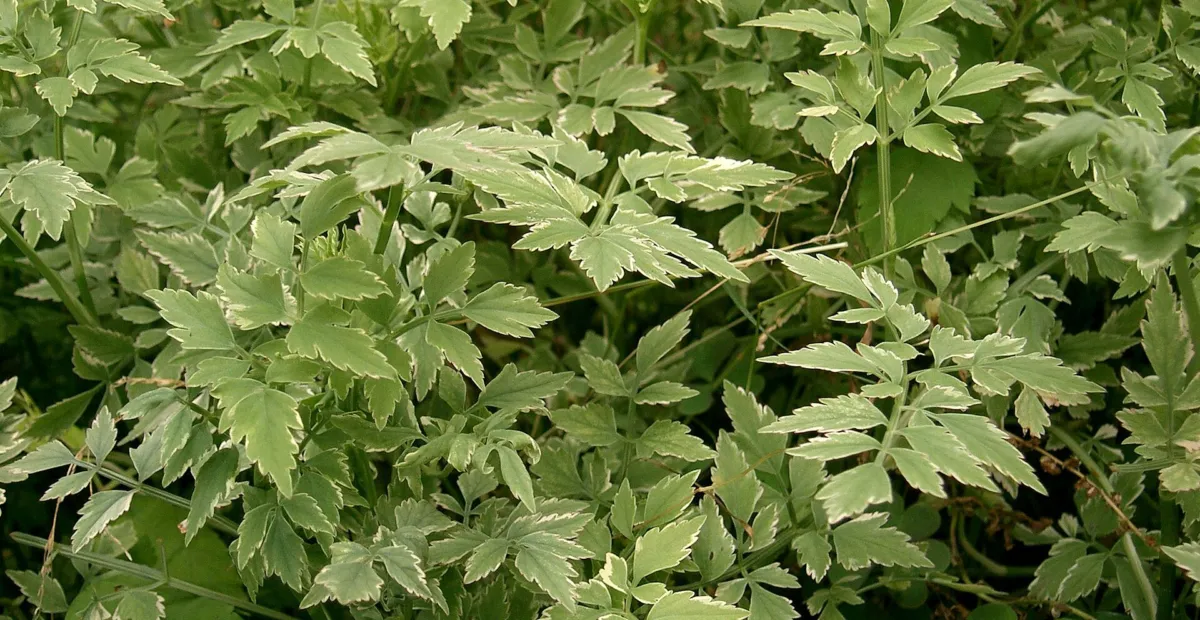
The plant forms low, spreading growth from slender stolons. Leaves are divided into ovate to triangular-ovate leaflets with coarse teeth; some forms appear crinkled or slightly lobed. Stems are light green, hollow, and vertically lined. Upright flowering stems carry flat-topped clusters of tiny white flowers.
Flowering
Small white flowers are arranged in compound umbels on upright flowering stems. Flowering is generally reported from June through August in the upper Midwest and similar temperate U.S. climates. Remove flower heads before seed dispersal if containment is important, although vegetative spread by stolons is also significant.
Pollination and visitors
The small, exposed flowers in compound umbels offer accessible floral resources to generalist insect visitors. Available documentation supports visits by bees, hoverflies, and beetles, but a single consistently documented pollinator species was not established.
Oenanthe javanica photos
Click any photo for a larger view. Source, author and license are shown separately.
Diseases and pests
Diseases
Maintain good air movement above the foliage and avoid stagnant, fouled water. Wet conditions can encourage fungal leaf spots and crown or stem rots. Remove affected foliage, improve sanitation, and avoid moving contaminated plant fragments or mud between ponds and containers.
Pests
Watch for aphids, slugs, snails, and chewing caterpillars, especially on lush new growth. Use hand removal, water sprays, barriers, or approved low-impact controls as appropriate. Inspect purchased plants for fragments and dispose of trimmings securely so stolons cannot spread.
Related diseases and pests
Only Plant Doctor profiles whose host data indicate this plant may be affected are shown here.
Toxicity and pollen
The species is cultivated as an edible leafy vegetable in parts of Asia, but reliable identification is essential because several close relatives in Oenanthe are seriously poisonous. Do not consume plants from unknown sources or plants collected from polluted water. Wash edible portions and follow local food-safety guidance.
- Typical season
- June–August where flowering occurs in temperate U.S. regions
- Pollination / pollen
- Insect-carried pollen; limited airborne dispersal expected
This is an insect-pollinated flowering plant, so pollen is generally transferred locally by flower visitors rather than released in large windborne clouds. However, species-specific U.S. airborne-pollen and allergy data are limited; sensitive individuals should avoid assuming zero risk during bloom.
Native habitat
It is associated with swampy ground, wet grasslands, muddy stream margins, marshes, and lake shores. The species tolerates saturated soils and a range of light levels, often performing well in semi-shaded wet habitats. Its native range is in East and Southeast Asia, while it has become introduced and naturalized in parts of North America.
Interesting fact
It can grow rooted in saturated mud and can also persist without firmly rooting in substrate. Its hollow stems and divided leaves resemble several other Apiaceae, making careful identification important. In North America it is treated as non-native and has been reported as invasive or potentially invasive in some regions. The plant is also known by several Asian culinary names, including seri and minari.
Frequently asked questions (FAQ)
The most relevant questions about this plant, with short and direct answers.
🌱Quick care
What is Water-celery (Oenanthe javanica)?⌄
Water-celery is a low-growing, spreading perennial herb in the Apiaceae family, grown for its celery-like foliage and small white flower clusters. It is also called Java waterdropwort, Chinese celery, and minari.
Is Water-celery perennial?⌄
Yes, Water-celery is a perennial that can return from rooted stems or crowns after winter. Its winter survival varies by climate, exposure, and how consistently wet the planting site remains.
How tall does Water-celery get?⌄
Water-celery commonly reaches about 9 to 28 inches tall, although its stems may sprawl outward and root along the ground. Its spread can exceed its height when growing conditions are favorable.
🌤️Environment and placement
How much sun does Water-celery need?⌄
Water-celery grows in full sun to partial shade, with fuller flowering usually occurring in brighter light. Provide afternoon shade in hot climates if the planting area might dry out.
Can Water-celery grow in standing water?⌄
Water-celery can grow in saturated soil and may tolerate shallow, continuously wet conditions, but performance depends on oxygen, water movement, and plant form. Avoid placing it where it can freely escape into natural waterways.
What type of soil is best for Water-celery?⌄
Use moisture-retentive loam or clay-loam enriched with organic matter. The soil should stay wet while still supporting healthy roots rather than becoming stagnant and foul-smelling.
What USDA hardiness zones can grow Water-celery?⌄
Water-celery is often listed as hardy through roughly USDA Zones 3 to 9, but actual overwintering varies substantially. In colder areas, protect the crown and expect foliage to die back during winter.
💧Care and problems
Does Water-celery spread aggressively?⌄
Yes, Water-celery can spread quickly by stolons that root at the nodes and sometimes by seed. Grow it only where its spread can be monitored, and check state or local invasive-plant rules before planting.
How do I keep Water-celery from spreading?⌄
Grow Water-celery in a sealed container or isolated wet bed, remove stolons before they root, and cut flower heads before seed develops. Never discard plant fragments or soil near streams, ponds, storm drains, or wetlands.
Why is my Water-celery turning yellow?⌄
Yellowing commonly results from insufficient moisture, poor root health, low light, or nutrient imbalance. Check that the root zone is actually saturated, then inspect for rot before adding fertilizer.
Why is my Water-celery wilting in wet soil?⌄
Wilting in wet soil can indicate damaged or rotting roots rather than a lack of water. Improve water quality and circulation, remove decaying stems, and re-root healthy nodes in clean, oxygenated water or wet soil.
🪴Planting and repotting
Can Water-celery grow in a container?⌄
Yes, Water-celery grows well in a watertight container or tub filled with moisture-retentive soil. Choose a container without drainage holes or use a saucer that keeps the root zone consistently wet, and prevent stems from rooting outside the container.
Can Water-celery grow in a pond or water garden?⌄
Yes, it can be planted at the shallow margins of a pond or water garden where its roots remain saturated. Keep it contained and remove wandering stems before they reach drainage channels or natural water.
When should I plant Water-celery?⌄
Plant Water-celery in spring after severe freezes have passed or in early fall while the soil is still warm. Spring planting is usually safer in colder parts of the United States because it gives the crown more time to establish.
How far apart should Water-celery plants be planted?⌄
Space Water-celery about 12 to 18 inches apart if you want a groundcover-like planting, allowing room for its spreading stems. Use wider spacing or a container when limiting its spread is important.
✂️Propagation and pruning
How do I prune Water-celery?⌄
Cut back damaged, sprawling, or unwanted stems at any time during active growth. Remove flowering stems before seed formation if you want to reduce self-seeding and maintain a compact planting.
How do I propagate Water-celery?⌄
The easiest method is division or stem cuttings, because nodes can root when kept in saturated soil or water. Place a rooted section or node-bearing stem in its own container before planting it permanently.
Can Water-celery be grown from seed?⌄
Yes, Water-celery can produce viable seed, although vegetative propagation is generally faster and more predictable. Sow seed in consistently moist medium and keep seedlings contained to prevent accidental spread.
⚠️Toxicity and safety
Is Water-celery invasive in the United States?⌄
Water-celery is nonnative and has been reported as invasive, noxious, or a species of concern in parts of the United States. Its legal status differs by location, so check your state invasive-species list before buying or sharing it.
Can you eat Water-celery?⌄
Oenanthe javanica is cultivated as an edible leafy vegetable in parts of Asia, but it should be eaten only when the identification is confirmed beyond doubt. Other Oenanthe species are highly poisonous, and cooking does not make a misidentified plant safe.
Is Water-celery poisonous to people or pets?⌄
The safety of a correctly identified Oenanthe javanica specimen is different from that of several highly toxic Oenanthe species, so do not rely on the common name alone. Prevent children and pets from eating it unless the plant has been professionally identified and its use is appropriate.
How can I tell Water-celery from poison hemlock or other toxic plants?⌄
Do not identify Water-celery by appearance alone because several Apiaceae plants have similar leaves, stems, and white flower umbels. Use a reliable botanical key or qualified local expert, and never taste an uncertain specimen.
Should I plant Water-celery near a natural stream or wetland?⌄
No, planting it beside a natural stream, wetland, or drainage channel is risky because creeping stems and plant fragments can spread downstream. Use a fully contained garden feature instead, subject to local regulations.
🌸Flowering and special interest
Does Water-celery flower?⌄
Yes, Water-celery produces small white flowers in umbrella-shaped clusters, usually during summer into early fall. Flowering is generally heavier in full sun than in deeper shade.
Does Water-celery attract pollinators?⌄
Its small white flower clusters can attract generalist insects such as small bees, flies, and wasps. However, its potential to spread should be considered before using it as a pollinator plant.
Similar plants
 Azure Monkshood (Aconitum carmichaelii) care guideAconitum carmichaelii
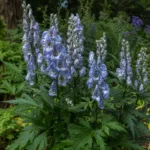 Monkshood (Aconitum ‘Stainless Steel’)Aconitum 'Stainless Steel'
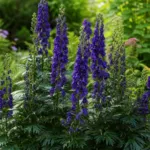 Monkshood (Aconitum ‘Bressingham Spire’)Aconitum 'Bressingham Spire'
 Golden full moon maple (Acer shirasawanum ‘Aureum’)Acer shirasawanum 'Aureum'
 Globosum (Acer platanoides ‘Globosum’)Acer platanoides 'Globosum'
 Striped maple (Acer pensylvanicum) care guideAcer pensylvanicum