
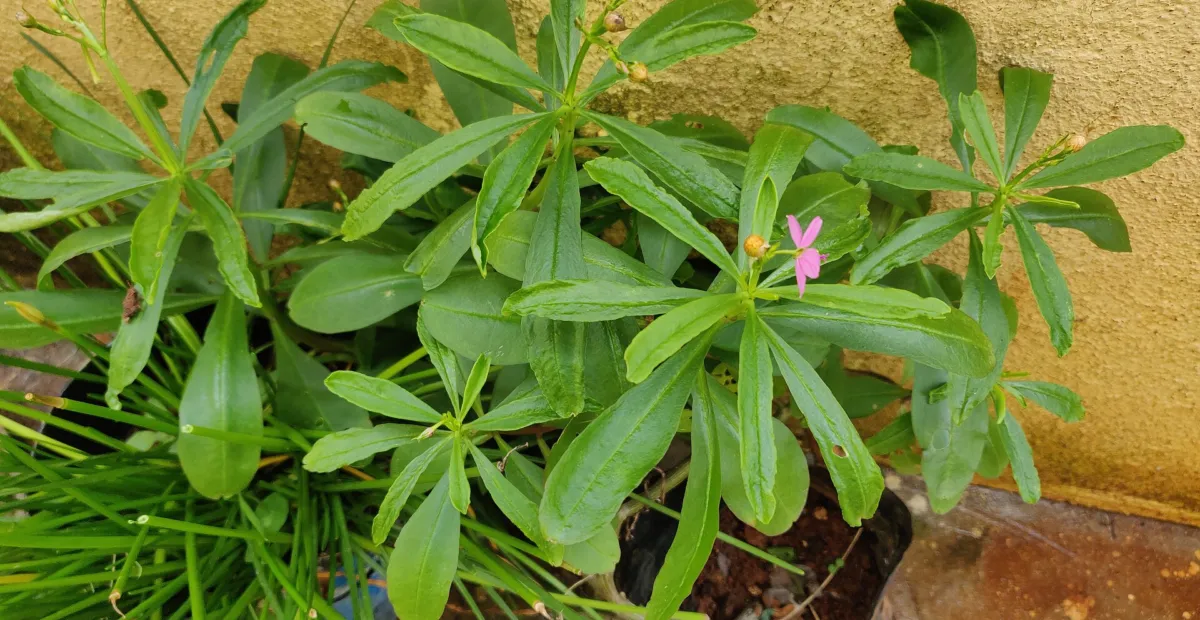
 Source:
 Talinum fruticosum short overview
Talinum fruticosum is a warm-climate leafy green grown for its tender, succulent foliage and edible shoots. The upright, branching plant also produces small pink flowers when temperatures are consistently high. In the United States, it is best treated as a frost-tender annual or container plant, with full sun, fertile well-drained soil, and regular moisture. Use only correctly identified, cleanly grown leaves for food.
Taxonomic classification
Talinum fruticosum care guide
Light and placement
Provide 6 or more hours of direct sun, ideally with morning and early afternoon exposure. In very hot inland locations, light afternoon shade can reduce wilting and leaf scorch. Long, weak stems and small leaves suggest insufficient light; bleached patches, crisp margins, or severe midday collapse suggest excessive heat, drought, or root stress rather than simple low light.
Watering and humidity
Water deeply when the top inch of soil begins to dry, then allow excess water to drain. During hot weather and active leaf harvest, check containers frequently because fleshy foliage does not eliminate the need for consistent moisture. Reduce watering in cool weather, but do not keep the plant continuously saturated. Good drainage is essential.
Soil and growing medium
Grow in fertile, humus-enriched soil that drains freely but does not dry rapidly. A loam or sandy loam amended with compost is suitable. Keep the root zone evenly moist while avoiding stagnant conditions. A slightly acidic to slightly alkaline reaction is generally acceptable; no narrow species-specific pH range is firmly established.
Feeding
Incorporate a moderate amount of finished compost before planting. During active growth, apply a balanced, water-soluble fertilizer at half the label rate every 3 to 4 weeks, or use a slow-release product according to its label. Avoid heavy nitrogen feeding, which can produce soft, overly lush growth. Stop routine feeding when growth slows in cool weather.
Growth and habit
It forms a branching, fleshy-stemmed herb and can produce repeated leafy growth when harvested lightly. Regular tip harvesting encourages a fuller plant and delays the plant becoming sparse or overgrown. Growth slows sharply with cool temperatures, drought, or low light.
Planting and repotting
Plant outdoors only after the danger of frost has passed and soil has warmed. Set plants at the same depth as they grew in their containers, or sow seed very shallowly and cover only lightly. Space about 12 to 18 inches apart for harvesting and airflow. Harden transplants gradually before placing them in full outdoor exposure.
Repot container plants when roots fill the pot or growth becomes crowded, preferably in spring or early summer. Move the plant into a container only one size larger and use a fresh, well-drained potting mix. Handle the fleshy stems carefully because they can snap.
Propagation and pruning
Propagation
Sow seed in warm soil or start it indoors several weeks before outdoor planting. Press seed onto the surface or cover very lightly, maintain steady moisture, and provide warmth. Soft stem cuttings can also root readily in a moist, free-draining medium. Take cuttings during active growth and protect new plants from cold.
Pruning
Harvest young shoot tips regularly to maintain compact branching and encourage new leaves. Remove flowering stems if the priority is foliage production. Cut back damaged or frost-injured growth only after new growth resumes, since cold-damaged stems may obscure viable tissue.
Overwintering
Move container plants indoors or into a heated greenhouse before nights approach 50°F. Provide the brightest available light, reduce watering, and stop heavy feeding during the cool season. Outdoor plants exposed to freezing temperatures may not recover; in most U.S. regions, saving seed or cuttings is more practical than overwintering in place.
Uses
Primarily grown as an edible leafy green, with young leaves and tender shoots commonly cooked or used in regional vegetable dishes. It can also serve as a warm-season container or garden foliage plant. Wash produce thoroughly and avoid harvesting from ornamental plants treated with non-food-safe pesticides.
Appearance
The plant has smooth, fleshy stems and alternate, entire leaves that are oval to spoon-shaped with a soft, succulent texture. Branching tends to increase with repeated tip harvest. Small pink flowers rise above the foliage in loose clusters, helping distinguish it from strictly foliage-grown leafy greens.
Flowering
Small flowers are produced in loose, branched clusters above the foliage during sustained warm conditions. Flowering is more likely when plants are mature and allowed to grow beyond repeated leafy harvests. Exact flower color and seasonal timing can vary with climate and cultivated material.
Pollination and visitors
Reliable species-specific pollinator records were not located in the reviewed sources. The small open flowers are compatible with visitation by small insects, but the strength and consistency of attraction should be considered undocumented rather than assumed.
Talinum fruticosum photos
Click any photo for a larger view. Source, author and license are shown separately.
Diseases and pests
Diseases
Avoid persistently wet foliage and crowded planting, which can encourage fungal leaf spotting or soft stem problems. Remove damaged tissue, improve airflow, and water at the soil line. Use clean growing media and discard severely affected plants rather than repeatedly treating edible foliage.
Pests
Watch for aphids, whiteflies, spider mites, and chewing insects, especially on stressed container plants. Inspect leaf undersides regularly, rinse foliage with water when appropriate, and remove heavily damaged growth. Use only pest controls labeled for edible crops and observe the stated preharvest interval.
Toxicity and pollen
The species is widely used as a food plant in tropical regions, but food use does not establish universal safety for every growing condition or preparation. Leaves and shoots should be eaten only from correctly identified plants grown away from pesticides, contaminated soil, and animal waste. Cooking practices and reported oxalate concerns vary by source; people with dietary restrictions should use appropriate caution.
- Typical season
- During warm-weather flowering; U.S. exposure timing is climate-dependent.
- Pollination / pollen
- Insect-dispersed pollen; airborne allergy importance not established
This is an insect-pollinated flowering plant, but the reviewed sources did not provide a dependable U.S. airborne-pollen or clinical allergy assessment. Do not treat the plant as allergen-free solely because it is generally visited by insects. People with pollen sensitivity should avoid direct exposure during flowering if symptoms occur.
Native habitat
Native to tropical and subtropical parts of the Americas, including the Caribbean and regions of Central and South America. It is associated with warm climates and seasonally dry tropical conditions, where it grows in disturbed or cultivated settings as well as naturalized habitats. It does not tolerate freezing conditions.
Interesting fact
The species is accepted under Talinum fruticosum, with several older names treated as synonyms. It is cultivated as a leafy vegetable across tropical and subtropical regions. Its succulent stems and leaves help explain its performance during short dry periods, although regular moisture improves edible leaf production.
Frequently asked questions (FAQ)
The most relevant questions about this plant, with short and direct answers.
🌱Quick care
What is Talinum fruticosum?⌄
Talinum fruticosum is a frost-tender, succulent-leaved herb grown as an edible leafy vegetable and ornamental flowering plant. It is also known by names such as waterleaf and Surinam purslane, but common names can refer to other Talinum species.
Is Talinum fruticosum easy to grow?⌄
Yes, Talinum fruticosum is generally easy to grow in warm weather when given sun, fertile soil, and regular moisture. It grows quickly once established but may struggle in cold or dry conditions.
How much sun does Talinum fruticosum need?⌄
Give Talinum fruticosum full sun to partial afternoon shade. In hot U.S. climates, afternoon shade can reduce wilting and leaf scorch while preserving good growth.
How often should I water Talinum fruticosum?⌄
Water Talinum fruticosum regularly whenever the soil surface begins to dry. Keep the soil moderately and evenly moist, but do not leave the roots in standing water.
Is Talinum fruticosum annual or perennial?⌄
Talinum fruticosum can behave as a perennial in frost-free climates but is commonly grown as an annual where winter freezes occur. Protect it from frost or grow it in a container for seasonal overwintering.
🌤️Environment and placement
What USDA zones can grow Talinum fruticosum outdoors?⌄
Talinum fruticosum is best suited to frost-free parts of USDA Zones 9–11 and warmer microclimates. Gardeners in colder zones should grow it as a warm-season annual or bring containers indoors before frost.
Can Talinum fruticosum grow indoors?⌄
Yes, Talinum fruticosum can grow indoors near a bright, sunny window or under a grow light. Indoor plants still need well-drained soil, good airflow, and careful watering to prevent root problems.
What temperature is too cold for Talinum fruticosum?⌄
Talinum fruticosum is frost-tender, so freezing temperatures can seriously damage or kill it. Move containers indoors and cover or harvest outdoor plants before the first expected frost.
What soil is best for Talinum fruticosum?⌄
Use fertile, well-drained loam or sandy loam for Talinum fruticosum. Improve compact or poorly drained soil with organic matter and coarse material so excess water can escape.
Can Talinum fruticosum grow in containers?⌄
Yes, Talinum fruticosum grows well in containers with drainage holes and a fertile, well-drained potting mix. Choose a container large enough for its fleshy roots and water when the mix begins to dry.
💧Care and problems
Why is my Talinum fruticosum wilting?⌄
Wilting usually results from insufficient moisture, intense heat, root damage, or poor drainage. Check the soil first, then water thoroughly if it is dry while avoiding repeated saturation.
Why are Talinum fruticosum leaves turning yellow?⌄
Yellow leaves commonly indicate overwatering, poor drainage, nutrient depletion, or root stress. Let excess water drain, inspect the roots if the problem persists, and provide fertile soil with regular but moderate watering.
Should I fertilize Talinum fruticosum?⌄
Yes, light fertilization can support vigorous leaf production, especially when harvesting it as a vegetable. Use compost or a balanced fertilizer according to the product label, because excessive fertilizer can produce weak, overly lush growth.
Does Talinum fruticosum need pruning?⌄
Talinum fruticosum does not require formal pruning, but pinching or cutting stems encourages branching and produces more tender foliage. Remove damaged growth and harvest regularly to keep the plant compact.
How do I harvest Talinum fruticosum leaves?⌄
Harvest young leaves and tender shoot tips by cutting stems several inches below the growing tips. Leave enough foliage for continued growth, and wash the harvested material thoroughly before preparation.
Why is my Talinum fruticosum not growing well?⌄
Poor growth is usually linked to cold temperatures, inadequate light, dry soil, depleted fertility, or waterlogged roots. Move the plant to warmth and bright light, maintain even moisture, and correct drainage or fertility problems.
🪴Planting and repotting
When should I plant Talinum fruticosum outdoors?⌄
Plant Talinum fruticosum outdoors after the danger of frost has passed and the soil has warmed. In the United States, the best timing varies by location, but it is generally a late-spring through summer crop outside tropical areas.
How deep should Talinum fruticosum seeds be planted?⌄
Sow Talinum fruticosum seeds very shallowly because they are tiny; press them onto moist soil and cover them only lightly. Keep the seedbed warm and consistently moist until germination.
Can Talinum fruticosum be transplanted?⌄
Yes, Talinum fruticosum can be transplanted once seedlings are established and have several true leaves. Handle the roots gently, water immediately after planting, and provide temporary shade if conditions are hot.
✂️Propagation and pruning
How do you propagate Talinum fruticosum?⌄
Talinum fruticosum can be propagated from seed or stem cuttings. Stem cuttings are often the more dependable method because seeds may have inconsistent viability or germination.
How do you grow Talinum fruticosum from cuttings?⌄
Take healthy stem sections about 5–8 inches long and plant them approximately 2 inches deep in moist, well-drained soil. Keep the cuttings warm and evenly moist until new growth indicates rooting.
Does Talinum fruticosum self-seed?⌄
Talinum fruticosum can self-seed because its dry capsules release numerous small seeds. Remove developing seed capsules if you want to limit volunteer plants, especially in warm climates.
⚠️Toxicity and safety
Is Talinum fruticosum edible?⌄
Yes, the young leaves and shoots of correctly identified Talinum fruticosum are documented as edible and are commonly cooked as a leafy vegetable. Do not eat a wild plant unless its identity is confirmed because several unrelated plants share similar common names.
Should Talinum fruticosum be cooked before eating?⌄
Cooking is the safer traditional preparation for Talinum fruticosum leaves and shoots. Cooking can reduce naturally occurring antinutritional compounds, but it does not make incorrectly identified or contaminated plant material safe.
Is Talinum fruticosum toxic to dogs or cats?⌄
Species-specific toxicity information for Talinum fruticosum is limited, so its safety for dogs and cats cannot be confirmed. Prevent pets from consuming large amounts and contact a veterinarian or poison-control service if ingestion causes symptoms.
Can you eat Talinum fruticosum raw?⌄
Although the leaves are used as food, cooked preparation is preferable to eating large amounts raw because the species can contain antinutritional compounds such as oxalates. Use only correctly identified, clean, young foliage.
Is Talinum fruticosum the same as Talinum paniculatum?⌄
No, Talinum fruticosum and Talinum paniculatum are separate accepted species, although common names such as fameflower may overlap. Confirm the scientific name before eating or buying seed because their appearance and uses can be confused.
🌸Flowering and special interest
What do Talinum fruticosum flowers look like?⌄
Talinum fruticosum produces small, star-shaped flowers that are commonly pink, with white or reddish forms also reported. The flowers occur in terminal branched clusters above the fleshy foliage.
When does Talinum fruticosum bloom?⌄
Talinum fruticosum generally blooms during warm, actively growing weather. Its flowers open during the daytime and may close later in the afternoon.
Why is my Talinum fruticosum flowering but not producing seeds?⌄
Seed production can be limited by immature plants, unfavorable weather, poor pollination, or flowers that have not yet completed development. Leave spent flower clusters attached until the capsules dry and split before judging seed production.
Similar plants
 Neptunia prostrata care guideNeptunia prostrata
  Telfairia occidentalis care guideTelfairia occidentalis
  Redflower ragleaf (Crassocephalum crepidioides) care guideCrassocephalum crepidioides
  Spiderwisp (Gynandropsis gynandra) care guideGynandropsis gynandra
  Aibika (Abelmoschus manihot) care guideAbelmoschus manihot
  Water-celery (Oenanthe javanica) care guideOenanthe javanica