
 Source:
 Moringa (Moringa oleifera) short overview
Moringa oleifera is a fast-growing tropical tree valued for its nutritious leaves, immature pods, flowers and oil-rich seeds. In the United States, it performs best in full sun, warm temperatures and sharply drained soil. It can be planted outdoors in frost-free areas or grown as a vigorous seasonal crop and container specimen elsewhere, where winter protection is essential. Regular cutting encourages tender leafy growth and keeps the plant manageable.
Taxonomic classification
Moringa (Moringa oleifera) care guide
Light and placement
Give full sun, ideally with 8 or more hours of direct light and protection from cold winds. A south-facing bed, heat-reflective wall or sunny patio is useful in cooler parts of the United States. Insufficient light causes weak, elongated shoots and sparse leaves; severe afternoon heat is usually tolerated if roots are not allowed to dry completely.
Watering and humidity
Water deeply when the upper several inches of soil have dried, then let excess drain fully. Keep seedlings evenly moist but never saturated. Reduce watering in cool weather and after leaf drop, especially indoors, where low light and wet soil quickly encourage root rot. Humidity is generally less important than drainage and airflow.
Soil and growing medium
Use a loose, sharply draining mix or sandy loam amended with compost. Avoid waterlogged clay and containers without ample drainage holes. A slightly acidic to slightly alkaline reaction is tolerated, with approximately pH 6.0–7.5 suitable for general cultivation. Excessively rich, wet soil can produce weak, lush growth and root problems.
Feeding
Feed during active spring and summer growth with a balanced fertilizer at label strength or use a moderate compost dressing. Container plants may need light feeding every 3–4 weeks, while in-ground plants generally need less. Do not fertilize during cold weather, drought stress or immediately after severe root disturbance.
Growth and habit
This species grows vigorously in heat and may become tall and sparsely branched if left unpruned. Regular harvesting or heading cuts encourage branching and a supply of tender leaves. Growth slows sharply in cool weather, and plants may shed leaves or die back after cold injury.
Planting and repotting
Plant outdoors only after the danger of frost has passed and soil is reliably warm. Set nursery plants at the same depth they were growing; sow seeds about 1 inch deep. Space trees 10–15 feet apart for leafy production, or closer if regularly coppiced. Water consistently during establishment, then allow the surface to dry between irrigations.
Repot container plants in spring when roots fill the pot, moving up only one or two sizes. Handle the brittle root system carefully and use a free-draining mix. Because moringa develops a substantial taproot when young, deep containers are preferable to shallow trays.
Propagation and pruning
Propagation
Sow fresh seed in warm, well-drained medium about 1 inch deep; germination is typically rapid under warm conditions. Semi-hardwood cuttings can also root, especially during active growth. Keep young plants warm and evenly but not constantly wet until established.
Pruning
Cut back young plants to encourage branching and harvestable leafy growth. Remove weak, damaged or frost-injured stems after new growth resumes. Coppicing or heading can maintain a compact form, but avoid heavy pruning during cold weather or severe drought.
Overwintering
Move container plants indoors before nights approach 45°F. Keep them in the brightest available window or under strong grow lights, water sparingly and expect slower growth or some leaf drop. In frost-free climates, protect young trees from cold snaps with horticultural fabric; established plants may resprout after light damage but are not reliably frost-hardy.
Uses
Young leaves, tender shoots, immature pods and flowers are used as vegetables in cuisines where moringa is cultivated; mature seeds yield edible oil. In the United States it is also grown as a warm-season leafy crop, container specimen and pollinator-garden tree. Culinary use should not be confused with unproven medicinal claims, and roots, root bark and concentrated extracts warrant caution.
Appearance
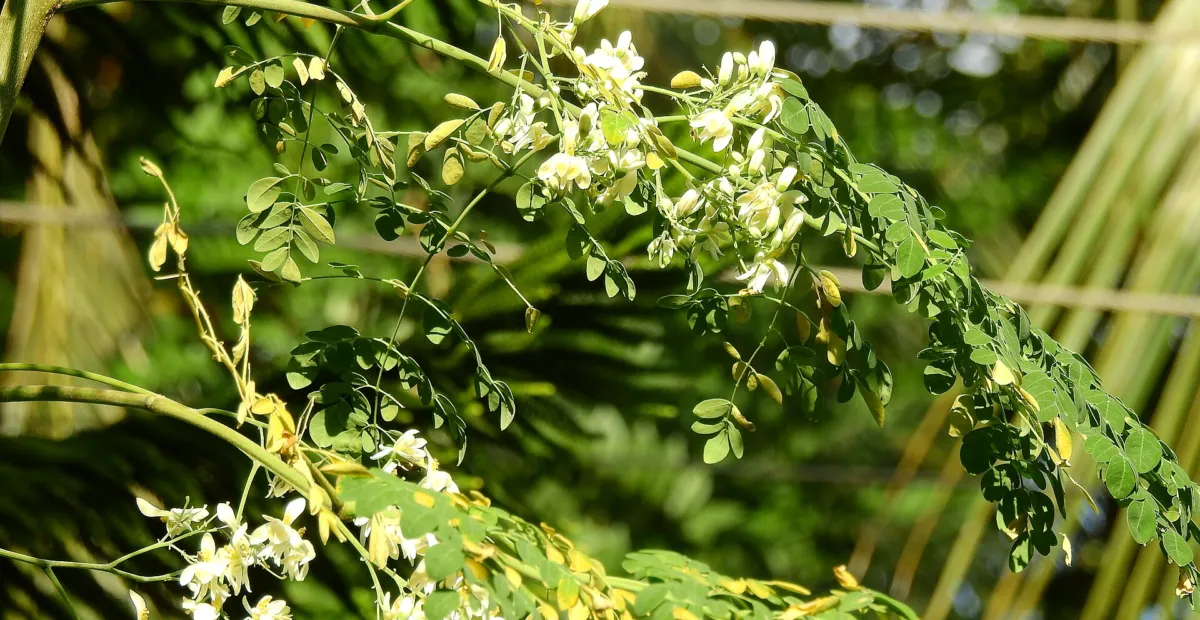
The plant has a slender, often pale or grayish trunk with soft, sparsely branched stems and delicate, feathery, tripinnate leaves. Small rounded leaflets give the canopy a light texture. Long, narrow, ribbed pods hang from the branches, while mature seeds are conspicuously winged.
Flowering
Fragrant white to cream flowers are borne in branched clusters on mature, actively growing shoots. Flowering is favored by warmth and a pronounced dry period, and may occur more than once in a long growing season. Cool temperatures, hard pruning or severe drought can delay blooming.
Pollination and visitors
The open, nectar- and pollen-bearing flowers are visited by bees and other insects. Visitor activity is greatest in warm, dry weather when flowering is abundant. Avoid broad-spectrum insecticides on flowering plants to protect visitors.
Moringa oleifera photos
Click any photo for a larger view. Source, author and license are shown separately.
Diseases and pests
Diseases
Prevent problems with excellent drainage, clean tools and good air circulation. Watch for root and stem rots in wet soil, leaf spots and powdery mildew under persistently humid conditions. Remove badly affected tissue and correct irrigation or spacing before using a labeled fungicide.
Pests
Inspect new shoots and leaf undersides for aphids, whiteflies, thrips, spider mites and caterpillars. Use water spray, hand removal or insecticidal soap where appropriate, avoiding treatment during active flowering. Prevent stress with steady watering and avoid excessive nitrogen, which can encourage soft pest-prone growth.
Toxicity and pollen
Leaves, immature pods and seeds are used as food, but concentrated preparations can cause adverse effects and rare allergic reactions, including anaphylaxis. Roots and especially root bark are not appropriate casual food items because bioactive compounds may be harmful. Avoid medicinal-dose self-treatment and seek medical advice for symptoms or drug interactions.
- Typical season
- During flowering, commonly summer into early fall in warm U.S. regions
- Pollination / pollen
- Insect-dispersed flower pollen
Moringa produces pollen during flowering, but it is not widely established as a major U.S. airborne allergen. Published reports document rare food or occupational allergy to leaves, seeds or powders rather than a predictable seasonal pollen syndrome. Sensitive people should avoid inhaling concentrated powders and monitor personal reactions.
Native habitat
Moringa is associated with seasonally dry tropical environments, including open woodland, savanna and disturbed sites. It prefers warmth, strong light and soils that drain quickly after rain, and it tolerates periodic drought better than prolonged saturation.
Interesting fact
The long, ribbed pods give the species its familiar drumstick-tree name. Mature seeds have papery wings and yield ben oil, a stable oil historically used in lubrication and perfumery. Repeated harvesting can keep a naturally tall tree in a compact leafy form. The species is native to the northwestern Indian subcontinent but is now widely cultivated in warm regions.
Frequently asked questions (FAQ)
The most relevant questions about this plant, with short and direct answers.
🌱Quick care
What is moringa?⌄
Moringa is Moringa oleifera, a frost-tender tropical tree in the Moringaceae family. It is grown for its fast growth, edible leaves and immature pods, which are often called drumsticks.
🌤️Environment and placement
How much sun does moringa need?⌄
Moringa needs full sun, ideally at least 6–8 hours of direct light daily. Strong sunlight supports compact growth, flowering and better leaf production.
What type of soil is best for moringa?⌄
Moringa grows best in sandy or loamy soil that drains sharply. Heavy clay should be amended or avoided because waterlogged roots can quickly damage the plant.
Can moringa grow in the United States?⌄
Moringa can grow outdoors year-round in warm parts of USDA Zones 9–10 and warmer protected locations. In colder areas, grow it in a container and bring it indoors before frost.
Is moringa cold hardy?⌄
No, moringa is frost-tender and can be damaged or killed by freezing temperatures. Protect it whenever temperatures approach 40°F, and move container plants indoors before the first frost.
Can moringa grow indoors?⌄
Moringa can be grown indoors temporarily if it receives very bright light from a sunny window or grow light. Indoor plants often become tall and sparse unless they are pruned and given strong light.
💧Care and problems
How often should I water moringa?⌄
Water moringa deeply when the soil has partly dried, then reduce watering once the plant is established. Avoid constantly wet soil because its roots are prone to rot in poor drainage.
How fast does moringa grow?⌄
Moringa can grow very quickly during warm, sunny weather, sometimes adding several feet in one season. Growth slows sharply in cool conditions, low light or when the roots remain wet.
Why are my moringa leaves turning yellow?⌄
Yellow leaves commonly result from overwatering, poor drainage, cold temperatures or insufficient light. Check the roots and soil moisture first, then improve drainage and move the plant to a warmer, sunnier location.
Why is my moringa losing its leaves?⌄
Moringa may drop leaves in response to cold, drought, transplant stress or reduced winter light. Leaf loss is often temporary if the stems remain alive and the plant is returned to warm, bright conditions.
How often should I fertilize moringa?⌄
Moringa usually needs only modest fertilization when planted in fertile soil. If growth is weak, apply a balanced fertilizer at label rates during active growth, but avoid excessive nitrogen that produces weak, overly tall stems.
How do I harvest moringa leaves?⌄
Harvest moringa leaves by pinching or cutting young shoots and leaf clusters from actively growing branches. Frequent light harvesting encourages branching, while removing too much foliage at once can weaken a small plant.
What should I do if moringa gets frost damage?⌄
Wait until cold damage is clear, then scratch the stems lightly to identify living green tissue and prune dead growth back to healthy wood. Keep the plant protected and avoid heavy watering while it recovers.
🪴Planting and repotting
Can moringa grow in a pot?⌄
Yes, moringa grows well in a large container with drainage holes and a fast-draining potting mix. Container growing is especially useful in most of the United States because the plant cannot tolerate frost.
How big should a moringa container be?⌄
Use a container at least 12–18 inches wide for a young moringa, then move it to a larger pot as the roots fill the soil. A heavy pot helps prevent a tall plant from tipping over.
When should I transplant moringa seedlings?⌄
Transplant moringa seedlings after they have developed several true leaves and nighttime temperatures remain consistently warm. Handle the roots gently and water once after planting, then allow the soil to dry partly between waterings.
✂️Propagation and pruning
How do I prune moringa?⌄
Prune moringa by cutting back long stems just above a leaf node to encourage branching and manageable growth. Regular tip pruning is useful for container plants and makes harvesting leaves easier.
When should I prune moringa?⌄
Prune moringa during active warm-season growth, when it can recover quickly. Avoid heavy pruning immediately before cold weather because new growth is especially vulnerable to chilling.
How do I grow moringa from seed?⌄
Sow fresh moringa seeds about ½ inch deep in a warm, well-drained seed-starting mix and keep them lightly moist. Germination is usually best with warmth, bright light and temperatures around 70–90°F.
Do moringa seeds need soaking before planting?⌄
Moringa seeds generally do not require soaking before planting. Soaking for several hours may soften the seed coat, but fresh seeds planted directly in warm, well-drained soil can germinate successfully.
Can moringa grow from cuttings?⌄
Yes, moringa can be propagated from mature stem cuttings, although results depend on warmth, moisture and cutting quality. Use a healthy, pencil-thick section, allow the cut to dry briefly, and root it in a well-drained medium.
⚠️Toxicity and safety
Can you eat moringa leaves and pods?⌄
Young moringa leaves and immature green pods are commonly eaten when properly prepared. Avoid assuming every plant part is safe: roots and bark are especially concerning, and food or supplement use should be discussed with a clinician during pregnancy, breastfeeding or medication use.
Are moringa flowers edible?⌄
Moringa flowers are used as food in some traditional cuisines, but safety information is less established than for ordinary food portions of young leaves and immature pods. Do not consume flowers from plants treated with ornamental pesticides.
Are moringa seeds edible?⌄
Moringa seeds may be used in some food traditions, but they are not as straightforwardly established for routine home consumption as young leaves and immature pods. Avoid eating large amounts or using seeds medicinally without qualified medical advice.
Is moringa safe during pregnancy?⌄
Moringa supplements and medicinal preparations should be avoided during pregnancy unless specifically approved by a qualified clinician. Evidence about safety is limited, and different plant parts and concentrated products may carry different risks.
Can moringa interact with medications?⌄
Yes, concentrated moringa products may interact with medicines affecting blood pressure, blood sugar, thyroid function, cholesterol or drug metabolism. Ask a pharmacist or clinician before using moringa supplements, especially if you take prescription medication.
Is moringa powder safe to use?⌄
Moringa powder is not automatically risk-free because supplements can vary in quality, concentration and contamination risk. Use products from reputable sources, follow the label, and check current recalls before consuming imported moringa powder.
🌸Flowering and special interest
When does moringa flower?⌄
Moringa flowers during warm growing conditions, with timing varying by climate, variety and plant age. Mature plants produce fragrant white or cream flower clusters, but cold, severe pruning or indoor growing can delay flowering.
Does moringa need another plant to produce pods?⌄
Moringa flowers contain both male and female reproductive structures, so one plant can produce pods. However, insect activity and favorable warm weather improve pollination and fruit set.
How long does it take moringa to produce pods?⌄
Moringa may produce pods within the first year in a long, warm growing season, although timing varies considerably. Pods develop after flowering and take roughly several weeks to a few months to mature, depending on conditions.
Similar plants
 Mulukhiyah (Corchorus olitorius) care guideCorchorus olitorius
  Cornsalad (Valerianella locusta) care guideValerianella locusta
  Spiderwisp (Gynandropsis gynandra) care guideGynandropsis gynandra
  Water spinach (Ipomoea aquatica) care guideIpomoea aquatica
  Telfairia occidentalis care guideTelfairia occidentalis
  Breynia androgyna care guideBreynia androgyna