
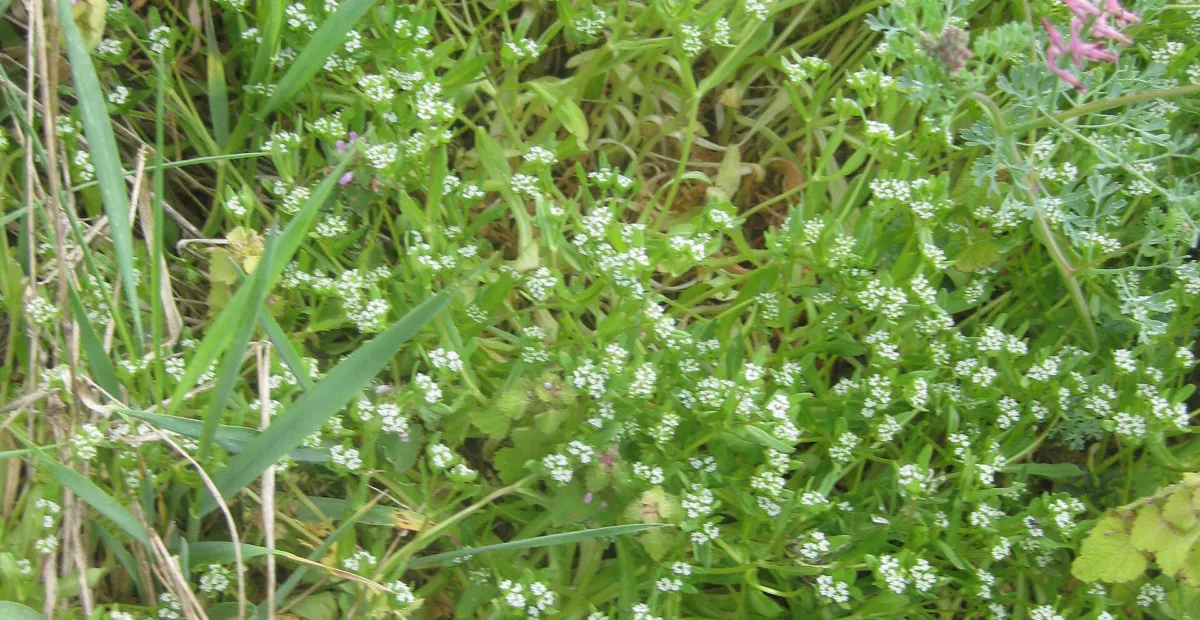
 Source:
 Cornsalad (Valerianella locusta) short overview
Cornsalad (Valerianella locusta) is a cool-season annual grown for its tender rosettes of spoon-shaped leaves with a mild, slightly nutty flavor. Sow it in late summer for fall and winter harvests, or in early spring before warm weather triggers bolting. Full sun, fertile well-drained soil, steady moisture, and light feeding support the best leaf quality. It is compact enough for containers and small kitchen gardens.
Taxonomic classification
Cornsalad (Valerianella locusta) care guide
Light and placement
Give full sun, ideally in an open bed or container with a south- or east-facing exposure. In areas with intense late-season heat, light afternoon shade can extend leaf quality, although the crop still needs strong light. Spindly growth suggests insufficient light; rapid bolting and harsh leaves usually indicate excessive warmth rather than excessive brightness.
Watering and humidity
Keep the seedbed and established plants evenly moist, supplying roughly 1–2 inches of water per week depending on soil and weather. Drip irrigation or gentle watering at the base helps keep foliage clean. Mulch lightly to reduce evaporation, but avoid saturated soil; moisture swings can make leaves tougher and reduce eating quality.
Soil and growing medium
Use fertile, organic-matter-rich soil that drains freely but does not dry rapidly. A loam or sandy loam amended with mature compost is suitable. Aim for a slightly acidic to neutral reaction, approximately pH 6.0–7.0. Avoid compacted ground and poorly drained sites, which can encourage damping-off and root problems.
Feeding
Prepare the bed with a soil test when possible. If fertility is low, incorporate a modest amount of mature compost before sowing. Feed sparingly because excessive nitrogen can produce soft growth; a light nitrogen side-dressing about four weeks after thinning or transplanting may help pale plants. Do not fertilize drought-stressed, waterlogged, or heat-bolting plants.
Growth and habit
The plant develops quickly during cool weather as a low, dense rosette. Continued harvesting delays flowering, while increasing day length and warmth promote bolting. Keep the planting weed-free during establishment because the compact crop competes poorly with taller or faster-growing weeds.
Planting and repotting
Direct-sow in late summer through fall for cool-season production, or in early spring several weeks before the average last frost. Sow about 1/4 inch deep, keep the seedbed evenly moist, and thin seedlings to roughly 3–4 inches apart with rows about 12 inches apart. Succession sowing every two weeks can extend harvests.
Usually unnecessary. If started in cells, transplant young plants before they become root-bound, keeping the root ball intact and disturbing roots as little as possible.
Propagation and pruning
Propagation
Propagate by seed. Direct-sow when soil temperatures are approximately 41–68°F; temperatures above about 70°F can inhibit germination. Sow successive batches in cool weather, and allow some plants to mature if volunteer seedlings are desired.
Pruning
No formal pruning is required. Harvest outer leaves regularly or cut the entire rosette near the crown. Remove bolting plants once leaf quality declines, unless seed collection or self-sown volunteers are wanted.
Overwintering
Fall-sown plants can overwinter in many regions, especially Zones 4–8 with mulch or light row cover. Establish plants before severe cold, then protect with straw mulch or fabric covers during hard freezes. Remove heavy mulch as growth resumes in spring. In warm regions, winter is the main growing season and no indoor protection is needed.
Uses
Grow primarily as an edible salad green or tender cooking green. Harvest individual leaves, clusters, or the entire rosette when young. It suits raised beds, containers, balcony planters, and succession-sown vegetable gardens. Culinary use should be limited to correctly identified, clean plants grown without unsafe chemical exposure.
Appearance
Identification is easiest from the low basal rosette of soft, spoon-shaped to rounded leaves. Leaves are smooth to lightly textured and often overlap densely at the center. If left to mature, slender branched stems rise above the rosette and bear tiny pale flowers.
Flowering
Plants form a basal rosette first, then produce branching flowering stems as temperatures rise and the plant bolts. The flowers are very small and inconspicuous rather than ornamental. In much of the United States, flowering commonly follows overwintering or early-spring growth.
Pollination and visitors
The small flowers may be visited by nonspecific small insects, but strong species-level documentation of pollinator attraction was not found in the reviewed sources. Because the flowers are inconspicuous and the crop is normally harvested before bolting, its value to pollinators is likely limited.
Valerianella locusta photos
Click any photo for a larger view. Source, author and license are shown separately.
Diseases and pests
Diseases
The main disease concerns are damping-off in crowded, persistently wet seedbeds and occasional Alternaria leaf spot. Use clean seed-starting mix, avoid overwatering, improve air movement, water at the soil surface, remove badly affected plants, and rotate salad crops where disease has occurred.
Pests
Aphids, flea beetles, leaf miners, cabbage loopers, and slugs may affect plants. Inspect leaf undersides, use floating row covers over young plants, remove weeds that shelter pests, hand-pick slugs or use traps, and use insecticidal soap only as directed when soft-bodied insects persist. Avoid unnecessary broad-spectrum sprays on a crop intended for eating.
Toxicity and pollen
Cornsalad is cultivated and eaten as a salad green, and no reliable authoritative evidence located in this review indicates inherent toxicity to people or pets when correctly identified and grown for food. Wash harvested leaves and avoid eating plants exposed to pesticides, contaminated soil, or animal waste. Misidentification remains a practical risk with any foraged plant.
- Typical season
- Typically late spring to early summer in the United States where plants are allowed to flower
- Pollination / pollen
- Insect-carried pollen; limited airborne dispersal expected
This is an insect-pollinated flowering annual, so pollen is generally released close to the flowers rather than in large windborne clouds. However, species-specific clinical allergy data were not located, so a definitive allergy rating cannot be established. People with known pollen sensitivity should avoid handling flowering plants if symptoms occur.
Native habitat
Native to Europe and associated with open, disturbed, seasonally cool habitats including arable fields and other light-soil sites. In cultivation it prefers fertile, moisture-retentive but well-drained ground and performs best when temperatures remain below roughly 75°F.
Interesting fact
The common name corn salad reflects its historical occurrence in European grain fields. The plant is harvested as a whole rosette or leaf by leaf. Cool conditions preserve tender leaves, while heat accelerates bolting. Some plants can overwinter and provide an early spring crop.
Frequently asked questions (FAQ)
The most relevant questions about this plant, with short and direct answers.
🌱Quick care
What is Cornsalad (Valerianella locusta)?⌄
Cornsalad is a cool-season edible green that forms small rosettes of mild, slightly nutty leaves. It is also commonly called mâche or lamb’s lettuce in the United States.
Is Cornsalad easy to grow?⌄
Yes, Cornsalad is generally easy to grow when given cool temperatures, fertile soil, consistent moisture, and full sun. It requires little maintenance beyond watering, thinning, and harvesting.
Is Cornsalad annual or perennial?⌄
Cornsalad is usually grown as an annual, although some plants may behave as biennials depending on climate and planting time. Plants typically flower and set seed after the cool growing season.
🌤️Environment and placement
How much sun does Cornsalad need?⌄
Cornsalad grows best in full sun, especially during cool weather. In regions with mild winters it can tolerate some light shade, but too much shade may produce smaller, slower-growing plants.
What temperature does Cornsalad prefer?⌄
Cornsalad prefers cool growing conditions and tolerates frost better than many tender salad greens. In colder areas, protect plants with row cover or straw mulch during severe freezes.
Can Cornsalad survive frost?⌄
Yes, Cornsalad is frost hardy and can survive light to moderate freezes once established. Protection may be needed where temperatures fall well below about 5°F or where freeze-thaw conditions are severe.
What soil is best for Cornsalad?⌄
Use fertile, well-drained loam enriched with organic matter, ideally with a soil pH around 6.0 to 7.0. Avoid poorly drained ground because constantly wet soil can damage the roots.
Can Cornsalad grow in containers?⌄
Yes, Cornsalad grows well in containers that are at least 6 inches deep and have drainage holes. Use a moisture-retentive potting mix and place the container where the plants receive full sun.
💧Care and problems
How often should I water Cornsalad?⌄
Water Cornsalad whenever the soil surface begins to dry so the soil remains evenly moist. Consistent moisture supports tender leaves, while drought stress can slow growth and encourage premature flowering.
Does Cornsalad need fertilizer?⌄
Cornsalad needs only light feeding if it is grown in fertile soil rich in organic matter. If growth is pale or weak, apply a balanced vegetable fertilizer according to the product label rather than heavily fertilizing.
Why is my Cornsalad not growing well?⌄
Poor growth is most often caused by heat, insufficient moisture, overcrowding, poor fertility, or waterlogged soil. Thin seedlings, improve drainage, maintain steady moisture, and grow it during the cool season.
Does Cornsalad have serious pests or diseases?⌄
Cornsalad has no consistently reported serious pest or disease problems in home gardens. Slugs, snails, and general leafy-green pests may still feed on plants, especially in damp conditions.
How do I harvest Cornsalad?⌄
Harvest individual leaves, outer clusters, or the entire rosette when the leaves reach a useful size. Cutting the plant slightly above the crown may allow additional leaves to develop.
When should I harvest Cornsalad before it flowers?⌄
Harvest Cornsalad before the flower stalk elongates for the most tender leaves. Once the plant begins bolting, the leaves may become less tender, so cut the whole rosette if flowering is starting.
How do I store harvested Cornsalad?⌄
Refrigerate unwashed Cornsalad in a loosely closed plastic bag or container and wash it just before use. Under good conditions, it may keep for about five to seven days, although fresher leaves have better texture.
🪴Planting and repotting
When should I plant Cornsalad in the United States?⌄
Plant Cornsalad in late summer or early fall for fall and winter harvests, or in early spring for harvest before hot weather arrives. Exact timing depends on local frost dates and winter temperatures.
How deep should I sow Cornsalad seeds?⌄
Sow Cornsalad seeds about ¼ inch deep in finely prepared soil. Keep the seedbed evenly moist until germination and avoid burying the small seeds too deeply.
How far apart should Cornsalad plants be?⌄
Thin or transplant Cornsalad plants to about 4 inches apart, with rows roughly 12 inches apart. Closer spacing is possible for baby-leaf harvests, but crowded plants have poorer airflow and smaller rosettes.
Can I succession-sow Cornsalad?⌄
Yes, sowing Cornsalad every two weeks during the cool growing season can provide a more continuous harvest. Stop or reduce sowing when sustained hot weather is likely to trigger bolting.
Can I transplant Cornsalad seedlings?⌄
Yes, Cornsalad can be transplanted, although direct sowing is often simplest. Handle the seedlings gently and transplant them while young, spacing them so the rosettes have room to develop.
✂️Propagation and pruning
How do I propagate Cornsalad?⌄
Cornsalad is propagated from seed. Sow fresh seed directly in the garden or start it indoors about six weeks before the intended transplanting date.
Can Cornsalad reseed itself?⌄
Yes, mature Cornsalad plants can drop seed and produce volunteer seedlings. Allow selected plants to flower and set seed, but remove unwanted seed heads if you do not want self-sowing.
How do I collect Cornsalad seeds?⌄
Leave healthy plants unharvested until the flowers finish and the small fruits mature and dry. Collect the dry seed heads, let them finish drying in a protected place, and store the cleaned seed cool and dry.
Should I prune Cornsalad?⌄
Cornsalad does not need ornamental pruning. Harvesting outer leaves regularly is the appropriate way to manage plants, while removing flowering plants can extend the useful harvest only briefly.
⚠️Toxicity and safety
Is Cornsalad edible?⌄
Yes, the young leaves and whole young rosettes of Cornsalad are commonly eaten raw in salads or lightly cooked. Wash harvested greens thoroughly and consume only plants that have been correctly identified.
Is Cornsalad toxic to people or pets?⌄
No specific toxicity is documented for correctly identified Valerianella locusta, and it is cultivated as an edible salad green. This does not rule out individual allergies, digestive sensitivity, or contamination from pesticides and contaminated soil.
Can you eat Cornsalad raw?⌄
Yes, young Cornsalad leaves are commonly eaten raw and have a mild, slightly nutty flavor. Wash them well before eating, especially when harvested from soil or outdoor containers.
🌸Flowering and special interest
When does Cornsalad flower?⌄
Cornsalad generally flowers in late winter or spring as temperatures rise and day length increases. The plant develops small, inconspicuous white to pale blue flowers on branching stems.
Why is my Cornsalad bolting?⌄
Cornsalad bolts when warming weather and longer days signal the end of its cool growing season. Harvest promptly, provide consistent moisture, and make successive plantings to maintain leaves before bolting.
Are Cornsalad flowers ornamental?⌄
Cornsalad flowers are small and not especially showy, so the plant is primarily grown for its edible leaves rather than display. Flowering is useful, however, if you want the plant to produce seed.
Can I eat Cornsalad after it flowers?⌄
You can technically eat the young leaves after flowering begins, but they may be less tender and less desirable. For the best quality, harvest the rosette before the flower stalk fully develops.
Similar plants
 Moringa (Moringa oleifera) care guideMoringa oleifera
  Aibika (Abelmoschus manihot) care guideAbelmoschus manihot
  Telfairia occidentalis care guideTelfairia occidentalis
  Breynia androgyna care guideBreynia androgyna
  Mulukhiyah (Corchorus olitorius) care guideCorchorus olitorius
  Talinum fruticosum care guideTalinum fruticosum