
 Source:
 Mulukhiyah (Corchorus olitorius) short overview
Mulukhiyah, Corchorus olitorius, is a warm-season annual grown for its tender, mucilaginous leaves and for jute fiber. It forms an upright, branched plant with serrated leaves, small pale-yellow flowers, and narrow ribbed seed capsules. In the United States it is best treated as a frost-tender summer crop, started after the soil has warmed and harvested regularly before flowering and seed formation.
Taxonomic classification
Mulukhiyah (Corchorus olitorius) care guide
Light and placement
Give Mulukhiyah a sunny bed receiving at least 6 hours of direct light, preferably with morning sun and some protection from intense late-afternoon heat in very hot climates. South- or southeast-facing exposure is suitable. Insufficient light produces thin, stretched growth and fewer harvestable shoots; harsh drought combined with reflected heat can cause leaf scorch, curling, or premature flowering.
Watering and humidity
Keep the root zone consistently moist, watering deeply when the top inch of soil begins to dry. Do not allow repeated wilting during the harvest period, because water stress toughens leaves and can hasten flowering. Mulch lightly to reduce evaporation, but keep mulch away from the stem. Reduce watering in cool weather or after growth slows, while avoiding waterlogged soil.
Soil and growing medium
Use fertile loam amended with mature compost. The soil should hold moisture without remaining saturated; raised beds or containers with drainage holes are useful in heavy clay. A slightly acidic to neutral reaction is suitable. Avoid very compacted ground, which restricts the fibrous root system and can encourage root problems during wet periods.
Feeding
Incorporate compost before planting, then apply a dilute balanced vegetable fertilizer after seedlings are established and again after repeated cutting if growth becomes pale or slow. Avoid heavy nitrogen applications late in the season, especially if plants are being allowed to flower and set seed. Do not fertilize drought-stressed or waterlogged plants until the root zone has recovered.
Growth and habit
This is a fast-growing, upright annual that branches readily when its growing tips are harvested. Regular cutting keeps the plant leafy and encourages tender side shoots. Once reproductive growth dominates, lower leaves may yellow or drop while flowers and seed capsules develop toward the upper stems.
Planting and repotting
Sow seed directly into prepared soil after warm weather is established, or start seedlings indoors 4–6 weeks before transplanting. Cover seed lightly, keep the seedbed evenly moist, and thin promptly after emergence. Transplant only after nights are reliably warm, since chilling can stall young plants. Succession sow every 2–3 weeks for a continuous supply of tender leaves.
For container culture, transplant seedlings into a container at least 12 inches wide and deep with drainage holes. Move plants while young, before roots become crowded. Refresh the upper layer of potting mix or shift to a larger container if roots circle densely or watering becomes unusually frequent.
Propagation and pruning
Propagation
Propagate from seed. Sow shallowly in warm soil or start indoors in clean seed-starting mix 4–6 weeks before transplanting. Keep the medium evenly moist until emergence. Use fresh, well-stored seed where possible and thin seedlings early to prevent weak, crowded growth.
Pruning
Harvest by cutting tender shoot tips regularly, leaving several lower nodes to encourage branching. Remove yellowing leaves and any diseased stems promptly. If the goal is leafy greens, cut plants back before heavy flowering and seed formation. For seed saving, allow selected plants to mature instead of repeatedly cutting them.
Overwintering
There is no reliable outdoor wintering method in frost-prone parts of the United States. Harvest before the first frost and remove spent plants. In frost-free climates it may persist longer, but cold nights can still reduce growth. Container plants may be moved indoors only to preserve a specimen, though low indoor light commonly causes weak growth.
Uses
The young leaves and tender shoots are cooked as a leafy vegetable and are valued for their mucilaginous texture in soups and stews. The plant is also one of the principal sources of jute fiber, although fiber production is a different harvest objective from leafy-green production. Harvest only correctly identified plants, and remove seed capsules from edible greens because mature seeds are toxic.
Appearance
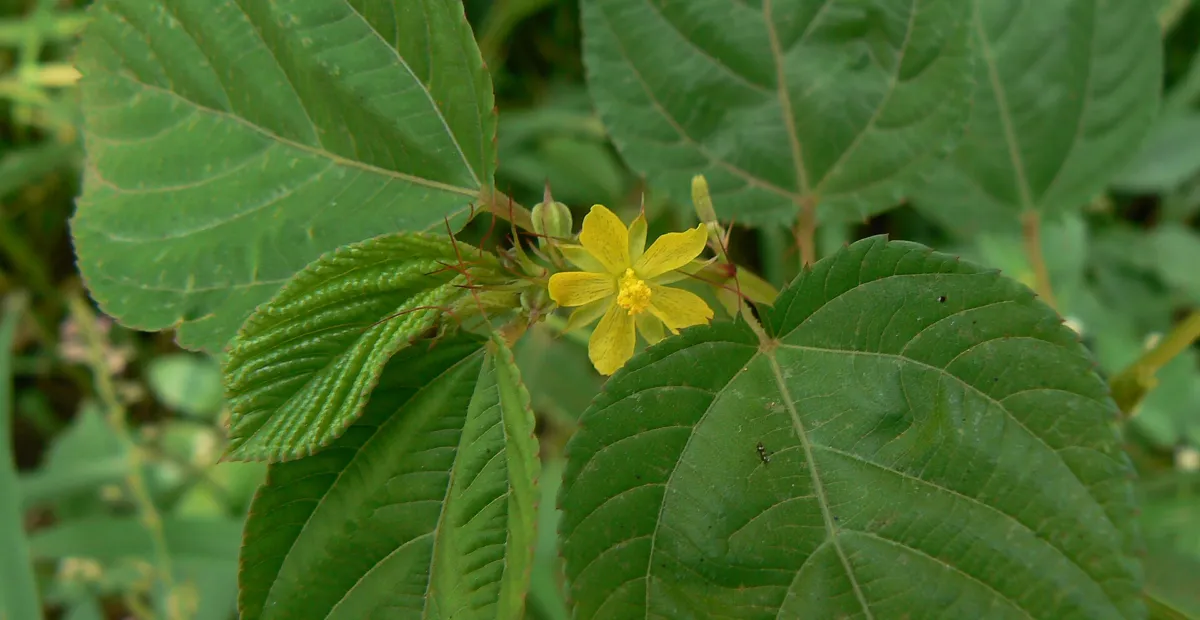
The plant has slender green to reddish-green stems, ovate-lanceolate leaves with serrated margins, and distinctive elongated, threadlike appendages on the lowest serrations. Small yellow flowers occur in short clusters opposite the upper leaves. Mature fruits are narrow, ribbed, cylindrical capsules that taper toward a beak.
Flowering
Flowers are bisexual, usually five-merous, and borne in small clusters opposite the upper leaves. The pale-yellow petals are typically about 0.2–0.3 inches long. Flowers open early in the day, and the plant is predominantly self-pollinating, although insect-mediated outcrossing also occurs. Flowering can continue in successive flushes for several weeks.
Pollination and visitors
The species is mainly self-pollinated, but bees and other small insects can visit the yellow flowers and contribute to cross-pollination. The flowers are short-lived and open early in the day. Available evidence supports insect visitation, but does not justify naming a single primary pollinator species for United States gardens.
Corchorus olitorius photos
Click any photo for a larger view. Source, author and license are shown separately.
Diseases and pests
Diseases
Prevent problems by using clean seed, rotating planting areas, avoiding overhead irrigation, and providing air movement. Watch for damping-off in crowded seedlings, leaf spots during persistently wet weather, and root decline in poorly drained soil. Remove affected tissue, improve drainage, and avoid working among wet plants to limit spread.
Pests
Inspect young shoots and leaf undersides for aphids, whiteflies, thrips, caterpillars, and spider mites. Use row cover while plants are small, hand-pick caterpillars, and wash soft-bodied pests off with water. Encourage beneficial insects and reserve labeled pesticides for confirmed, significant infestations; follow all product directions for edible crops.
Toxicity and pollen
The leaves are widely eaten when harvested as a vegetable, but mature seeds and seed-containing capsules contain cardiac glycosides and can cause serious poisoning if consumed. Do not eat mature seeds, pods, or seed-contaminated greens. Store seed packets away from children and pets, and contact Poison Control or a veterinarian after suspected ingestion.
- Typical season
- Summer to early fall in temperate United States gardens
- Pollination / pollen
- Sticky pollen presented in small, short-lived flowers
This is a flowering, insect-pollinated annual, but reliable evidence is insufficient to assign a specific airborne-allergy risk level for its pollen. Flowers are small and pollen is primarily presented to visiting insects rather than dispersed by wind. People with known pollen sensitivity should still avoid direct exposure if symptoms occur.
Native habitat
It occurs in tropical and subtropical regions in moist sites such as swampy grassland, disturbed ground, field margins, and cultivated areas. It favors warmth, fertile soils, and reliable moisture, and may behave as a crop escape or weed in suitable climates. In the United States it is generally cultivated during the frost-free season rather than treated as a hardy perennial.
Interesting fact
Mulukhiyah is both a traditional leafy vegetable and a major jute-fiber crop. Its leaves become noticeably mucilaginous when cooked. The narrow capsules are ribbed and split into five valves. Seed production can continue after leafy quality declines, so harvesting goals determine when plants should be cut back.
Frequently asked questions (FAQ)
The most relevant questions about this plant, with short and direct answers.
🌱Quick care
What is Mulukhiyah?⌄
Mulukhiyah is the edible-leaf annual Corchorus olitorius, a warm-season member of the Malvaceae family. It is also grown for jute fiber, but home gardeners usually cultivate it for its mucilaginous leaves used in soups and stews.
Is Mulukhiyah easy to grow?⌄
Mulukhiyah is generally easy to grow when given heat, sun, fertile soil, and consistent moisture. It grows quickly during summer but is damaged or killed by frost.
How much sun does Mulukhiyah need?⌄
Mulukhiyah grows best in full sun, although it can tolerate light partial shade. In hot climates, a little afternoon shade may reduce water stress without greatly reducing growth.
How often should I water Mulukhiyah?⌄
Water Mulukhiyah regularly enough to keep the soil evenly and moderately moist. Do not let the soil become waterlogged, because its roots still require good drainage.
Is Mulukhiyah frost hardy?⌄
No, Mulukhiyah is frost-tender and should be grown as a warm-season annual in most of the United States. A light frost can severely damage the foliage, while a hard freeze usually kills the plant.
🌤️Environment and placement
What temperature does Mulukhiyah need to grow?⌄
Mulukhiyah needs warm growing conditions and performs best during frost-free weather. Plant it outdoors only after the danger of frost has passed, and protect or harvest it before the first fall freeze.
Can Mulukhiyah grow in containers?⌄
Yes, Mulukhiyah grows well in a large container with fertile, moisture-retentive potting mix and drainage holes. Choose a container at least 12 inches wide and deep enough to support its vigorous summer growth.
What soil is best for Mulukhiyah?⌄
Use fertile, moisture-retentive but well-drained loam for Mulukhiyah. Incorporating compost before planting can improve both nutrient availability and moisture consistency.
Can Mulukhiyah grow in partial shade?⌄
Mulukhiyah can tolerate light partial shade, but full sun usually produces stronger growth and better leaf yields. Deep shade may result in weak, elongated plants and fewer harvestable leaves.
💧Care and problems
How fast does Mulukhiyah grow?⌄
Mulukhiyah grows rapidly in warm weather and can produce harvestable leaves within several weeks after establishment. Growth slows sharply in cool conditions and stops after frost.
How do I fertilize Mulukhiyah?⌄
Plant Mulukhiyah in compost-enriched soil and feed lightly if growth is pale or weak. Excessive nitrogen can encourage lush, soft growth without being necessary for a productive home crop.
Why are my Mulukhiyah leaves turning yellow?⌄
Yellow leaves may result from overwatering, poor drainage, nutrient deficiency, or cool temperatures. Check soil moisture first, improve drainage if needed, and avoid feeding heavily while the plant is cold-stressed.
What pests attack Mulukhiyah?⌄
Mulukhiyah can be damaged by common leaf-chewing insects, sap-feeders, and occasionally nematodes. Inspect the undersides of leaves regularly and use the least-toxic control appropriate for an edible crop.
Should I mulch around Mulukhiyah?⌄
A light layer of organic mulch can help Mulukhiyah maintain even soil moisture and reduce weed competition. Keep mulch slightly away from the stem to improve airflow and reduce the risk of rot.
When can I harvest Mulukhiyah leaves?⌄
Begin harvesting Mulukhiyah leaves once the plants are established and producing vigorous new growth, often about six weeks after sowing. Pick young leaves and tender shoot tips regularly for the best texture.
How do I harvest Mulukhiyah without killing the plant?⌄
Harvest the upper young leaves and shoot tips while leaving enough lower foliage for continued growth. Frequent light harvesting is usually better than removing nearly all leaves at once.
Can Mulukhiyah be grown indoors over winter?⌄
Mulukhiyah can be started indoors, but maintaining a mature plant through winter requires strong light, warmth, adequate container space, and careful watering. For most gardeners, growing a new crop from seed the following spring is easier.
🪴Planting and repotting
When should I plant Mulukhiyah in the United States?⌄
Sow Mulukhiyah outdoors after the soil has warmed and nighttime temperatures remain reliably above about 60°F. In most of the United States, this means late spring to early summer, with timing adjusted for local frost dates.
How do you plant Mulukhiyah seeds?⌄
Sow Mulukhiyah seeds shallowly in prepared, moist soil and keep the seedbed evenly damp until germination. Thin crowded seedlings so plants have enough room for airflow and repeated leaf harvesting.
How long does Mulukhiyah take to germinate?⌄
Mulukhiyah usually germinates within roughly one to two weeks under warm, consistently moist conditions. Germination can be slower when the soil is cool, dry, or crusted.
How far apart should Mulukhiyah plants be?⌄
Space Mulukhiyah plants about 8 to 20 inches apart, depending on whether you want individual plants or a dense harvest bed. Wider spacing improves airflow, while closer spacing supports harvesting young shoots and leaves.
✂️Propagation and pruning
How is Mulukhiyah propagated?⌄
Mulukhiyah is normally propagated from seed. It is an annual crop, so fresh seed is generally more practical than attempting cuttings or overwintering established plants.
Can I save seeds from Mulukhiyah?⌄
You can save Mulukhiyah seed by allowing selected capsules to mature and dry on the plant, then collecting them before they split. Store the cleaned, fully dry seed in a cool, dry, sealed container.
Should I prune Mulukhiyah?⌄
Yes, harvesting or pinching the growing tips encourages branching and supplies a continuing harvest of tender leaves. Stop allowing repeated harvests if you need the plant to flower and produce seed.
⚠️Toxicity and safety
Are Mulukhiyah leaves edible?⌄
Yes, the young leaves and tender shoots of correctly identified Mulukhiyah are edible when prepared as a food. Wash them thoroughly and use only healthy plant material grown away from pesticides, contaminated soil, or roadside pollution.
Are Mulukhiyah seeds poisonous?⌄
Mature Mulukhiyah seeds and seed capsules should be considered toxic and should not be eaten. Research has identified cardiac glycosides in the seeds, so keep mature seed material away from children and pets.
Can you eat Mulukhiyah seed pods?⌄
Do not eat mature Mulukhiyah seed pods or their seeds. Although some culinary traditions use very young fruits, the safest home-gardening practice is to harvest the leaves and tender shoots and discard mature capsules.
Is Mulukhiyah safe for dogs and cats?⌄
Do not allow dogs or cats to chew Mulukhiyah seeds or mature seed capsules. Because seed toxicity has been documented, contact a veterinarian or an animal poison service if a pet may have ingested them.
What should I do if someone eats Mulukhiyah seeds?⌄
Contact Poison Control in the United States at 1-800-222-1222 or seek urgent medical advice after possible seed ingestion. Do not induce vomiting unless a medical professional specifically instructs you to do so.
🌸Flowering and special interest
Does Mulukhiyah flower?⌄
Yes, Mulukhiyah produces small yellow flowers in the leaf axils during the warm growing season. The flowers are usually less conspicuous than the foliage and may appear after the plant has been harvested repeatedly.
What do Mulukhiyah seed pods look like?⌄
Mulukhiyah produces elongated, cylindrical seed capsules that turn from green to brown as they mature. Allow them to dry fully for seed collection, but do not treat mature capsules or seeds as edible.
Similar plants
 He African Moringa or cabbage tree (Moringa stenopetala) care guideMoringa stenopetala
  Water-celery (Oenanthe javanica) care guideOenanthe javanica
  Aibika (Abelmoschus manihot) care guideAbelmoschus manihot
  Neptunia prostrata care guideNeptunia prostrata
  Moringa (Moringa oleifera) care guideMoringa oleifera
  Talinum fruticosum care guideTalinum fruticosum