
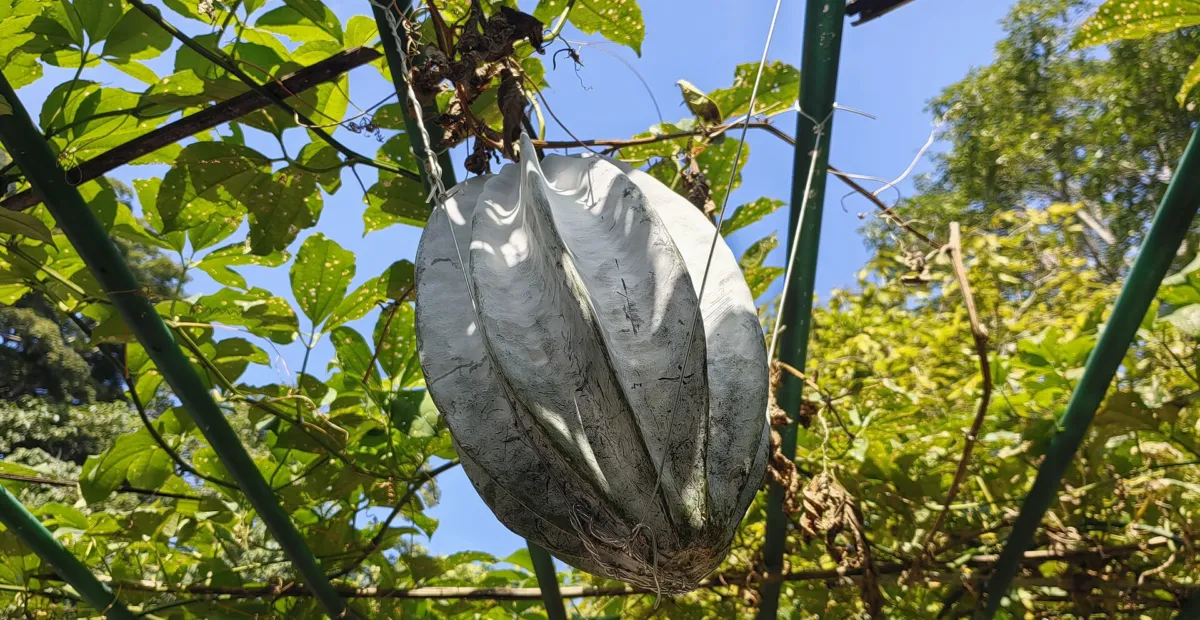
 Source:
 Telfairia occidentalis short overview
Telfairia occidentalis is a vigorous, tender tropical vine in the cucumber family, native to wet tropical Africa and widely cultivated as a leafy vegetable. Its young shoots and leaves are eaten, while female plants can produce large, ribbed fruits containing edible seeds. In the United States, it is best treated as a warm-season annual or container plant unless grown in a heated greenhouse, because it has no meaningful frost tolerance.
Taxonomic classification
Telfairia occidentalis care guide
Light and placement
Give the vine a bright site with 6 or more hours of direct sun, ideally with morning or afternoon sun and protection from harsh reflected heat in very hot climates. A sturdy trellis helps expose the foliage evenly. Stretching, small leaves, and weak stems indicate inadequate light; pale, scorched, or wilted foliage despite moist soil suggests excessive heat or light stress.
Watering and humidity
Water deeply whenever the surface begins to dry, keeping the root zone consistently moist but never stagnant. During hot weather and heavy leaf production, containers may need frequent watering; reduce watering in cool weather, but do not allow the tuberous rootstock to become completely dry. High humidity supports vigorous growth, although good airflow is important to limit fungal problems.
Soil and growing medium
Use fertile loam amended with compost and enough coarse material to prevent compaction. The soil should hold moisture for rapid leafy growth while draining freely after irrigation. A slightly acidic to neutral reaction is suitable. Avoid shallow, droughty, waterlogged, or heavily compacted soil, which can restrict the shallow feeder roots and encourage root disease.
Feeding
Incorporate finished compost before planting, then feed during active growth with a balanced vegetable fertilizer or a nitrogen-moderate organic fertilizer. Apply at label strength every 3 to 4 weeks in containers or after repeated harvests. Do not fertilize dry soil, during cold spells, or when the plant is stressed by waterlogging; water first and resume feeding once growth is active.
Growth and habit
This species is a vigorous climber with separate male and female plants or flowers, depending on the genetic system and population. It rapidly produces long vines and benefits from early trellising. Harvesting young shoots encourages fresh leafy growth, while allowing excessive untended spread can shade neighboring plants and make disease monitoring difficult.
Planting and repotting
Sow fresh seed in warm soil after cold weather has passed, or start it in a deep container to minimize root disturbance. Plant into fertile, evenly moist soil once nights are reliably warm. Install the trellis before vines begin running. Because seeds are sensitive to drying and may germinate poorly after storage, use fresh, fully developed seed and avoid chilling or desiccating it.
Use a large, deep container with drainage holes and a strong trellis. Repot only when the root system has filled the container or the medium has degraded, preferably during active warm-season growth. Move the plant with the root ball intact because disturbance can slow establishment. A container at least 15–20 gallons is more realistic for a vigorous fruiting specimen than a small houseplant pot.
Propagation and pruning
Propagation
Propagation is usually by fresh seed. Sow seed promptly because it is sensitive to drying and chilling and may germinate poorly after storage. Stem cuttings and rootstock material can be used for vegetative multiplication, but they require warm, humid conditions and careful moisture control. Specialized tissue-culture methods are documented but are not practical for ordinary home propagation.
Pruning
Guide young shoots onto the trellis and remove damaged, diseased, or overcrowded growth with clean pruners. Harvesting young shoot tips can keep the vine manageable and stimulate branching. After a cold-weather setback or seasonal dieback, cut back only dead tissue once new growth shows where the living vine or rootstock remains.
Overwintering
Treat the plant as frost tender. Before temperatures fall below 50°F, move containers into a heated greenhouse or bright indoor space. Reduce watering in cooler conditions, maintain good light and airflow, and keep the rootstock above chilling temperatures. In suitable tropical climates, protect the root zone and allow seasonal regrowth, but do not expose it to frost.
Uses
The young leaves and shoots are used as cooked leafy vegetables in West African food traditions, and the seeds are also eaten. In the United States, cultivation is most practical in large containers, warm vegetable gardens, or heated greenhouses. Use only correctly identified, properly prepared plant material; traditional food use does not establish safety for concentrated extracts or medicinal preparations.
Appearance
The plant forms long, flexible green vines from a tuberous underground rootstock. Leaves are broad, green, and palmately divided into several pointed lobes, with tendrils supporting the climbing habit. Mature female plants can bear large, elongated, ribbed fruits with a pale waxy surface. The combination of lobed leaves, tendrils, and large fluted fruit helps distinguish it from ordinary squash vines.
Flowering
The species produces distinct male and female flowers, with male flowers generally appearing earlier and in far greater numbers. Female flowers develop on older, more vigorous portions of the vine and are followed by the ribbed fruit when pollination succeeds. Flowering dates vary substantially with latitude, planting date, day length, and tropical growing conditions.
Pollination and visitors
Pollination is insect-mediated, but the female flowers are relatively scarce and male flowers greatly outnumber them. Published floral studies report pollen and nectar primarily from male flowers, which may explain why female flowers receive fewer visits. The available evidence supports flower-visiting insects generally, but does not establish a single principal pollinator species for U.S. gardens.
Telfairia occidentalis photos
Click any photo for a larger view. Source, author and license are shown separately.
Diseases and pests
Diseases
Watch for powdery mildew, downy mildew, leaf spots, and root or crown rots, especially under crowded, wet conditions. Use clean seed and tools, avoid overhead irrigation, improve airflow, and remove badly affected leaves. Rotate planting areas when possible. Waterlogged soil is particularly risky; correct drainage before using fungicides, and follow U.S. label directions for any product used on edible crops.
Pests
Common cucurbit pests such as aphids, whiteflies, spider mites, thrips, cucumber beetles, and caterpillars may attack foliage or young growth. Inspect leaf undersides and growing tips frequently. Use row cover on young plants, hand-pick larger pests, wash off small infestations, and conserve beneficial insects. For edible crops, use only products labeled for the crop and observe the harvest interval.
Toxicity and pollen
The plant has a long history of food use, but older laboratory studies reported toxicity from concentrated root and leaf extracts in rodents, while later animal studies found no acute toxicity at some oral extract doses. These results do not establish safety for pets, children, concentrated preparations, or unusually large amounts. Use only properly identified, traditionally prepared edible parts and prevent access to raw roots, extracts, and unknown plant material.
- Typical season
- Warm-season flowering; U.S. timing varies by greenhouse or outdoor climate.
- Pollination / pollen
- Heavy, locally released pollen from male flowers; airborne persistence is not well documented.
This is an insect-pollinated flowering vine, and male flowers produce pollen. Reliable species-specific data on airborne pollen counts, allergenicity, and clinical allergy cases were not located. Avoid assuming zero allergy risk; sensitive gardeners should limit direct exposure during flowering, use gloves when handling flowers, and avoid deliberately drying or aerosolizing pollen.
Native habitat
The species is native to humid, wet tropical regions of Africa, where it grows in warm climates with abundant rainfall and fertile soils. It is associated with tropical cultivation and moist lowland environments rather than frost-prone habitats. Its tuberous rootstock allows persistence through unfavorable periods, while the aerial vines may die back seasonally.
Interesting fact
The plant is dioecious or strongly sex-differentiated, so fruit production depends on female plants and compatible pollen. Its seeds are recalcitrant and lose viability when dried or chilled. A surviving underground rootstock can regenerate new shoots after the aerial vine declines. Female plants are often more vigorous and produce more useful leafy material than male plants.
Frequently asked questions (FAQ)
The most relevant questions about this plant, with short and direct answers.
🌱Quick care
What is Telfairia occidentalis?⌄
Telfairia occidentalis is a vigorous tropical climbing vine in the Cucurbitaceae family, grown mainly for its edible leaves and seeds. It is commonly called fluted gourd or fluted pumpkin, but the verified plant identity is Telfairia occidentalis.
Is Telfairia occidentalis easy to grow?⌄
Telfairia occidentalis can be productive when given heat, moisture, fertile soil, and sturdy support, but it is not reliably hardy in most of the United States. In cooler regions, grow it as a warm-season annual or in a greenhouse.
🌤️Environment and placement
How much sun does Telfairia occidentalis need?⌄
Give Telfairia occidentalis full sun for strongest growth, although it can tolerate partial shade. In very hot climates, afternoon shade may reduce heat stress if the soil remains evenly moist.
What USDA hardiness zones can grow Telfairia occidentalis outdoors?⌄
Telfairia occidentalis is frost tender and is best grown outdoors only where the growing season stays warm and frost-free. In much of the United States, plant it after the last spring frost and protect it from temperatures near freezing.
Does Telfairia occidentalis need a trellis?⌄
Yes, a sturdy trellis or other support is strongly recommended because Telfairia occidentalis produces long, vigorous vines with tendrils. A support keeps the foliage off wet soil, improves air circulation, and makes harvesting easier.
How large can a Telfairia occidentalis vine become?⌄
Telfairia occidentalis can develop exceptionally long climbing vines, potentially reaching about 50 feet under favorable tropical conditions. Provide ample vertical or horizontal space, and guide new growth before the stems become difficult to manage.
How do you overwinter Telfairia occidentalis?⌄
Overwinter Telfairia occidentalis in a warm greenhouse or bright indoor space protected from frost, keeping the soil lightly but consistently moist. Reduce watering during slower growth, maintain good airflow, and expect some leaf loss after moving it indoors.
Can Telfairia occidentalis survive winter outdoors in the United States?⌄
Telfairia occidentalis generally cannot survive freezing temperatures outdoors and should be treated as frost tender. In areas with cool winters, grow it as a seasonal annual or move a container indoors before temperatures approach freezing.
💧Care and problems
How often should I water Telfairia occidentalis?⌄
Water Telfairia occidentalis whenever the soil surface begins to dry, keeping the root zone evenly moist but not waterlogged. Container plants and vines growing in hot, windy weather may need watering more frequently.
When can you harvest Telfairia occidentalis leaves?⌄
Leaf harvest may begin roughly 80–90 days after sowing when the plant is actively growing. Harvest tender shoots and leaves with clean tools, leaving enough healthy vine and foliage to support continued regrowth.
How often can Telfairia occidentalis be harvested?⌄
Telfairia occidentalis can be harvested repeatedly during active growth, and research indicates that approximately 3- to 4-week intervals can encourage branching and repeated flushes. Exact timing depends on plant vigor, fertility, moisture, and how heavily each harvest removes.
Why is my Telfairia occidentalis not growing well?⌄
Poor growth is commonly associated with cold temperatures, weak light, depleted soil, inconsistent moisture, poor drainage, or damaged seedlings. Check warmth and root-zone moisture first, then improve fertility and provide sturdy support without keeping the soil saturated.
Why are Telfairia occidentalis leaves turning yellow?⌄
Yellow leaves may result from overwatering, poor drainage, nutrient depletion, root stress, or naturally aging foliage. Keep the soil evenly moist rather than soggy, inspect the roots and undersides of leaves, and correct growing conditions before adding fertilizer.
🪴Planting and repotting
Can Telfairia occidentalis grow in containers?⌄
Telfairia occidentalis can grow in a large container if it has rich soil, dependable moisture, excellent drainage, and a strong trellis. Choose a container large enough for vigorous roots and expect to water more often than plants growing in the ground.
What soil is best for Telfairia occidentalis?⌄
Use rich, fertile, moisture-retentive soil that still drains well. Incorporating finished compost or other well-rotted organic matter can improve fertility and moisture holding without leaving the roots in stagnant water.
How do you plant Telfairia occidentalis seeds?⌄
Plant fresh, mature seeds in warm, fertile, evenly moist soil, setting them about 2 inches deep. Use a warm location and avoid disturbing the large cotyledons, which supply important reserves during early seedling growth.
When should I start Telfairia occidentalis seeds indoors?⌄
Start Telfairia occidentalis indoors about 4–6 weeks before your expected last spring frost, using a warm growing area. Transplant only after cold weather has passed, because the vine is frost tender and dislikes chilled soil.
✂️Propagation and pruning
How long do Telfairia occidentalis seeds take to germinate?⌄
Telfairia occidentalis seeds commonly germinate in roughly 1–2 weeks under warm, favorable conditions, although timing varies with seed freshness, seed size, temperature, and growing medium. Large, viable seeds generally establish more vigorously than small ones.
Can you grow Telfairia occidentalis from store-bought seeds?⌄
You can grow Telfairia occidentalis from viable seeds, but seed freshness matters because stored seeds may lose viability or begin germinating inside the fruit. Choose sound, mature seeds from a reliable source and sow them promptly.
Can Telfairia occidentalis be propagated from cuttings?⌄
Telfairia occidentalis is traditionally propagated by seed, and reliable home-gardening guidance for ordinary stem cuttings is limited. Specialized research has examined tissue culture and regeneration, but seed propagation is the practical method for most growers.
How should I prune Telfairia occidentalis?⌄
Prune Telfairia occidentalis selectively to control the vine and harvest tender shoots and leaves. Make clean cuts above a node, avoid removing excessive growth at once, and leave enough foliage for continued plant recovery and development.
⚠️Toxicity and safety
Can you eat Telfairia occidentalis leaves?⌄
The young leaves and tender shoots of Telfairia occidentalis are traditionally used as a leafy vegetable, especially in West African cuisines. Harvest from correctly identified plants and wash and prepare the leaves appropriately before eating.
Are Telfairia occidentalis seeds edible?⌄
The mature seeds of Telfairia occidentalis are traditionally eaten and are valued for their protein and oil content. Preparation practices vary, so use properly identified, mature seeds from a trustworthy source rather than assuming every part of the fruit is edible.
Is Telfairia occidentalis toxic to humans or pets?⌄
Safety evidence for Telfairia occidentalis is incomplete, so do not assume that every plant part is safe for people or pets. The leaves and seeds have traditional food uses, but avoid unverified medicinal preparations and seek professional advice after accidental ingestion.
Is the Telfairia occidentalis fruit edible?⌄
The large fruit is primarily valued for its seeds, while the fruit flesh is not generally treated as a standard edible vegetable. Because preparation and safety information is incomplete, use only plant parts and preparation methods supported by reliable regional food knowledge.
🌸Flowering and special interest
Does Telfairia occidentalis have male and female flowers?⌄
Yes, Telfairia occidentalis bears separate male and female flowers, usually on the same plant. Male flowers may appear earlier, while female flowers develop later and require successful pollination to produce seeds.
How can I tell male and female Telfairia occidentalis flowers apart?⌄
Male flowers have visible stamens and do not have a swelling behind the flower, while female flowers have a small, developing ovary that resembles a miniature fruit. Female flowers generally appear later than male flowers.
Why is my Telfairia occidentalis flowering but not producing fruit?⌄
Flowering without fruit usually indicates insufficient pollination, a lack of compatible pollinating insects, stress, or the presence of male flowers without receptive female flowers. Encourage pollinators and, if necessary, transfer pollen from a male flower to a female flower by hand.
Does Telfairia occidentalis need hand pollination?⌄
Hand pollination is not always necessary outdoors, but it can improve fruit set where pollinating insects are scarce. Use a small brush or freshly opened male flower to transfer pollen to the stigma of a receptive female flower.
Similar plants
 Water spinach (Ipomoea aquatica) care guideIpomoea aquatica
  He African Moringa or cabbage tree (Moringa stenopetala) care guideMoringa stenopetala
  Talinum fruticosum care guideTalinum fruticosum
  Aibika (Abelmoschus manihot) care guideAbelmoschus manihot
  Neptunia prostrata care guideNeptunia prostrata
  Garden Huckleberry (Solanum scabrum) care guideSolanum scabrum