
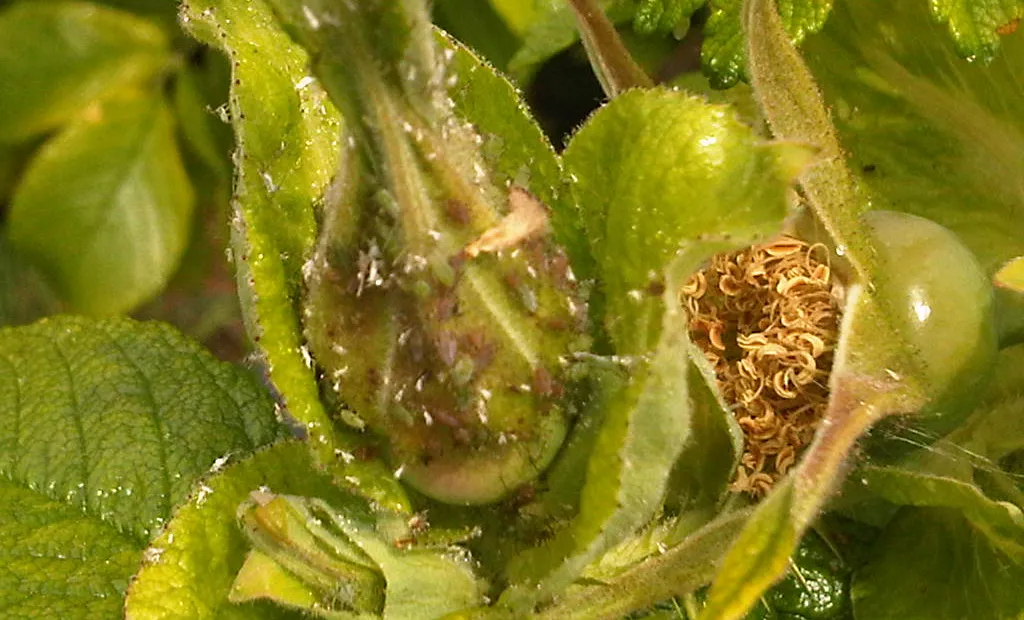
Rose aphid
Macrosiphum rosaeRose aphid overview
The rose aphid, Macrosiphum rosae, is a soft-bodied sap-feeding insect found mainly on tender shoots, buds and young leaves of cultivated and wild roses. Small colonies usually cause little lasting harm, but heavy infestations can curl foliage, distort buds, slow new growth and deposit sticky honeydew that supports sooty mold. Identification should be confirmed because several aphid species occur on roses.
Typical conditions
Overview
Macrosiphum rosae, commonly called the rose aphid, is a small, pear-shaped aphid that may appear green, pink or reddish-brown. Adults and nymphs feed in groups with piercing-sucking mouthparts, especially on tender rose shoots, buds and the undersides of young leaves.
Color alone is not sufficient for species-level identification. Roses may also host potato aphid and other aphid species, so a reliable diagnosis should consider the host, colony location, body form, cornicles and—when necessary—microscopic identification.
Symptoms and identification
Early signs include clusters of small aphids on shoot tips, flower stems, buds or the undersides of young leaves. Feeding may cause curled, puckered or distorted young leaves, shortened shoots, poor bud development, premature bud drop and reduced flower quality.
Aphids excrete sticky honeydew, which can make foliage and nearby surfaces glossy or tacky. Dark sooty mold may develop on honeydew, although the mold is a secondary superficial growth rather than the primary injury. Heavy infestations can stunt new growth, while light infestations often produce little measurable damage.
Causes and spread
The pest spreads locally when winged aphids leave crowded colonies and colonize fresh rose growth. It can also be moved on infested nursery plants, cuttings, tools or nearby rose shoots. Dense succulent growth, high nitrogen fertility, sheltered foliage and ant attendance can support colony establishment.
Rain, irrigation, wind, high temperatures and natural enemies can reduce exposed colonies. Do not assume every aphid on a rose is M. rosae; other aphid species may have different host ranges and management implications.
Life cycle and persistence
In temperate regions, rose aphids commonly overwinter as eggs on rose stems. Eggs hatch in spring, and wingless females can produce living young without mating for several generations. Nymphs mature through several molts and may remain concentrated on expanding shoots and buds.
As colonies become crowded or host growth changes, winged forms may develop and disperse. Seasonal host use and the occurrence of secondary hosts vary geographically and among aphid populations; roses are the consistently documented primary host in the sources reviewed. In autumn, sexual forms may occur and produce overwintering eggs.
Treatment and control
Treat only when colonies are increasing, new growth is being distorted, buds are being damaged or the plant cannot tolerate the infestation. For a localized problem, first remove colonies by hand or with water and reassess after several days.
If further treatment is warranted, use a labeled rose-and-aphid product and target the undersides of leaves, shoot tips and buds. Contact materials work only where spray reaches the insects. Follow the current U.S. label and avoid applications during pollinator activity or when blooms are being visited. Recheck the plant rather than applying automatically on a fixed schedule.
Low-impact and biological control
Begin with nonchemical measures. Inspect new growth at least weekly during active spring and early-summer growth, concentrating on shoot tips, buds and leaf undersides. Crush small colonies by hand or dislodge them with a firm stream of water directed at the infested tissue. Repeat as needed, while avoiding excessive force that damages buds or foliage.
- Prune and discard heavily infested shoot tips when practical, especially on young roses.
- Avoid excessive nitrogen fertilization, which promotes lush growth attractive to aphids.
- Conserve naturally occurring lady beetles, lacewings, syrphid larvae and aphid parasitoids by limiting unnecessary broad-spectrum insecticides.
- Control ants only when they are actively tending aphids; reducing ant access can improve biological control.
- Insecticidal soap or horticultural oil may be useful against exposed aphids when the product label permits use on roses. Thorough coverage is important, and repeat applications may be needed because these materials have little residual activity. Test a small area first and avoid spraying drought-stressed, heat-stressed or moisture-stressed plants.
Prevention
- Choose well-adapted rose cultivars and maintain even watering, mulch and appropriate fertility to support vigorous but not excessively lush growth.
- Inspect newly purchased roses and isolate or wash off aphids before planting them near established plants.
- Monitor shoot tips and buds from spring flush through the main growing season, with extra attention after pruning or nitrogen fertilization.
- Keep rose plantings open enough for air movement and spray coverage, but recognize that pruning alone does not prevent aphids.
- Remove badly infested terminal growth when it can be done without sacrificing valuable buds.
- Preserve flowering plants and habitat that support aphid predators and parasitoids, while avoiding unnecessary insecticide use.
Interesting facts
- Rose aphids are often found in groups on the newest rose growth rather than on older, tougher leaves.
- Ants may protect aphid colonies because they collect honeydew, potentially interfering with predators and parasitoids.
- Many aphids are difficult to identify reliably by color alone; several species can look similar on roses.
- Rose aphids are among the aphids reported to have roles in plant-virus transmission, but virus risk depends on the virus, host and local aphid population.
Use insecticides only when monitoring shows that control is justified and only products legally authorized for roses and aphids in the United States. Follow the current product label exactly, including crop or site, rate, personal protective equipment, pollinator precautions, reentry interval and harvest restrictions where applicable. Avoid routine broad-spectrum sprays because they can kill lady beetles, syrphid larvae, lacewings and parasitoids.