
 Source:
 Iris ‘Amethyst Flame’ short overview
Iris 'Amethyst Flame' is a historic tall bearded iris bred by Robert Schreiner and introduced in 1958. Its large, heavily ruffled blooms combine lilac-lavender petals with a soft pink sheen and warm brown coloring on the hafts. Growing to about 38 inches tall, this midseason-to-late bloomer performs best in full sun and sharply drained soil. It won the American Dykes Medal in 1963 and remains notable for its strong garden presence and influence in iris breeding.
Taxonomic classification
Iris ‘Amethyst Flame’ care guide
Light and placement
Give this cultivar full sun for the strongest flowering, ideally in an open bed with at least six hours of direct light. Morning sun and good air movement help foliage dry quickly. It may tolerate partial shade, but too little light can reduce flowering and produce weaker stalks; excessive shade also increases competition and dampness around the rhizomes.
Watering and humidity
Water deeply after planting and during the first growing season whenever the upper soil begins to dry. Once established, water during prolonged drought rather than on a fixed schedule. Keep the rhizome and crown from staying wet, especially in cool weather, and avoid frequent overhead irrigation that keeps foliage damp.
Soil and growing medium
Use fertile, sharply drained soil that does not remain wet around the rhizomes. A loamy or sandy-loam bed is suitable; amend heavy clay with mineral material and organic matter rather than planting the rhizome deeply. The cultivar tolerates a broad pH range, with neutral to slightly alkaline conditions generally suitable.
Feeding
Apply a light, low-nitrogen fertilizer or a modest layer of mature compost in early spring as growth begins. A second light application after flowering may support rhizome development in poor soil. Keep fertilizer off the rhizome itself, avoid excessive nitrogen, and do not feed heavily during drought or immediately after planting.
Growth and habit
Forms a clumping fan of rhizome-connected sword-shaped leaves and sends up tall, branched flowering stalks. Divide crowded clumps after flowering to preserve vigor and flowering space. Good drainage and shallow rhizome placement are more important than frequent watering.
Planting and repotting
Plant bare-root rhizomes in late summer to early fall, or as soon as they arrive while conditions permit. Set the rhizome horizontally with the upper surface exposed or barely covered, spread the roots beneath it, water thoroughly, and allow the plant to establish before winter.
Container-grown rhizomes can be divided and refreshed after flowering or in late summer. Use a wide, stable container with excellent drainage, and keep the rhizome near the soil surface rather than burying it.
Propagation and pruning
Propagation
Propagate vegetatively by dividing rhizomes in late summer, approximately six to eight weeks after flowering. Retain healthy divisions with a firm rhizome and fan of leaves, trim damaged roots, and replant promptly. Seed propagation is mainly for breeding because seedlings do not reliably reproduce the cultivar.
Pruning
After flowering, remove spent flower stalks near the base. Leave healthy leaves in place through summer so they can replenish the rhizome, then remove yellowed or frost-damaged foliage in late fall. Discard diseased leaves rather than composting them.
Overwintering
Leave established rhizomes outdoors in USDA Zones 4–8. Do not bury the rhizome under thick wet mulch; instead, use a thin, airy mulch layer only where winter heaving is a concern. In colder marginal sites, protect newly divided plants with light mulch after the ground cools, then remove excess cover in spring.
Uses
Use in sunny perennial borders, historic iris collections, cottage-style plantings, and cut-flower displays. Its tall, branched stems provide strong vertical accents. It is not an edible plant, and rhizomes should be kept away from children and pets because Iris species can be toxic if eaten.
Appearance
The plant forms upright fans of narrow, sword-shaped blue-green leaves. Tall, branched stems rise above the foliage and carry large, broad, heavily ruffled flowers. The blooms are primarily lilac-lavender with a soft pink sheen, brown or chestnut coloring on the hafts, and a pale beard. The combination of height, ruffling, and warm haft markings helps distinguish the cultivar.
Flowering
This tall bearded iris blooms in the midseason to late part of the spring iris season. Each branched stalk carries large, ruffled flowers with three upright standards, three spreading falls, and a contrasting beard. Rebloom has been reported in some locations, but it is not a dependable feature for all U.S. gardens.
Pollination and visitors
The open, showy flowers can be visited by bees and bumblebees seeking floral rewards, but available evidence does not establish a cultivar-specific primary pollinator species. Avoid treating its pollen as a major airborne allergy source solely because the plant is insect-pollinated.
Iris 'Amethyst Flame' photos
Click any photo for a larger view. Source, author and license are shown separately.
Diseases and pests
Diseases
Maintain good air circulation, avoid overhead irrigation, and remove diseased foliage. Soft rot is favored by wet, heavy soil and damaged rhizomes; discard rotted tissue and replant only firm, healthy rhizomes. Leaf spot can be reduced through sanitation and improved airflow.
Pests
Watch for iris borer damage, including water-soaked leaf streaks, brown leaf bases, frass, and soft or tunneled rhizomes. Remove affected foliage and rhizomes, maintain sanitation, and inspect plants in spring and summer. Slugs, snails, aphids, and thrips may occasionally damage foliage or flowers.
Related diseases and pests
Only Plant Doctor profiles whose host data indicate this plant may be affected are shown here.
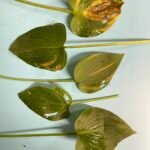 PestStrawberry foliar nematodeAphelenchoides fragariae
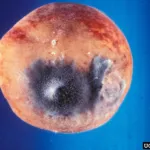 DiseaseRhizopus soft rotRhizopus stolonifer
 PestBrown Garden SnailCornu aspersum (Müller, 1774)
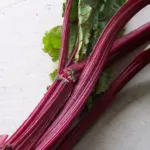 DiseaseBacterial soft rotPectobacterium carotovorum
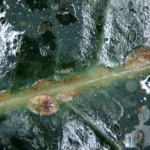 PestBrown Soft ScaleCoccus hesperidum
 DiseaseAlternaria leaf spot and fruit rotAlternaria alternata
 DiseaseRhizoctonia DiseasesRhizoctonia solani Kühn
 PestOnion thripsThrips tabaci Lindeman
Toxicity and pollen
Iris species are listed as toxic to dogs and cats, with the rhizomes containing the greatest concentration of irritating compounds. Ingestion may cause drooling, vomiting, diarrhea, or lethargy. Keep rhizomes and plant debris away from pets and seek veterinary advice after ingestion.
- Typical season
- Late spring, during bloom
- Pollination / pollen
- Heavy, insect-carried pollen
As a large-flowered, insect-pollinated iris, this cultivar is not generally regarded as a major source of airborne pollen. Direct cultivar-specific allergy studies were not found, so the low rating reflects likely pollen dispersal behavior rather than proof of zero allergy risk.
Native habitat
This is a garden cultivar rather than a wild species, descended from cultivated tall bearded iris breeding. It is adapted to temperate garden conditions with a seasonal dry period, strong sunlight, and soils that drain rapidly around the rhizomes.
Interesting fact
Introduced by Robert Schreiner in 1958 from seedling M-289-A.
Won the American Dykes Medal in 1963.
Its recorded parents include 'Crispette' and 'Pathfinder'.
It was once highly ranked in American Iris Society popularity polls.
The cultivar has been used as a parent in later iris breeding.
Frequently asked questions (FAQ)
The most relevant questions about this plant, with short and direct answers.
🌱Quick care
What is Iris 'Amethyst Flame'?⌄
Iris 'Amethyst Flame' is a tall bearded iris cultivar introduced by Schreiner in 1958. It typically grows about 38 inches tall and produces large, ruffled lilac-to-amethyst flowers.
How much sun does Iris 'Amethyst Flame' need?⌄
Give Iris 'Amethyst Flame' full sun for the strongest growth and flowering. It can tolerate partial shade, but reduced light may result in fewer flowers or weaker stems.
How often should I water Iris 'Amethyst Flame'?⌄
Water Iris 'Amethyst Flame' moderately while it is establishing, then allow the soil to dry somewhat between waterings. Established plants are relatively drought tolerant but perform poorly in persistently wet soil.
Is Iris 'Amethyst Flame' hardy in the United States?⌄
Yes, Iris 'Amethyst Flame' is a frost-hardy outdoor perennial in much of the United States. Exact performance depends on local winter temperatures, drainage, and the protection provided by the planting site.
How tall does Iris 'Amethyst Flame' grow?⌄
Iris 'Amethyst Flame' usually reaches about 36–38 inches tall when flowering. Its tall flower stalks make it suitable for the middle or back of a sunny perennial border.
🌤️Environment and placement
What type of soil is best for Iris 'Amethyst Flame'?⌄
Plant Iris 'Amethyst Flame' in well-drained loam or sandy loam. Heavy clay or waterlogged soil should be amended or avoided because excess moisture can damage the rhizomes.
Can Iris 'Amethyst Flame' grow in clay soil?⌄
Iris 'Amethyst Flame' can grow in clay soil only if drainage is improved. Incorporate suitable organic material and plant the rhizomes slightly raised rather than leaving them in saturated ground.
Where is the best place to plant Iris 'Amethyst Flame'?⌄
Choose an open, sunny location with good air circulation and fast-draining soil. A raised bed, slope, or well-drained border is generally better than a low spot that collects water.
Can Iris 'Amethyst Flame' grow in partial shade?⌄
Yes, Iris 'Amethyst Flame' can tolerate partial shade, especially in hot climates. For the best bloom display and sturdier stems, provide several hours of direct sun each day.
Is Iris 'Amethyst Flame' drought tolerant?⌄
Established Iris 'Amethyst Flame' is fairly drought tolerant once its roots and rhizomes are established. Water during prolonged drought, especially in the first growing season or during flowering.
💧Care and problems
How do I care for Iris 'Amethyst Flame' after flowering?⌄
Remove spent flowers and cut the flower stalk back after blooming. Keep the foliage in place while it remains green so the rhizome can store energy for the following season.
Why is my Iris 'Amethyst Flame' not flowering?⌄
The most common causes are insufficient sun, overcrowded rhizomes, excessive nitrogen, or overly wet soil. Check the planting depth and drainage, and divide congested clumps when needed.
Why are the leaves of my Iris 'Amethyst Flame' turning yellow?⌄
Yellow leaves may result from normal seasonal aging, overwatering, poor drainage, or disease. Remove damaged foliage, improve air circulation, and make sure the rhizomes are not sitting in wet soil.
Does Iris 'Amethyst Flame' need fertilizer?⌄
Iris 'Amethyst Flame' usually needs only light fertilization in average garden soil. Use a low-nitrogen fertilizer in spring or after flowering, because excessive nitrogen can produce foliage at the expense of blooms.
How much space does Iris 'Amethyst Flame' need?⌄
Space Iris 'Amethyst Flame' about 12–24 inches apart, depending on the planting design and how quickly the clump is expected to fill. Avoid crowding, which reduces air circulation and flowering.
🪴Planting and repotting
When should I plant Iris 'Amethyst Flame' in the United States?⌄
Plant bare-root Iris 'Amethyst Flame' in late summer to early fall, ideally several weeks before the ground freezes. Container-grown plants can usually be planted during the growing season if they are watered consistently while establishing.
How should I plant an Iris 'Amethyst Flame' rhizome?⌄
Set the rhizome horizontally with its roots spread downward and the upper surface exposed or just barely covered with soil. Planting too deeply is a common cause of poor flowering and rhizome problems.
Can Iris 'Amethyst Flame' be grown in a container?⌄
Yes, Iris 'Amethyst Flame' can be grown in a large container with excellent drainage and a gritty, well-drained potting mix. Choose a heavy pot because the tall flower stalks can make small containers unstable.
✂️Propagation and pruning
How do I propagate Iris 'Amethyst Flame'?⌄
Propagate Iris 'Amethyst Flame' by dividing established rhizomes rather than by seed. Each division should include a healthy rhizome section and a fan of leaves, and divisions are best replanted in late summer.
When should I divide Iris 'Amethyst Flame'?⌄
Divide Iris 'Amethyst Flame' about every three to five years, or when the clump becomes crowded and flowering declines. Late summer, after flowering, is generally the most suitable time for division.
Can Iris 'Amethyst Flame' be grown from seed?⌄
It can produce seed if pollinated, but seedlings will not reliably reproduce the named cultivar. To preserve the exact characteristics of Iris 'Amethyst Flame', use rhizome division.
Should I cut back Iris 'Amethyst Flame' foliage in fall?⌄
Do not cut healthy foliage back while it is still green because it continues feeding the rhizome. Remove diseased or damaged leaves promptly, and trim remaining foliage after it has naturally declined.
⚠️Toxicity and safety
Is Iris 'Amethyst Flame' toxic to dogs and cats?⌄
Yes, Iris 'Amethyst Flame' is toxic to dogs and cats if ingested. Keep pets from chewing the plant and contact a veterinarian promptly if ingestion causes vomiting, drooling, diarrhea, or other concerning symptoms.
Is Iris 'Amethyst Flame' poisonous to people?⌄
Iris 'Amethyst Flame' should not be eaten and may cause irritation or illness if plant parts are ingested. Wear gloves when handling it if you have sensitive skin, and keep rhizomes away from children.
🌸Flowering and special interest
When does Iris 'Amethyst Flame' bloom?⌄
Iris 'Amethyst Flame' generally blooms in mid to late spring, depending on the local climate. Its registered bloom season is described as midseason to late, and occasional rebloom has been reported in some regions.
What color are the flowers of Iris 'Amethyst Flame'?⌄
The flowers are typically large, ruffled lilac, lavender, or amethyst-lavender with a soft pink sheen. The hafts may show warmer chestnut or flame-colored markings, giving the cultivar its name.
Is Iris 'Amethyst Flame' a reblooming iris?⌄
Iris 'Amethyst Flame' is primarily known as a spring-blooming tall bearded iris, not a reliably reblooming cultivar. Rebloom has been reported in some locations, but it should not be expected in every U.S. garden.
Is Iris 'Amethyst Flame' fragrant?⌄
Fragrance is not consistently documented as a defining feature of Iris 'Amethyst Flame'. Its main ornamental qualities are the large, heavily ruffled flowers, unusual lilac-amethyst coloring, and tall branching stems.
Is Iris 'Amethyst Flame' good for cut flowers?⌄
Yes, the tall stems and large, substantial flowers make Iris 'Amethyst Flame' suitable for cutting. Cut stems when a lower flower is beginning to open, and place them in clean water immediately.
Similar plants
 Delosperma nubigenum care guideDelosperma nubigenum
 Flatleaf Sheepfig (Delosperma ashtonii) care guideDelosperma ashtonii
 Delosperma congestum care guideDelosperma congestum
 He pickle pla (Delosperma echinatum) care guideDelosperma echinatum
 Tarkastad Sheepfig (Delosperma dyeri) care guideDelosperma dyeri
 Busy Lizzie (Impatiens walleriana) care guideImpatiens walleriana