
 Source:
 Busy Lizzie (Impatiens walleriana) short overview
Busy Lizzie (Impatiens walleriana) is a tender tropical perennial from eastern Africa that is usually grown as a colorful annual in U.S. gardens. Its dense, rounded growth and abundant pink, red, coral, white, or bicolored flowers make it especially useful in shaded beds, containers, and hanging baskets. Keep it evenly moist in rich, well-drained soil, protect it from frost, and provide morning or filtered light for the best flowering.
Taxonomic classification
Busy Lizzie (Impatiens walleriana) care guide
Light and placement
Provide bright filtered light, dappled shade, or morning sun with afternoon shade. Plants can tolerate deep shade but usually become taller and flower less. Too much hot afternoon sun may bleach or scorch leaves and cause repeated wilting; too little light produces weak, stretched growth and fewer blooms. East-facing exposures, shaded porches, and beds beneath open tree canopies are usually suitable.
Watering and humidity
Water when the surface begins to dry, soaking the root zone thoroughly and allowing excess water to drain. Do not let containers stand in water. Check plants more often during hot, dry weather because the foliage wilts quickly, then reduce watering in cool weather. Water at the soil line when possible to reduce disease spread.
Soil and growing medium
Use a rich, moisture-retentive but well-drained potting mix or garden soil with plentiful organic matter. Slightly acidic to neutral conditions are suitable. Avoid compacted soil and containers that remain waterlogged, because saturated roots can rot quickly. A mulch layer helps keep the root zone evenly moist during hot weather.
Feeding
Feed container plants with a balanced fertilizer at half strength every 2–4 weeks during active growth, or use a controlled-release fertilizer according to its label. Garden plants benefit from compost worked into the soil before planting. Reduce or stop feeding when growth slows, during severe heat stress, or after frost damage.
Growth and habit
Plants grow rapidly into dense, rounded or slightly spreading clumps. In hot weather they may become leggy or wilt dramatically even when they recover after watering. Pinching or trimming back elongated stems encourages branching and restores a fuller appearance. Consistent moisture is more important than heavy fertilization for maintaining compact growth.
Planting and repotting
Plant outdoors after the danger of frost has passed and soil has warmed. Set nursery plants at the same depth they occupied in their containers. Space plants about 8–12 inches apart for a dense display, allowing extra room where airflow is poor. Harden greenhouse-grown plants for several days before planting.
Repot container plants when roots circle the pot or growth slows, usually in spring. Move into a container only one size larger and use fresh, well-drained potting mix. Avoid burying the crown or keeping the new container constantly saturated.
Propagation and pruning
Propagation
Sow seed indoors about 8–10 weeks before the intended outdoor planting date. Press seed onto the surface of a moist sterile mix because light can aid germination, and keep it warm and humid. Soft stem cuttings can also root readily in clean, moist propagation media. Plants are usually propagated before flowering or while actively growing.
Pruning
If plants become leggy in late summer, trim back the longest stems by up to one-third just above a leaf node. Remove damaged or diseased foliage promptly and deadhead only if desired; regular deadheading is not required for continued flowering.
Overwintering
Treat plants as annuals outside USDA Zones 10–11. Before frost, healthy container specimens may be moved indoors to a bright window or grown under lights, but reduced winter light often causes weak growth. Keep indoor plants warm, lightly moist, and isolated from pests; take cuttings if preserving a favorite cultivar.
Uses
Widely used for shaded annual beds, borders, window boxes, containers, hanging baskets, and protected patios. It is valued for continuous color in locations where many flowering annuals perform poorly. It is ornamental rather than a recommended edible or medicinal plant.
Appearance
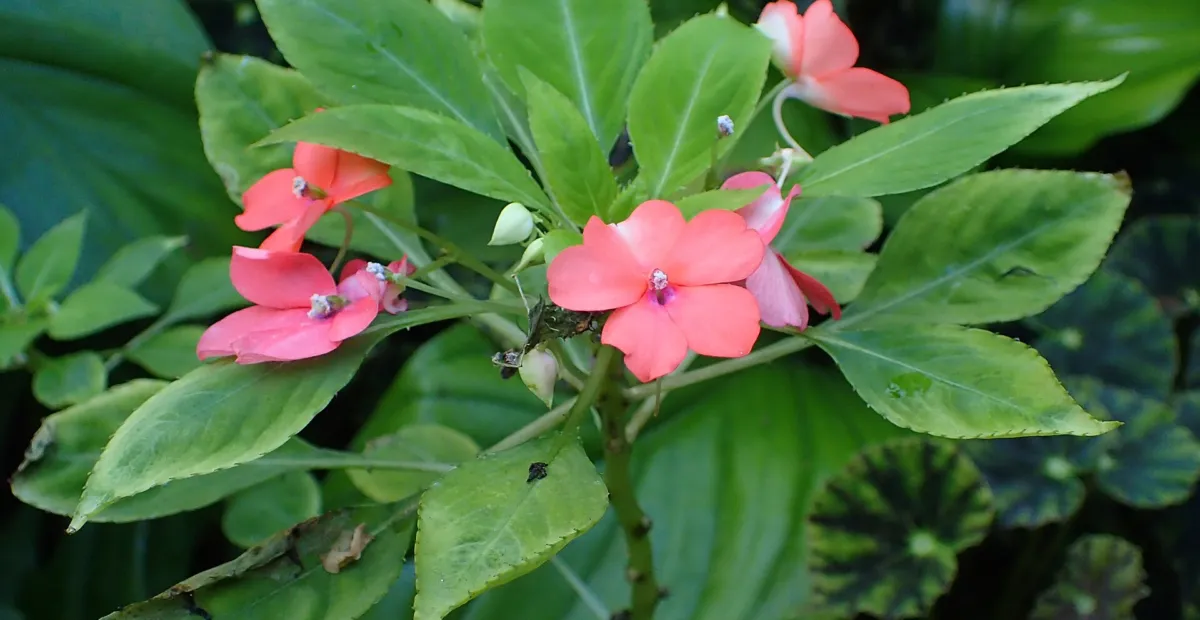
Busy Lizzie has glossy oval to elliptic leaves, succulent-looking green stems, and a dense rounded habit. The flowers are carried above or among the foliage and may be flat-faced, spurred, single, semidouble, double, or bicolored. Mature seed capsules are small and ribbed; when ripe, they split explosively and scatter seed.
Flowering
Flowers are produced freely from late spring through the first fall frost in temperate U.S. gardens. Flowering is strongest with bright filtered light or morning sun followed by afternoon shade. Deep shade can produce taller plants with fewer flowers, while intense hot afternoon sun may scorch foliage and increase wilting.
Pollination and visitors
Flowers provide nectar to some visiting insects, and published studies document nectar feeding by mosquitoes. General insect visitation and seed set have also been recorded, but strong, consistent attraction of common U.S. bees or butterflies is not sufficiently established for a high pollinator rating.
Impatiens walleriana photos
Click any photo for a larger view. Source, author and license are shown separately.
Diseases and pests
Diseases
The most important disease is impatiens downy mildew, which causes pale or yellowed leaves, downward leaf curling, white-gray growth beneath leaves, and rapid defoliation. Improve air circulation, avoid overhead watering, remove infected plants promptly, and do not compost diseased material. Choose resistant modern cultivars where available.
Pests
Watch for aphids, thrips, spider mites, whiteflies, fungus gnats, and slugs. Inspect leaf undersides and new growth regularly, isolate infested containers, improve airflow, and begin with hand removal or a targeted insecticidal soap or horticultural oil treatment when appropriate. Avoid spraying stressed plants or during pollinator activity.
Related diseases and pests
Only Plant Doctor profiles whose host data indicate this plant may be affected are shown here.
 PestBroad mitePolyphagotarsonemus latus (Banks)
 DiseaseImpatiens necrotic spot virus diseaseImpatiens necrotic spot orthotospovirus
 DiseaseCucumber mosaic virusCucumber mosaic virus
 PestCyclamen mitePhytonemus pallidus
 PestTwo-spotted spider miteTetranychus urticae
 PestCitrus mealybugPlanococcus citri
 DiseaseSouthern blightAthelia rolfsii
 DiseaseDowny Mildew Caused by Hyaloperonospora parasiticaHyaloperonospora parasitica
Toxicity and pollen
Reliable pet-safety references generally list impatiens as non-toxic, but plant material can still cause mild stomach upset if eaten in quantity, and individual sensitivity is possible. Prevent children and pets from consuming large amounts of any ornamental plant, and seek professional advice if symptoms develop.
- Typical season
- No dependable U.S. airborne-pollen season is established for this species.
- Pollination / pollen
- Insect-dispersed pollen, not typically released in large airborne clouds
Impatiens walleriana is primarily insect-pollinated, so its pollen is not generally released like wind-pollinated grass or tree pollen. However, direct clinical allergy data and reliable U.S. airborne-pollen measurements for this species are scarce; an allergy-free claim would therefore be unwarranted.
Native habitat
The species is native to moist tropical and subtropical regions of Kenya, Mozambique, Tanzania, and Zimbabwe. It naturally favors humid, shaded or partly shaded habitats and moisture-retentive soils. In cultivation it performs best when its roots remain cool and evenly moist while foliage receives protection from harsh afternoon heat.
Interesting fact
The genus name Impatiens refers to the impatient release of ripe seeds from explosive capsules. The species is native to eastern Africa but is one of the most widely used shade bedding plants in the United States. Its flowers may be single, semidouble, double, or bicolored depending on cultivar. It is a tropical perennial that behaves as a seasonal annual wherever frost occurs.
Frequently asked questions (FAQ)
The most relevant questions about this plant, with short and direct answers.
🌱Quick care
What is Busy Lizzie (Impatiens walleriana)?⌄
Busy Lizzie is a shade-loving flowering plant in the balsam family, Balsaminaceae. It is commonly grown as a seasonal annual in the United States, although it can remain perennial in frost-free climates.
How much light does Busy Lizzie need?⌄
Busy Lizzie grows best in bright filtered light, partial shade, or full shade. Morning sun with afternoon shade is usually suitable, while intense direct afternoon sun can scorch the leaves and increase wilting.
How often should I water Busy Lizzie?⌄
Water Busy Lizzie whenever the soil surface begins to dry, keeping the root zone evenly moist. Do not let the pot or planting bed remain waterlogged, because saturated soil can cause root rot.
What soil is best for Busy Lizzie?⌄
Use rich, organic soil that stays moist but drains well. A quality potting mix or garden soil amended with compost is suitable, provided excess water can drain freely.
Is Busy Lizzie an annual or perennial?⌄
Busy Lizzie is usually grown as an annual in the United States because it is frost-tender. It can behave as a perennial in USDA Zones 10–11 or when protected indoors from freezing temperatures.
🌤️Environment and placement
Can Busy Lizzie grow in full shade?⌄
Busy Lizzie can tolerate full shade, but it may grow taller and produce fewer flowers. Bright shade or a few hours of gentle morning sun generally supports better blooming.
Can Busy Lizzie grow in direct sunlight?⌄
Busy Lizzie can handle limited gentle sunlight, especially in the morning, but strong afternoon sun may scorch foliage and cause rapid wilting. In hot climates, provide filtered light or afternoon shade.
Can Busy Lizzie be grown indoors?⌄
Busy Lizzie can be grown indoors near a bright window with filtered light and good air circulation. Keep the soil evenly moist, but use a container with drainage and avoid placing it against a cold window.
What temperature is best for Busy Lizzie?⌄
Busy Lizzie prefers warm conditions and should be protected from frost and freezing temperatures. Move container plants indoors before temperatures approach 40°F, and do not plant outdoors until frost danger has passed.
Can Busy Lizzie grow in containers or hanging baskets?⌄
Busy Lizzie grows well in containers, window boxes, and hanging baskets. Choose a container with drainage holes and monitor it closely because potting mix dries faster than garden soil.
💧Care and problems
Why is my Busy Lizzie wilting?⌄
Busy Lizzie commonly wilts because the soil is too dry, the plant is exposed to excessive heat or sun, or the roots are damaged by waterlogged soil. Check soil moisture and drainage before watering again.
Why are Busy Lizzie leaves turning yellow?⌄
Yellow leaves may result from overwatering, poor drainage, downy mildew, nutrient stress, or natural aging. If yellowing is accompanied by leaf drop and white growth beneath leaves, suspect downy mildew.
Why is my Busy Lizzie losing leaves?⌄
Busy Lizzie may lose leaves because of downy mildew, drought stress, excessive heat, root problems, or severe insect damage. Remove badly affected foliage and inspect the plant for wet soil, pests, or pale growth with white undersides.
How do I prevent downy mildew on Busy Lizzie?⌄
Reduce downy mildew risk by spacing plants well, watering at the soil surface in the morning, avoiding overhead irrigation, and selecting resistant cultivars when available. Remove infected plants and do not compost their tissues.
What pests attack Busy Lizzie?⌄
Busy Lizzie can be affected by aphids, spider mites, thrips, and slugs. Inspect leaf undersides regularly and address infestations early with appropriate physical or labeled garden controls.
Does Busy Lizzie need fertilizer?⌄
Busy Lizzie benefits from moderate feeding during active growth, especially in containers. Use a balanced, water-soluble fertilizer according to the label, because excessive fertilizer can encourage weak growth or worsen disease problems.
🪴Planting and repotting
When should I plant Busy Lizzie outdoors?⌄
Plant Busy Lizzie outdoors after the danger of frost has passed and the soil has begun to warm. Harden greenhouse-grown plants for several days before placing them permanently outdoors.
How far apart should Busy Lizzie plants be spaced?⌄
Space Busy Lizzie according to the mature size of the cultivar, commonly about 8–12 inches apart for bedding displays. Leave enough room for airflow to reduce disease pressure.
Does Busy Lizzie need repotting?⌄
Repot Busy Lizzie when roots fill the container, water runs rapidly through the pot, or growth becomes crowded. Move it into a pot only one size larger with fresh, well-drained potting mix.
Can Busy Lizzie be planted in garden beds?⌄
Busy Lizzie is well suited to shaded garden beds, borders, and woodland-style plantings. Prepare rich, moisture-retentive soil and avoid locations that stay saturated after rain.
✂️Propagation and pruning
How do you propagate Busy Lizzie from cuttings?⌄
Take healthy stem cuttings several inches long, remove the lower leaves, and place them in water or a moist rooting medium in bright indirect light. Keep the medium evenly moist until roots form, then transplant carefully.
Can Busy Lizzie grow from seed?⌄
Busy Lizzie can be grown from seed, although many modern cultivars are commonly purchased as transplants or propagated by cuttings. Sow seed in a sterile, moist medium and provide warmth and bright filtered light.
Should I prune Busy Lizzie?⌄
Pruning is optional but helpful for leggy or overgrown Busy Lizzie. Pinch or trim stems back by up to about one-third to encourage branching and refresh the plant's shape.
Do I need to deadhead Busy Lizzie flowers?⌄
Busy Lizzie usually does not require deadheading because spent flowers often drop on their own. Removing damaged flowers and foliage can still improve appearance and air circulation.
⚠️Toxicity and safety
Is Busy Lizzie toxic to dogs and cats?⌄
Busy Lizzie is generally considered non-toxic to dogs and cats. Eating large amounts of any plant can still cause mild stomach upset, so contact a veterinarian if symptoms develop.
Is Busy Lizzie poisonous to people?⌄
Busy Lizzie is generally considered non-toxic to people. It is still an ornamental plant rather than a food crop, so avoid intentional consumption and seek medical advice if ingestion causes symptoms.
🌸Flowering and special interest
When does Busy Lizzie bloom?⌄
Busy Lizzie typically blooms from late spring through summer and may continue until the first fall frost. Flowering is strongest when the plant receives bright shade, consistent moisture, and adequate nutrition.
Why is my Busy Lizzie not flowering?⌄
Busy Lizzie may fail to flower because of excessive shade, drought stress, heat, root problems, or excessive nitrogen fertilizer. Move container plants to brighter filtered light and keep the soil consistently moist.
How can I make Busy Lizzie bloom more?⌄
Provide bright filtered light, evenly moist well-drained soil, and moderate fertilizer to encourage abundant flowering. Pinching leggy stems can also create a fuller plant with more flowering shoots.
Similar plants
 Impatiens New Guinea Group (Impatiens hawkeri) care guideImpatiens hawkeri
 Compact White (Impatiens sunpatiens ‘Compact White’)Impatiens sunpatiens 'Compact White'
 Impatiens ‘New Guinea’Impatiens 'New Guinea'
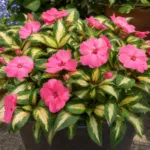 Compact Tropical (Impatiens sunpatiens ‘Compact Tropical’)Impatiens sunpatiens 'Compact Tropical'
 Fusion Glow (Impatiens walleriana ‘Fusion Glow’)Impatiens walleriana 'Fusion Glow'
 Compact Red (Impatiens sunpatiens ‘Compact Red’)Impatiens sunpatiens 'Compact Red'