
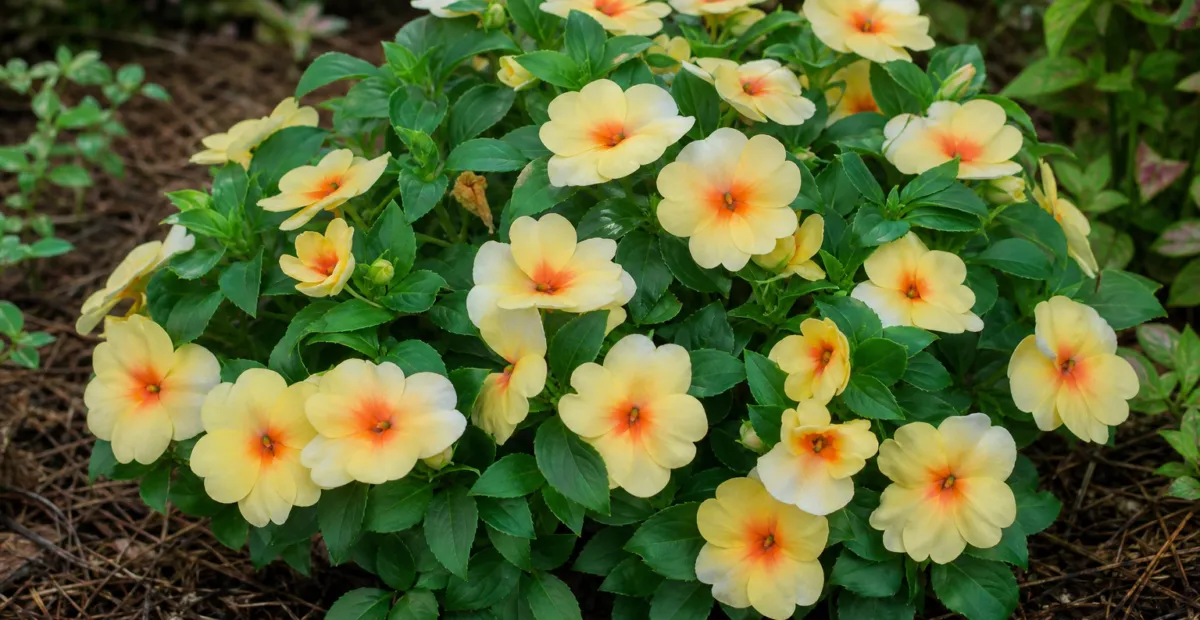
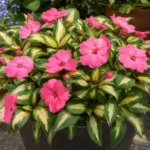
 AI-generated illustration
Fusion Glow (Impatiens walleriana ‘Fusion Glow’) short overview
Impatiens walleriana 'Fusion Glow' is a distinctive shade-garden selection with soft yellow flowers warmed by orange-peach centers and a long summer display. It forms a leafy, compact-to-mounding plant suited to containers, hanging baskets, and sheltered beds. Keep it evenly watered in rich, well-drained soil and protect it from harsh afternoon sun, drying winds, and frost. Its exact taxonomic background is somewhat uncertain in older cultivar records.
Taxonomic classification
Fusion Glow (Impatiens walleriana ‘Fusion Glow’) care guide
Light and placement
Place in bright filtered light, partial shade, or shade. An east-facing site can provide gentle morning sun; north-facing exposure is useful where summers are hot. Harsh afternoon sun may scorch leaves and cause rapid wilting, while very deep shade can produce lanky growth and fewer flowers. Protect from hot reflected light and drying wind.
Watering and humidity
Water when the surface begins to dry, soaking the root zone thoroughly and allowing excess water to drain. Keep the soil consistently moist rather than alternating between drought and saturation. Check containers more often during hot weather, reduce watering in cool conditions, and avoid wetting foliage late in the day. High humidity is tolerated if air circulation is adequate.
Soil and growing medium
Use a moisture-retentive but well-drained potting mix or garden soil enriched with organic matter. A loamy structure works well; avoid compacted soil and standing water, which can encourage root and stem rots. Slightly acidic to neutral conditions are suitable. Container mixes should drain freely while retaining enough moisture to prevent repeated wilting.
Feeding
Feed after establishment with a balanced, water-soluble fertilizer at half strength every two to four weeks, or use a controlled-release product according to its label. Container plants generally need more regular feeding than plants in amended beds. Do not fertilize drought-stressed, wilted, or diseased plants until they recover.
Growth and habit
This selection grows quickly into a dense, leafy mound with upright-to-spreading stems. It benefits from regular moisture and occasional trimming if stems become leggy late in the season. Pinching young plants can encourage branching, while excessive shade, heat, or drought may reduce flowering and make growth less compact.
Planting and repotting
Plant outdoors after the danger of frost has passed and soil has warmed. Set plants at the same depth as in their nursery container, firm the soil lightly, and water well. Allow enough room for the plant to mound without crowding; sheltered east- or north-facing positions are especially useful.
Repot container plants when roots fill the pot or the mix becomes compacted, preferably in spring. Move into a container only one size larger and refresh part of the growing medium. Handle the fleshy stems gently and water thoroughly after transplanting.
Propagation and pruning
Propagation
Commercially, this cultivar is propagated by stem cuttings to preserve its traits. Take healthy, non-flowering tip cuttings during active growth, remove lower leaves, and root them in a sterile, lightly moist medium under bright filtered light. Seed propagation is not recommended for maintaining cultivar uniformity.
Pruning
Pinch growing tips early to encourage branching. If plants become leggy late in summer, cut back the longest stems by up to one-third, then maintain even moisture while new shoots develop. Remove faded or damaged foliage for appearance and sanitation; routine deadheading is usually unnecessary.
Overwintering
Treat as an annual outdoors outside USDA Zones 10–11. Before frost, take healthy cuttings or move container plants indoors to a bright, warm location. Reduce watering slightly indoors but do not allow the root ball to dry completely. Watch for low-light legginess and indoor pests.
Uses
Use as a seasonal bedding plant, shade-container accent, hanging-basket filler, or sheltered patio plant. Its warm flower color works well with ferns, hostas, caladiums, coleus, begonias, and other shade-tolerant companions. It is not recommended as an edible or medicinal plant.
Appearance
The plant has smooth, fleshy green stems and alternate, ovate to elliptic leaves with toothed margins. Its most recognizable feature is the unusual warm-toned bloom: soft yellow petals with orange-peach coloration toward the center. The foliage is generally green rather than variegated, and the overall form is dense and rounded when grown with adequate light.
Flowering
Flowers are produced freely over the warm growing season, with individual blooms carried above the foliage on slender stalks. The Fusion Glow type is noted for unusual single flowers in a soft yellow to yellow-orange range with warmer coloration toward the center. Blooming slows under cold, drought, or severe heat stress.
Pollination and visitors
The open, nectar-bearing flowers may receive occasional visits from bees and other small insects, but this cultivar is primarily valued as an ornamental rather than as a documented specialist pollinator plant.
Diseases and pests
Diseases
Prevent disease by spacing plants for air movement, watering at the soil surface, and avoiding persistently saturated soil. Watch for root or stem rot in poorly drained conditions, powdery mildew in stagnant humid air, and downy mildew-like symptoms such as yellowing, leaf drop, and grayish growth. Remove affected material and avoid reusing contaminated soil.
Pests
Inspect new growth for aphids, thrips, spider mites, and whiteflies. Reduce stress with even watering and good air circulation; use a strong water spray for light infestations and insecticidal soap when necessary. Avoid broad-spectrum insecticides during bloom because they can harm visiting insects.
Related diseases and pests
Only Plant Doctor profiles whose host data indicate this plant may be affected are shown here.
 PestBroad mitePolyphagotarsonemus latus (Banks)
 PestCyclamen mitePhytonemus pallidus
 PestTwo-spotted spider miteTetranychus urticae
 PestCitrus mealybugPlanococcus citri
 DiseaseImpatiens necrotic spot virus diseaseImpatiens necrotic spot orthotospovirus
 DiseaseCucumber mosaic virusCucumber mosaic virus
 DiseaseSouthern blightAthelia rolfsii
 DiseaseMaple powdery mildewSawadaea bicornis
Toxicity and pollen
Impatiens is listed by major US poison-control and veterinary resources as non-toxic to dogs and cats. No specific human toxicity concern is documented for this cultivar, but plant material should not be eaten and ordinary precautions are appropriate for children and pets.
- Typical season
- Late spring through early fall while flowers are open
- Pollination / pollen
- Insect-dispersed pollen
As an insect-pollinated ornamental, its pollen is generally not released in large airborne clouds. Individual sensitivity is still possible, and flowering plants can carry other allergens such as dust or mold when grown in damp conditions.
Native habitat
The Impatiens walleriana background is associated with humid tropical African environments, especially moist forest margins and sheltered habitats. Cultivated plants prefer similar conditions: filtered light, organic soil, steady moisture, and protection from cold and drying exposure.
Interesting fact
Fusion Glow was introduced as part of the early Fusion impatiens group known for unusual flower shapes and warm, often bicolored tones. Historic variety records distinguish the original Fusion Glow from later related selections such as Fusion Glow Improved and Fusion Glow Yellow. The plant is commonly maintained by cuttings when exact cultivar characteristics are important.
Frequently asked questions (FAQ)
The most relevant questions about this plant, with short and direct answers.
🌱Quick care
What is Impatiens walleriana 'Fusion Glow'?⌄
Impatiens walleriana 'Fusion Glow' is a shade-loving, frost-tender flowering impatiens grown as a warm-season annual in most of the United States. It is valued for warm yellow to apricot-toned flowers and a dense, mounded habit.
How much light does Impatiens walleriana 'Fusion Glow' need?⌄
Give it partial shade to shade, with bright filtered light or gentle morning sun. Protect it from intense afternoon sun, which can scorch foliage and increase water stress.
How often should I water 'Fusion Glow' impatiens?⌄
Water whenever the soil surface begins to feel slightly dry, keeping the root zone evenly moist. Do not let the container or planting bed remain waterlogged.
What soil is best for Impatiens walleriana 'Fusion Glow'?⌄
Use moisture-retentive, humus-rich, well-drained loam or a quality container mix. The soil should hold consistent moisture while allowing excess water to drain freely.
Is 'Fusion Glow' impatiens an annual or perennial?⌄
It is usually grown as a warm-season annual in the United States because it is frost tender. It may persist only where winters remain reliably frost-free, roughly USDA Zones 10–12.
🌤️Environment and placement
Can 'Fusion Glow' impatiens grow in full shade?⌄
Yes, it can grow in full shade if the location receives bright ambient or filtered light. Flowering may be reduced in very dark shade.
Can Impatiens walleriana 'Fusion Glow' tolerate morning sun?⌄
Yes, gentle morning sun is usually suitable, especially when the soil remains evenly moist. Avoid hot, exposed afternoon sun in warmer climates.
Where should I plant 'Fusion Glow' impatiens outdoors?⌄
Plant it in a sheltered bed, border, container, or hanging basket with partial shade to shade. Choose a site protected from harsh afternoon heat and drying winds.
How large does 'Fusion Glow' impatiens get?⌄
It typically forms a dense mound about 14–18 inches tall and wide, although size varies with climate, watering, container volume, and growing conditions.
Is 'Fusion Glow' impatiens suitable for containers and hanging baskets?⌄
Yes, it performs well in containers and hanging baskets when grown in a quality moisture-retentive mix. Containers may need more frequent watering than plants in the ground.
💧Care and problems
Why are the leaves on my 'Fusion Glow' impatiens turning yellow?⌄
Yellow leaves most often indicate inconsistent watering, saturated soil, root stress, or natural aging of older foliage. Check drainage and soil moisture before adding fertilizer.
Why is my 'Fusion Glow' impatiens wilting even though the soil is wet?⌄
Wilting in wet soil can indicate root stress or root rot caused by poor drainage or excessive watering. Improve drainage, remove severely damaged roots if repotting, and avoid keeping the mix continuously soggy.
Does 'Fusion Glow' impatiens need fertilizer?⌄
Feed it lightly with a balanced, water-soluble fertilizer during active growth if it is in a container or nutrient-poor soil. Avoid heavy fertilization, which can produce foliage at the expense of flowers.
Does Impatiens walleriana 'Fusion Glow' need deadheading?⌄
No, regular deadheading is generally unnecessary because impatiens can continue flowering without removing every spent bloom. Trim only damaged, diseased, or excessively leggy growth.
How do I keep 'Fusion Glow' impatiens blooming all summer?⌄
Keep the soil evenly moist, provide bright shade or gentle morning sun, and prevent heat and drought stress. Occasional light feeding can help container plants maintain vigorous flowering.
What should I do if 'Fusion Glow' impatiens becomes leggy?⌄
Pinch or trim the stem tips lightly to encourage branching and a fuller mound. Also check whether the plant is receiving enough bright filtered light and whether it is crowded.
🪴Planting and repotting
When should I plant 'Fusion Glow' impatiens outdoors?⌄
Plant it outdoors after the danger of frost has passed and nighttime temperatures are consistently mild. In much of the United States, this means late spring, with timing determined by local climate.
How far apart should I plant 'Fusion Glow' impatiens?⌄
Space plants about 12 inches apart for a continuous mass while allowing airflow between them. Use wider spacing in humid locations or where disease pressure is high.
Can I grow 'Fusion Glow' impatiens indoors?⌄
Yes, it can be grown indoors in bright filtered light, a consistently moist but well-drained mix, and a container with drainage holes. Indoor plants may flower less heavily if light is insufficient.
How often should I repot 'Fusion Glow' impatiens?⌄
Repot when roots fill the container, water runs quickly through the pot, or growth becomes crowded. Move it into a pot only one size larger and refresh the moisture-retentive mix.
✂️Propagation and pruning
Can I propagate Impatiens walleriana 'Fusion Glow' from cuttings?⌄
Yes, it can be propagated from stem cuttings, which generally root best from healthy, nonflowering shoots. Because it is a named cultivated variety, check any applicable propagation restrictions before commercial multiplication.
How do I take cuttings from 'Fusion Glow' impatiens?⌄
Take a 3–4 inch cutting below a leaf node, remove the lower leaves, and place the stem in a clean, lightly moist rooting medium. Keep it warm in bright indirect light until roots form.
Can I save seeds from 'Fusion Glow' impatiens?⌄
You can collect seed, but seedlings may not reproduce the exact traits of the named cultivar. Stem cuttings are the more reliable way to preserve the plant’s characteristics.
⚠️Toxicity and safety
Is Impatiens walleriana 'Fusion Glow' toxic to dogs and cats?⌄
It is considered non-toxic to dogs and cats. Even non-toxic plants should not be treated as edible, and large amounts of plant material may still cause mild digestive upset.
Is 'Fusion Glow' impatiens edible?⌄
No, it is not an edible plant and should not be used as food or tea. Keep plant material and potting products away from children and pets.
🌸Flowering and special interest
What color flowers does 'Fusion Glow' impatiens have?⌄
Its flowers are typically warm yellow with apricot or peach accents, although the exact color can vary with the plant line and growing conditions. The blooms appear against dense green foliage.
When does 'Fusion Glow' impatiens bloom?⌄
It generally flowers from late spring through summer and may continue into early fall where temperatures remain favorable. Consistent moisture and protection from extreme heat support longer flowering.
Why is my 'Fusion Glow' impatiens not flowering?⌄
Insufficient light, drought stress, excessive heat, overfertilization, or root problems can reduce flowering. Move it to brighter filtered light, stabilize watering, and avoid high-nitrogen fertilizer.
Similar plants
 Impatiens ‘New Guinea’Impatiens 'New Guinea'
 Compact Red (Impatiens sunpatiens ‘Compact Red’)Impatiens sunpatiens 'Compact Red'
 Impatiens New Guinea Group (Impatiens hawkeri) care guideImpatiens hawkeri
 Compact Tropical (Impatiens sunpatiens ‘Compact Tropical’)Impatiens sunpatiens 'Compact Tropical'
 Busy Lizzie (Impatiens walleriana) care guideImpatiens walleriana
 Compact White (Impatiens sunpatiens ‘Compact White’)Impatiens sunpatiens 'Compact White'