
 Source:
 Tarkastad Sheepfig (Delosperma dyeri) short overview
Tarkastad Sheepfig (*Delosperma dyeri*) is a compact succulent subshrub from the mountains of South Africa’s Eastern Cape. It forms a low, spreading clump of fleshy, papillate green leaves and produces conspicuously large flowers in orange to copper-orange shades. In the United States, it is best suited to full sun, gravelly or sandy soil, rock gardens, troughs and containers where rapid drainage prevents winter rot. Exact garden performance varies by climate and provenance.
Taxonomic classification
Tarkastad Sheepfig (Delosperma dyeri) care guide
Light and placement
Provide full sun, ideally with a south- or west-facing exposure and unobstructed light for most of the day. In very hot climates, bright afternoon sun is usually acceptable if the root zone drains rapidly. Stretching, sparse flowering and greener, softer growth indicate insufficient light; bleached patches or scorched tissue can indicate abrupt heat or reflected-light stress.
Watering and humidity
Water deeply, then allow the growing medium to dry substantially before watering again. Reduce irrigation in cool weather and during winter, especially in areas with frequent rain. Container plants may need more frequent checks than in-ground specimens, but never maintain a constantly damp mix. Soft, translucent or collapsing leaves indicate excess moisture; wrinkling can indicate drought stress.
Soil and growing medium
Use a sharply drained, mineral-heavy substrate containing grit, coarse sand, pumice or small gravel. Avoid compacted clay and heavy organic mixes that stay wet around the crown. A slightly acidic to slightly alkaline reaction is generally suitable; exact species-specific pH data are limited.
Feeding
Feed sparingly. In spring, use a dilute balanced succulent fertilizer or a small amount of low-nitrogen controlled-release fertilizer if growth is weak. Do not fertilize drought-stressed, freshly divided or dormant plants, and avoid rich feeding that produces soft, rot-prone growth.
Growth and habit
A compact, low-growing succulent subshrub with spreading or decumbent stems. It is most vigorous in bright light and porous soil, while excess irrigation can cause soft growth and crown failure. The plant generally needs little routine maintenance after establishment.
Planting and repotting
Plant outdoors in spring after the local danger of hard frost has passed, choosing a raised or sloping position with excellent drainage. Set the crown level with the surrounding soil rather than burying the stems. Allow about 12 inches of space for a compact spreading plant and keep surrounding vegetation from shading it.
Repot in spring when active growth begins or when roots fill the container. Handle the shallow, fleshy root system carefully, refresh the gritty mix, and keep the crown at its former level. Delay thorough watering briefly after root disturbance.
Propagation and pruning
Propagation
Propagate from stem cuttings or seed. Take healthy cuttings during active growth, allow cut surfaces to dry briefly, then root them in a gritty mix with restrained watering. Surface-sow fine seed because light can aid germination; keep the medium lightly moist until emergence, then increase ventilation.
Pruning
Little pruning is required. Remove dead, damaged or rotting stems with clean tools after the surface has dried. Lightly trim stretched growth in spring to maintain a compact form, but avoid cutting deeply into old, leafless material unless live buds are visible.
Overwintering
In USDA Zones 6b–8, winter survival depends heavily on drainage. Keep the crown out of standing rain and avoid wet mulch against the stems. In colder climates, grow it in a container and overwinter under bright, cool, frost-free protection, watering only enough to prevent severe shriveling.
Uses
Best documented as an ornamental for rock gardens, alpine troughs, gravel beds, xeriscapes and sharply drained containers. Its compact habit and vivid flowers make it useful as a small-scale groundcover or accent. It should not be presented as edible or medicinal without separate authoritative evidence.
Appearance
The plant has compact, low, spreading growth with densely leafy, decumbent stems. Leaves are fleshy, green, pointed and approximately half-round to semiterete in cross-section, with a subtly papillate or glistening surface. The orange-toned flowers are unusually large relative to the compact foliage and provide the main identification feature in bloom.
Flowering
This species produces conspicuously large, daisy-like flowers in orange shades. Delosperma flowers commonly open most fully in bright daylight and close during dull conditions or evening. Exact peak bloom dates vary with latitude, winter conditions and rainfall.
Pollination and visitors
The large, open flowers are consistent with visitation by small bees, bumblebees and other flower-visiting insects. A species-specific pollinator study was not located, so the attraction rating is based on documented Delosperma floral ecology and the species’ conspicuous flowers rather than a confirmed single insect species.
Diseases and pests
Diseases
The principal risk is root or crown rot caused by persistently wet soil, especially in cool seasons. Improve drainage, avoid waterlogging and remove collapsed tissue promptly. Good air movement and keeping dense organic mulch away from the crown help reduce fungal problems.
Pests
Watch for mealybugs, aphids and slugs or snails in sheltered, moist settings. Inspect new growth and container plants, remove pests manually where practical, and improve light and airflow before using a labeled treatment. Avoid routine spraying when flowers are open to visitors.
Related diseases and pests
Only Plant Doctor profiles whose host data indicate this plant may be affected are shown here.
 Environmental stressWaterlogging
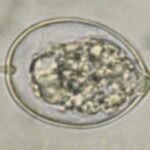 DiseasePhytophthora cactorum crown, collar, root and fruit rotPhytophthora cactorum
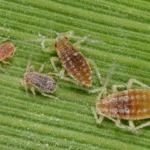 PestMealy Plum AphidHyalopterus pruni (Geoffroy, 1762)
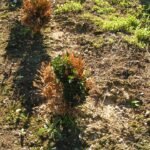 DiseasePhytophthora root and crown rotPhytophthora nicotianae
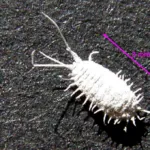 PestObscure mealybugPseudococcus viburni
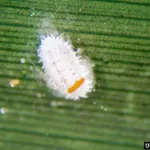 PestCitrus mealybugPlanococcus citri
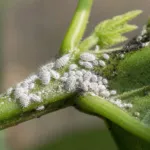 PestCotton mealybugPhenacoccus solenopsis Tinsley
Toxicity and pollen
No authoritative species-specific toxicology record was located for Delosperma dyeri. Do not treat the lack of a record as proof of safety. Prevent ingestion of plant material, supervise children and pets around unfamiliar succulents, and wash skin after handling if irritation occurs.
- Typical season
- Typically late spring through summer during flowering in the United States.
- Pollination / pollen
- Insect-borne floral pollen
This is an insect-pollinated flowering succulent, so pollen is usually released at the flower rather than dispersed broadly by wind. No species-specific clinical allergen data were located; people with significant pollen sensitivity should still avoid assuming zero risk during heavy bloom.
Native habitat
Delosperma dyeri is native to mountainous areas of South Africa’s Eastern Cape Province. It is associated with a temperate, seasonally dry environment and rocky, well-drained sites. Its natural distribution is localized, so garden success depends more on matching drainage and winter moisture conditions than on adding fertility.
Interesting fact
The species was rediscovered on mountains of the Eastern Cape after its original description.
Its leaves and stems have a papillate, glistening surface typical of many ice plants.
The species is described as compact and especially suitable for rockery culture.
Its accepted name is Delosperma dyeri L.Bolus.
The former variety D. dyeri var. laxum is treated as a synonym by Kew.
Frequently asked questions (FAQ)
The most relevant questions about this plant, with short and direct answers.
🌱Quick care
What is Delosperma dyeri, or Tarkastad Sheepfig?⌄
Delosperma dyeri, commonly called Tarkastad Sheepfig, is a low-growing succulent subshrub in the ice plant family, Aizoaceae. It is native to South Africa and is grown for its fleshy foliage and brightly colored, daisy-like flowers.
Is Tarkastad Sheepfig easy to grow?⌄
Yes, Tarkastad Sheepfig is generally easy to grow when it receives full sun and excellent drainage. The main risks are overwatering, heavy soil, and prolonged cold, wet winter conditions.
How much sun does Delosperma dyeri need?⌄
Delosperma dyeri grows best in full sun, meaning at least 6 hours of direct sunlight daily. Strong light helps maintain compact growth and supports flowering.
How often should I water Tarkastad Sheepfig?⌄
Water Tarkastad Sheepfig deeply but infrequently, allowing the soil to dry between waterings. Once established, it is drought tolerant, but newly planted specimens need more regular moisture while roots develop.
Is Delosperma dyeri drought tolerant?⌄
Yes, Delosperma dyeri is drought tolerant once established. It still performs best with occasional deep watering during prolonged heat or drought, provided excess water drains quickly.
🌤️Environment and placement
What USDA hardiness zone is Delosperma dyeri?⌄
The exact hardiness of species-typical Delosperma dyeri is not consistently documented across authoritative sources. In the United States, treat it as a plant for mild climates unless your local nursery confirms a hardier selection, and protect it from cold, wet winters.
Can Delosperma dyeri survive winter outdoors?⌄
Delosperma dyeri can survive winter outdoors where temperatures are moderate and the soil remains sharply drained. In colder or wet regions, protect it from prolonged freezing, winter rain, and saturated soil.
Can Tarkastad Sheepfig grow in a container?⌄
Yes, Tarkastad Sheepfig grows well in a container with drainage holes and a gritty succulent mix. Containers also make it easier to move the plant under cover before a cold, wet winter.
Where should I plant Delosperma dyeri outdoors?⌄
Plant Delosperma dyeri in a sunny rock garden, raised bed, gravel border, or other location with fast-draining soil. Avoid low spots where water collects and shaded areas where the plant may become sparse.
Can Delosperma dyeri grow indoors?⌄
Delosperma dyeri can be kept indoors temporarily near a very bright, sunny window, but it is primarily suited to outdoor cultivation. Indoor plants need excellent drainage and careful watering because low light and stagnant moisture can cause decline.
💧Care and problems
What soil is best for Tarkastad Sheepfig?⌄
Use gritty, sandy, or rocky soil that drains rapidly. A commercial cactus or succulent mix amended with extra grit or coarse mineral material is usually better than moisture-retentive garden soil.
Why is my Delosperma dyeri turning soft or mushy?⌄
Soft, mushy foliage usually indicates overwatering, poor drainage, or rot. Move the plant to drier, sharply drained soil, remove damaged tissue, and allow the growing medium to dry before watering again.
Why is my Tarkastad Sheepfig not flowering?⌄
Insufficient sunlight is a common reason Tarkastad Sheepfig fails to flower. Too much fertilizer, recent transplanting, drought stress, or winter damage can also delay flowering.
Does Delosperma dyeri need fertilizer?⌄
Delosperma dyeri usually needs little fertilizer when grown in reasonably fertile soil. If growth is weak, apply a light, diluted succulent fertilizer during active growth rather than frequent heavy feeding.
What pests affect Tarkastad Sheepfig?⌄
Tarkastad Sheepfig is generally low-maintenance, but aphids, mealybugs, and other sap-feeding insects may occasionally appear. Inspect stems and leaf joints, and improve airflow while treating infestations promptly.
🪴Planting and repotting
When is the best time to plant Delosperma dyeri?⌄
Plant Delosperma dyeri in spring after the danger of hard frost has passed, giving it time to establish before winter. In warm, dry regions, early fall can also work if the plant has time to root before cold weather.
How do I plant Tarkastad Sheepfig in heavy clay soil?⌄
Do not plant Tarkastad Sheepfig directly into poorly draining clay without improving the site. Use a raised bed, rock garden, or substantial mineral amendment that allows water to drain rapidly away from the crown and roots.
How deep should I plant Delosperma dyeri?⌄
Plant Delosperma dyeri at the same depth it was growing in its nursery container, keeping the crown at or slightly above the soil surface. Burying the crown increases the risk of rot.
How often should I repot Tarkastad Sheepfig?⌄
Repot Tarkastad Sheepfig only when it has outgrown its container or the potting mix has broken down. Choose a pot just slightly larger than the root ball and repot during active growth, handling the roots gently.
✂️Propagation and pruning
How can I propagate Delosperma dyeri from cuttings?⌄
Propagate Delosperma dyeri from stem cuttings by taking a healthy section, allowing the cut end to dry briefly, and placing it in gritty, well-drained mix. Keep the medium only lightly moist until roots form, then gradually resume normal watering.
Can Tarkastad Sheepfig be propagated by division?⌄
Yes, an established Tarkastad Sheepfig can usually be divided if it has several rooted sections. Separate the plant carefully, replant each rooted piece in sharply drained soil, and water sparingly until it reestablishes.
Can Delosperma dyeri be grown from seed?⌄
Yes, Delosperma dyeri can be grown from seed, although seed-grown plants may be slower and less uniform than cuttings. Sow the seed on well-drained medium, avoid burying it deeply, and keep it lightly moist during germination.
When should I prune Tarkastad Sheepfig?⌄
Prune Tarkastad Sheepfig in spring or after flowering to remove dead, damaged, or overly long stems. Avoid cutting deeply into old, leafless growth unless you can see healthy buds capable of regrowing.
⚠️Toxicity and safety
Is Delosperma dyeri toxic to dogs and cats?⌄
The toxicity of Delosperma dyeri has not been established by an authoritative species-specific toxicology record. Keep pets and children from chewing the plant, and contact a veterinarian or poison-control service if ingestion causes symptoms.
Is Tarkastad Sheepfig safe to eat?⌄
Tarkastad Sheepfig should not be eaten because its edible safety has not been reliably documented. Handle it as an ornamental plant and wash hands after working with it, especially if sap contacts sensitive skin.
🌸Flowering and special interest
When does Delosperma dyeri bloom?⌄
Delosperma dyeri generally flowers during the warmer, brighter part of the growing season. Exact timing varies with sunlight, temperature, moisture, and local conditions in the United States.
What color are Delosperma dyeri flowers?⌄
Delosperma dyeri is known for brightly colored, daisy-like flowers, often described in red, copper, orange, or related warm tones depending on the plant and selection. Flower color can vary among cultivated forms.
Do Delosperma dyeri flowers open in cloudy weather?⌄
Like many Delosperma, Delosperma dyeri flowers open most fully in bright sunlight and may close or remain less open during cloudy conditions. This daily response is normal and does not necessarily indicate stress.
Similar plants
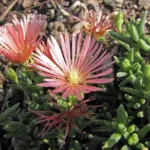 Trailing Iceplant (Delosperma cooperi) care guideDelosperma cooperi
 Flatleaf Sheepfig (Delosperma ashtonii) care guideDelosperma ashtonii
 Delosperma nubigenum care guideDelosperma nubigenum
 He pickle pla (Delosperma echinatum) care guideDelosperma echinatum
 Sheepfigs (Delosperma) care guideDelosperma
 Delosperma congestum care guideDelosperma congestum