
 Source:
Trailing Iceplant (Delosperma cooperi) short overview
Trailing Iceplant is a low, spreading succulent perennial from South Africa that forms a dense mat of fleshy green leaves. In sunny, sharply drained sites, it produces a long display of brilliant magenta-purple, daisy-like flowers. It suits rock gardens, gravel beds, slopes, retaining walls, containers, and dry borders, but winter survival depends on excellent drainage and local climate; wet cold is more damaging than cold alone.
Taxonomic classification
Trailing Iceplant (Delosperma cooperi) care guide
Light and placement
Give the plant unobstructed full sun, ideally with a south- or west-facing orientation and reflected heat from gravel or stone. Insufficient light produces looser growth and fewer flowers. In very hot regions, morning-to-afternoon sun with some late-day protection may reduce scorch, but shade usually reduces flowering. Good air movement is preferable to humid, enclosed placement.
Watering and humidity
Water deeply but infrequently, then allow the soil to dry substantially before watering again. During the growing season, established plants usually need irrigation only during prolonged drought. Reduce watering sharply in fall and winter, especially in cold climates, because saturated roots are vulnerable to rot. Containers dry faster but still require a dry interval between soakings.
Soil and growing medium
Use gritty, sharply drained soil with abundant mineral material such as coarse sand, gravel, pumice, or crushed stone. Avoid unamended clay and sites that stay wet in winter. A neutral to slightly alkaline reaction is generally suitable, but drainage is more important than exact pH.
Feeding
This plant performs well in lean, mineral soil and generally needs little feeding. If growth is weak in a container, apply a balanced fertilizer diluted to one-quarter or one-half strength once in spring, after active growth begins. Do not feed during cold, wet weather or when the plant is dormant.
Growth and habit
Plants spread by branching, prostrate stems that root or anchor near the ground and gradually form a dense mat. Growth is fastest in warm, bright weather. In colder regions, foliage may darken or die back after frost; avoid winter wet and remove damaged material in spring rather than cutting healthy stems unnecessarily.
Planting and repotting
Plant after the danger of hard frost has passed, setting the crown at soil level rather than burying the stems. Choose a sunny, sheltered position and space plants about 12–24 inches apart, closer for quicker cover. Water once after planting, then let the soil dry between waterings while roots establish.
Repot container plants only when crowded or when the growing medium has degraded. Handle the shallow, fleshy root system gently, refresh with a cactus or succulent mix amended with grit, and allow damaged roots to dry briefly before watering.
Propagation and pruning
Propagation
Take softwood cuttings in spring or summer, allow cut ends to callus briefly, then root them in a gritty, barely moist medium. Seeds can also be sown in a well-drained mix. Avoid keeping propagation material constantly wet.
Pruning
No routine pruning is required. In spring, remove winter-damaged or untidy stems and spent flower remains if desired. Cut cleanly and avoid repeatedly shearing healthy green growth, which can leave wounds in wet weather.
Overwintering
In USDA Zone 6 and colder or wetter sites, place plants in a rain-shadow or cover the root zone with a loose, dry mineral mulch. Do not trap moisture around the crown. Container specimens can be moved under cover before prolonged freezing, kept cool and bright, and watered very sparingly.
Uses
Use it as a drought-tolerant groundcover, edging plant, rock-garden subject, slope planting, retaining-wall accent, or sunny container plant. It is particularly useful where a low mat and vivid summer color are wanted. It is ornamental rather than a documented culinary or medicinal crop.
Appearance
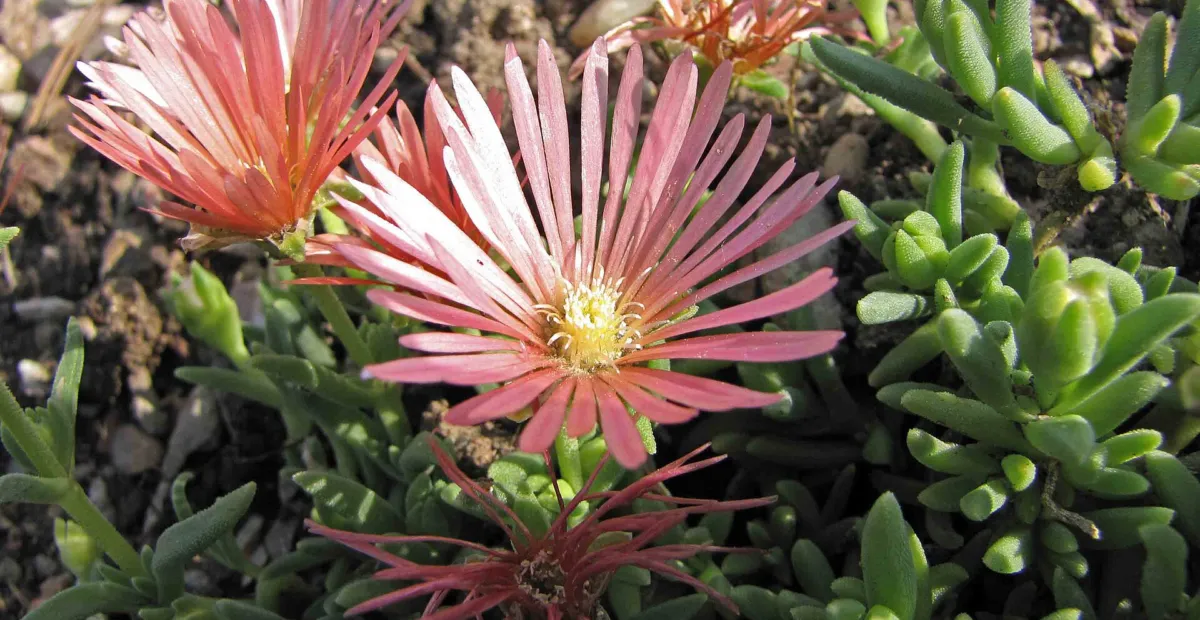
This species has succulent, cylindrical to slightly triangular green leaves with a surface that can appear dotted or translucent. Prostrate, branching stems create a low mat, while the vivid purple-magenta flowers rise just above the foliage. The combination of fleshy leaves, ground-hugging habit, and brilliant daisy-like blooms helps distinguish it from taller, less succulent ice plants.
Flowering
Flowers are solitary, daisy-like and terminal or axillary, with numerous narrow petal-like segments surrounding a central cluster of stamens. Blooms open most strongly in bright sunshine and may close in dull conditions. The usual U.S. garden display is from June through September.
Pollination and visitors
The showy, open flowers are likely visited by generalist insects, but the reviewed authoritative sources did not provide sufficiently specific, species-level visitor documentation to assign a reliable pollinator group.
Delosperma cooperi photos
Click any photo for a larger view. Source, author and license are shown separately.
Diseases and pests
Diseases
Usually disease-free when grown in bright light and fast-draining soil. Root and stem problems are most likely when the crown stays wet, especially during cool weather. Improve drainage, avoid overhead irrigation, and remove soft or rotting tissue promptly.
Pests
Aphids and mealybugs may occur, especially under glass or in stressed container plants. Inspect new growth, isolate affected specimens, wash off small infestations, and use a labeled treatment only when necessary. Avoid excessive nitrogen, which can encourage soft growth.
Related diseases and pests
Only Plant Doctor profiles whose host data indicate this plant may be affected are shown here.

Toxicity and pollen
The reviewed authoritative horticultural and plant databases did not establish a reliable human or pet toxicity classification for Delosperma cooperi. Do not consume the plant; prevent children and pets from chewing unfamiliar plant material, and seek professional advice after ingestion or a significant reaction.
- Typical season
- Flowering season, generally June through September in much of the United States
- Pollination / pollen
- Insect-dispersed floral pollen
No strong species-specific airborne-allergy evidence was identified. Because the plant is insect-pollinated, pollen is generally released at the flower rather than dispersed broadly by wind, but this does not prove zero allergy risk. People with known plant allergies should avoid direct exposure to flowers and sap.
Native habitat
The species is native to the Free State and Lesotho in southern Africa, where it occurs in temperate upland environments. Its succulent leaves and mat-forming habit suit sunny, seasonally dry, rocky conditions. In cultivation, wet winter soil is a greater threat than summer drought.
Interesting fact
The genus name refers to conspicuous seeds, while the common iceplant name relates to translucent bladder-like surface cells on the leaves. The species forms a low mat rather than an upright shrub and can remain evergreen in mild-winter regions. UC Davis trials found good flowering with low irrigation once plants were established.
Frequently asked questions (FAQ)
The most relevant questions about this plant, with short and direct answers.
🌱Quick care
What is Trailing Iceplant (Delosperma cooperi)?⌄
Trailing Iceplant is a low, spreading succulent perennial in the Aizoaceae family, grown for its fleshy foliage and bright pink to purple, daisy-like flowers. It is commonly used as a drought-tolerant ground cover, rock-garden plant, or container spiller.
How much sunlight does Trailing Iceplant need?⌄
Trailing Iceplant needs full sun, ideally at least 6 hours of direct sunlight daily. Insufficient light can reduce flowering and make the plant grow less compactly.
How often should you water Delosperma cooperi?⌄
Water Delosperma cooperi sparingly, allowing the soil to dry substantially between waterings. Established plants usually need supplemental water only during prolonged hot, dry periods, while containers may dry out faster.
Is Trailing Iceplant drought tolerant?⌄
Yes, Trailing Iceplant is highly drought tolerant once established. It performs best when watered deeply but infrequently rather than kept consistently moist.
How big does Trailing Iceplant get?⌄
Trailing Iceplant usually grows about 3 to 6 inches tall and spreads roughly 1 to 2 feet wide. Its stems form a low, mat-like cover that can trail over rocks, walls, or container edges.
🌤️Environment and placement
What USDA zones can grow Delosperma cooperi?⌄
Delosperma cooperi is commonly listed for USDA Zones 6 through 10, although hardiness can vary with the cultivar and local conditions. In colder or wet-winter areas, protection and exceptionally sharp drainage improve survival.
Can Trailing Iceplant survive winter outdoors?⌄
Trailing Iceplant can survive winter outdoors in suitable climates, especially when planted in very well-drained soil. Winter wet is often more damaging than cold, so avoid waterlogged sites and consider a sheltered location in colder zones.
Can Delosperma cooperi grow in partial shade?⌄
Delosperma cooperi may tolerate some partial shade, but full sun is preferred for dense growth and abundant flowers. Shade generally leads to fewer blooms and a less vigorous, more open habit.
Is Trailing Iceplant suitable for hot, dry areas?⌄
Yes, Trailing Iceplant is well suited to hot, dry landscapes because it tolerates heat, drought, sandy soil, and shallow rocky sites. Good drainage remains essential even in arid climates.
Can Trailing Iceplant grow near the coast?⌄
Trailing Iceplant can perform well in many coastal settings because it has moderate salt tolerance and handles heat and drought. Plant it in a sunny site with gritty soil that drains quickly after rain.
💧Care and problems
What soil is best for Delosperma cooperi?⌄
The best soil for Delosperma cooperi is gritty, sandy, rocky, and sharply drained. Avoid heavy clay or rich soil that stays wet, especially during winter.
Why is my Trailing Iceplant turning brown or dying?⌄
Brown or dying Trailing Iceplant is often caused by excess moisture, poor drainage, root rot, severe frost, or insufficient sunlight. Check whether the soil stays wet, remove rotted growth, and improve drainage before watering again.
Why is Delosperma cooperi not blooming?⌄
Delosperma cooperi may fail to bloom because of insufficient sunlight, excessive moisture, overly rich soil, or cold damage. Move it to full sun and maintain dry, sharply drained conditions while avoiding excessive nitrogen fertilizer.
Does Trailing Iceplant need fertilizer?⌄
Trailing Iceplant usually needs little fertilizer because it is adapted to lean, dry soil. If growth is weak, apply a light, balanced fertilizer in spring according to the product label, but avoid heavy feeding.
Does Trailing Iceplant get pests or diseases?⌄
Trailing Iceplant is generally low maintenance but can develop root rot when soil remains wet. Aphids and mealybugs may occasionally affect plants, particularly those grown under cover or in persistently stressed conditions.
Should Trailing Iceplant be watered in winter?⌄
Trailing Iceplant should receive little or no supplemental water during cold, wet winters. Keeping the crown and roots relatively dry is especially important because winter moisture can cause rot and plant loss.
🪴Planting and repotting
When is the best time to plant Delosperma cooperi?⌄
The best time to plant Delosperma cooperi is spring after severe frost has passed, giving roots time to establish before winter. Fall planting can work in mild, dry climates if the soil drains exceptionally well.
How far apart should Trailing Iceplant be planted?⌄
Space Trailing Iceplant about 16 to 24 inches apart for a ground-cover planting. Wider spacing slows coverage, while closer spacing creates a faster mat but can reduce airflow in wet conditions.
Can Delosperma cooperi grow in containers?⌄
Yes, Delosperma cooperi grows well in containers with drainage holes and a gritty succulent or cactus-style potting mix. Use a wide container rather than a deep one, and never allow the pot to sit in water.
How do you plant Trailing Iceplant in clay soil?⌄
Plant Trailing Iceplant in a raised bed, rock garden, slope, or amended mound rather than directly into poorly drained clay. Mixing in coarse mineral material and improving surface drainage can reduce rot, but heavy wet soil may still be unsuitable.
✂️Propagation and pruning
How do you propagate Delosperma cooperi from cuttings?⌄
Propagate Delosperma cooperi by taking healthy stem cuttings in spring or summer and allowing the cut ends to dry briefly before placing them in a gritty, well-drained medium. Keep the medium only lightly moist until roots form.
Can Trailing Iceplant be grown from seed?⌄
Yes, Trailing Iceplant can be grown from seed, although seedlings may vary and generally take longer to reach flowering size than cuttings. Sow the seed in a well-drained medium and provide warmth and bright light.
Does Trailing Iceplant spread on its own?⌄
Trailing Iceplant spreads outward as its stems root or extend across the soil surface, forming a low mat. Its spread is usually manageable in ordinary garden conditions, but plants can be trimmed when they exceed their intended area.
Should Trailing Iceplant be pruned?⌄
Trailing Iceplant does not require regular pruning. Lightly trim damaged, dead, or overextended stems after flowering or in spring, taking care not to remove healthy crowns before winter.
⚠️Toxicity and safety
Is Trailing Iceplant toxic to dogs or cats?⌄
There is no established species-specific toxicity classification confirming that Delosperma cooperi is toxic to dogs or cats. Because plant reactions can vary and identification may be uncertain, prevent pets from consuming it and contact a veterinarian if ingestion causes symptoms.
Is Delosperma cooperi safe for children?⌄
There is no established species-specific toxicity classification for Delosperma cooperi, but it should not be treated as edible. Keep unfamiliar plants away from children and seek medical advice if plant material is swallowed or causes irritation.
🌸Flowering and special interest
When does Trailing Iceplant bloom?⌄
Trailing Iceplant commonly blooms from late spring or early summer into summer, with flowering sometimes continuing into early fall in favorable conditions. Full sun and dry, well-drained soil support the heaviest display.
What color are Delosperma cooperi flowers?⌄
Delosperma cooperi usually produces vivid pink, magenta, or purple daisy-like flowers with a contrasting center. Exact color can vary among cultivars and nursery selections.
Do Trailing Iceplant flowers open in the shade?⌄
Trailing Iceplant flowers open most fully in bright sunlight and may close or appear less prominent in cloudy conditions or shade. A sunny planting location produces the strongest daily display.
Does Trailing Iceplant attract pollinators?⌄
Yes, Trailing Iceplant flowers can attract bees and other flower-visiting insects. Planting several specimens in full sun can create a longer-lasting nectar and pollen resource during the blooming season.
Similar plants
 Lavender Ice Plant (Delosperma ‘Lavender Ice’)Delosperma 'Lavender Ice'
 Sheepfigs (Delosperma) care guideDelosperma
 Stock Sheepfig (Delosperma floribundum) care guideDelosperma floribundum
 Delosperma ‘Fire Spinner’Delosperma 'Fire Spinner'
 Flatleaf Sheepfig (Delosperma ashtonii) care guideDelosperma ashtonii
 Tarkastad Sheepfig (Delosperma dyeri) care guideDelosperma dyeri