
 Source:
Delosperma ‘Fire Spinner’ short overview
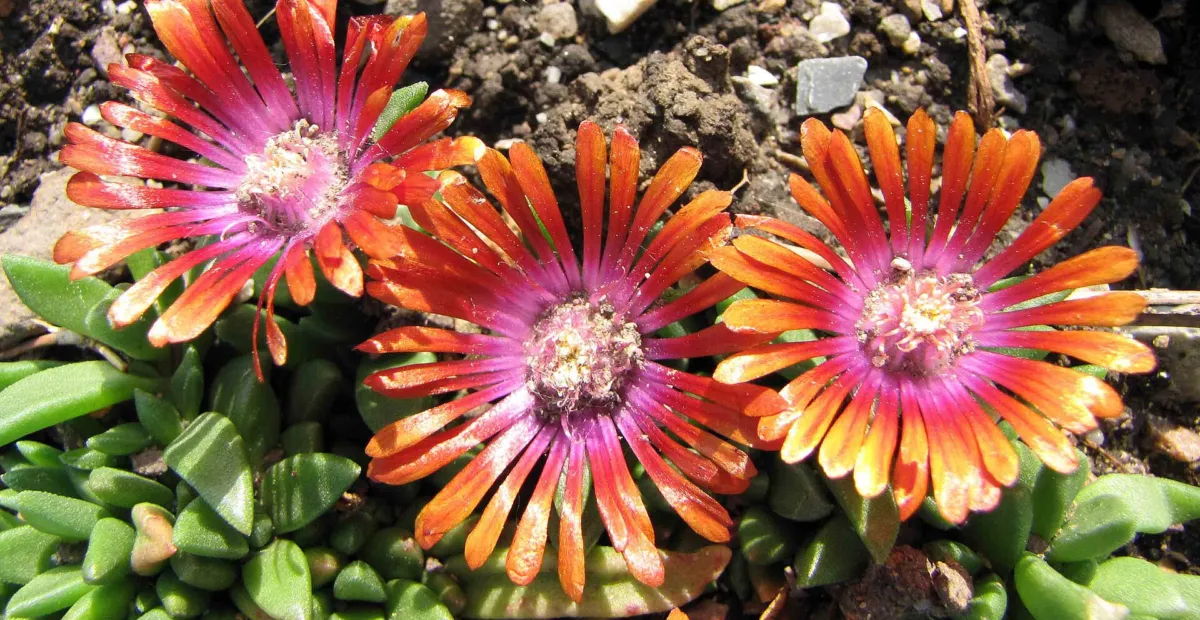
Delosperma 'Fire Spinner' is a low, spreading hardy ice plant with evergreen, apple-green succulent foliage and unusually vivid three-color flowers. Orange-tipped petals fade through magenta-pink toward a pale center, creating a pinwheel effect from late spring into early summer, with occasional later blooms. Give it full sun, sharply drained gritty soil, and restrained watering; it is especially effective in rock gardens, gravel beds, containers, and drought-conscious landscapes.
Taxonomic classification
Delosperma ‘Fire Spinner’ care guide
Light and placement
Provide at least 6 hours of direct sun, ideally in an open south- or west-facing position with strong air movement. Full sun produces the best flowering and compactest growth. Too little light causes fewer flowers and looser stems; prolonged wet heat combined with shade increases rot risk. Light shade is tolerated in some climates but is not ideal.
Watering and humidity
Water deeply but infrequently once established, allowing the soil to dry substantially between waterings. During the first growing season, water more regularly while roots establish, then reduce irrigation in summer according to rainfall and soil drainage. Keep the crown and foliage drier in cool weather; never maintain constantly wet soil.
Soil and growing medium
Use lean, gritty, sharply drained soil with substantial sand, gravel, or small stone. A raised bed, slope, crevice, or cactus-style container mix helps prevent winter and summer waterlogging. Sources report tolerance of acidic, neutral, and alkaline conditions; near-neutral soil is a practical target, but drainage matters more than fine pH adjustment.
Feeding
Usually needs no fertilizer in the ground. Excess nutrition can produce soft, leggy growth and may reduce longevity, especially in containers. If growth is weak, apply a dilute, low-nitrogen succulent fertilizer once in spring after active growth begins; do not feed drought-stressed, newly transplanted, or winter-dormant plants.
Growth and habit
Forms a dense, prostrate mat from branching, rooting stems. It fills sunny gaps gradually and can spill over stones or container edges. Once established, growth is restrained by dry soil and low fertility; excessive water or fertilizer can make the mat softer and less durable.
Planting and repotting
Plant after the danger of severe frost has passed, or in fall where winters are reliably dry and mild. Set the crown at soil level rather than burying the stems. Allow about 8–12 inches between plants for a linked mat, or 12–24 inches where a more open spread is preferred. Water regularly during establishment, then taper as roots develop.
Repot container plants in spring when growth resumes, moving them only one pot size wider. Use a shallow container with a drainage hole and a gritty, fast-draining mix. Handle the fleshy stems gently, allow damaged tissue to dry briefly, and avoid heavy watering immediately after transplanting.
Propagation and pruning
Propagation
Stem cuttings are the preferred method for preserving this cultivar. Take healthy, actively growing, non-flowering sections in spring or after flowering, let cut ends dry briefly, and insert them into a barely moist gritty medium. Division is also possible when actively growing. Keep cuttings on the dry side; overwatering encourages rot.
Pruning
Routine pruning is generally unnecessary. In spring, remove winter-damaged, dead, or rotted sections after new growth becomes visible. Trim wayward stems only to maintain an edge or to collect healthy cuttings; avoid cutting deeply into dormant crowns.
Overwintering
Leave the plant in place through winter where it is hardy, and do not remove apparently dormant foliage too early in spring. The main winter risk is wet soil rather than cold alone. In containers, move pots under rain protection or to an unheated, bright shelter in severe wet winters, watering only enough to prevent extreme shriveling.
Uses
Use as a low ground cover, rock-garden plant, gravel-bed accent, edging, sunny slope plant, or spiller for shallow containers. Its drought tolerance and long seasonal display suit xeric and water-wise designs. It is ornamental rather than a documented culinary or medicinal plant; do not promote ingestion.
Appearance
The plant has fleshy, cylindrical to narrowly succulent apple-green leaves on prostrate, branching stems. It forms a low evergreen carpet, with flowers held just above or among the foliage. The strongest identification feature is the unusual three-zone flower coloration: orange outer tips, magenta-pink interior petals, and a pale center.
Flowering
Flowers are daisy-like and borne close to the mat on short stems. The narrow petals show a distinctive color transition from orange or apricot tips through magenta-pink toward a pale center. Bloom is strongest in late spring and early summer; scattered flowers may continue through summer. Flowers open most fully in bright sunlight.
Pollination and visitors
The open, brightly colored flowers are documented or marketed as attractive to bees, bumblebees, and butterflies. Visitor activity is greatest during sunny flowering periods. The available evidence supports visitor groups rather than a single reliably documented pollinator species.
Diseases and pests
Diseases
Usually trouble-free when grown in fast-draining soil. Root and stem rots are the main concern and are encouraged by saturated soil, poor drainage, or wet winter crowns. Improve drainage, remove rotted tissue, and avoid overhead irrigation during cool, cloudy periods.
Pests
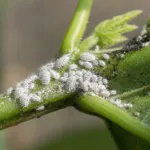
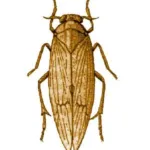
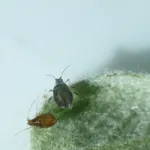
Generally pest-resistant, though aphids, mealybugs, and occasional slugs or snails may occur in stressed or overly wet plantings. Inspect new growth and flower bases, improve air movement, remove pests by hand or with a measured water spray, and avoid routine broad-spectrum insecticides during bloom.
Related diseases and pests
Only Plant Doctor profiles whose host data indicate this plant may be affected are shown here.
Toxicity and pollen
No reliable authoritative source located in this review documented toxicity specific to Delosperma 'Fire Spinner'. Do not treat the lack of a listing as proof of safety; prevent children and pets from chewing unfamiliar plant material, and seek professional advice after ingestion or a reaction.
- Typical season
- Late spring through summer
- Pollination / pollen
- Insect-carried pollen; not typically wind-dispersed
As an insect-pollinated flowering succulent, it is not generally considered a major airborne-pollen source in gardens, but no cultivar-specific allergy study was located. People with known plant allergies should avoid handling flowers if symptoms occur and should not assume zero allergy risk.
Native habitat
The cultivar traces to high-elevation South African Delosperma germplasm and was selected for performance in dry, sunny North American gardens. Its adapted ecological conditions include intense light, lean soils, rapid drainage, seasonal moisture, and cool or cold periods with limited winter saturation.
Interesting fact
This Plant Select introduction was selected from South African high-elevation material and is valued for combining unusual tricolor flowers with cold hardiness. Its flowers open in bright sun, while the succulent foliage can remain evergreen in suitable climates. It is a named cultivar, so vegetative propagation is preferred over seed for maintaining its flower pattern.
Frequently asked questions (FAQ)
The most relevant questions about this plant, with short and direct answers.
🌱Quick care
What is Delosperma 'Fire Spinner'?⌄
Delosperma 'Fire Spinner' is a low, spreading hybrid ice plant grown for succulent foliage and orange, pink, and white flowers. It forms a mat about 1–3 inches tall and 12–24 inches wide.
Is Delosperma 'Fire Spinner' easy to grow?⌄
Yes, Delosperma 'Fire Spinner' is generally easy to grow when planted in full sun and sharply drained soil. Its main requirement is avoiding consistently wet conditions, especially in winter.
🌤️Environment and placement
How much sun does Delosperma 'Fire Spinner' need?⌄
Delosperma 'Fire Spinner' grows best with at least 6 hours of direct sun daily. It may tolerate light shade, but reduced light can produce fewer flowers and weaker growth.
What USDA hardiness zones are suitable for Delosperma 'Fire Spinner'?⌄
Delosperma 'Fire Spinner' is commonly rated for USDA Hardiness Zones 5–9. Cold survival depends heavily on excellent winter drainage, so wet soil can damage it even within its listed zones.
Can Delosperma 'Fire Spinner' survive winter outdoors?⌄
Yes, it can overwinter outdoors in suitable climates, particularly Zones 5–9 with dry, well-drained soil. Protecting it from winter rain and saturated snowmelt is more important than adding heavy mulch.
Where should I plant Delosperma 'Fire Spinner' in the landscape?⌄
Plant Delosperma 'Fire Spinner' in a rock garden, raised bed, dry slope, gravel border, wall, or sunny path edge. Choose a location where water drains away quickly rather than collecting around the crown.
Can Delosperma 'Fire Spinner' grow in hot climates?⌄
Yes, Delosperma 'Fire Spinner' tolerates heat and drought once established. In hot, humid regions, place it in the sunniest, best-ventilated site available and use very fast-draining soil.
Can Delosperma 'Fire Spinner' grow in a container?⌄
Yes, Delosperma 'Fire Spinner' grows well in containers with drainage holes and a gritty succulent or cactus mix. Containers require more frequent summer watering than in-ground plants but must never remain waterlogged.
💧Care and problems
How often should I water Delosperma 'Fire Spinner'?⌄
Water Delosperma 'Fire Spinner' deeply but infrequently, allowing the soil to dry between waterings. Established plants need supplemental water mainly during prolonged hot, dry periods.
How do I know if Delosperma 'Fire Spinner' is overwatered?⌄
Overwatered Delosperma 'Fire Spinner' may develop soft, discolored, or collapsing stems and leaves. Reduce watering immediately, improve drainage, and remove rotted portions if the damage is localized.
Does Delosperma 'Fire Spinner' need fertilizer?⌄
Delosperma 'Fire Spinner' usually needs little or no fertilizer in ordinary garden soil. Excess fertility can encourage soft, leggy growth and may reduce long-term performance.
Why is my Delosperma 'Fire Spinner' turning brown or dying?⌄
Brown or dying growth is often caused by excess moisture, poor drainage, winter wet, or insufficient light. Check the roots and crown for rot, then move or replant the plant in a sunnier, grittier site if necessary.
Does Delosperma 'Fire Spinner' attract bees or butterflies?⌄
Yes, the flowers of Delosperma 'Fire Spinner' can attract bees and butterflies when they are open in bright sunlight. Flowers may close or appear less showy during cloudy weather.
Is Delosperma 'Fire Spinner' deer resistant?⌄
Delosperma 'Fire Spinner' is generally considered deer resistant because of its succulent foliage. Deer resistance is not absolute and can vary with local food pressure.
🪴Planting and repotting
What soil is best for Delosperma 'Fire Spinner'?⌄
Use gritty, sandy, rocky, or other sharply drained soil for Delosperma 'Fire Spinner'. Heavy clay should be amended substantially or replaced with a raised, fast-draining planting medium.
How far apart should I plant Delosperma 'Fire Spinner'?⌄
Space Delosperma 'Fire Spinner' about 12–24 inches apart, depending on how quickly you want the plants to fill in. Wider spacing improves air circulation in humid areas.
When is the best time to plant Delosperma 'Fire Spinner'?⌄
Plant Delosperma 'Fire Spinner' in spring after severe freezes have passed or in early fall while the soil is still workable. Avoid planting immediately before periods of prolonged cold and wet weather.
Can Delosperma 'Fire Spinner' grow in clay soil?⌄
Delosperma 'Fire Spinner' generally performs poorly in unamended clay because the roots stay too wet. Use a raised bed, slope, or heavily amended gritty planting area to provide reliable drainage.
How do I grow Delosperma 'Fire Spinner' in a pot?⌄
Use a shallow or medium container with drainage holes and a gritty, fast-draining mix. Set the plant at the same depth it was growing and water only after the mix has dried substantially.
✂️Propagation and pruning
How do I propagate Delosperma 'Fire Spinner' from cuttings?⌄
Take short stem cuttings from actively growing, healthy shoots, let the cut ends dry briefly, and place them in a well-drained propagation mix. Keep the medium only slightly moist because excessive water can rot the cuttings.
Does Delosperma 'Fire Spinner' root easily from cuttings?⌄
Yes, Delosperma 'Fire Spinner' generally roots readily from stem cuttings without rooting hormone. Success is highest when cuttings are kept warm, bright, and on the dry side rather than constantly wet.
Can Delosperma 'Fire Spinner' be divided?⌄
Yes, established Delosperma 'Fire Spinner' can be divided by separating rooted sections of the mat. Replant divisions in dry, sharply drained soil and water sparingly until they re-establish.
Can I grow Delosperma 'Fire Spinner' from seed?⌄
Seed propagation is possible, but named cultivars may not produce seedlings identical to the parent. Stem cuttings or division are preferable when you want to preserve the distinctive 'Fire Spinner' flower colors.
Does Delosperma 'Fire Spinner' need pruning?⌄
Delosperma 'Fire Spinner' usually needs little pruning. Remove dead, damaged, or rotted sections and trim an overgrown edge lightly after flowering if you need to maintain its shape.
⚠️Toxicity and safety
Is Delosperma 'Fire Spinner' toxic to dogs or cats?⌄
Cultivar-specific toxicity documentation for Delosperma 'Fire Spinner' is limited, so its safety for dogs and cats cannot be confirmed with certainty. Prevent pets from chewing ornamental plants and contact a veterinarian or poison-control service if ingestion occurs.
Is Delosperma 'Fire Spinner' safe for humans to touch?⌄
Delosperma 'Fire Spinner' is not known to cause routine skin problems from ordinary handling, but cultivar-specific safety research is limited. Wash hands after gardening and avoid ingesting the plant.
🌸Flowering and special interest
When does Delosperma 'Fire Spinner' bloom?⌄
Delosperma 'Fire Spinner' typically flowers from late spring into summer and may continue or rebloom into early fall in favorable conditions. The exact season varies with climate, winter conditions, and available sunlight.
What color are Delosperma 'Fire Spinner' flowers?⌄
The flowers have orange to apricot outer petals, a pink to magenta band, and a pale or white center. The three-color pattern is most vivid when blooms are fresh and fully open in sunlight.
Why is my Delosperma 'Fire Spinner' not blooming?⌄
The most common causes are insufficient sunlight, excessive fertilizer, poor drainage, or inadequate seasonal cooling. Move it to full sun, avoid rich feeding, and keep the soil dry enough to protect the roots.
Do Delosperma 'Fire Spinner' flowers open in cloudy weather?⌄
Delosperma 'Fire Spinner' flowers open most reliably in bright sun and may remain closed or partly closed on cloudy days. This behavior is normal for many ice plants and is not necessarily a sign of stress.
Similar plants
 Delosperma congestum care guideDelosperma congestum
 Delosperma nubigenum care guideDelosperma nubigenum
 Lavender Ice Plant (Delosperma ‘Lavender Ice’)Delosperma 'Lavender Ice'
 Delosperma ‘Jewel of Desert Garnet’Delosperma 'Jewel of Desert Garnet'
 He pickle pla (Delosperma echinatum) care guideDelosperma echinatum
 Stock Sheepfig (Delosperma floribundum) care guideDelosperma floribundum