
 Source:
Iris ‘Edith Wolford’ short overview
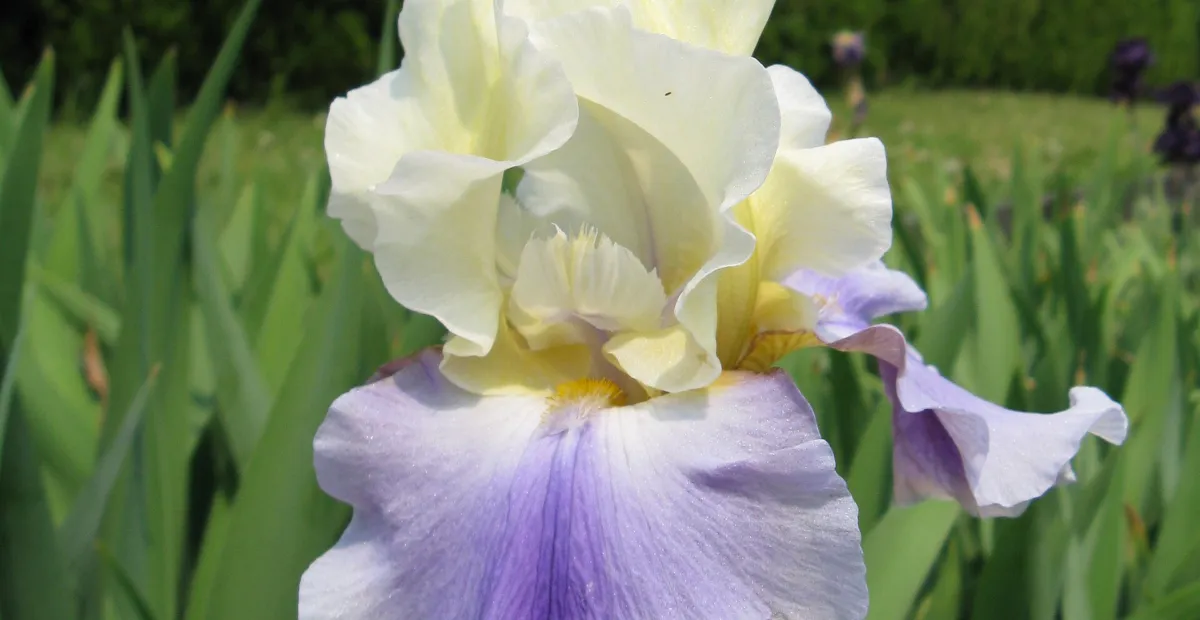
Iris 'Edith Wolford' is a celebrated tall bearded iris introduced by Ben Hager in 1986. Its ruffled flowers combine canary-yellow standards with blue-violet falls and contrasting orange beards, rising above fans of sword-shaped gray-green leaves. This rhizomatous perennial performs best in full sun and sharply drained soil, with the rhizomes planted shallowly. It suits sunny borders, cottage gardens and cut-flower plantings.
Taxonomic classification
Iris ‘Edith Wolford’ care guide
Light and placement
Give full sun, ideally at least 6 hours of direct light from a south-, southeast- or southwest-facing exposure. Morning sun with afternoon light is useful in hot climates if drainage remains excellent. Too little light produces weak scapes, fewer flowers and floppier fans; excessive heat is usually managed with water and airflow rather than deep shade.
Watering and humidity
Water deeply after planting and during the first growing season whenever the upper soil begins to dry. Once established, water during prolonged drought, especially while flower scapes are developing, but let the rhizome zone drain between applications. Reduce irrigation after flowering and avoid wet winter soil. Average humidity is acceptable; no special misting is needed.
Soil and growing medium
Use fertile, well-drained loam or sandy loam. Heavy clay should be amended or raised to prevent waterlogging around the rhizomes. A near-neutral to slightly alkaline reaction is generally suitable; avoid burying the rhizome in organic mulch, which can encourage rot.
Feeding
In poor soil, apply a balanced, low-nitrogen fertilizer or a modest layer of mature compost in early spring and again after flowering. Keep fertilizer off the rhizome and avoid excessive nitrogen, which promotes lush foliage and weak flowering. Do not feed dry, heat-stressed or newly divided plants heavily.
Growth and habit
This cultivar forms expanding fans from shallow rhizomes and produces upright flowering scapes from established divisions. Divide when flowering declines or the center becomes congested. Keep competing groundcovers and dense mulch away from the rhizomes so the crown remains dry and receives sun.
Planting and repotting
Plant purchased or divided rhizomes from midsummer into early fall, allowing several weeks for root establishment before hard freezes. Set the rhizome horizontally with its upper surface at or just above soil level, spread the roots beneath it, and avoid thick mulch over the crown. Allow about 18–24 inches between divisions.
Container-grown divisions can be moved after flowering or in late summer. Use a wide, shallow container with excellent drainage, set the rhizome near the surface, and divide when the clump becomes crowded. Containers dry and freeze faster than beds, so monitor moisture and winter exposure.
Propagation and pruning
Propagation
Propagate by division rather than seed to preserve the cultivar. Lift crowded clumps in midsummer or late summer, separate healthy rhizome sections with a fan of leaves, trim damaged roots, and replant immediately. Seedlings will not reliably reproduce the named cultivar.
Pruning
Cut flowering stems to the base after the display ends and remove yellowing or diseased leaves. In fall, trim foliage to roughly 6 inches after it has declined naturally. Do not cut healthy foliage prematurely, since it replenishes the rhizome for the next season.
Overwintering
Leave healthy foliage until it declines, then cut it back after frost or in late fall. In cold regions, a light, loose winter covering can protect newly planted divisions, but remove it early in spring. Keep winter mulch off the rhizome itself. Container plants need protection from repeated freeze-thaw cycles and should not sit in water.
Uses
Use as a specimen or repeating clump in sunny perennial borders, cottage gardens, wall-side beds and cut-flower plantings. The tall stems and contrasting bicolor flowers provide strong vertical and seasonal interest. Do not use for food, remedies or pet-accessible plantings because iris tissues can irritate when eaten.
Appearance
The plant has upright sword-shaped gray-green leaves arranged in flat fans. Tall branched scapes rise above the foliage and carry large, ruffled bicolor blooms. The combination of clear yellow standards, blue-violet falls and orange beards is the principal identification feature, although color intensity can shift with growing conditions.
Flowering
This is a midseason tall bearded iris that flowers in mid-to-late spring in much of the United States. The flowers are strongly ruffled and carried on tall, branched scapes. Rebloom has been reported in some regions, but it is not dependable across all climates.
Pollination and visitors
The large, showy, bearded flowers are structurally adapted for insect visitation, but reliable cultivar-specific visitor records were not found. Avoid presenting this named cultivar as a documented specialist pollinator plant; its main value is ornamental.
Diseases and pests
Diseases
Avoid saturated soil and overhead irrigation to reduce bacterial soft rot and fungal spotting. Remove damaged tissue, improve drainage, and discard badly rotted rhizomes. Keep foliage open to air and remove spent leaves in fall. Virus symptoms such as streaking or mottling warrant removal of affected plants because viruses have no reliable garden cure.
Pests
Watch for iris borers, thrips, aphids, slugs and snails. Remove old foliage and debris, inspect rhizomes during division, and improve sanitation. Manage minor chewing proportionately; persistent iris borer damage is best handled by removing affected rhizomes and replanting clean stock.
Related diseases and pests
Only Plant Doctor profiles whose host data indicate this plant may be affected are shown here.
 PestStrawberry foliar nematodeAphelenchoides fragariae
 DiseaseBacterial soft rotPectobacterium carotovorum
 DiseaseRhizopus soft rotRhizopus stolonifer
 DiseaseRhizoctonia DiseasesRhizoctonia solani Kühn
 PestOnion thripsThrips tabaci Lindeman
 PestMelon thripsThrips palmi Karny
 PestChilli thripsScirtothrips dorsalis Hood
 DiseaseBacterial WiltRalstonia solanacearum species complex
Toxicity and pollen
Iris species are associated with gastrointestinal irritation if eaten, and the rhizomes or rootstocks contain the greatest practical concern. Sap may irritate sensitive skin. Wear gloves when dividing or handling damaged rhizomes, prevent ingestion, and seek professional advice after suspected exposure.
- Typical season
- During spring flowering
- Pollination / pollen
- Mostly insect-transferred pollen; limited airborne dispersal
Bearded iris flowers are insect-pollinated, so their pollen is generally not released in large airborne clouds like wind-pollinated grasses or trees. Individual sensitivity is still possible, and close handling of flowers may expose a person to pollen. The low rating reflects limited airborne dispersal rather than guaranteed allergy safety.
Native habitat
As a garden hybrid rather than a wild population, it has no single native habitat. Its tall bearded iris heritage is suited to temperate gardens with sunny exposures, seasonal moisture and freely draining soils. The exposed-rhizome habit reflects adaptation to conditions where the crown can dry between rains.
Interesting fact
Introduced by Ben Hager in 1986, this cultivar received the American Dykes Medal in 1993. Its yellow-and-blue bicolor combination is distinctive among tall bearded irises. Flower color intensity can vary with temperature, moisture and growing conditions. Rebloom has been recorded in selected regions but is not universal.
Frequently asked questions (FAQ)
The most relevant questions about this plant, with short and direct answers.
🌱Quick care
What is Iris 'Edith Wolford'?⌄
Iris 'Edith Wolford' is a tall bearded iris, a rhizomatous perennial grown for its ruffled yellow-and-blue-violet flowers. It is a garden cultivar rather than a wild species.
How tall does Iris 'Edith Wolford' get?⌄
Iris 'Edith Wolford' typically reaches about 40 inches tall when flowering. Its mature spread depends on how quickly the rhizomes multiply and how often the clump is divided.
What colors are the flowers of Iris 'Edith Wolford'?⌄
The flowers have yellow standards and blue-violet to lavender-blue falls, often with a softly ruffled appearance. Color intensity can vary with temperature, moisture, light, and growing conditions.
Is Iris 'Edith Wolford' a bearded iris?⌄
Yes, Iris 'Edith Wolford' is a tall bearded iris. Each drooping fall has a fuzzy beard that helps distinguish it from beardless iris types.
🌤️Environment and placement
How much sun does Iris 'Edith Wolford' need?⌄
Plant Iris 'Edith Wolford' in full sun, ideally with at least six hours of direct sunlight daily. Some afternoon shade may be tolerated in very hot climates, but too much shade can reduce flowering.
What soil is best for Iris 'Edith Wolford'?⌄
Use well-drained loam or sandy loam for Iris 'Edith Wolford'. Heavy or poorly drained soil should be amended or raised because prolonged wetness can cause rhizome rot.
Can Iris 'Edith Wolford' grow in clay soil?⌄
Iris 'Edith Wolford' can grow in clay if drainage is improved before planting. In heavy clay, plant the rhizome higher so part of it remains exposed rather than burying it deeply.
Is Iris 'Edith Wolford' hardy in the United States?⌄
Iris 'Edith Wolford' is generally hardy outdoors where tall bearded iris are adapted. Actual performance depends on winter drainage, regional climate, and the protection available in colder areas.
Can Iris 'Edith Wolford' grow in containers?⌄
Iris 'Edith Wolford' can be grown in a large, well-drained container, but garden beds usually provide better long-term space for its spreading rhizomes. Choose a heavy pot and keep the rhizome near the soil surface.
💧Care and problems
How often should I water Iris 'Edith Wolford'?⌄
Water Iris 'Edith Wolford' deeply after planting and during active spring growth, then allow the soil to dry somewhat between waterings. Established plants usually need low to moderate water unless drought is prolonged or rebloom is being encouraged.
Does Iris 'Edith Wolford' tolerate drought?⌄
Established Iris 'Edith Wolford' tolerates short periods of dry weather once rooted. Water during extended drought, especially while buds are forming or if the plant is recently divided.
Should I mulch Iris 'Edith Wolford'?⌄
Keep thick mulch off the rhizome of Iris 'Edith Wolford' because trapped moisture can promote rot. A light layer may be used nearby for weed control, but the rhizome should remain exposed to sun and air.
Why is my Iris 'Edith Wolford' not blooming?⌄
Poor flowering is commonly caused by insufficient sun, rhizomes planted too deeply, overcrowding, excessive nitrogen, or transplant shock. Move or divide the plant only after checking drainage and light first.
What fertilizer does Iris 'Edith Wolford' need?⌄
Iris 'Edith Wolford' generally needs little fertilizer, and a low-nitrogen fertilizer is preferable if growth is weak. Apply it around the clump rather than directly on the rhizomes because fertilizer can burn them.
What pests and diseases affect Iris 'Edith Wolford'?⌄
Iris 'Edith Wolford' can be affected by iris borers, thrips, slugs, snails, bacterial soft rot, fungal problems, and viruses. Good drainage, sanitation, airflow, and removal of damaged foliage reduce risk.
How do I prevent iris borer damage on Iris 'Edith Wolford'?⌄
Remove and destroy dead leaves and garden debris after the first hard frost, and inspect leaves for tunneling during spring. Dig out and discard severely damaged rhizomes rather than replanting infected material.
🪴Planting and repotting
When should I plant Iris 'Edith Wolford'?⌄
Plant bare-root rhizomes from about six weeks after flowering through late summer or early fall, giving them time to establish before winter. Container-grown plants can also be planted in spring if watered carefully.
How deep should I plant Iris 'Edith Wolford' rhizomes?⌄
Plant the rhizome shallowly with its upper surface at or just slightly above the soil line. Spread the roots underneath and anchor them firmly, because deeply buried rhizomes are more likely to rot and bloom poorly.
How far apart should I plant Iris 'Edith Wolford'?⌄
Space individual rhizomes about 12 to 18 inches apart to allow airflow and future increase. Point the leaf fans outward so the developing clump has room to expand.
Can Iris 'Edith Wolford' be planted near automatic sprinklers?⌄
It is better to plant Iris 'Edith Wolford' away from constantly wet irrigation zones. Occasional deep watering is suitable, but frequent moisture around the rhizome increases the risk of soft rot.
✂️Propagation and pruning
How do I propagate Iris 'Edith Wolford'?⌄
Propagate Iris 'Edith Wolford' by dividing its rhizomes rather than by seed. Lift the clump, separate healthy sections with a fan of leaves and roots, trim damaged material, and replant the divisions shallowly.
When should I divide Iris 'Edith Wolford'?⌄
Divide Iris 'Edith Wolford' about every three to five years, usually from midsummer through early fall. Division is especially useful when the center of the clump stops flowering or the rhizomes become crowded.
Should I cut back Iris 'Edith Wolford' after flowering?⌄
Cut the flower stalk back to the base after the blooms fade, but leave healthy foliage in place. The leaves continue producing energy for the rhizomes and next year's flowers.
Should I remove the leaves of Iris 'Edith Wolford' in fall?⌄
Remove yellow, dead, or diseased foliage in fall, while leaving healthy green leaves until they naturally decline. In areas with iris borer pressure, thorough removal of old debris is particularly important.
⚠️Toxicity and safety
Is Iris 'Edith Wolford' poisonous to dogs and cats?⌄
Yes, Iris 'Edith Wolford' can be toxic to dogs and cats if eaten. Keep pets from chewing the rhizomes and foliage, and contact a veterinarian promptly if ingestion causes vomiting, drooling, diarrhea, or other symptoms.
Is Iris 'Edith Wolford' toxic to people?⌄
Iris 'Edith Wolford' has low human toxicity compared with some ornamental plants, but it should not be eaten. Sap or plant material may still cause stomach upset or skin irritation in sensitive people.
🌸Flowering and special interest
When does Iris 'Edith Wolford' bloom?⌄
Iris 'Edith Wolford' usually blooms in late spring to early summer, commonly around May or June depending on local climate. Flowering may occur earlier in warm regions and later in colder areas.
Does Iris 'Edith Wolford' rebloom?⌄
Iris 'Edith Wolford' is primarily known as a spring-flowering tall bearded iris, and a second bloom should not be assumed. Some plants may produce occasional late-season flowers under favorable conditions, but rebloom is not guaranteed.
Is Iris 'Edith Wolford' good for cut flowers?⌄
Yes, Iris 'Edith Wolford' is suitable for cutting because its tall stems and strongly contrasting flowers display well indoors. Cut stems when lower buds are beginning to open and place them in clean water.
Has Iris 'Edith Wolford' won a major iris award?⌄
Yes, Iris 'Edith Wolford' received the American Iris Society Dykes Medal in 1993. The award reflects its recognized quality as a tall bearded iris cultivar.
Similar plants
 He pickle pla (Delosperma echinatum) care guideDelosperma echinatum
 Delosperma nubigenum care guideDelosperma nubigenum
 Impatiens ‘New Guinea’Impatiens 'New Guinea'
 Fusion Glow (Impatiens walleriana ‘Fusion Glow’)Impatiens walleriana 'Fusion Glow'
 Iris ‘Amethyst Flame’Iris 'Amethyst Flame'
 Compact Tropical (Impatiens sunpatiens ‘Compact Tropical’)Impatiens sunpatiens 'Compact Tropical'