
 Source:
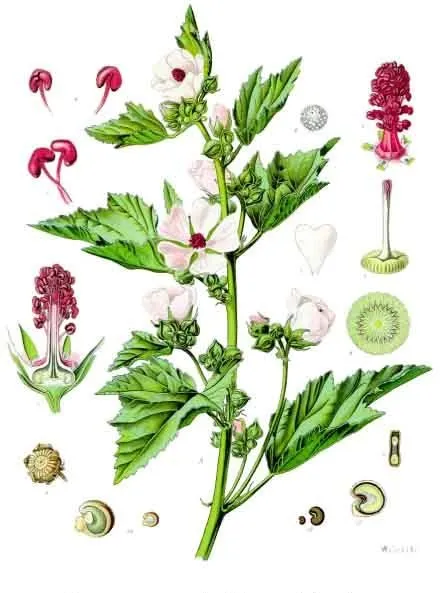
 Marsh mallow (Althaea officinalis) short overview
Marsh mallow (Althaea officinalis) is a tall, cold-hardy perennial with soft gray-green foliage and lilac-pink summer flowers. Grow it in full sun to partial shade with consistently moist, fertile, well-drained soil. It suits cottage gardens, wildlife plantings, rain gardens and herb gardens, and is the historic plant associated with the original marshmallow confection. A tall, deciduous herbaceous perennial with soft gray-green leaves and clusters of lilac-pink flowers in summer. Marsh mallow prefers full sun, fertile moisture-retentive soil and reliable watering, but adapts to a broad range of soil textures.
Taxonomic classification
Marsh mallow (Althaea officinalis) care guide
Light and placement
Give full sun for the strongest stems and flowering, with partial shade acceptable in hot climates or where afternoon heat is intense. East-, south- or west-facing placements work well when soil moisture is dependable. Sparse flowering or weak, stretched stems suggest insufficient light; scorched foliage usually indicates heat or drought stress rather than excessive light alone.
Watering and humidity
Water deeply when the upper inch of soil begins to dry, aiming for steady moisture rather than repeated shallow sprinkles. Increase frequency during hot, windy weather and reduce it after fall dieback, while avoiding stagnant winter saturation in containers. Mulch helps moderate root-zone moisture and temperature.
Soil and growing medium
Use fertile loam, clay or sandy soil that holds moisture without remaining stagnant. Marsh mallow tolerates mildly acidic through mildly alkaline conditions and can grow in wet-margin soils, but strong drainage is useful in ordinary garden beds. Incorporate compost before planting if the soil is poor or compacted.
Feeding
Apply a thin layer of compost or a balanced, slow-release perennial fertilizer in spring as growth resumes. Avoid heavy nitrogen feeding, which can produce weak, leafy stems and increase crowding. Do not fertilize drought-stressed or waterlogged plants; correct moisture and drainage first.
Growth and habit
This perennial forms a strong upright clump and sends up tall, somewhat wiry flowering stems from a leafy base. It performs best when moisture is reliable. In exposed sites, neighboring plants or a discreet support may help prevent stems from leaning.
Planting and repotting
Plant nursery stock in spring or early fall, setting it at the same depth as in its original container. Space plants about 24–36 inches apart to allow the upright stems and basal foliage to develop. Water deeply during the first growing season, especially where summer weather is hot or dry.
Container-grown plants can be moved in spring before vigorous growth begins. Choose a deep container for the substantial root system, refresh part of the mix every few years, and avoid allowing the pot to dry completely. Long-term planting in the ground is usually easier than permanent container culture.
Propagation and pruning
Propagation
Sow fresh seed in late summer or spring; germination can be uneven and cold stratification may improve results. Divide established plants in spring or fall, or take root cuttings during dormancy. Plant divisions promptly and keep them evenly moist while re-establishing.
Pruning
Cut the stems to the ground after flowering or once the foliage has died back. Removing spent stems can improve winter appearance and reduce overwintering disease debris. Leave some seed-bearing stems if self-sowing or wildlife value is desired.
Overwintering
Plants in USDA Zones 3–7 generally overwinter outdoors without special protection. Allow stems to die back naturally, then cut them down after dormancy. In colder or exposed sites, a light mulch over the crown can reduce freeze-thaw stress; container plants need insulation because roots are less protected above ground.
Uses
Useful as a tall ornamental perennial in cottage borders, wildlife gardens, moist beds and pond margins. Young leaves and roots have documented historical food uses, but harvest only from correctly identified, pesticide-free plants and verify suitability with a qualified professional before medicinal use.
Appearance
Leaves are broadly oval to shallowly lobed, softly hairy and gray-green, with a velvety texture. Stems are upright, branched and also softly pubescent. The combination of pale foliage, tall stems and small pink-lilac flowers helps distinguish this species from shorter common mallows.
Flowering
Small, five-petaled, saucer-shaped flowers appear in clusters along tall stems. Bloom is typically strongest from midsummer into early fall. Flowers are usually lilac-pink, with darker veining that can be visible at close range.
Pollination and visitors
Open, nectar- and pollen-bearing flowers are documented as being visited by bees; other small flower-visiting insects such as bumblebees and hoverflies may also use the blooms. This visitor information is separate from human allergy risk.
Althaea officinalis photos
Click any photo for a larger view. Source, author and license are shown separately.
Diseases and pests
Diseases
Rust is the principal reported disease concern. Improve air circulation, avoid prolonged overhead watering, remove badly affected leaves, and cut stems back after flowering. Dispose of diseased foliage rather than composting it if rust is severe.
Pests
Flea beetles may chew small holes in leaves, especially on young growth. Encourage vigorous growth, remove heavily damaged leaves, and use row covers on young plants if pressure is high. Avoid broad-spectrum insecticides during bloom to protect flower visitors.
Toxicity and pollen
No strong, authoritative evidence indicates that Althaea officinalis is highly poisonous to people or pets. The plant has a long history of food and herbal use, but concentrated preparations may interact with medicines, and individual allergic reactions remain possible. Do not treat traditional use as a substitute for medical advice.
- Typical season
- July–September in much of the United States
- Pollination / pollen
- Insect-carried pollen; not typically wind-dispersed
As an insect-pollinated mallow, its pollen is generally less airborne than pollen from wind-pollinated grasses or trees. The plant is not automatically allergy-free: sensitive people may react to flowers or plant handling, and evidence for a precise U.S. airborne-pollen rating is limited.
Native habitat
In its native range, marsh mallow occurs in moist or wet ground, including marsh margins, ditch sides, river edges, damp grassland and coastal habitats. It favors temperate climates and soils that remain moist for at least part of the growing season.
Interesting fact
The roots contain mucilaginous compounds and were historically used in food and herbal preparations. The modern confection marshmallow takes its name from this plant, although commercial marshmallows no longer depend on its root. The species is native across Europe into western Asia and North Africa and has been introduced in parts of North America.
Frequently asked questions (FAQ)
The most relevant questions about this plant, with short and direct answers.
🌱Quick care
What is marsh mallow (Althaea officinalis)?⌄
Marsh mallow is a hardy herbaceous perennial in the Malvaceae family, grown for its soft, velvety foliage and pale pink summer flowers. It is also the plant historically associated with the original marshmallow confection.
Is marsh mallow perennial or annual?⌄
Marsh mallow is a hardy perennial that dies back in winter and returns from its root system in spring. It is generally suitable for USDA Hardiness Zones 3 through 9.
How big does marsh mallow get?⌄
Marsh mallow typically grows about 3 to 6 feet tall and 2.5 to 4 feet wide. Give it enough room because mature plants form substantial root systems and upright clumps.
Is marsh mallow easy to grow?⌄
Marsh mallow is generally easy to grow when given full sun, fertile soil, and consistent moisture. It needs more space and water than many drought-tolerant perennials.
🌤️Environment and placement
How much sun does marsh mallow need?⌄
Marsh mallow grows best in full sun, meaning at least 6 hours of direct sunlight daily. It tolerates partial shade, especially in hot climates, but may become taller and flower less heavily.
What is the best soil for marsh mallow?⌄
The best soil is moist, fertile, well-drained loam, although marsh mallow also tolerates clay and sandy soil. Improve poor soil with organic matter, but avoid stagnant water around the crown.
Can marsh mallow grow in wet soil?⌄
Marsh mallow can grow in consistently moist soil and is well suited to rain gardens, stream edges, and other damp locations. It tolerates wet conditions better than many garden perennials, provided drainage is not completely stagnant.
Can marsh mallow grow in clay soil?⌄
Marsh mallow tolerates clay soil, particularly when it remains moist and is not severely compacted. Add compost and improve drainage if water pools for long periods after rain.
💧Care and problems
How often should I water marsh mallow?⌄
Water marsh mallow whenever the soil surface begins to dry, keeping the root zone evenly moist during the growing season. Newly planted specimens need regular watering, while established plants tolerate brief dry periods but perform best with steady moisture.
Does marsh mallow need fertilizer?⌄
Marsh mallow usually needs little fertilizer when planted in fertile soil. A spring application of compost or a balanced, slow-release fertilizer is generally sufficient; excessive nitrogen can encourage lanky foliage over flowers.
Why is my marsh mallow wilting?⌄
Wilting marsh mallow most often indicates insufficient moisture, heat stress, or root damage. Check soil moisture several inches below the surface and inspect the roots if the soil is wet but the plant continues to decline.
What pests affect marsh mallow?⌄
Flea beetles and aphids can occasionally damage marsh mallow, usually by chewing holes or sucking sap from the foliage. Monitor plants regularly and use physical removal or a low-impact treatment when damage becomes significant.
What diseases affect marsh mallow?⌄
Marsh mallow may develop foliar rust, especially in humid conditions with poor air circulation. Remove badly affected leaves, water at the soil line, and thin crowded growth to keep foliage drier.
🪴Planting and repotting
When should marsh mallow be planted?⌄
Plant marsh mallow in spring after the risk of hard frost has passed or in early fall while the soil is still workable. Fall planting can help established plants develop roots before winter.
How far apart should marsh mallow plants be spaced?⌄
Space marsh mallow plants about 18 to 30 inches apart, allowing additional room where fertile soil encourages large growth. Wider spacing improves air circulation and makes maintenance easier.
Can marsh mallow be grown in a container?⌄
Marsh mallow can be grown in a large, deep container, but it is not ideal for small pots because the plant develops a substantial root system. Use a container with drainage holes and keep the potting mix consistently moist.
✂️Propagation and pruning
How do you grow marsh mallow from seed?⌄
Sow marsh mallow seeds shallowly in moist soil and provide light for germination. Germination is often improved by cold stratifying the seeds for about 2 to 4 weeks before sowing.
Can marsh mallow be propagated by division?⌄
Marsh mallow can be propagated by dividing an established plant, preferably in early spring or fall. Each division should include healthy roots and several viable shoots, then be replanted at the original depth.
When should marsh mallow be pruned?⌄
Cut marsh mallow stems back to the ground in late fall after flowering has finished or in early spring before new growth begins. Removing spent flowers during summer keeps the plant neater but is not essential.
⚠️Toxicity and safety
Is marsh mallow toxic to dogs, cats, or people?⌄
Marsh mallow is generally considered a low-concern plant, with no strong evidence of significant toxicity when grown as an ornamental. Do not allow pets or children to consume large quantities, and use extra caution with medicinal preparations or plants treated with chemicals.
Can you eat marsh mallow?⌄
The leaves and roots of marsh mallow have historical culinary and herbal uses, but eating garden-grown material requires correct plant identification and clean growing conditions. Culinary or medicinal use should not be assumed safe for everyone, particularly during pregnancy, illness, or medication use.
Is marsh mallow the plant used to make modern marshmallows?⌄
Marsh mallow is the plant historically used in an early marshmallow-like confection made from its root. Modern commercial marshmallows generally do not contain marsh mallow root extract.
Is marsh mallow invasive in the United States?⌄
Marsh mallow is not uniformly classified as invasive across the United States, but it has escaped cultivation and become naturalized in some areas. Prevent unwanted spread by removing seed heads before they mature and checking local invasive-plant guidance.
🌸Flowering and special interest
How long does marsh mallow take to flower?⌄
Marsh mallow generally flowers from mid- to late summer, often from July through September in the United States. Seed-grown plants may take longer to bloom than established nursery plants, depending on growing conditions.
What color are marsh mallow flowers?⌄
Marsh mallow produces pale pink to blush-colored, five-petaled flowers. The blooms usually appear singly or in small clusters along the upper stems.
Why is my marsh mallow not blooming?⌄
Poor flowering is commonly caused by insufficient sunlight, drought stress, excessive nitrogen, or a plant that is still becoming established. Move or thin nearby plants if necessary and maintain even moisture without overfertilizing.
Does marsh mallow attract bees and other pollinators?⌄
Marsh mallow flowers can provide nectar and pollen for bees and other flower-visiting insects. Planting it in a sunny, open location improves access for pollinators.
Similar plants
 Azure Monkshood (Aconitum carmichaelii) care guideAconitum carmichaelii
 Monkshood (Aconitum ‘Stainless Steel’)Aconitum 'Stainless Steel'
 Monkshood (Aconitum ‘Bressingham Spire’)Aconitum 'Bressingham Spire'
 Golden full moon maple (Acer shirasawanum ‘Aureum’)Acer shirasawanum 'Aureum'
 Globosum (Acer platanoides ‘Globosum’)Acer platanoides 'Globosum'
 Striped maple (Acer pensylvanicum) care guideAcer pensylvanicum