
Zucchini yellow mosaic
Zucchini yellow mosaic virusZucchini yellow mosaic overview
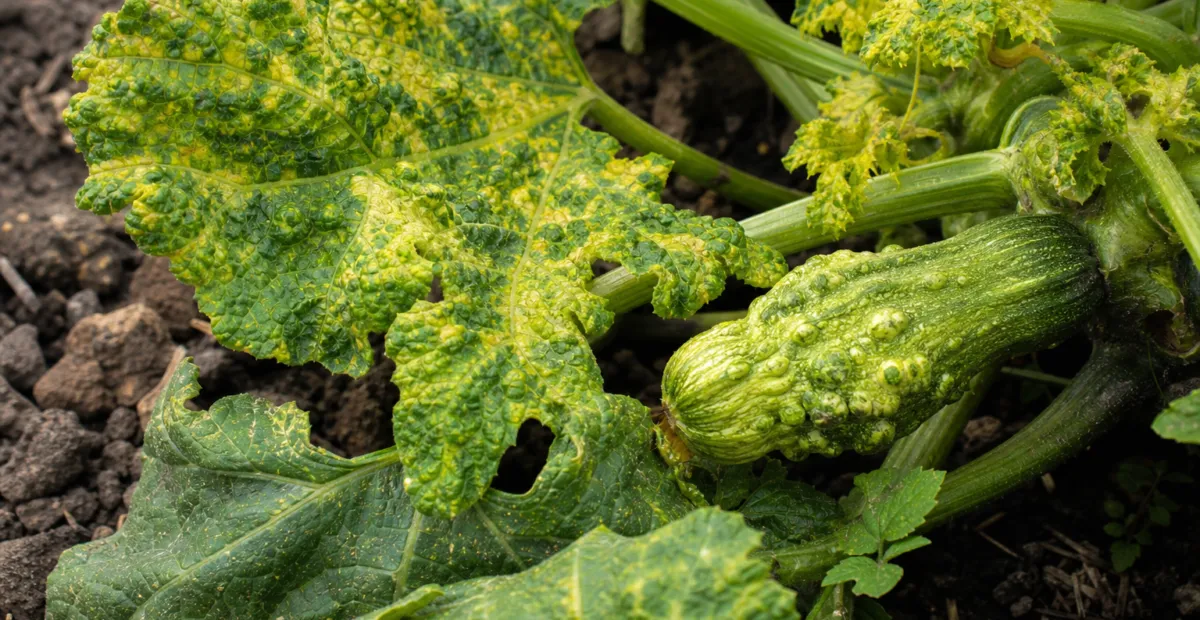
Zucchini yellow mosaic is a serious viral disease of squash and other cucurbits caused by zucchini yellow mosaic virus (ZYMV). In the United States, infected plants may show bright yellow-green mosaic, blistering, leaf distortion, severe stunting, and misshapen, knobby squash fruit. The virus is spread mainly by aphids in a nonpersistent manner and by sap contact, so prevention, resistant cultivars, sanitation, and early removal are more effective than trying to cure infected plants.
Typical conditions
Overview
Zucchini yellow mosaic virus is an economically important disease of cucurbits in the United States and worldwide. Summer squash, zucchini, pumpkin, cucumber, muskmelon, and watermelon can be affected, although symptom severity varies with the virus strain, host cultivar, plant age, and growing conditions.
Diagnosis based on symptoms alone is uncertain because ZYMV can resemble watermelon mosaic virus, papaya ringspot virus type W, cucumber mosaic virus, herbicide injury, and nutrient or environmental disorders. Suspect samples should be confirmed by a plant diagnostic laboratory when the result affects crop removal or future planting decisions.
Symptoms and identification
Typical symptoms on zucchini and squash include bright yellow-green mosaic, vein clearing, blistering, puckering, severe leaf distortion, reduced leaf blades, and shortened internodes. Young leaves may become narrow, string-like, or severely malformed, and whole plants may be stunted.
Fruit can develop knobby or irregular areas, strong deformation, cracking, and poor quality. In melon and watermelon, longitudinal or radial cracks may occur. Early infections may reduce flowering, fruit set, seed production, and marketable yield. Symptoms can differ substantially among ZYMV strains and may be mild or temporarily masked by environmental conditions.
Causes and spread
ZYMV is spread primarily by aphids in a nonpersistent manner. Aphids can acquire the virus during brief probes on infected plants and transmit it quickly to healthy plants; therefore, insecticides often do not prevent primary infections because transmission may occur before aphids are killed.
The virus is also readily transmitted mechanically in contaminated sap. Hands, clothing, tools, equipment, footwear, and contact between wounded leaves can move virus from infected to healthy squash plants. Seed transmission has been demonstrated experimentally at low frequency, including symptomless infected seedlings, so reputable, tested seed is preferable.
Life cycle and persistence
After an aphid acquires ZYMV from an infected plant, it can transmit the virus during subsequent brief feeding probes. The virus then multiplies systemically through the plant, with symptoms appearing after an interval that depends on temperature, cultivar, strain, and plant age.
Infected cucurbit debris and living volunteer plants can maintain inoculum between plantings. The importance of particular overwintering hosts varies by region. In Florida, the wild cucurbit Melothria pendula has been documented as an infected reservoir. Experimental host ranges are broader than the consistently important natural host range, so non-cucurbit reports should be interpreted cautiously.
Treatment and control
There is no curative treatment that eliminates ZYMV from an infected plant. Remove plants with strong, spreading symptoms, especially early in the season, to reduce local inoculum and mechanical spread. Bag diseased plants before carrying them through the garden.
Protect remaining plants with sanitation, weed and volunteer-cucurbit removal, insect-exclusion measures, and resistant or tolerant cultivars. Managing aphids can reduce secondary spread and plant stress, but it cannot reliably stop the first transmission event because ZYMV is transmitted nonpersistently. If confirmation is important, submit symptomatic leaves to a state or university plant diagnostic laboratory.
Low-impact and biological control
- Use physical exclusion, reflective mulch, clean seed, sanitation, and rapid removal of symptomatic plants as the primary organic-compatible measures.
- Encourage beneficial aphid predators such as lady beetles, lacewings, syrphid larvae, and parasitoid wasps by avoiding unnecessary broad-spectrum insecticides and maintaining flowering habitat away from the crop.
- Use only organic products registered and labeled for the crop and intended use in the United States. Insecticidal soaps or horticultural oils may suppress aphid populations under suitable conditions, but they do not cure infected plants and may not prevent initial ZYMV transmission.
Prevention
- Choose cultivars listed by the seed company or extension recommendations as resistant or tolerant to ZYMV, recognizing that resistance may be strain-specific and is not absolute.
- Start with reputable, tested seed and inspect transplants before planting. Do not save seed from symptomatic plants.
- Remove volunteer squash, cucumbers, melons, and watermelons, and control weeds that may harbor aphids or viruses.
- Scout young plants frequently. Remove suspicious plants promptly, place them in a bag, and discard them rather than composting infected tissue.
- Disinfect tools and wash hands after handling suspect plants. Avoid moving through the crop when foliage is wet or unnecessarily touching growing tips.
- Use floating row covers over young cucurbits where practical, removing them when flowering begins so pollinators can reach the plants. Reflective mulch may reduce some aphid landings, but it is not fully reliable.
Interesting facts
- ZYMV is a potyvirus with flexuous rod-shaped particles and a single-stranded positive-sense RNA genome.
- Major US strains have included Connecticut and Florida types, and symptoms may differ enough that field identification can be difficult.
- Some ZYMV-resistant breeding lines and cultivars have strain-specific protection; resistance should not be assumed to cover every isolate.
- Direct contact, contaminated tools, clothing, footwear, and plant sap can transmit the virus, not only aphids.
- Natural infection is most consistently associated with cucurbits, although experimental inoculations have produced infections in plants from several other families.
No pesticide cures an infected plant or provides dependable protection against initial nonpersistent aphid transmission. Use only products legally authorized in the United States for the specific crop and problem, and follow the current label, including crop, site, rate, timing, re-entry, and preharvest requirements. Prioritize resistant cultivars, sanitation, exclusion, weed management, and removal of infected plants.