He cucamelo (Melothria scabra) short overview
He cucamelo (Melothria scabra) is a tender climbing cucurbit grown for its charming grape-sized fruits, marked with miniature watermelon-like stripes. The crisp, cucumber-flavored fruits have a lightly sour character and can be eaten fresh, added to stir-fries or pickled. In the United States it is usually grown as a warm-season annual, although its tuberous rootstock can be overwintered indoors in suitable conditions.
Taxonomic classification
He cucamelo (Melothria scabra) care guide
Light and placement
Place in a site receiving at least 6–8 hours of direct sun, ideally with a south- or west-facing exposure and shelter from cold winds. Strong light supports flowering and fruiting. Pale, stretched growth suggests insufficient light; scorched leaves or severe midday wilt suggest heat or root-zone stress rather than a need for deep shade.
Watering and humidity
Keep soil evenly and moderately moist, watering deeply when the top inch begins to dry. Container plants may need water more often during hot weather. Mulch the root zone to reduce swings in moisture, but keep mulch away from stems. Avoid constant saturation and overhead watering, especially late in the day.
Soil and growing medium
Use fertile, humus-rich soil that drains freely but holds steady moisture. A loam amended with compost is suitable. Avoid compacted or waterlogged ground, which can weaken roots and reduce growth. A slightly acidic to neutral reaction, approximately pH 6.0–7.0, is appropriate.
Feeding
Mix finished compost into the planting area before setting out plants. If growth is pale or weak, apply a balanced vegetable fertilizer at the label rate after establishment and again when vigorous vines begin flowering. Avoid heavy nitrogen feeding, which can produce excess foliage with poorer fruiting. Do not fertilize drought-stressed or waterlogged plants.
Growth and habit
A vigorous, warm-season vine with curling tendrils that quickly uses trellis space. Vertical training keeps fruits cleaner, improves visibility during harvest and reduces slug damage. Tender stems and tendrils are easily injured by cold or rough handling, so provide support early and guide growth gently.
Planting and repotting
Start seeds indoors about 4–6 weeks before the average last frost, or direct-sow after frost danger has passed and soil has warmed. Sow about 1/2 inch deep. Space plants 9–12 inches apart, or give each plant a large container and sturdy vertical support. Harden indoor-grown seedlings before planting out.
For container plants, transplant only after roots have filled the starter pot and outdoor temperatures are reliably warm. Use a large container with drainage holes and a trellis; disturb the root ball as little as possible. Repotting is generally unnecessary during the growing season.
Propagation and pruning
Propagation
Propagate by seed. Sow indoors 4–6 weeks before the last frost or direct-sow after the soil warms. For seed saving, allow fruits to mature fully, ferment the extracted seed briefly in water, rinse, dry thoroughly and store cool and dry.
Pruning
Pruning is usually limited to guiding stems onto the support, removing damaged growth and cutting back the vine after frost. Thin congested growth if airflow is poor, but avoid severe pruning during active fruit production.
Overwintering
In temperate climates, grow as an annual and remove the vine after frost. To preserve perennial rootstock, lift or pot the tuberous base before freezing weather, keep it above 50°F in a dormant location and maintain the medium almost completely dry until spring growth resumes.
Uses
Grow primarily as an edible vegetable and novelty fruit. Young fruits are crisp when eaten raw, while older fruits can be pickled; they may also be used in salads or cooked briefly. The delicate vine makes a useful edible ornamental for trellises and containers. This species should not be promoted for medicinal use without separate clinical evidence.
Appearance
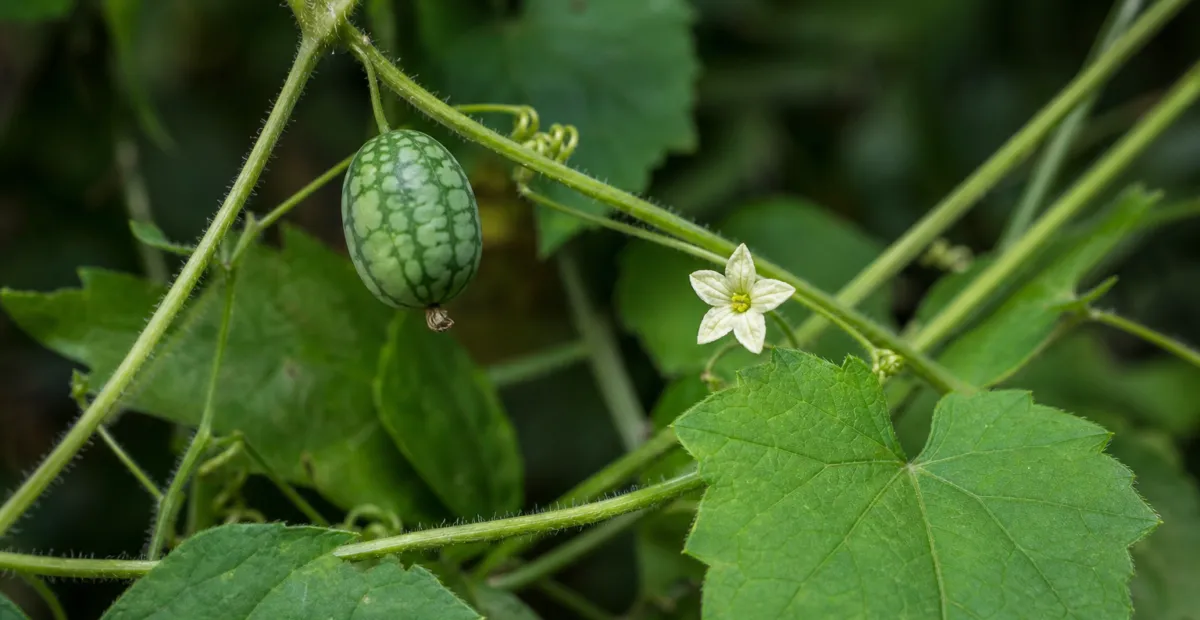
The vine has slender, delicate stems, curling tendrils and small palmate leaves resembling cucumber foliage. Flowers are tiny and yellow in the leaf axils. Fruits are oblong, grape-sized and light green with darker longitudinal stripes, giving the plant its miniature-watermelon appearance.
Flowering
Small, solitary, five-petaled yellow flowers develop in the leaf axils. Female flowers may appear before male flowers, an unusual sequence among cucurbits. Flowering begins in warm weather and continues while the vine is actively growing, with fruit developing after successful insect pollination.
Pollination and visitors
The plant bears separate male and female flowers on the same vine and depends on insect visitation for reliable fruit set. Cucurbit flowers are commonly visited by bees and bumblebees, but a specific primary pollinator for Melothria scabra was not sufficiently documented in the sources reviewed.
Melothria scabra photos
Click any photo for a larger view. Source, author and license are shown separately.
Diseases and pests
Diseases
Good airflow, clean foliage and well-drained soil help limit common cucurbit problems such as powdery mildew, downy mildew and bacterial leaf diseases. Water at the soil surface rather than wetting leaves, remove badly affected foliage and avoid working among plants when they are wet. Confirm a diagnosis before using a labeled treatment.
Pests
University of Wisconsin Extension reports no significant pest problems in typical cultivation. Continue to inspect for cucumber beetles, aphids, spider mites and slugs, especially in stressed plants. Use row covers early in the season where appropriate, hand-pick visible pests and keep fruit off the soil to reduce slug damage.
Toxicity and pollen
The young fruits are documented as edible and are commonly eaten fresh or pickled. No reliable authoritative evidence was found indicating that the species is toxic to people or pets when correctly identified and consumed as food. Do not eat unidentified volunteer cucurbits, and discard fruit that is distinctly bitter or otherwise abnormal.
- Typical season
- Flowering season, typically June–September in much of the United States
- Pollination / pollen
- Primarily insect-carried pollen
This is an insect-pollinated flowering plant, so pollen is generally deposited locally rather than dispersed widely by wind. A low airborne-allergy classification is a cautious horticultural assessment, not a guarantee that sensitive individuals will have no reaction. Flowers are most relevant during the warm-season blooming period.
Native habitat
The species is native from Mexico through Central America to Venezuela, where it occurs in seasonally dry tropical environments including forest, woodland and thicket habitats. It favors warm conditions and soils that provide moisture during growth without prolonged saturation.
Interesting fact
The fruits resemble miniature striped watermelons but have a cucumber-like flavor with mild sourness. The species is a tuberous geophyte in its native range. Mature vines can cover a small trellis quickly. Unlike standard cucumbers, female flowers may appear before male flowers.
Frequently asked questions (FAQ)
The most relevant questions about this plant, with short and direct answers.
🌱Quick care
What is he cucamelo (Melothria scabra)?⌄
He cucamelo is a fast-growing, tender perennial vine in the cucumber family, Cucurbitaceae, grown for its small, edible, cucumber-like fruits. In most of the United States, it is cultivated as an annual because it cannot tolerate frost.
How much sun does he cucamelo need?⌄
He cucamelo grows best in full sun, receiving at least 6 hours of direct sunlight daily. A sheltered location helps protect its tender vines from wind and cool temperatures.
How often should I water he cucamelo?⌄
Water he cucamelo regularly so the soil stays evenly moist but not waterlogged. Increase watering during hot, dry weather, especially when the vine is flowering and producing fruit.
How big does he cucamelo get?⌄
He cucamelo can produce vigorous vines about 8 to 10 feet long in favorable conditions. The plant needs vertical space or a trellis because its tendrils climb readily.
🌤️Environment and placement
What type of soil is best for he cucamelo?⌄
Use fertile, humus-rich, well-drained loam for he cucamelo. Improving poor soil with compost can support stronger growth, while heavy, poorly drained soil may cause root problems.
Can he cucamelo grow in a container?⌄
Yes, he cucamelo can grow successfully in a large container with drainage holes and a sturdy trellis. Choose a container that holds several gallons of soil and check moisture more often than with plants in the ground.
Does he cucamelo need a trellis?⌄
A trellis is strongly recommended for he cucamelo because its climbing vines and tendrils grow more neatly when supported. Vertical growth also keeps fruit off the soil and makes harvesting easier.
Is he cucamelo frost hardy?⌄
No, he cucamelo is frost tender and should not be planted outdoors until the danger of frost has passed. Protect the roots and vines from freezing temperatures, or grow the plant as a seasonal annual.
Can he cucamelo grow in partial shade?⌄
He cucamelo may survive in partial shade but generally grows and fruits best in full sun. Too little light can reduce vigor, flowering, and fruit production.
💧Care and problems
Why is my he cucamelo growing leaves but not fruit?⌄
Poor fruiting can result from insufficient sunlight, cool weather, excess nitrogen, or inadequate pollination. Give the vine full sun, avoid excessive nitrogen fertilizer, and allow time for both male and female flowers to develop.
Why is he cucamelo wilting?⌄
Wilting is most often caused by dry soil, heat stress, root damage, or waterlogged conditions. Check soil moisture several inches below the surface and correct either drought or poor drainage.
What pests attack he cucamelo?⌄
He cucamelo is relatively resistant to serious pest problems, but it can still be affected by common cucurbit pests, slugs, snails, aphids, or rodents. Inspect foliage and fruit regularly and remove pests by hand or with appropriate garden controls.
Does he cucamelo need fertilizer?⌄
He cucamelo benefits from fertile soil and moderate feeding during active growth. Avoid excessive nitrogen, which can produce lush vines with fewer flowers and fruits; compost or a balanced vegetable fertilizer is usually sufficient.
Should I prune he cucamelo?⌄
Routine pruning is usually unnecessary for he cucamelo. Remove damaged or diseased growth and guide vigorous vines onto their support if they spread beyond the growing area.
Why are the leaves of he cucamelo turning yellow?⌄
Yellow leaves may indicate overwatering, poor drainage, nutrient deficiency, aging foliage, or disease. Check the roots and soil moisture first, then look for spotting, mildew, insects, or distorted new growth.
🪴Planting and repotting
When should I plant he cucamelo outdoors in the United States?⌄
Plant he cucamelo outdoors after the local average last frost date, when the soil and nighttime temperatures have warmed. In cooler regions, start seeds indoors about 4 to 6 weeks before that date.
How far apart should he cucamelo plants be spaced?⌄
Space he cucamelo plants about 9 to 12 inches apart when growing them on a trellis. Wider spacing may improve airflow when plants are grown without vertical support.
How deep should I plant he cucamelo seeds?⌄
Sow he cucamelo seeds about one-quarter inch deep in warm, fine-textured seed-starting mix. Keep the medium lightly moist and provide warmth until germination.
How long do he cucamelo seeds take to germinate?⌄
He cucamelo seeds commonly germinate in about 7 to 10 days under warm conditions. Cool soil can delay germination or reduce the percentage of seeds that sprout.
Can I direct-sow he cucamelo seeds?⌄
Yes, direct-sow he cucamelo seeds outdoors after the last frost when the soil is warm. Indoor sowing is often more reliable in short-season areas because the plant needs a long warm growing period.
✂️Propagation and pruning
How do I propagate he cucamelo?⌄
He cucamelo is most commonly propagated from seed. Mature plants can also be overwintered from their dormant rootstock in a frost-free location and replanted in spring.
Can I save seeds from he cucamelo fruits?⌄
Yes, seeds can be saved from fully mature he cucamelo fruits, preferably fruits that have ripened thoroughly or fallen from the vine. Clean and dry the seeds completely before storing them in a cool, dry place.
Can he cucamelo survive winter indoors?⌄
He cucamelo can sometimes be overwintered indoors as a dormant rootstock, but it must be protected from frost. Keep the dormant roots cool and nearly dry, then resume watering as new growth begins in spring.
Can I grow he cucamelo from cuttings?⌄
Seed propagation is the standard and best-documented method for he cucamelo. Reliable guidance on routine propagation from stem cuttings is limited, so cuttings should not be considered the primary method.
⚠️Toxicity and safety
Is he cucamelo edible?⌄
Yes, the correctly identified fruits of he cucamelo are edible and have a crisp, cucumber-like flavor with mild tartness. Eat only fruit from a confidently identified Melothria scabra plant because similar-looking wild cucurbits may differ.
Is he cucamelo toxic to people or pets?⌄
No documented species-specific toxicity was found for correctly identified he cucamelo, and its fruits are traditionally eaten. Because formal pet-safety data may be limited, prevent pets from consuming large quantities of unfamiliar plant material.
How do he cucamelo fruits taste?⌄
He cucamelo fruits taste like crisp cucumber with a mildly sour or citrusy note. They can be eaten fresh, added to salads, cooked briefly, or pickled.
How can I tell he cucamelo apart from Melothria pendula?⌄
He cucamelo, Melothria scabra, typically has small striped or mottled fruits resembling miniature watermelons, while Melothria pendula can have more uniformly green young fruits that darken as they mature. Do not eat a wild plant based on fruit appearance alone; confirm its identification first.
🌸Flowering and special interest
When does he cucamelo flower?⌄
He cucamelo produces small yellow flowers during warm-season growth, typically from summer into early fall. Flowering may be delayed by cool temperatures, low light, or excessive vegetative growth.
Does he cucamelo need two plants to produce fruit?⌄
He cucamelo plants produce both male and female flowers, so one healthy plant can usually produce fruit. Fruit set still depends on flower development and pollination by insects or other natural movement.
Why does he cucamelo have flowers but no fruit?⌄
Flowers may fail to produce fruit because they are too young, poorly pollinated, or exposed to cool, wet, or stressful conditions. Avoid disturbing the vines and encourage pollinators by growing the plant in a sunny location.
When can I harvest he cucamelo fruit?⌄
Harvest he cucamelo fruits when they are firm, green, and about grape-sized, usually from midseason until the first frost. Younger fruits are typically best for fresh eating, while more mature fruits can be used for pickling.