
 Source:
 Elkhorn Fern (Platycerium bifurcatum) short overview
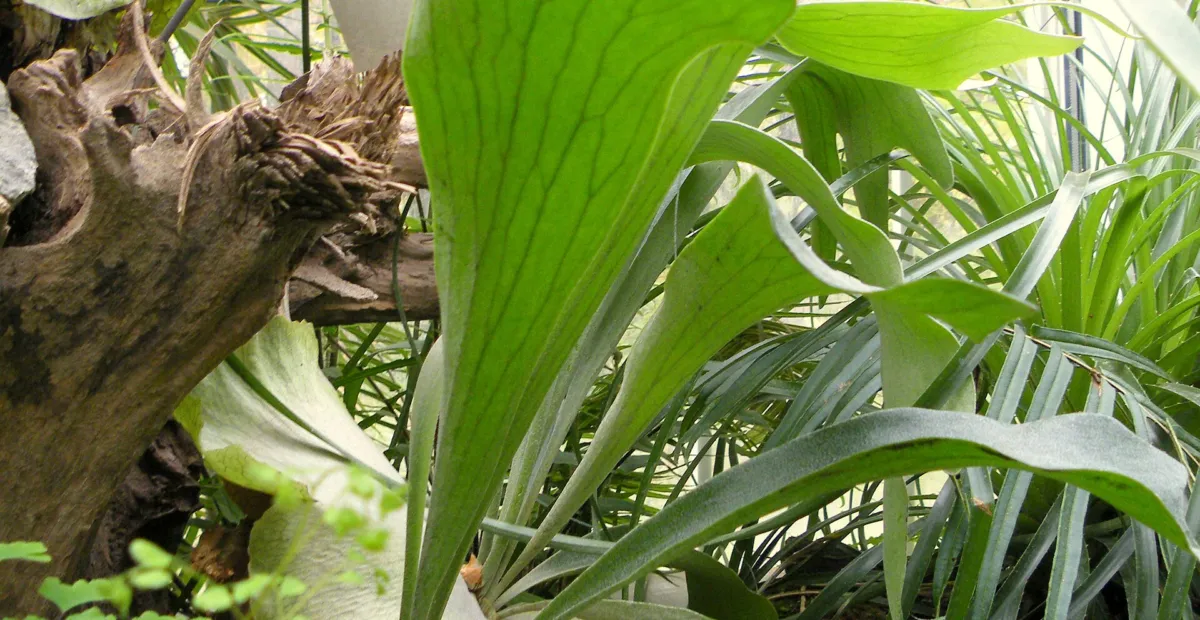
Elkhorn Fern, Platycerium bifurcatum, is an unusual evergreen fern that naturally grows as an epiphyte on tree trunks and branches across Australasia. Its rounded sterile shield fronds collect leaf litter and moisture, while its gray-green fertile fronds divide into antler-like lobes. In the United States it is usually grown mounted on wood, bark, or a wire basket, or kept in a well-drained epiphytic mix with bright filtered light and reliable humidity.
Taxonomic classification
Elkhorn Fern (Platycerium bifurcatum) care guide
Light and placement
Provide bright filtered light or dappled shade, such as an east-facing window behind a sheer curtain, a covered porch, or beneath a bright tree canopy. Gentle morning sun can be tolerated after acclimation, but harsh afternoon sun may scorch fertile fronds and dry the mount rapidly. Very dim conditions cause weak growth and can increase pest or disease problems.
Watering and humidity
Soak the mount or container thoroughly when the medium is partly dry, allowing excess water to drain completely. During warm, bright growth, watering may be needed about weekly, while cool or dim winter conditions require less frequent soaking. Wet the roots and shield-frond area, but do not keep the crown waterlogged. Good airflow is essential after watering.
Soil and growing medium
Grow mounted or in a very open epiphytic medium such as long-fiber sphagnum, orchid bark, and coarse organic material. The medium must drain rapidly and retain some moisture without becoming saturated. Slightly acidic to neutral conditions are suitable; avoid dense, waterlogged potting soil and burying the rhizome.
Feeding
Feed during active spring and summer growth with a balanced liquid fertilizer diluted to about one-quarter to one-half strength, applied to the growing medium or mount after watering. Monthly feeding is commonly used for actively growing plants, while established specimens may need only occasional applications. Reduce or stop feeding in cold, dim winter conditions.
Growth and habit
This rhizomatous epiphyte forms a clumping display from a central crown and may produce offsets, commonly called pups. Shield fronds remain attached and gradually overlap, while fertile fronds arch or hang outward. Keep the growing point uncovered, and enlarge the mount before crowding causes poor airflow or unstable support.
Planting and repotting
Mount during the warm growing season, positioning the crown against a shallow mound of damp sphagnum or other airy medium. Secure it loosely with soft ties, nylon, or non-copper wire until new growth anchors it. Leave room for shield fronds to expand and avoid placing the crown below standing water.
Repot only when the support or container is too small, the medium has decomposed, or drainage has declined. Preserve the crown and roots, and move the plant to a slightly larger mount or a coarse epiphytic mix. Do not bury the rhizome or cover the growing point.
Propagation and pruning
Propagation
Separate established pups when they have their own roots and several fronds. Wrap the root area in damp sphagnum and secure the division to a mount during warm, active growth. Division is practical for gardeners; propagation from spores is possible but very slow and technically demanding.
Pruning
Do not remove healthy shield fronds, even when they turn brown; they protect the crown and hold organic debris. Remove only dead, diseased, or badly damaged fertile fronds with clean tools. Never cut into the central growing point or scrape away the gray protective scales.
Overwintering
Bring the plant indoors or into a heated greenhouse before freezing weather. Keep it above about 55°F for reliable growth, with bright filtered light, reduced watering, and adequate humidity. Brief cold exposure may be survived by established plants, but prolonged temperatures in the 20s°F can cause severe damage, especially when the plant is wet or exposed to wind.
Uses
Primarily an ornamental specimen for mounted displays, hanging baskets, shade patios, conservatories, and warm-climate gardens. It is especially useful where a vertical or epiphytic accent is desired. In frost-prone parts of the United States, grow it as a container or indoor plant and move it under protection before freezing weather.
Appearance
The plant is recognized by its dimorphic fronds. Rounded to shield-shaped sterile fronds press against the mount, collect falling debris, and often turn tan or brown with age. Fertile fronds are leathery, gray-green, pendulous or arching, and repeatedly fork into antler-like lobes. Fine pale scales give the foliage a soft, silvery cast.
Pollination and visitors
No animal pollination is involved. As a fern, Platycerium bifurcatum reproduces through spores rather than flowers, nectar, or pollen-bearing anthers.
Platycerium bifurcatum photos
Click any photo for a larger view. Source, author and license are shown separately.
Diseases and pests
Diseases
Poor air circulation, excessive moisture, and low light can encourage black spot, fungal damage, or crown and root rot. Improve ventilation, avoid keeping the crown constantly saturated, remove badly damaged tissue with sterile tools, and correct the watering pattern before using a fungicide.
Pests
Spider mites, aphids, mealybugs, scale, and occasionally snails or slugs may occur. Inspect frond bases and shield fronds regularly. Improve humidity and airflow for mites, isolate affected plants, remove pests manually where practical, and use a labeled horticultural soap or oil according to directions. Avoid soaking persistent moisture into a poorly ventilated crown.
Related diseases and pests
Only Plant Doctor profiles whose host data indicate this plant may be affected are shown here.
 DiseaseBlack Root RotBerkeleyomyces basicola
 DiseaseCitrus black spotPhyllosticta citricarpa
 PestMealy Plum AphidHyalopterus pruni (Geoffroy, 1762)
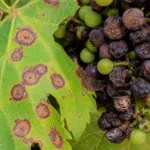 DiseaseBlack Rot of GrapePhyllosticta ampelicida (formerly Guignardia bidwellii)
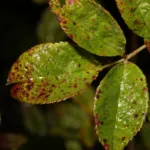 DiseaseRose black spotDiplocarpon rosae
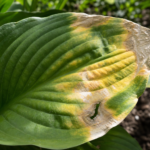 Environmental stressExcess light stress
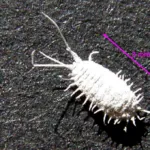 PestObscure mealybugPseudococcus viburni
 PestCitrus mealybugPlanococcus citri
Toxicity and pollen
ASPCA lists Platycerium bifurcatum as non-toxic to dogs and cats. No specific human toxicity is documented in the consulted sources. Normal plant-handling hygiene is appropriate, and avoid ingesting ornamental plant material or growing media.
- Pollination / pollen
- Fern spores released from sori
Ferns do not produce airborne pollen in the flowering-plant sense. This species releases spores from mature fertile fronds. Spores are generally heavier and less persistently airborne than many wind-dispersed pollens, but sensitive individuals may still prefer good ventilation during heavy spore release.
Native habitat
Native populations occur from Java and nearby Southeast Asia through New Guinea and tropical to subtropical Australia, with related records extending toward New Caledonia. It grows attached to trunks, branches, and sometimes rocks in humid forest environments, relying on trapped litter and rainfall rather than ordinary ground soil.
Interesting fact
The species has two strongly different frond types: sterile shield fronds and fertile antler-like fronds. Shield fronds trap fallen leaves and help create a self-made compost pocket. The plant is epiphytic but does not parasitize its host. Brown felt-like patches on fertile fronds are normal spore-bearing structures.
Frequently asked questions (FAQ)
The most relevant questions about this plant, with short and direct answers.
🌱Quick care
What is Platycerium bifurcatum commonly called in the United States?⌄
Platycerium bifurcatum is commonly called Elkhorn Fern; it is also widely sold as Staghorn Fern. It is an epiphytic fern in the Polypodiaceae family.
Is Elkhorn Fern easy to grow indoors?⌄
Yes, Elkhorn Fern is generally manageable indoors when given bright filtered light, good airflow, moderate humidity, and careful watering. The main risk is root or crown rot from staying wet continuously.
How much light does an Elkhorn Fern need?⌄
Give Elkhorn Fern bright filtered light or dappled shade. Protect it from intense afternoon sun, although gentle morning sun may be tolerated when humidity and moisture are adequate.
How often should I water an Elkhorn Fern?⌄
Water when the mounting material or potting mix has begun to dry but before the roots become completely dry. Water more often during warm, bright weather and less often during cool winter conditions.
Should I mist my Elkhorn Fern?⌄
Misting can modestly increase surface humidity, but it should not replace thorough watering. Good airflow is important because constantly wet fronds and stagnant air can encourage problems.
🌤️Environment and placement
Where should I place an Elkhorn Fern indoors?⌄
Place it near a bright east- or north-facing window, or a filtered south- or west-facing window. Keep it away from harsh direct afternoon sun, heating vents, and cold drafts.
Can Elkhorn Fern grow outside in the United States?⌄
Yes, it can grow outdoors year-round in warm, frost-free parts of the United States, especially USDA Zones 10–11. In colder areas, bring it indoors or protect it before freezing weather.
What temperature is too cold for an Elkhorn Fern?⌄
Protect Elkhorn Fern when temperatures approach 30°F because it is frost-tender. Brief cold exposure may cause damage, while freezing conditions can kill leaves or the entire plant.
Can Elkhorn Fern tolerate direct sunlight?⌄
Elkhorn Fern generally prefers bright indirect or dappled light rather than strong direct sun. Limited morning sun may be acceptable, but intense midday or afternoon exposure can scorch the fronds.
Does Elkhorn Fern need high humidity?⌄
Elkhorn Fern grows best with moderate to high humidity, particularly in heated or air-conditioned homes. A humidifier, pebble tray, grouping with other plants, or a naturally humid room can help.
Can Elkhorn Fern grow on a tree?⌄
Yes, Elkhorn Fern naturally grows as an epiphyte and can be attached to a tree trunk or large branch. Choose a stable, non-rotting surface with filtered light and regular moisture.
💧Care and problems
Why are my Elkhorn Fern’s shield fronds turning brown?⌄
Brown shield fronds are usually normal as the older protective fronds mature and dry. Do not remove them while attached because they help anchor the plant and collect moisture and organic matter.
Should I remove the brown leaves from an Elkhorn Fern?⌄
Remove only fully dead or loose material that comes away naturally, and prune withered fertile fronds if needed. Leave attached brown shield fronds in place because they are functional parts of the plant.
Can I wipe the fuzzy coating off Elkhorn Fern fronds?⌄
No, avoid wiping the fine gray or white hairs from the fertile fronds. This natural coating helps reduce water loss and should not be treated as dust or pests.
Why is my Elkhorn Fern turning yellow?⌄
Yellowing commonly indicates excessive moisture, poor drainage, insufficient light, or stress from a sudden environmental change. Check that the mix dries slightly between waterings and that the plant has good airflow.
Why is my Elkhorn Fern wilting?⌄
Wilting usually means the plant is too dry, exposed to excessive heat or sun, or has damaged roots from overwatering. Check the moisture at the root zone before watering and move it away from harsh exposure.
How do I know if I am overwatering an Elkhorn Fern?⌄
Persistent sogginess, yellowing, soft tissue, unpleasant odor, and declining roots suggest overwatering. Use an open epiphytic mix and allow slight drying between thorough waterings.
What pests attack Elkhorn Fern?⌄
Elkhorn Fern may be affected by spider mites, aphids, and mealybugs. Inspect the undersides and bases of fronds regularly, especially when indoor air is dry.
Does Elkhorn Fern need fertilizer?⌄
Elkhorn Fern needs only light, occasional feeding during active growth. Use a diluted balanced houseplant fertilizer and avoid heavy applications that can damage roots or accumulate in the mounting material.
🪴Planting and repotting
What soil is best for Elkhorn Fern?⌄
Use an open epiphytic mix made from materials such as sphagnum moss, orchid bark, and other coarse organic components. Avoid dense garden soil or standard potting mix that stays waterlogged.
Can I grow Elkhorn Fern in a pot?⌄
Yes, Elkhorn Fern can be grown in a pot with a very airy epiphytic mix and excellent drainage. A pot should support the plant without burying its crown or trapping excess moisture.
How do I mount an Elkhorn Fern?⌄
Place a pad of sphagnum or another open organic medium against wood, cork, or a similar support, then secure the plant over the medium with soft ties or fishing line. Fasten around the brown shield fronds, not across tender green fertile fronds.
When should I repot or remount an Elkhorn Fern?⌄
Repot or remount when the plant has outgrown its support, the medium has decomposed, or drainage has declined. Handle the root mass carefully and perform the work during active growth when possible.
✂️Propagation and pruning
How do I propagate Elkhorn Fern from pups?⌄
The easiest method is to separate a pup with a sharp, clean knife while retaining its growing point, some roots, and both shield and fertile fronds if available. Mount the division in moist, airy material and keep it warm until established.
When can I separate Elkhorn Fern pups?⌄
Separate pups once they are large enough to have a distinct growing point and some roots or attached basal tissue. Very small pups are more vulnerable to drying and may establish slowly.
Can Elkhorn Fern be grown from spores?⌄
Yes, Elkhorn Fern can be propagated from spores collected from the brown spore patches on fertile fronds. Spore propagation is much slower and more delicate than dividing pups.
How do I collect Elkhorn Fern spores?⌄
Place a mature spore-bearing section of fertile frond in a clean brown paper bag until the spores fall as fine brown dust. Sow them on a sterile, consistently moist medium rather than burying them deeply.
Can I cut off healthy Elkhorn Fern fronds?⌄
Avoid cutting healthy fertile or shield fronds because they support growth and water collection. Prune only damaged, fully dead, or withered fertile fronds unless there is a specific propagation or mounting reason.
⚠️Toxicity and safety
Is Elkhorn Fern toxic to dogs and cats?⌄
No, Elkhorn Fern is listed as non-toxic to dogs and cats. Pets can still experience stomach upset if they consume large amounts of any plant material.
Is Elkhorn Fern poisonous to humans?⌄
No specific human toxicity is documented for Elkhorn Fern. Even so, avoid eating ornamental plant material and wash your hands after handling potting media or treatments.
🌸Flowering and special interest
Does Elkhorn Fern produce flowers?⌄
No, Elkhorn Fern does not produce flowers because it is a fern. It reproduces through spores formed on the undersides of mature fertile fronds.
What are the two types of fronds on Elkhorn Fern?⌄
Elkhorn Fern produces shield-shaped sterile fronds and forked, antler-like fertile fronds. The shield fronds protect and anchor the plant, while the fertile fronds produce spores.
What are the brown patches on Elkhorn Fern fronds?⌄
The brown patches on mature fertile fronds are spore-producing areas, not necessarily disease. Avoid rubbing or washing them off if you want the plant to reproduce.
Similar plants
 Saucer Magnolia (Magnolia soulangeana) care guideMagnolia soulangeana
 Magnolia × loebneri ‘Merrill’Magnolia × loebneri 'Merrill'
 Magnolia loebneri care guideMagnolia loebneri
 Sweetbay magnolia (Magnolia virginiana) care guideMagnolia virginiana
 Star magnolia (Magnolia stellata) care guideMagnolia stellata
 Magnolia sprengeri care guideMagnolia sprengeri