
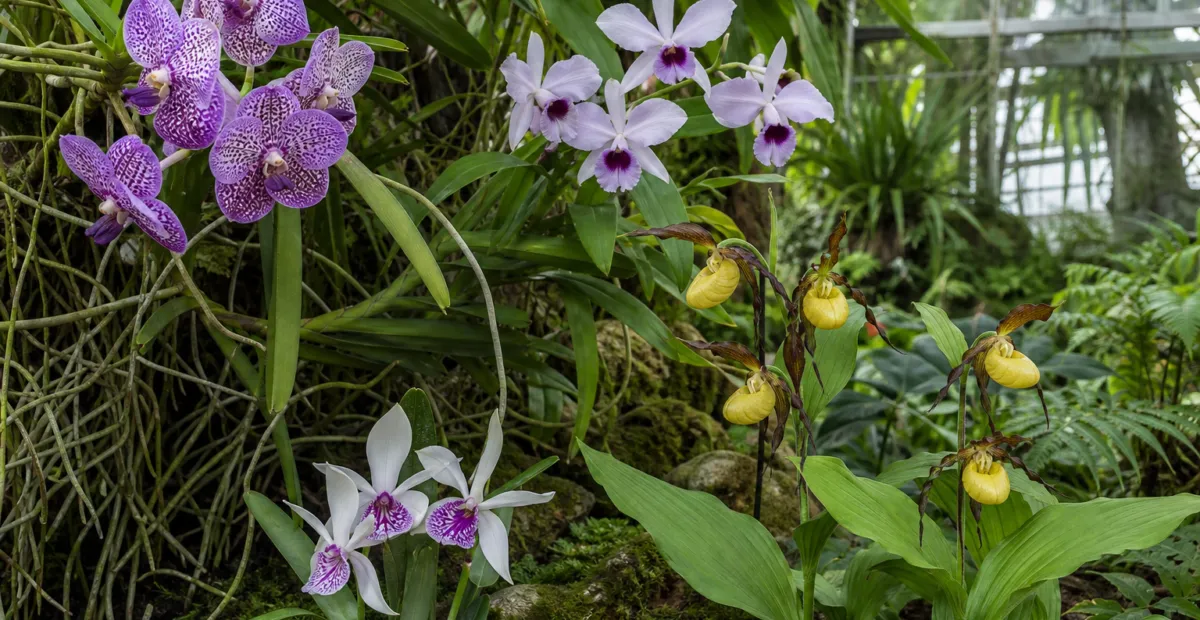
 AI-generated illustration
Orchid (Orchidaceae) short overview
Orchidaceae, the orchid family, is a remarkably diverse group of flowering plants found on every continent except Antarctica. Its members range from tropical epiphytes with aerial roots to terrestrial woodland, bog, prairie, and alpine orchids. Most are perennial herbs with highly specialized, often resupinate flowers, tiny seeds, and close relationships with mycorrhizal fungi. Because the family includes species with very different habitats and climates, light, watering, temperature, and potting advice must be matched to the individual genus or species.
Taxonomic classification
Orchid (Orchidaceae) care guide
Light and placement
Most cultivated epiphytic orchids prefer bright, filtered light rather than harsh midday sun. East- or lightly shaded south- and west-facing windows often work indoors; terrestrial species may prefer brighter woodland or meadow conditions. Pale, yellow-green leaves, scorch, or reddish patches can indicate excess light, while very dark green leaves and weak flowering often indicate too little.
Watering and humidity
Watering cannot be standardized across the family. Epiphytic orchids are usually watered thoroughly after the potting medium approaches dryness, then allowed to drain completely; terrestrial orchids may need more even moisture. Reduce watering for species with a seasonal rest period. Keep water from standing around roots, and increase air movement when humidity is high.
Soil and growing medium
Epiphytic orchids generally need an open, airy medium such as coarse bark with perlite, charcoal, or other drainage material; dense ordinary potting soil can suffocate their roots. Terrestrial orchids require a structure suited to their native habitat, often a humus-rich but well-drained soil. Slightly acidic to neutral conditions suit many cultivated types, but some species have narrower preferences.
Feeding
During active growth, many cultivated orchids respond to dilute, balanced fertilizer applied at regular intervals rather than heavy doses. Flush the medium periodically to reduce salt accumulation. Avoid strong feeding during dormancy, immediately after severe root loss, or when the plant is dehydrated. Terrestrial species may benefit from organic matter, but fresh manure and concentrated amendments are unsuitable.
Growth and habit
The family includes both monopodial orchids that grow from a central stem and sympodial orchids that advance through rhizomes or successive growths. Many epiphytes store water or nutrients in pseudobulbs, while terrestrial species may use tubers or fleshy roots. Growth rhythm, dormancy, and flowering triggers differ widely, so maintenance should follow the individual genus.
Planting and repotting
Match planting and establishment to the orchid's life form. Mount or pot epiphytes in an airy medium with the crown above the surface; plant terrestrial orchids in a habitat-appropriate, well-drained soil. Handle roots gently, maintain steady moisture during establishment, and avoid waterlogged sites. Outdoor planting is suitable only for species proven hardy in the local climate.
Repot when the medium decomposes, roots outgrow the container, drainage declines, or the plant has finished flowering and begins new growth. Use a container appropriate to the root system and a fresh, open medium. Remove rotten roots with sterile tools, keep the crown at the correct height, and delay heavy watering until damaged cuts have dried.
Propagation and pruning
Propagation
Propagation varies by group. Sympodial orchids may be divided when several vigorous growths and healthy roots are present; offsets and keikis can be separated after they form roots. Seed propagation is technically demanding because seeds usually require fungal or laboratory support. Commercial orchids are often multiplied by tissue culture.
Pruning
Remove spent flower spikes according to the individual orchid's growth habit. Some monopodial orchids can rebloom from a still-green spike, while dead or fully brown spikes may be cut near the base with sterilized tools. Remove damaged, diseased, or completely dead foliage only when necessary.
Overwintering
Winter treatment ranges from simple indoor protection for tropical orchids to natural outdoor dormancy for hardy terrestrial species. Protect tender orchids from frost, cold drafts, and cold wet roots. Provide adequate light indoors, reduce watering when growth slows, and keep dormant hardy species in conditions appropriate to their native climate rather than warm, wet rooms.
Uses
Orchids are widely grown as houseplants, greenhouse specimens, conservatory plants, cut flowers, and collector plants. Native terrestrial orchids can support habitat conservation and restoration when propagated legally. Vanilla is an orchid used as a flavor crop, but that use applies to particular species rather than the family as a whole; wild collection should be avoided.
Appearance
Orchids are recognized by strongly bilateral flowers, three sepals, three petals, and a modified central lip or labellum. The reproductive organs are fused into a column, and pollen is commonly packaged into pollinia. Leaves may be leathery, grass-like, pleated, or reduced; epiphytic roots often have a pale outer velamen layer.
Flowering
Orchid flowers commonly twist during development so the labellum faces downward, creating a landing platform or specialized visual and tactile guide. The column combines stamens and stigma, while pollinia allow efficient transfer of large pollen masses. Bloom timing ranges from brief seasonal displays to flowers lasting for weeks or months in cultivated hybrids.
Pollination and visitors
Orchid pollination is exceptionally diverse. Documented systems include nectar rewards, deceptive flowers, fragrance mimicry, sexual deception, and specialized interactions with bees, wasps, flies, beetles, butterflies, and moths. Some orchids are self-pollinating or have unusual non-animal systems, so visitor relationships must be evaluated at species or genus level.
Orchidaceae photos
Click any photo for a larger view. Source, author and license are shown separately.
Diseases and pests
Diseases
Root and crown rots are encouraged by stagnant water, poor airflow, and decomposed media. Use clean pots and tools, water according to the plant's growth habit, and remove affected tissue promptly. Leaf spots, bacterial infections, and fungal problems spread more readily when foliage stays wet; improve ventilation, isolate symptomatic plants, and avoid unnecessary chemical treatment.
Pests
Common protected-culture pests include scale, mealybugs, aphids, thrips, spider mites, and fungus gnats. Inspect leaf axils, roots, new growth, and flower spikes regularly. Improve plant vigor and airflow, isolate infested specimens, remove visible pests, and use labeled horticultural or biological controls when monitoring shows treatment is warranted.
Related diseases and pests
Only Plant Doctor profiles whose host data indicate this plant may be affected are shown here.
 PestMealy Plum AphidHyalopterus pruni (Geoffroy, 1762)
 PestOnion thripsThrips tabaci Lindeman
 PestMelon thripsThrips palmi Karny
 PestChilli thripsScirtothrips dorsalis Hood
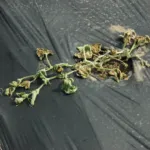 DiseaseBacterial WiltRalstonia solanacearum species complex
 DiseaseBacterial Fruit BlotchAcidovorax citrulli
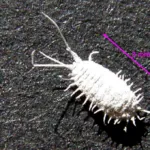 PestObscure mealybugPseudococcus viburni
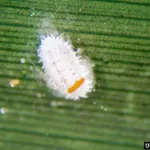 PestCitrus mealybugPlanococcus citri
Toxicity and pollen
Orchidaceae is too diverse for a single reliable family-wide toxicity classification. Vanilla is an important edible orchid, while ornamental orchids and commercial hybrids vary by species and may lack robust ingestion data. Do not assume every orchid is edible or harmless; identify the plant before ingestion, prevent pets and children from chewing unknown specimens, and seek professional advice after significant exposure.
- Typical season
- During flowering; timing varies by species and region
- Pollination / pollen
- Usually insect-transferred pollinia rather than freely airborne pollen; family-wide variation exists.
Most orchids package pollen into pollinia that are transferred by animal visitors rather than released as large quantities of wind-borne grains. This generally limits airborne exposure compared with wind-pollinated plants, but it does not prove zero allergy risk. Fragrance, floral materials, growing media, molds, and individual species differences may also affect sensitive people.
Native habitat
Orchids occupy nearly every terrestrial environment except open water and true desert, from lowland tropical forests to cloud forests, wetlands, temperate woodlands, grasslands, rocky habitats, and high mountains. Many epiphytes grow on trees without parasitizing them, while terrestrial species depend on specialized soils, seasonal moisture, and mycorrhizal fungi for establishment.
Interesting fact
Orchid seeds are among the smallest of all flowering-plant seeds and usually lack substantial food reserves. Germination commonly depends on compatible mycorrhizal fungi. The family includes both tree-dwelling epiphytes and ground-dwelling species. Many flowers use a labellum and column to place visiting insects in a precise position for pollinia transfer.
Frequently asked questions (FAQ)
The most relevant questions about this plant, with short and direct answers.
🌱Quick care
What is an orchid?⌄
Orchid is the common name for flowering plants in the family Orchidaceae. Because this family includes many genera and habitats, care requirements vary widely between individual orchids.
Are orchids easy to care for indoors?⌄
Many commonly sold orchids are manageable indoors when their light, watering, temperature, humidity, and potting medium are matched to the type. Phalaenopsis orchids are generally among the easiest choices for beginners.
🌤️Environment and placement
How much light do orchids need?⌄
Most orchids need bright, indirect light, although the ideal intensity varies by genus and habitat. Gentle morning sun is often suitable, while strong afternoon sun may scorch leaves unless filtered.
Can orchids grow in a north-facing window?⌄
Some low-light orchids can grow in a north-facing window, but flowering may be limited if the light is too weak. An east-facing window is often a better general choice for indoor orchids.
Can orchids grow under artificial lights?⌄
Yes, orchids can grow under artificial lights when the light is bright enough and provided on a consistent daily schedule. Keep the fixtures far enough away to prevent leaf or flower damage.
What temperature is best for orchids?⌄
The best temperature depends on the orchid, but many cultivated indoor types prefer warm to intermediate household conditions with slightly cooler nights. Avoid sudden temperature changes, drafts, and contact with hot or cold window glass.
Do orchids need high humidity?⌄
Many orchids benefit from moderate to high humidity, especially epiphytic and cloud-forest types. Good air movement is essential because stagnant, constantly damp conditions increase the risk of fungal and bacterial problems.
Can orchids grow outdoors in the United States?⌄
Some orchids can grow outdoors seasonally or year-round in suitable U.S. climates, but many cultivated orchids need protection from frost and temperature extremes. Check the specific genus or species and your local USDA hardiness conditions before planting outside.
💧Care and problems
How often should I water an orchid?⌄
Water an orchid when its potting medium is nearly dry rather than following a fixed calendar. Frequency depends on the orchid, pot size, medium, indoor temperature, humidity, light, and season.
Is watering orchids with ice cubes safe?⌄
Ice cubes are not the preferred way to water orchids because they provide little water and can expose roots to sudden cold. Use room-temperature water and soak the medium thoroughly when it is nearly dry.
What potting medium is best for orchids?⌄
Most epiphytic orchids need a loose, fast-draining orchid medium such as bark, sphagnum moss, perlite, or a suitable mixture rather than ordinary potting soil. Terrestrial orchids may require a different, habitat-specific mix.
Should orchids be fertilized?⌄
Orchids generally grow and flower better with regular, diluted fertilizer during active growth. Use an orchid fertilizer according to its label and reduce feeding when the plant is dormant or growing slowly.
Why are my orchid leaves turning yellow?⌄
Yellow orchid leaves may result from natural aging, excessive light, watering stress, root damage, or a nutritional problem. A single older yellowing leaf can be normal, but rapid or widespread yellowing requires checking the roots and growing conditions.
Why are my orchid leaves wrinkled?⌄
Wrinkled leaves usually indicate that the plant is not receiving enough usable water, often because of underwatering or damaged roots. Inspect the roots and medium instead of simply watering more, because waterlogged roots can cause similar symptoms.
What do healthy orchid roots look like?⌄
Healthy orchid roots are generally firm and plump, with a color that may range from green to silvery white depending on moisture and the root’s outer coating. Black, mushy, hollow, or easily collapsing roots are usually damaged or dead.
How do I treat orchid root rot?⌄
Treat root rot by removing the plant from its pot, cutting away dead or mushy roots with sterilized tools, and repotting it in fresh, well-drained medium. Correct the cause, such as slow-drying media, poor drainage, low light, or excessive watering.
Why does my orchid have brown or black spots?⌄
Brown or black spots can result from sunburn, physical damage, fungal or bacterial disease, or prolonged moisture on leaves. Isolate a declining plant, improve air circulation, keep foliage dry, and seek an orchid-specific diagnosis if the spots spread.
How do I get rid of mealybugs on an orchid?⌄
Remove mealybugs with a cotton swab lightly moistened with rubbing alcohol, keeping the alcohol off flowers and testing a small area first. Repeat treatment and inspect nearby plants because infestations can recur.
🪴Planting and repotting
Do orchids need special pots?⌄
Orchids need containers with reliable drainage and a size appropriate for the root system. Clear plastic pots are useful for monitoring roots and moisture, while decorative pots should not trap water around the inner pot.
When should I repot an orchid?⌄
Repot an orchid when the potting medium has broken down, drainage has declined, roots are failing, or the plant has outgrown its container. Repotting is often easiest as new roots begin to grow, but a severely deteriorating medium should be replaced promptly.
Can I repot an orchid while it is blooming?⌄
It is usually better to wait until flowering ends because repotting during bloom may shorten the life of the flowers. Repot immediately only when the medium, roots, pests, or drainage create an urgent problem.
Can orchids grow in regular potting soil?⌄
Most commonly grown epiphytic orchids should not be planted in regular potting soil because it stays too dense and wet around their roots. Use a coarse orchid medium unless the particular orchid is a terrestrial species adapted to soil.
✂️Propagation and pruning
How are orchids propagated?⌄
Orchids can be propagated by division, keikis, back bulbs, or laboratory seed culture, depending on the type. Division and keikis are the most practical methods for many home growers.
What is an orchid keiki?⌄
A keiki is a young plantlet that develops on an orchid, commonly along a flower spike or from the base. It can usually be separated and potted after it has developed several roots and leaves.
Can I grow an orchid from a flower stem cutting?⌄
A flower-stem cutting will not reliably produce a new orchid because most orchid stems do not root like ordinary houseplant cuttings. Some Phalaenopsis spikes may produce keikis under suitable conditions, but this is not guaranteed.
Where should I cut an orchid flower spike?⌄
The correct cutting point depends on the orchid type and the condition of the spike. For Phalaenopsis, a healthy green spike may be cut above a node to encourage possible branching, while a brown or dry spike is normally cut near its base.
⚠️Toxicity and safety
Are orchids poisonous to cats and dogs?⌄
The commonly sold Phalaenopsis orchid is listed by the ASPCA as non-toxic to dogs, cats, and horses. Because Orchidaceae includes many different plants and any plant material may still cause stomach upset, identify the exact orchid and contact a veterinarian if a pet becomes ill.
🌸Flowering and special interest
Why is my orchid not blooming?⌄
Insufficient light is one of the most common reasons an orchid fails to rebloom, although maturity, temperature, watering, nutrition, and seasonal cues also matter. Increase light gradually and confirm that the plant is otherwise producing healthy new growth.
How long do orchid flowers last?⌄
Orchid flowers may last from several days to many weeks, depending on the genus, species, hybrid, temperature, humidity, and plant health. Cooler, stable conditions and proper watering often help flowers remain attractive longer.
How often do orchids rebloom?⌄
Reblooming frequency varies greatly by genus and growing conditions, with some cultivated orchids flowering once a year and others blooming more often. A healthy plant usually needs adequate light and time to complete its growth cycle before flowering again.
Should I cut off orchid flowers after they fade?⌄
Remove faded flowers to improve appearance, but do not automatically remove the entire flower spike. Whether the spike should be trimmed depends on the orchid type and whether the spike remains green, healthy, or capable of producing more flowers.
Similar plants
 Azure Monkshood (Aconitum carmichaelii) care guideAconitum carmichaelii
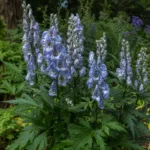 Monkshood (Aconitum ‘Stainless Steel’)Aconitum 'Stainless Steel'
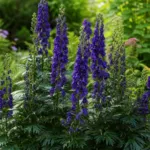 Monkshood (Aconitum ‘Bressingham Spire’)Aconitum 'Bressingham Spire'
 Golden full moon maple (Acer shirasawanum ‘Aureum’)Acer shirasawanum 'Aureum'
 Globosum (Acer platanoides ‘Globosum’)Acer platanoides 'Globosum'
 Striped maple (Acer pensylvanicum) care guideAcer pensylvanicum