
 Source:
 Aloe vera short overview
Aloe vera is a compact, evergreen succulent perennial valued for its architectural rosette of fleshy, toothed leaves and forgiving indoor culture. Give it strong light, a sharply draining mix, and a thorough watering only after the substrate has dried. In frost-free climates it can be grown outdoors and may produce a tall branched stalk of yellow to reddish flowers, while colder regions require container culture and winter protection. The leaf gel and yellow latex are chemically distinct and should not be treated as interchangeable.
Taxonomic classification
Aloe vera care guide
Light and placement
Place Aloe vera in a south- or west-facing window with several hours of direct sun, increasing exposure gradually after low-light conditions. An east-facing window or bright filtered light is safer in very hot summer climates. Too little light produces elongated, floppy growth and greener, weaker leaves; excessive sudden sun can bleach or scorch leaf surfaces. Rotate the pot periodically for even growth.
Watering and humidity
Water thoroughly until excess drains from the pot, then wait until the mix is fully dry through most of the container before watering again. In bright summer conditions this may be every 2–4 weeks; indoors in winter it may be much less often. Empty saucers and never leave the crown sitting wet. Humidity does not replace good drainage and should not be increased deliberately.
Soil and growing medium
Use a porous cactus or succulent mix amended with extra pumice, perlite, or coarse mineral grit. The container must have a drainage hole, and the root zone should dry promptly after watering. Avoid dense garden soil or peat-heavy mixes that remain wet. Aloe vera tolerates a broad pH range, but structure and drainage matter more than fine pH adjustment.
Feeding
Feed only during active spring and summer growth, using a balanced fertilizer diluted to about one-quarter to one-half the label strength, or a modest succulent fertilizer. Apply to already moist soil rather than dry roots. Skip feeding after repotting until new growth resumes, during cold or dim winter conditions, and whenever the plant is stressed or recently overwatered.
Growth and habit
This species forms a slowly expanding rosette and commonly produces offsets around the base. Mature plants can become crowded in containers, but division is straightforward when offsets have developed their own roots. Strong light helps maintain compact leaves and may improve the likelihood of flowering in older, established plants.
Planting and repotting
Choose a raised, sharply drained site in full sun or bright filtered light. Set the root ball no deeper than it was growing and keep soil away from the central crown. Water once after planting, then allow the root zone to dry before repeating. In humid or rainy regions, containers or raised beds are safer than poorly drained ground.
Repot in spring or early summer when roots fill the container or offsets crowd the pot. Move up only one container size and use a drainage hole with fresh succulent mix. Let disturbed roots dry briefly before planting, and wait several days before the first thorough watering if roots were cut or damaged.
Propagation and pruning
Propagation
Propagate most reliably from offsets. Separate a well-developed offset when it has its own roots, allow damaged surfaces to dry briefly, and pot it into a dry, porous mix. Seed propagation is possible but slower and less predictable for ordinary houseplant production; sow fresh seed in a warm, well-drained medium.
Pruning
Remove dead or badly damaged outer leaves at their base with a clean, sharp blade. Cut spent flowering stalks near the rosette after bloom finishes, taking care not to injure living leaves. Do not routinely trim healthy leaf tips; damaged tips will not regrow, so remove the whole leaf only when necessary.
Overwintering
Bring outdoor plants indoors before temperatures approach 40°F, especially when rain or frost is expected. Keep the plant in the brightest available window, reduce watering sharply, and avoid cold drafts and wet soil. In USDA Zone 9, outdoor plants may survive mild winters only in a protected, dry location; hard freezes can kill leaves or the entire plant.
Uses
Aloe vera is primarily grown as an ornamental succulent, indoor plant, patio container subject, and drought-tolerant accent in warm-climate gardens. Processed inner-leaf gel is used in commercial cosmetics and some food products, but raw leaf latex and whole-leaf preparations are not interchangeable with purified gel and should not be consumed casually. Avoid unsupported self-treatment claims.
Appearance
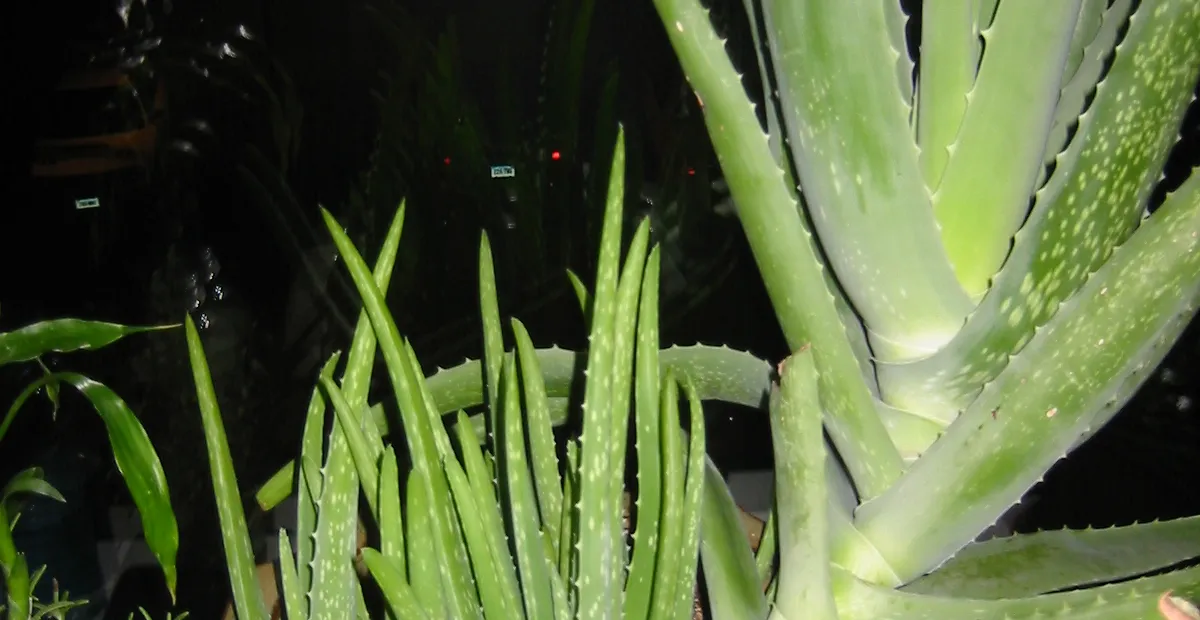
Leaves are thick, gray-green to green, lance-shaped, and arranged in a basal rosette. Their margins carry small, pale teeth, while cultivated plants may show subtle spots or bands when young. The short stem is usually concealed by overlapping leaves. A mature plant can send up a tall, branched flowering stalk from the rosette center.
Flowering
The inflorescence rises well above the rosette and branches from the middle, bearing dense racemes of pendent, tubular flowers. Kew records yellow perianth segments that may sometimes be red and a September–November flowering period in the native range. In the United States, outdoor bloom is commonly reported from late winter into spring in warm climates; indoor flowering is irregular and depends on age, light, and seasonal conditions.
Pollination and visitors
Research on Aloe flowers documents visits by honey bees and other bees across the genus, but pollination efficiency varies strongly by species and floral structure. For Aloe vera specifically, evidence for a dominant US pollinator is limited, so a broad bee visitor group is more defensible than assigning a particular species.
Aloe vera photos
Click any photo for a larger view. Source, author and license are shown separately.
Diseases and pests
Diseases
Most problems are caused by excess moisture: root rot produces soft, dark roots and collapsing leaves, while crown rot affects the central growth point. Prevent disease with a porous mix, a draining container, careful watering, and good airflow. Remove rotted tissue, discard saturated soil, and allow healthy tissue to dry before repotting.
Pests
Watch for mealybugs, scale, and occasionally aphids around leaf bases, offsets, and flower stalks. Isolate affected plants, remove small infestations with a cotton swab or gentle water spray, and repeat a labeled insecticidal soap or horticultural oil treatment as directed. Avoid treating drought-stressed or intensely hot plants.
Related diseases and pests
Only Plant Doctor profiles whose host data indicate this plant may be affected are shown here.
 PestCotton mealybugPhenacoccus solenopsis Tinsley
 DiseasePhytophthora cactorum crown, collar, root and fruit rotPhytophthora cactorum
 DiseaseRhizopus soft rotRhizopus stolonifer
 DiseaseBacterial soft rotPectobacterium carotovorum
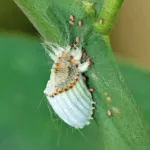 PestCottony Cushion ScaleIcerya purchasi
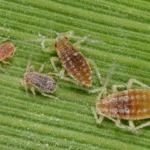 PestMealy Plum AphidHyalopterus pruni (Geoffroy, 1762)
 PestMelon aphid (cotton aphid)Aphis gossypii Glover
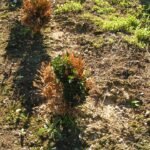 DiseasePhytophthora root and crown rotPhytophthora nicotianae
Toxicity and pollen
ASPCA lists Aloe vera as toxic to dogs and cats because of saponins and anthraquinones, with vomiting, diarrhea, and lethargy reported. In people, the yellow latex and whole-leaf preparations can cause abdominal cramps and diarrhea, and oral products have additional safety concerns. Topical inner gel is generally better tolerated, but ingestion and skin reactions remain possible.
- Typical season
- When flowering; late winter to spring outdoors in warm US regions
- Pollination / pollen
- Heavy, animal-carried pollen released from exposed anthers
Aloe vera produces pollen in its flowers, but the pollen is primarily handled by animal visitors rather than dispersed as a persistent airborne cloud. Direct allergy data for this species are limited, so a low—not zero—airborne relevance is the cautious classification. People with known plant or pollen sensitivities should avoid direct exposure to flowers and seek medical advice for symptoms.
Native habitat
In its native range, Aloe vera occurs in dry desert or dry shrubland settings, especially on rocky slopes in northern Oman from roughly 50–800 m elevation. It is adapted to intense light, episodic rainfall, rapid drainage, and extended dry periods. Naturalized populations occur in many warm regions where frost is limited.
Interesting fact
Aloe vera is an accepted species, while Aloe barbadensis is a synonym. Its clear inner gel and yellow latex are separate leaf products with different chemistry and safety considerations. The species is native to the Hajar Mountain region of Oman rather than being native throughout tropical Africa. Older plants can produce a flowering stalk far taller than the leaf rosette.
Frequently asked questions (FAQ)
The most relevant questions about this plant, with short and direct answers.
🌱Quick care
How do you care for Aloe vera indoors?⌄
Give Aloe vera bright light, use very well-drained succulent or cactus mix, and water only after the soil has dried thoroughly. Keep it warm and protect it from frost.
🌤️Environment and placement
How much light does Aloe vera need?⌄
Aloe vera grows best in bright light to full sun. Acclimate it gradually to strong direct sun, especially after moving it outdoors, to reduce the risk of leaf scorch.
Can Aloe vera grow in low light?⌄
Aloe vera may survive in lower light, but it usually becomes slower-growing and stretched rather than compact. Move it to a brighter window or supplement with a grow light if the leaves become thin or elongated.
What is the best window for Aloe vera?⌄
A south- or west-facing window is usually suitable in the United States, provided intense sun does not overheat or scorch the leaves. An east-facing window can also work if it provides several hours of strong light.
Can Aloe vera grow outside in the United States?⌄
Aloe vera can grow outdoors year-round only in frost-free regions, while gardeners elsewhere should grow it in a container and bring it indoors before cold weather. Protect it from frost and freezing temperatures.
What temperature is too cold for Aloe vera?⌄
Aloe vera should be protected from frost and freezing temperatures. Bring container plants indoors before cold nights, since chilled, wet soil greatly increases the risk of damage and rot.
💧Care and problems
How often should you water Aloe vera?⌄
Water Aloe vera deeply, then allow the potting mix to dry completely before watering again. The interval varies with light, temperature, pot size, and season, so soil dryness is more reliable than a fixed schedule.
How do you know when Aloe vera needs water?⌄
Check that the potting mix is dry several inches down and that the pot feels noticeably lighter before watering. Slightly less frequent watering is safer than keeping the soil continually moist.
Can you overwater Aloe vera?⌄
Yes, overwatering is one of the most common causes of Aloe vera decline and root rot. Use a drainage hole, empty standing water, and wait until the soil is fully dry before watering again.
Why are my Aloe vera leaves turning brown?⌄
Brown leaves can result from excessive direct sun, underwatering, cold injury, or damaged roots from overwatering. Check the soil and roots first, then adjust light and watering gradually rather than changing everything at once.
Why are my Aloe vera leaves turning yellow?⌄
Yellow leaves most often indicate overly wet soil or deteriorating roots, although older leaves can naturally yellow before drying. Inspect the roots and improve drainage if the mix stays damp for long periods.
Why is my Aloe vera plant drooping?⌄
Drooping leaves may indicate underwatering, root damage from persistent moisture, insufficient light, or cold stress. Check whether the soil is dry or wet and inspect the roots before deciding whether to water.
Does Aloe vera need humidity?⌄
No, Aloe vera generally adapts well to average indoor humidity and does not need misting. Avoid wetting the foliage repeatedly because moisture trapped around the leaves can contribute to rot.
Does Aloe vera need fertilizer?⌄
Aloe vera needs little fertilizer and can grow well with sparse feeding during active growth. If you fertilize, use a diluted, balanced houseplant fertilizer and avoid feeding when the plant is dormant or stressed.
🪴Planting and repotting
What soil is best for Aloe vera?⌄
Use a very well-drained succulent or cactus mix. A container mix that remains wet for extended periods is unsuitable and can cause root problems.
What type of pot is best for Aloe vera?⌄
Choose a pot with a drainage hole and only slightly more room than the root system requires. Terracotta can be helpful because it dries faster, but drainage is more important than the pot material.
When should you repot Aloe vera?⌄
Repot Aloe vera when roots circle the pot, emerge from drainage holes, the plant becomes unstable, or the mix has broken down. Move it into a pot only one size larger and use fresh, fast-draining mix.
How do you plant Aloe vera in a container?⌄
Set Aloe vera at the same depth it was growing, surround the roots with dry succulent mix, and use a pot with drainage. After repotting, wait briefly before watering if the roots were disturbed or damaged.
✂️Propagation and pruning
How do you propagate Aloe vera?⌄
The easiest method is separating offsets, or pups, that develop around the mother plant. Remove an offset with some roots if possible, let damaged cuts dry briefly, then plant it in well-drained succulent mix.
Can Aloe vera grow from a leaf cutting?⌄
Leaf propagation is unreliable for Aloe vera because a detached leaf commonly rots before producing a new plant. Offsets are the more dependable propagation method.
How do you prune Aloe vera?⌄
Aloe vera usually needs little pruning; remove dead, damaged, or completely dried leaves at the base with a clean blade. Do not routinely cut healthy leaf tips because the wounds may turn brown.
Why does Aloe vera produce pups?⌄
Pups are offsets produced as Aloe vera matures and forms a clump. They can remain attached for a fuller display or be separated once they are large enough to establish independently.
⚠️Toxicity and safety
Is Aloe vera toxic to dogs and cats?⌄
Yes, Aloe vera is toxic to dogs and cats if they eat the plant, and ingestion can cause vomiting, diarrhea, and lethargy. Keep it out of pets’ reach and contact a veterinarian or animal poison service after suspected ingestion.
Is Aloe vera safe for humans to eat?⌄
Aloe vera should not be eaten casually because the outer leaf and yellow latex contain compounds that can cause adverse effects. Commercial products prepared for internal use differ from raw houseplant leaves, so follow medical or product guidance.
Can you use gel from an Aloe vera houseplant on skin?⌄
The clear inner gel is commonly used topically, but raw leaves also contain yellow latex and may be contaminated or irritating. Patch-test first, avoid applying it to deep wounds, and do not assume every houseplant is suitable for ingestion.
🌸Flowering and special interest
Does Aloe vera flower indoors?⌄
Aloe vera can flower indoors, but mature plants with strong light and suitable growing conditions are more likely to bloom. Flowering is less reliable in dim rooms and may take several years.
What do Aloe vera flowers look like?⌄
Aloe vera produces a tall flower stalk with tubular yellow to orange flowers. A healthy, mature plant receiving strong light is more likely to produce a stalk than a young or light-starved plant.
Why is my Aloe vera not flowering?⌄
Insufficient light, young age, limited seasonal growth, or unsuitable temperatures can prevent flowering. Provide strong light, avoid chronic overwatering, and allow the plant a normal active growing season.
Similar plants
 Azure Monkshood (Aconitum carmichaelii) care guideAconitum carmichaelii
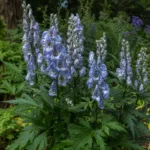 Monkshood (Aconitum ‘Stainless Steel’)Aconitum 'Stainless Steel'
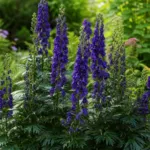 Monkshood (Aconitum ‘Bressingham Spire’)Aconitum 'Bressingham Spire'
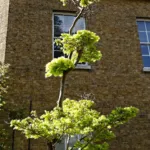 Golden full moon maple (Acer shirasawanum ‘Aureum’)Acer shirasawanum 'Aureum'
 Globosum (Acer platanoides ‘Globosum’)Acer platanoides 'Globosum'
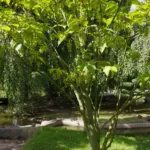 Striped maple (Acer pensylvanicum) care guideAcer pensylvanicum