Some houseplants become family heirlooms. A jade plant moves from a grandmother’s windowsill to a grandchild’s apartment, while a pothos seems to survive every forgotten watering. Other plants look wonderful at the garden center but decline after two or three years, even when you are doing your best.
The difference is not always your gardening skill. A plant’s natural growth habit, light requirements, root system, potting mix, seasonal rhythm, and ability to recover from stress all play a part. Once you understand those differences, you can choose better plants and give short-lived ones a fairer chance.
First, “long-lived” does not always mean “easy”
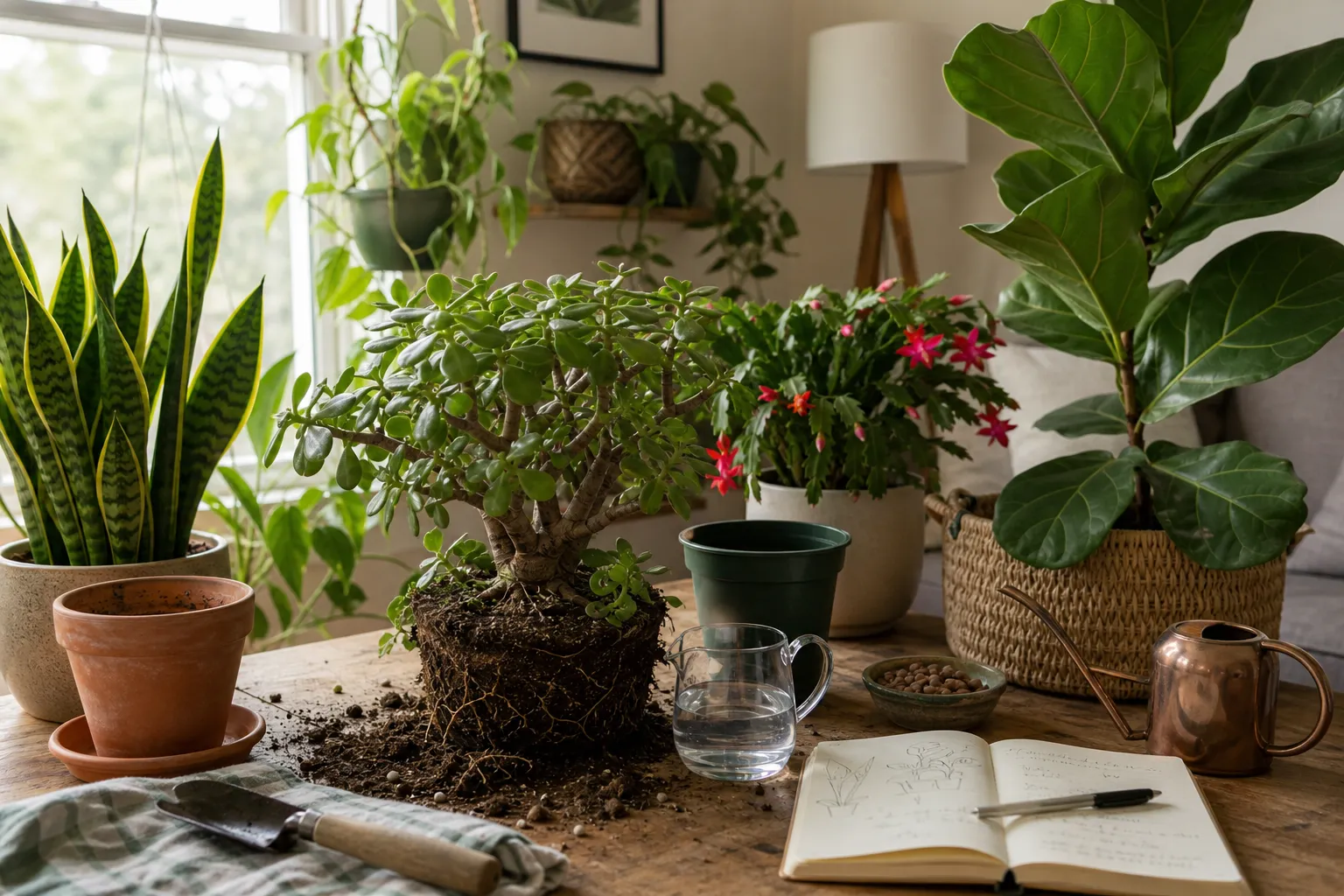
A plant can live for decades yet need careful attention. A fiddle-leaf fig may survive for many years in a bright home, but it can react dramatically to sudden changes in light, drafts, watering, or pot position. Meanwhile, a snake plant may tolerate months of imperfect care and continue growing slowly.
Longevity and toughness overlap, but they are not the same thing. Long-lived houseplants usually have one or more helpful features:
- They store water in leaves, stems, bulbs, or roots.
- They can regrow from a strong crown or underground structure.
- They tolerate indoor light levels reasonably well.
- They recover after pruning, repotting, or occasional drought.
- They can be propagated, allowing you to renew the plant over time.
By contrast, some plants decline because they are naturally seasonal, flower heavily, dislike indoor conditions, or have little reserve when their roots are damaged.
The biggest difference: a plant’s natural life strategy
Slow growers often have staying power
Snake plants, cast-iron plants, many hoyas, jade plants, and some dracaenas tend to grow slowly. Slow growth means the plant may not look dramatically different from year to year, but it also means the plant often uses resources gradually. A thick leaf, swollen stem, or underground rhizome can help it endure dry periods and recover from setbacks.
Slow growth is not proof that a plant is healthy. A plant can stop growing because it lacks light or has root problems. Still, a naturally slow-growing species often makes a better long-term houseplant than a fast-growing plant that quickly outgrows its pot or depends on consistently high humidity.
Fast growers can be both rewarding and demanding
Pothos, heartleaf philodendron, spider plants, and tradescantias can produce an impressive amount of foliage in a single growing season. Their rapid growth makes them satisfying for beginners, but it also means they may exhaust the available space, become leggy in poor light, or develop bare sections after repeated stress.
Fast growers are not necessarily short-lived. In fact, many can survive for decades if you refresh them with pruning and cuttings. The original trailing stem may look tired, but a few healthy nodes can produce a new, vigorous generation.
Some plants are sold at the end of a natural cycle
Flowering plants can be confusing. A cyclamen, florist’s kalanchoe, or poinsettia may look spectacular when purchased, then lose leaves or stop flowering. That does not always mean the plant is dead. Some need a rest period, cooler conditions, shorter days, or a different watering routine after flowering.
Other plants are grown and sold primarily for temporary display. They may continue growing in the right conditions, but their care requirements can be more exacting than the average living room provides. Before buying, check whether the plant is a year-round foliage plant, a seasonal bloomer, or a plant with a built-in dormant period.
Light is the slow-moving cause of many failures
Watering mistakes are easy to notice, but inadequate light often causes a quieter decline. A plant may continue producing leaves for months while using stored energy. Eventually, new growth becomes smaller, stems stretch toward a window, variegation fades, and older leaves drop.
Even plants labeled “low light” need enough light to make food. Low light usually means the plant tolerates less light than a sun-loving cactus, not that it can thrive in a dark corner.
For a stronger long-term setup:
- Place high-light plants near a bright south- or west-facing window, while protecting sensitive foliage from harsh afternoon sun.
- Give medium-light plants bright, filtered light near an east-facing window or several feet from a brighter window.
- Use a grow light when winter daylight is weak, especially in northern states or rooms with small windows.
- Turn plants a quarter turn every week or two so growth stays more balanced.
- Move plants away from heating and air-conditioning vents, which can create rapid temperature and moisture changes.
Watch the new growth rather than judging the plant only by its oldest leaves. New leaves that are smaller, paler, or farther apart than earlier growth often point to a light problem.
Roots determine how long the top of the plant can thrive
A houseplant is only as healthy as the root system supporting it. Roots need both moisture and oxygen. When a pot stays waterlogged, air spaces disappear, roots can deteriorate, and the plant may show yellow leaves or wilting even though the soil is wet.
The opposite problem can also occur. A plant may dry out repeatedly until fine roots die back. It may recover temporarily after watering, then decline because too little healthy root tissue remains to supply the leaves.
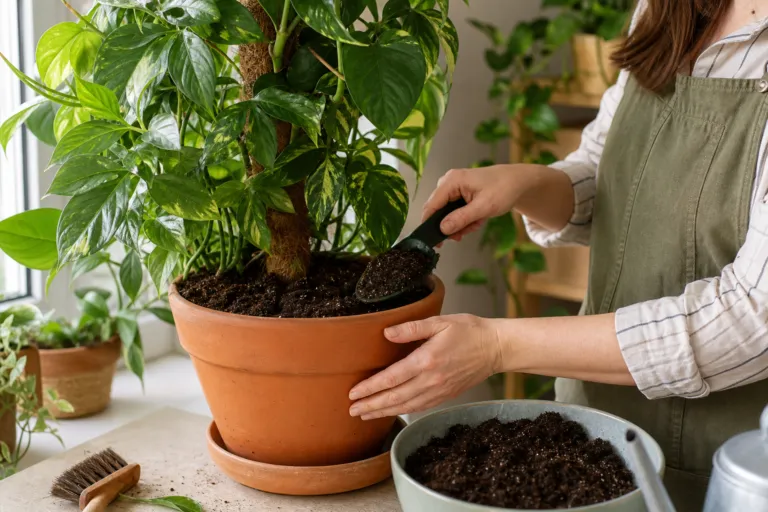
Container choice matters. Use a pot with a drainage hole and a potting mix designed for indoor containers. If you place that pot inside a decorative cachepot, empty excess water after watering rather than allowing the plant to sit in a pool.
How to recognize a root-bound plant
Roots naturally fill a container over time, but a severely crowded root ball has difficulty holding an even supply of water and nutrients. Consider checking the roots when:
- The mix dries out unusually fast.
- Roots circle densely around the outside of the root ball.
- Roots emerge from the drainage holes.
- Growth slows despite suitable light and reasonable feeding.
- Water runs straight through the pot without wetting the mix evenly.
Repot in spring or during active growth when possible. Move the plant into a pot only 1 to 2 inches wider than the current one. A dramatically larger pot holds more wet mix around a small root ball and can increase the risk of overwatering.
Water by evidence, not by the calendar
There is no reliable “water every Sunday” rule. A plant’s needs change with window direction, room temperature, humidity, pot material, season, plant size, and root health. A plant in a warm, bright room may need water much sooner than the same species in a cool winter room.
For many foliage plants, check the top 1 inch of potting mix. If it feels dry there and the pot feels noticeably lighter, water thoroughly until a little drains from the bottom. Then empty the saucer or cachepot. Plants such as cacti, succulents, and some resting plants usually need the mix to dry more deeply before watering.
A simple watering experiment
Try this measurement exercise with one plant rather than guessing for the entire collection. Choose a pothos, philodendron, or similar foliage plant in a 6-inch plastic pot.
- Water slowly until drainage begins.
- Measure how much water you poured in. For many plants in this size pot, it may be roughly 2 to 4 cups, but the exact amount depends on the mix and how dry it was.
- Let the pot drain for 10 to 15 minutes, then empty the saucer.
- Record the date, room location, and pot weight by lifting it.
- Check the soil every two days and water again only when the plant’s usual dryness signal appears.
After two or three cycles, you will have a useful personal baseline. You may discover that the plant needs water every 7 to 10 days in a bright summer room but every 14 to 21 days in a cooler, lower-light winter location. These are observations, not universal schedules, so use the soil and pot weight as your final guide.
Different varieties can have very different lifespans
Species and cultivars within the same broad group may respond differently indoors. Compare a green pothos with a highly variegated cultivar: the variegated plant usually has less chlorophyll in its leaves and may need brighter light to maintain strong growth. In a dim room, it can become sparse sooner.
Compare a compact, slow-growing snake plant with a vigorous vining plant. The snake plant may remain attractive with little pruning, while the vine may need regular trimming and propagation to prevent long, bare stems.
Compare a holiday cactus with a tropical fern. The cactus stores water in flattened stems and generally prefers a drying period between waterings. A fern has thinner foliage and often needs more consistent moisture and humidity. Treating both plants alike can shorten one plant’s life.
When choosing a long-term houseplant, look beyond the name on the label. Ask:
- Does this plant naturally grow as a durable foliage plant or as a seasonal display?
- Will my home provide its preferred light during winter?
- Does it tolerate drying, or does it need evenly moist soil?
- Can I prune or propagate it when it becomes old or unattractive?
- Will its mature size fit the space?
Pruning and propagation can restart the clock
Many plants appear to “die of old age” when the real problem is a tired, stretched, or damaged structure. Pruning can encourage new shoots from healthy nodes, while propagation lets you replace declining stems with young plants that share the same genetics.
For vining plants, take cuttings from actively growing, pest-free stems. Each cutting should include at least one node, the point where a leaf attaches to the stem. Root it in water or a clean, airy propagation medium, then move it into potting mix once the roots are established.
Spider plants produce offsets, snake plants can be divided, and many succulents can be restarted from cuttings or leaves. Work with clean tools and begin with healthy material. A cutting taken from a stressed, infested, or severely dehydrated plant is less likely to succeed.
What commonly shortens a houseplant’s life?
- Repeated overwatering: Constantly wet mix can damage roots and reduce oxygen.
- Long-term low light: The plant survives but gradually runs out of energy.
- Extreme pot changes: Moving into a much larger container can keep the root zone wet for too long.
- Salt buildup: Fertilizer residues and hard-water minerals can accumulate in the potting mix over time.
- Persistent pests: A small infestation can become serious when the plant is already stressed.
- Sudden environmental changes: A move from a humid greenhouse to a dry room can cause leaf loss and shock.
- Ignoring seasonal needs: Some plants naturally slow down in winter or need a rest after flowering.
Fertilizer can support active growth, but it cannot compensate for inadequate light, damaged roots, or poor drainage. Feed according to the product label and the plant’s growth stage rather than applying more in hopes of forcing recovery.
How to build a decades-long routine
Choose plants that match your home instead of trying to remake your home around every plant. A bright apartment may suit succulents, hoyas, and many flowering plants. A dimmer room may be better for cast-iron plant, snake plant, pothos, or certain dracaenas, provided the light is still adequate for steady growth.
Once a month, inspect the collection systematically:
- Look closely at new leaves and stems.
- Lift pots to compare their weight before and after watering.
- Check drainage holes and remove standing water.
- Turn or reposition plants that are leaning.
- Inspect leaf undersides for pests.
- Remove dead foliage and clean dusty leaves when appropriate.
- Record unusual changes instead of changing several care factors at once.
That last step is especially useful. If you move a plant, repot it, increase watering, and add fertilizer all in the same week, you will not know what helped or harmed it. Change one major factor, then give the plant time to respond.
The encouraging truth about plant longevity
Some houseplants are naturally better suited to a decades-long indoor life, but many “short-lived” plants can be renewed. A tired pothos can become a tray of cuttings. An old spider plant can produce offsets. A holiday cactus can recover after a rest period. Even a plant that cannot be kept indefinitely may teach you exactly what your home can support.
Focus on steady light, thoughtful watering, healthy roots, and timely pruning. With those basics in place, you are not simply keeping a plant alive—you are creating the conditions for it to mature, recover, and sometimes become part of your household for many years.