Few gardening moments feel more alarming than moving a healthy-looking plant to a new spot and finding its leaves on the floor a few days later. The soil is moist, the foliage looked glossy, and there are no obvious pests—so what happened?
In many cases, the plant is reacting to a sudden change rather than dying from a mysterious disease. A move from the nursery to your home, from a windowsill to a porch, or even from one side of a room to the other can alter light, temperature, humidity, airflow and water use. The plant may shed a few leaves while it adjusts its balance between roots and foliage.
The good news is that mild leaf drop is often manageable. Your job is not to panic-water, fertilize heavily or move the plant again and again. Instead, give it a steady environment, inspect the roots and watch what happens over the next few weeks.
Leaf drop is often the plant’s adjustment period
Plants continuously balance water loss from their leaves with water uptake through their roots. When conditions change, that balance can temporarily break down. A plant that was grown in a bright greenhouse may suddenly receive much less light indoors. A plant moved outdoors may face stronger sun, wind and drying air than it experienced inside.
Dropping a few leaves can reduce the amount of foliage the roots must support. This is especially common after a plant changes location, comes home from a store or is repotted. University extension guidance notes that adjustment can happen even when a plant moves only a short distance, and the transition commonly settles within a few weeks if growing conditions are suitable.
Look at the pattern, not just the number of fallen leaves. Occasional loss of an older lower leaf may be normal. A rapid cascade of leaves, widespread yellowing, mushy stems or a sour-smelling potting mix points to a problem that needs closer attention.
Five changes that can trigger healthy leaves to fall
1. The light changed more than you realized
Light intensity can vary dramatically across a room. A plant sitting directly beside a south-facing window may receive several times more usable light than the same plant placed six feet away. Outdoor light is stronger still, even in a shaded area.
Moving a plant from bright conditions to a dim corner can reduce photosynthesis—the process that lets leaves make energy. The plant may gradually yellow and shed older leaves. The reverse move can also cause trouble: a shade-loving pothos, fern or peace lily may develop pale, crispy or scorched patches after sudden exposure to strong direct sun.
Season matters, too. A window that seemed gentle in January can deliver intense sunlight in late spring or summer as the sun’s angle changes. If you are moving a plant closer to a south- or west-facing window, make the change gradually over about one to two weeks.
2. Temperature and drafts shifted
Plants respond to temperature changes even when the room feels comfortable to you. A new position near an exterior door may expose foliage to cold drafts. A spot above a heat register can create hot, dry air. A plant placed against cold glass may experience a chilly leaf surface overnight, while the root ball remains relatively warm.
Tropical houseplants are particularly sensitive to abrupt changes. When moving them outdoors in the United States, wait until nighttime temperatures are reliably mild for the plant, then begin in a sheltered location. Wind and direct sun can stress leaves just as quickly as cold.
3. Humidity and airflow changed
Indoor air often becomes especially dry during the heating season. Moving a plant from a humid bathroom or greenhouse-like plant shelf to a dry living room can increase water loss from the foliage. Strong fans, air-conditioning vents and forced-air heat can add to the stress.
Humidity alone is not always the whole explanation, but it can make a light or watering change harder for the plant to handle. Try to keep the plant away from direct blasts of heated or cooled air. Grouping plants together may modestly improve the immediate microclimate, but do not crowd them so tightly that leaves stay wet or air cannot circulate.
4. The old watering routine no longer fits
A move changes how quickly potting mix dries. A plant in brighter light may use water faster; the same plant in a dim room may use much less. A pot placed on a warm windowsill can dry unevenly, while a decorative cachepot may trap excess water around the roots.
Both extremes can lead to leaf drop. Underwatering deprives leaves of water, while overwatering reduces oxygen around the roots and can encourage root decline. Yellowing leaves and a wet mix do not mean the plant needs more water—sometimes they mean the opposite.
5. Roots were disturbed during repotting or transport
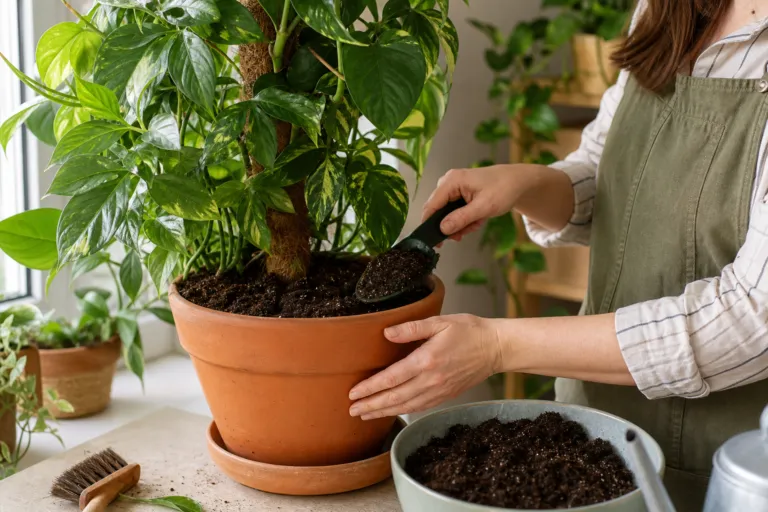
Repotting, dividing, carrying a large plant or loosening tightly packed roots can temporarily reduce the roots’ ability to supply the existing foliage. That imbalance is commonly called transplant shock. A plant may wilt, pause growth or drop some leaves while new roots establish.
Repotting into a pot that is much larger than the original can also keep the mix wet for too long. In most cases, choose a container only about 1 to 2 inches wider than the current pot and make sure it has a drainage hole.
How different plants respond to a move
Not all houseplants react in the same way. Their natural habits and leaf structure influence how dramatic the transition looks.
- Pothos and heartleaf philodendron: These forgiving vines may lose a few older leaves after a light or watering change, but they often recover well once conditions stabilize. Avoid placing them immediately in harsh afternoon sun.
- Ferns and prayer plants: Their thin foliage loses moisture readily. They may respond to dry air, drafts or inconsistent moisture with curling, browning and leaf loss.
- Ficus and rubber plants: These woody houseplants are famous for dropping leaves after changes in light, temperature or location. A stable spot is often more helpful than frequent rescue moves.
- Schefflera and other broad-leaved plants: They may shed leaves when light falls sharply or roots remain too wet. Check the potting mix and inspect for pests before assuming the problem is simply relocation.
- Snake plants, jade plants and many succulents: Their thicker leaves and water-storing tissues generally tolerate a brief dry period better than ferns, but they can suffer when moved into low light and watered on the old, more frequent schedule.
These are tendencies, not guarantees. Two plants of the same species can respond differently because of pot size, root health, cultivar, age and the conditions they experienced before you bought them.
A simple home experiment: measure before you guess
If you are unsure whether a move changed the plant’s water use, try a small two-week growing experiment. Choose one plant and keep it in one location rather than moving it repeatedly. Record the date, the soil condition and the amount of water you apply.
Try this practical watering test
- Push your finger about 1 inch into the potting mix, or use a wooden skewer for a deeper pot. Record whether the mix feels dry, slightly moist or wet.
- Weigh the entire potted plant with a household scale if the pot is manageable. Write down the weight immediately after watering and again each morning for several days.
- When the plant’s mix has reached its normal drying point, water slowly until a small amount drains from the bottom. For a typical 8-inch houseplant pot, you might measure roughly 2 to 4 cups of water, but treat that as an observation—not a universal rule.
- Let the pot drain fully and empty the saucer. Record the amount used and the number of days before the top inch becomes dry again.
- Repeat the check for two weeks without automatically watering on a calendar schedule.
The goal is to discover your plant’s pattern. A pothos in a bright, warm window may need water more often than the same cultivar in a cool, low-light room. A succulent may need a longer dry interval than either one. Use the soil and the plant’s condition as your guide, not a fixed number of days.
What to do immediately after moving a plant
Resist the urge to compensate for leaf drop with dramatic care. A steady recovery plan usually works better.
- Choose one suitable location. Match the plant’s light needs, then leave it there long enough to adjust.
- Check the soil before watering. Feel below the surface rather than judging by the top alone.
- Keep the root zone evenly managed. Avoid alternating between bone-dry mix and a constantly saturated pot.
- Protect the plant from extremes. Keep it away from cold drafts, heat vents, intense reflected sun and strong fans.
- Skip heavy fertilizing during the adjustment period. A stressed plant usually needs stable light, water and temperature before it needs extra nutrients.
- Remove only clearly dead material. Wait before pruning healthy green leaves unless they are badly damaged or diseased.
- Inspect for pests. Look beneath leaves and along stems for webbing, scale, mealybugs or sticky residue, especially if the plant came from outdoors or a retail display.
How to tell normal adjustment from a deeper problem
A few green leaves falling soon after a move can fit a normal adjustment pattern. The plant may look slightly thinner but still have firm stems, healthy roots and new growth developing later.
Take a closer look if the decline continues beyond a few weeks or spreads rapidly. Warning signs include:
- Leaves turning yellow throughout the plant while the soil stays wet
- Brown, soft or black roots when you gently inspect the root ball
- A collapsing stem base or unpleasant odor from the pot
- Webbing, cottony clusters, scale-like bumps or repeated sticky deposits
- Leaves developing crispy patches after a move into strong sun
- Persistent wilting even when the potting mix is moist
Healthy roots are generally firm, while dark, soft roots may indicate excessive moisture and root damage. If the root system is severely compromised, simply changing the plant’s location will not solve the problem. Correct the underlying watering and drainage issue, and repot only when necessary.
Prevent leaf drop the next time you move a plant
Think of relocation as acclimation rather than transportation. Before moving the plant, note its current light, temperature and watering pattern. Then change one major factor at a time whenever possible.
For a plant going outdoors, begin in bright shade or a sheltered area for a few hours. Increase exposure gradually over several days, watching for wilting or sun damage. For a plant coming indoors at the end of summer, inspect it for pests, move it through a less intense-light transition if possible and expect its water needs to decrease as indoor light levels fall.
For a simple room-to-room move, start with a position that resembles the old one. If the final destination is much darker or brighter, shift the plant in stages. This approach takes longer, but it gives leaves and roots time to adjust their water and energy budget.
A little leaf loss does not mean you failed
Plants are living systems, not decorations that remain unchanged when you rearrange a room. After a move, a plant may discard a few leaves while it adapts to its new light, temperature, humidity and watering rhythm.
Watch the trend rather than reacting to every fallen leaf. Provide suitable light, check moisture thoughtfully, protect the plant from extremes and give it time. With a calm, measured approach, many plants will stabilize—and often reward you with fresh growth once their new home begins to feel familiar.