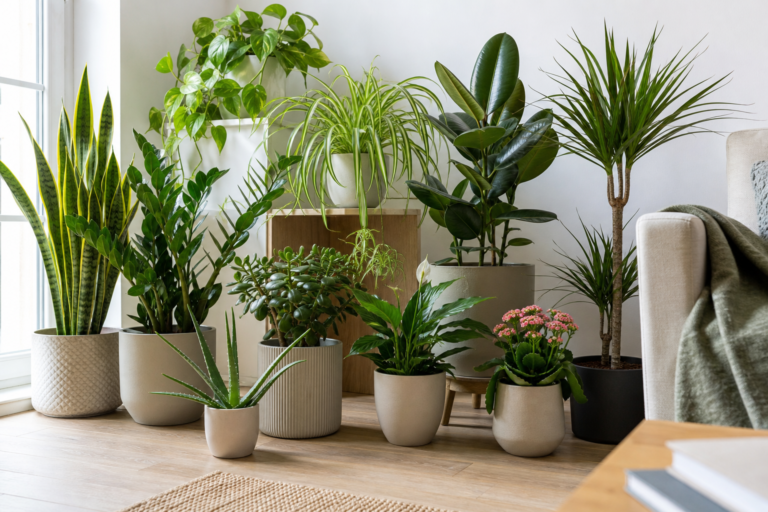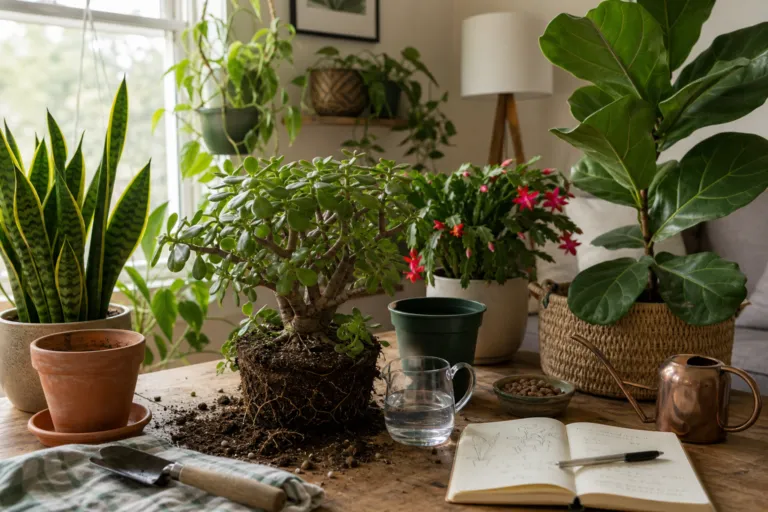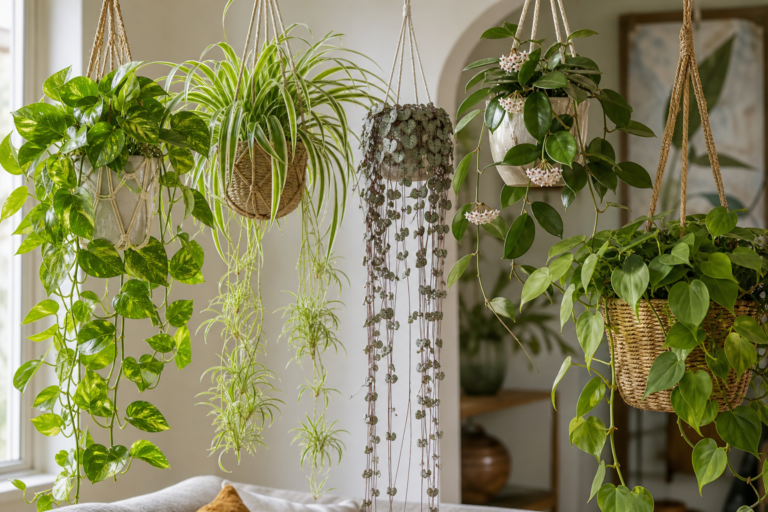
Some houseplants seem to change overnight. A pothos sends out a new vine, a spider plant produces babies, and a monstera unfurls a leaf large enough to demand its own chair. Others take a quieter approach. They may spend weeks or even months looking exactly the same, then reward your patience with one perfectly formed leaf or a little cluster of new growth.
Slow growth is not automatically a warning sign. In many plants, it reflects a useful combination of traits: low-light tolerance, water storage, compact growth, thick leaves, or a natural preference for seasonal rest. If you understand what is happening below the soil, these plants become much easier—and more enjoyable—to grow.
What makes a houseplant slow-growing?
Growth depends on light, temperature, water, nutrition, root health and the plant’s natural growth habit. When one or more of these factors limits photosynthesis—the process plants use to turn light into energy—new leaves appear more slowly.
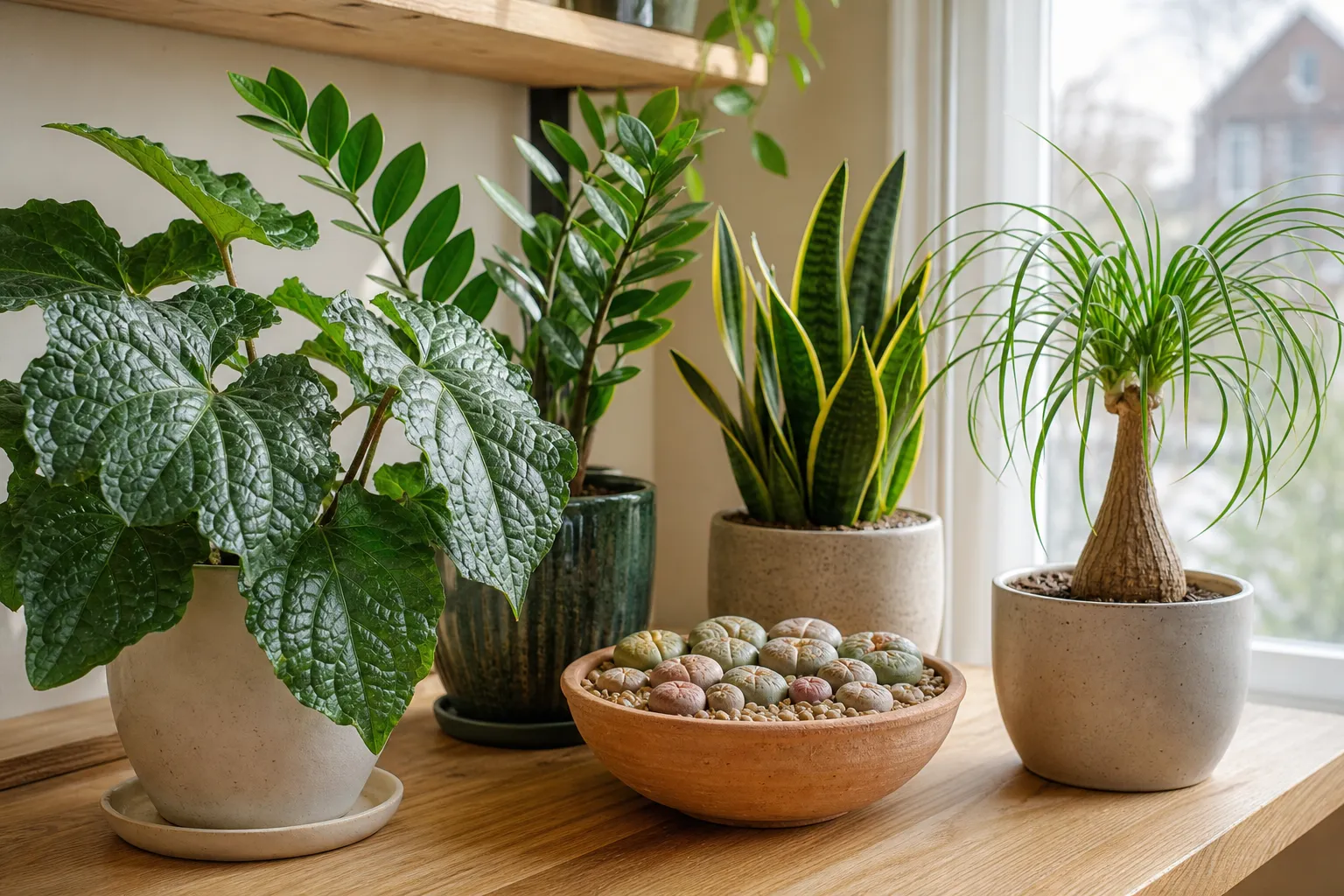
Some species are naturally conservative. A ZZ plant stores water in underground rhizomes, while a snake plant grows from sturdy rhizomes that produce leaves gradually. Living stones have evolved to survive in dry environments by storing water in their thick, fused leaves. Their slow pace is part of their survival strategy, not a failure of care.
Indoor conditions also matter. A room may feel bright to you but still provide far less light than an outdoor growing site. Winter is especially quiet for houseplants in much of the United States, when shorter days, lower window light and cooler rooms reduce growth. A plant can remain healthy while doing very little from late fall through early spring.
Five houseplants that reward patience
1. Cast-iron plant (Aspidistra elatior)
The cast-iron plant has earned its reputation. It tolerates low or filtered light, average household humidity and occasional missed waterings. Its long, leathery leaves emerge from underground rhizomes, so it does not usually produce a steady stream of new foliage. Instead, a new leaf may appear as a tightly rolled spear at the soil line and take time to open.
Most plants reach roughly 2 feet tall and wide indoors, although size varies by cultivar and growing conditions. Green forms generally cope better with dim rooms than heavily variegated types, whose pale markings contain less chlorophyll and may need brighter filtered light.
- Place it in low to moderate, indirect light.
- Water when the potting mix feels dry near the surface, then let excess drain away.
- Keep it out of intense direct sun, which can scorch the leaves.
- Repot only when the plant has clearly filled its container; it is comfortable slightly root-bound.
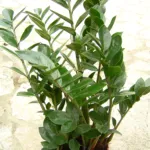
2. ZZ plant (Zamioculcas zamiifolia)
The ZZ plant is an architectural slow grower with glossy leaflets arranged along upright stems. Its underground rhizomes act like storage tanks, helping it endure dry periods and lower light. That same reserve system means the plant has no reason to drink frequently, and overwatering is often a greater danger than neglect.
New stems can seem to appear all at once, but the plant may spend a long time building energy before sending one up. The ‘Raven’ form is especially dramatic: its new leaves emerge green and gradually darken to deep purple-black over several weeks.
- Give it bright, indirect light for stronger growth, though it tolerates lower light.
- Allow the potting mix to dry substantially between waterings.
- Use a pot with drainage holes and a loose, well-draining mix.
- Reduce watering and feeding during the darker, cooler months.
3. Snake plant (Dracaena trifasciata)
Snake plants are often sold as nearly indestructible, but their slow growth is easy to misunderstand. In a dim corner, they may remain unchanged for a long time. In brighter indirect light, they can produce new leaves and offsets more reliably, but they still tend to grow in measured bursts rather than continuously.
Cultivar matters. Narrow-leaved forms and compact rosette types may look slow because they stay small, while tall cylindrical or upright cultivars eventually make a stronger vertical statement. Variegated plants can also grow more slowly than vigorous green forms when light is limited.
- Place the plant near a bright window with filtered light, or use a suitable grow light.
- Let the soil dry well before watering again.
- Rotate the pot occasionally so growth stays balanced.
- Do not increase watering simply because the plant has not produced a new leaf.
4. Living stones (Lithops spp.)
Living stones are among the slowest and most unusual houseplants. Their paired, pebble-like leaves sit close to the soil surface, and the plant may produce only a small amount of visible growth in a year. Rather than adding leaves continuously, living stones follow a seasonal cycle: an old leaf pair gradually shrivels while a new pair develops inside it.
These plants need more light than the low-light choices above. A bright south- or west-facing window may work if the plant acclimates gradually, while a grow light can help in darker homes. Use a gritty, fast-draining mix and resist the urge to water on a calendar.
- Provide very bright light, with protection from sudden exposure to harsh sun.
- Water sparingly and only when the plant’s seasonal cycle indicates it is ready.
- Keep water from sitting in the leaf fissure or around the crown.
- Choose a shallow container with drainage.
Because living stones have a specialized watering rhythm, they are not the best first plant for someone who wants a simple weekly routine. They are ideal, however, if you enjoy observation and careful recordkeeping.
5. Ponytail palm (Beaucarnea recurvata)
Despite its common name, the ponytail palm is not a true palm. Its swollen trunk stores water, and its long, narrow leaves form a fountain-like crown. Indoors, it often grows slowly, especially in a modest-sized pot or a room with limited light.
Give it the brightest location you have, provided the plant adjusts gradually to direct sun. Allow the mix to dry between thorough waterings, and avoid planting it in an oversized container. A large volume of damp soil can stay wet too long around a plant that uses water slowly.
Why thick leaves and underground storage slow the schedule
Water-storing plants operate with a different timetable from soft-leaved tropicals. Their leaves, stems or roots hold reserves, allowing them to continue functioning between waterings. That is excellent for survival, but it means the plant does not need to produce new foliage rapidly.
Low-light plants also tend to grow conservatively. Shade-tolerant species can photosynthesize with less light, but they generally cannot manufacture energy as quickly as a fast-growing vine in bright conditions. Low light may keep a plant alive while producing little new growth; brighter indirect light often improves growth without requiring harsher direct sun.
Temperature adds another layer. Most houseplants grow more actively during warm, bright months and slow down in winter. Keep plants away from cold drafts, heating vents and sudden temperature swings. For many homes, stable room temperatures and better winter light will help more than extra fertilizer.
A simple four-week growth experiment
If you are unsure whether a plant is truly slow-growing or simply underlit, try a small home experiment. Choose one healthy plant and record the conditions rather than changing everything at once.
- Measure light by location. Note the window direction and how many hours of bright or filtered light the plant receives. If you use a grow light, record the daily schedule and distance recommended for that fixture.
- Measure water accurately. Use a measuring cup instead of guessing. Record the amount you apply and the date. Water slowly until a little drains from the bottom, then empty the saucer.
- Check the soil. Insert a finger about 1 inch into the mix for smaller pots, or use a wooden skewer deeper into a large container. Record whether the mix is dry, slightly moist or wet.
- Photograph once a week. Use the same angle and distance. Look for a new spear, offset, leaf tip or change in height—not just dramatic expansion.
- Record temperature and problems. Note cold windows, nearby vents, yellowing leaves, pests or a recent move.
For example, a ZZ plant in a 6-inch pot might receive 1 to 2 cups of water only after the mix has dried substantially, while a cast-iron plant in the same-size container may need water sooner in bright summer light. Those numbers are starting points, not rules. Potting mix, plant size, temperature, humidity and drainage can change the result considerably.
Comparing varieties without making unfair judgments
It is tempting to compare two plants and decide that one is healthier because it is taller. That can be misleading. A compact snake plant cultivar may be growing exactly as intended, while a variegated cast-iron plant may naturally produce fewer leaves than a solid-green type.
When you compare varieties, look at several traits:
- How much new growth appeared over the same season.
- Whether the plant is producing offsets or only increasing leaf size.
- How much light each cultivar receives.
- Whether the roots fill the pot or remain sparse.
- Whether the leaves remain firm, evenly colored and free from persistent damage.
A healthy slow-growing plant should still show signs of good condition. Firm leaves, stable color and sound roots matter more than a weekly height increase.
Common mistakes that do not make slow plants grow faster
Overwatering
Watering more often rarely speeds up a slow plant. It can instead reduce oxygen around the roots and encourage root problems. Let the plant and potting mix guide you rather than following a fixed Sunday schedule.
Overfertilizing
Fertilizer supplies nutrients, but it cannot replace light. Feeding a plant that is barely photosynthesizing may lead to salt buildup in the mix or weak, stretched growth. If the plant is actively growing in spring and summer, use a balanced houseplant fertilizer at the label’s recommended dilution—or weaker if you are inexperienced. Pause or reduce feeding during winter dormancy.
Repotting too frequently
Repotting can disturb roots and does not guarantee faster growth. Move a plant up only when roots are circling heavily, emerging from drainage holes, or when the potting mix has broken down and drains poorly. Choose a container only slightly larger than the current one.
Moving the plant every few days
Constant changes make it difficult to learn what the plant actually prefers. Pick a suitable spot, allow the plant time to adjust and make changes gradually, especially when increasing sun exposure.
Learn to enjoy the long view
Slow-growing houseplants suit busy homes and patient gardeners. They ask you to notice small changes: a new leaf spear at the base of a cast-iron plant, a ZZ stem emerging from the soil, or a living stone beginning its seasonal renewal.
Give these plants appropriate light, careful watering, good drainage and time. If growth pauses but the foliage remains healthy, you may be seeing the plant’s natural rhythm rather than a problem. The reward is not instant transformation—it is the pleasure of keeping a living thing steady, resilient and quietly beautiful for years.