
 AI-generated illustration
Juniperus × media ‘Old Gold’ short overview
Juniperus × media 'Old Gold' is a spreading evergreen juniper valued for layered branching and bronze-gold, scale-like foliage that retains color through winter. This compact-to-intermediate cultivar works well in sunny foundation beds, low hedges, erosion-control plantings, rock gardens and large containers. Give it sharply drained soil and avoid persistent wetness; established plants tolerate drought and generally need little pruning.
Taxonomic classification
Juniperus × media ‘Old Gold’ care guide
Light and placement
Place in full sun for the strongest golden coloration, ideally with at least 6 hours of direct light. East-, south- or west-facing positions are suitable; light partial shade is tolerated, especially in hot climates. Too little light can produce greener, looser growth, while intense reflected heat combined with drought may scorch foliage.
Watering and humidity
Water deeply and slowly when the upper several inches of soil begin to dry during establishment, then extend the interval as roots develop. Reduce irrigation in cool or rainy seasons and avoid frequent shallow watering. Once established, the shrub tolerates drought, but prolonged dry spells still justify a deep soak. Do not keep the root zone saturated.
Soil and growing medium
Use a sharply draining soil with good pore space; sandy, loamy, clay-loam and shallow rocky soils can work if water does not remain around the roots. The cultivar tolerates acidic, neutral and alkaline conditions. Improve compacted clay with site-wide organic matter rather than creating a small amended planting pocket.
Feeding
Feed sparingly. A thin layer of compost or a balanced, slow-release evergreen fertilizer can be applied in early spring if growth is weak or soil fertility is poor. Do not fertilize drought-stressed, newly transplanted or late-season plants, and avoid high-nitrogen feeding that encourages soft growth.
Growth and habit
This cultivar forms a broad, layered shrub with branches that spread outward and rise gently toward the tips. Growth is usually more horizontal than vertical, making the plant useful where evergreen width and soil coverage matter more than height. Its mature form is generally maintained without shearing.
Planting and repotting
Plant in spring or fall when the soil is workable. Set the root flare level with the surrounding soil, water deeply to settle the root zone, and apply a thin mulch layer without touching the stems. Allow roughly 5–8 feet of horizontal space for a specimen planting, adjusting spacing for the intended hedge or groundcover effect.
Repot container plants in early spring before strong new growth, moving only one container size larger. Preserve the root ball, use a free-draining shrub or conifer mix, and ensure the pot has generous drainage holes. Avoid frequent root disturbance because junipers establish best when their roots are left relatively undisturbed.
Propagation and pruning
Propagation
Semi-hardwood cuttings are the standard practical method and are usually taken in late summer or early fall. Rooting can be slow and benefits from consistent moisture, high humidity and a sterile, sharply draining medium. Seed propagation does not reliably reproduce the cultivar.
Pruning
Little or no routine pruning is required. If shaping is necessary, prune lightly in late winter or early spring, cutting back to live, green growth. Avoid deep cuts into old, bare wood because junipers often regenerate poorly from leafless interior branches. Remove dead, crossing or damaged branches first.
Overwintering
Plants established in the ground generally need no winter protection in their hardiness range. Container specimens have less root insulation and should be placed in a sheltered location or protected with insulating material during severe cold. Avoid winter wetness, salt accumulation and late-season nitrogen fertilizer.
Uses
Useful for sunny foundation beds, low hedges, broad groundcover, erosion control, rock gardens, coastal plantings and large containers. Its evergreen structure provides year-round texture and color. Do not use it as a culinary juniper or assume its cones are edible; this cultivar is grown as an ornamental.
Appearance
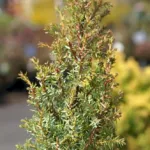
The plant has dense, evergreen, scale-like foliage arranged along layered, ascending branches. New growth is brighter yellow-gold, while older foliage commonly develops bronze tones, especially in winter. The overall effect is a low, broad shrub with persistent color and fine conifer texture rather than a sharply pyramidal form.
Pollination and visitors
Animal pollination is not the relevant ecological service for this cultivar. Junipers are generally wind-pollinated, and 'Old Gold' is commonly described as a male selection. It should therefore not be promoted as a flower-pollinator plant.
Diseases and pests
Diseases
Prevent disease by planting in well-drained soil, avoiding chronic irrigation and improving air circulation. Watch for browning patches, branch dieback or basal decline, which can be associated with Phytophthora or canker problems. Remove affected material when practical, disinfect pruning tools, and avoid moving wet soil or irrigation water from diseased plants.
Pests
Inspect for aphids, scale insects, conifer spider mites and caterpillars. Encourage plant vigor through correct drainage and avoid unnecessary insecticide use. Prune out heavily infested small branches when appropriate; use a targeted treatment only after confirming the pest and following the product label.
Related diseases and pests
Only Plant Doctor profiles whose host data indicate this plant may be affected are shown here.
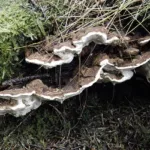 DiseaseHeterobasidion root diseaseHeterobasidion annosum
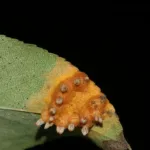 DiseasePear trellis rustGymnosporangium sabinae
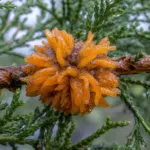 DiseaseCedar-Apple RustGymnosporangium juniperi-virginianae Schwein.
 PestBrown Garden SnailCornu aspersum (Müller, 1774)
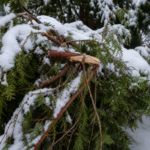 Environmental stressSnow Load Damage
 Environmental stressWind scorch
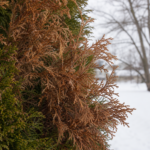 Environmental stressWinter desiccation (winter burn)
 Environmental stressRoot Anoxia
Toxicity and pollen
RHS lists this cultivar as harmful if eaten and a potential skin allergen. The safest practice is to avoid ingestion, wear gloves when handling or pruning, and keep trimmings away from children and animals. Cultivar-specific clinical toxicity data for dogs and cats are limited, so ingestion should be discussed with a veterinarian or poison service.
- Typical season
- Late winter to spring, depending on climate and plant sex
- Pollination / pollen
- Airborne, wind-dispersed conifer pollen
Juniper pollen is airborne and can be relevant to seasonal allergy sufferers, particularly when nearby male plants release pollen in late winter or spring. Exact pollen output varies with sex, weather and region; avoid placing male junipers immediately beside frequently used outdoor living areas if pollen sensitivity is a concern.
Native habitat
Juniperus × media is a cultivated hybrid rather than a wild native taxon. Its parentage is generally associated with Chinese juniper and Savin juniper, and the cultivar is adapted to sunny, open conditions, free-draining soils and a broad range of soil reactions. It performs poorly where roots stay saturated.
Interesting fact
The cultivar originated as a sport of 'Pfitzeriana Aurea' in the Netherlands in the mid-20th century. Its golden-bronze foliage can retain useful winter color. It is widely encountered under more than one botanical name in horticultural commerce.
Frequently asked questions (FAQ)
The most relevant questions about this plant, with short and direct answers.
🌱Quick care
What is Juniperus × media 'Old Gold'?⌄
Juniperus × media 'Old Gold' is a low-growing, spreading evergreen conifer shrub in the cypress family. It is grown for dense bronze-gold foliage and bright golden new growth.
How big does Juniperus × media 'Old Gold' get?⌄
Juniperus × media 'Old Gold' typically grows about 2 to 3 feet tall and 4 to 5 feet wide. Some landscape references list wider plants, so allow at least 5 to 6 feet of space unless you plan to prune.
Is Juniperus × media 'Old Gold' evergreen?⌄
Yes, Juniperus × media 'Old Gold' is an evergreen shrub that provides year-round foliage. Its color may deepen toward bronze or gold in colder weather.
🌤️Environment and placement
How much sun does Juniperus × media 'Old Gold' need?⌄
Plant Juniperus × media 'Old Gold' in full sun for the strongest growth and best golden color. It tolerates partial shade, but too little light can make the plant less dense and less colorful.
Can Juniperus × media 'Old Gold' grow in partial shade?⌄
Yes, Juniperus × media 'Old Gold' can grow in partial shade, preferably with several hours of direct sunlight. Expect less intense gold coloring and potentially looser growth than in full sun.
What soil is best for Juniperus × media 'Old Gold'?⌄
Use well-drained sandy, loamy, clay, or rocky soil for Juniperus × media 'Old Gold'. Drainage is more important than soil texture because persistently wet roots can cause decline.
Can Juniperus × media 'Old Gold' tolerate clay soil?⌄
Yes, Juniperus × media 'Old Gold' can tolerate clay soil if excess water drains away. Improve a poorly drained site rather than placing the shrub where water regularly collects.
Is Juniperus × media 'Old Gold' drought tolerant?⌄
Juniperus × media 'Old Gold' becomes drought tolerant after its root system is established. Water it regularly during the first growing season and during prolonged heat or drought thereafter.
What USDA hardiness zones are suitable for Juniperus × media 'Old Gold'?⌄
Juniperus × media 'Old Gold' is commonly listed as hardy in USDA Zones 4 through 9. Performance can still vary with winter exposure, drainage, snow cover, and local microclimate.
Is Juniperus × media 'Old Gold' resistant to salt and deer?⌄
Juniperus × media 'Old Gold' is often considered relatively tolerant of deer, road salt, and air pollution. Protection may still be necessary in areas with heavy browsing or concentrated deicing salt.
💧Care and problems
How often should I water Juniperus × media 'Old Gold'?⌄
Water Juniperus × media 'Old Gold' deeply when the upper soil begins to dry during establishment, usually once or twice weekly depending on weather and soil. Once established, water mainly during extended hot or dry periods.
Why is my Juniperus × media 'Old Gold' turning brown?⌄
Brown foliage on Juniperus × media 'Old Gold' may result from drought, waterlogged roots, winter injury, spider mites, or fungal problems. Check soil moisture, drainage, and the pattern of browning before treating the plant.
Why is my Juniperus × media 'Old Gold' losing its golden color?⌄
Reduced golden color on Juniperus × media 'Old Gold' is commonly caused by insufficient sunlight or seasonal color change. Move or thin surrounding plants only if the shrub is receiving substantially less light than it needs.
Does Juniperus × media 'Old Gold' need fertilizer?⌄
Juniperus × media 'Old Gold' usually needs little fertilizer when planted in reasonably fertile soil. If growth is weak, use a soil test before applying a balanced, slow-release fertilizer in spring.
What pests affect Juniperus × media 'Old Gold'?⌄
Juniperus × media 'Old Gold' can be affected by spider mites, scale insects, bagworms, and occasional foliage or root diseases. Good air circulation, proper watering, and avoiding wet soil help reduce problems.
🪴Planting and repotting
When is the best time to plant Juniperus × media 'Old Gold'?⌄
Plant Juniperus × media 'Old Gold' in spring or fall when temperatures are moderate and the soil is workable. Fall planting is useful in many parts of the United States, provided the ground is not frozen or waterlogged.
How far apart should Juniperus × media 'Old Gold' be planted?⌄
Space Juniperus × media 'Old Gold' about 4 to 6 feet apart for individual plants with room to develop. Use the wider spacing for a more natural outline and the closer spacing for a quicker low hedge or mass planting.
Can Juniperus × media 'Old Gold' be grown in a container?⌄
Yes, Juniperus × media 'Old Gold' can be grown in a large container with drainage holes and a well-drained potting mix. Container plants need more frequent watering and may need winter protection in colder zones.
How should I plant Juniperus × media 'Old Gold'?⌄
Plant Juniperus × media 'Old Gold' with the root flare at soil level and the top of the root ball slightly above poorly drained ground. Backfill with the native soil, water thoroughly, and apply a light mulch without covering the stems.
✂️Propagation and pruning
How is Juniperus × media 'Old Gold' propagated?⌄
Juniperus × media 'Old Gold' is generally propagated from stem cuttings rather than seed to preserve its named cultivar characteristics. Rooting can be slow and is usually more reliable under controlled nursery conditions.
Can you grow Juniperus × media 'Old Gold' from seed?⌄
You can grow junipers from seed, but seedlings will not reliably reproduce the foliage color, habit, or other traits of Juniperus × media 'Old Gold'. Use cuttings or nursery-grown plants when an exact cultivar is required.
When should Juniperus × media 'Old Gold' be pruned?⌄
Prune Juniperus × media 'Old Gold' in late winter, early spring, or when light trimming is needed during the growing season. Remove dead or damaged branches and shorten overly long shoots rather than shearing deeply.
Can Juniperus × media 'Old Gold' be cut back hard?⌄
Avoid cutting Juniperus × media 'Old Gold' back into leafless old wood because junipers often do not regenerate from those sections. Make selective cuts to branches that still have green foliage.
Does Juniperus × media 'Old Gold' need regular pruning?⌄
No, Juniperus × media 'Old Gold' generally needs little or no regular pruning. Trim only to remove damaged growth or keep the shrub within its allotted space.
⚠️Toxicity and safety
Is Juniperus × media 'Old Gold' poisonous to dogs and cats?⌄
Juniperus × media 'Old Gold' may be harmful if eaten, especially in larger amounts, because juniper foliage and berry-like cones contain irritating compounds. Prevent pets from chewing the plant and contact a veterinarian if significant ingestion occurs.
Are the berries of Juniperus × media 'Old Gold' edible?⌄
Do not eat the berry-like cones of Juniperus × media 'Old Gold'. Cultivar identity and chemical composition can be uncertain, and ingestion may cause digestive upset or other harmful effects.
Can Juniperus × media 'Old Gold' irritate skin?⌄
Yes, handling Juniperus × media 'Old Gold' may irritate sensitive skin because its foliage contains aromatic oils. Wear gloves when pruning and wash exposed skin after handling.
🌸Flowering and special interest
Does Juniperus × media 'Old Gold' produce flowers?⌄
Juniperus × media 'Old Gold' does not produce showy flowers; it is valued for evergreen foliage instead. Like other junipers, it may produce small, inconspicuous reproductive structures and berry-like cones.
Does Juniperus × media 'Old Gold' produce berries?⌄
Juniperus × media 'Old Gold' may produce small berry-like cones, although production varies with plant sex, pollination, age, and growing conditions. These structures should not be treated as edible fruit.
What wildlife uses Juniperus × media 'Old Gold'?⌄
The berry-like cones of Juniperus × media 'Old Gold' may attract birds, while the dense evergreen branches provide year-round cover. Its wildlife value is generally secondary to its ornamental landscape use.
Similar plants
 Juniperus × media ‘Gold Star’Juniperus × media 'Gold Star'
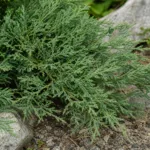 Creeping juniper (Juniperus horizontalis) care guideJuniperus horizontalis
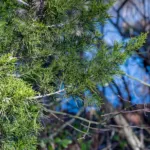 Eastern redcedar (Juniperus virginiana) care guideJuniperus virginiana
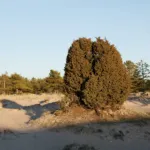 Common juniper (Juniperus communis) care guideJuniperus communis
 Flaky juniper (Juniperus squamata) care guideJuniperus squamata
 Compressa (Juniperus communis ‘Compressa’)Juniperus communis 'Compressa'