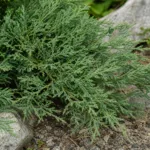
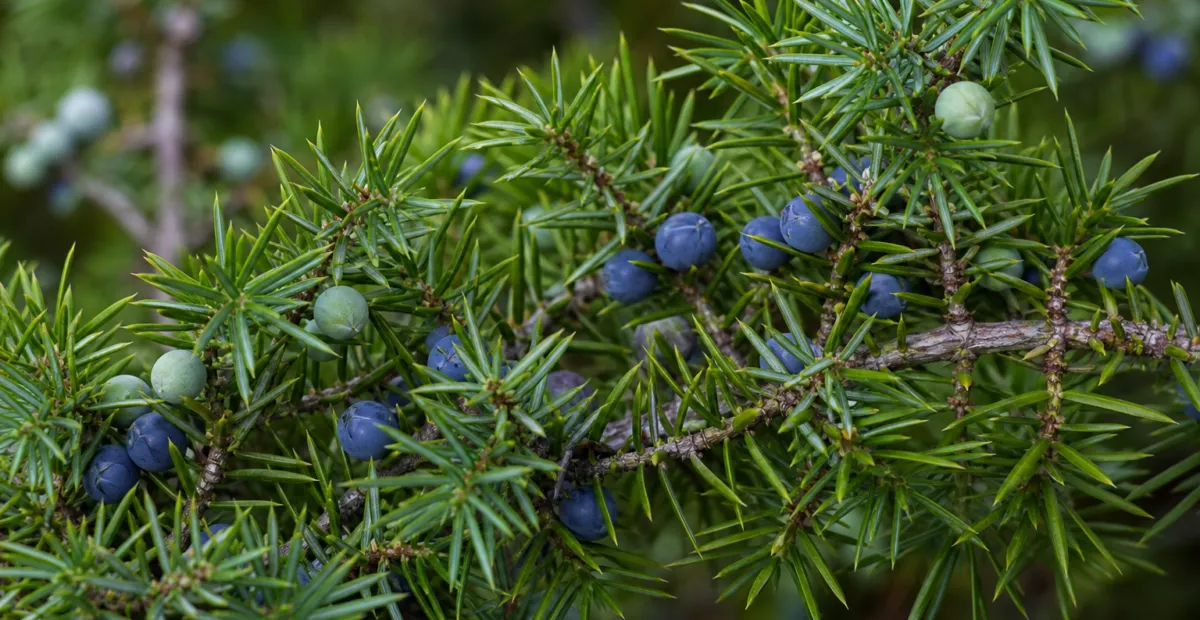
 AI-generated illustration
 Common juniper (Juniperus communis) short overview
Common juniper is a hardy, evergreen conifer with stiff, needle-like leaves and a naturally variable habit, ranging from a low, spreading shrub to a small upright tree. Female plants develop blue-black, berry-like seed cones that mature over two to three years and provide food for birds. It suits sunny, well-drained sites, tolerates poor soils and drought once established, and is especially useful in cold-climate landscapes, rock gardens, wildlife plantings, and informal screens.
Taxonomic classification
Common juniper (Juniperus communis) care guide
Light and placement
Plant in full sun with at least 6 hours of direct light, ideally in an open position with good air circulation. A south- or west-facing exposure is suitable in most U.S. gardens. Light shade is tolerated, especially in woodland margins, but dense shade can produce sparse, weak growth and a more open habit. Excessive reflected heat is usually less damaging than wet roots, provided the plant is watered during establishment.
Watering and humidity
Water deeply after planting whenever the upper few inches of soil begin to dry, then gradually extend the interval as roots establish. Mature plants usually need supplemental water only during prolonged heat or drought. Avoid frequent shallow watering and never leave the root zone saturated. Container plants dry faster and need more regular checks. Humidity generally does not require special management if foliage has good air movement.
Soil and growing medium
Use a sharply drained soil based on sand, loam, gravel, or amended clay. Common juniper tolerates nutrient-poor and strongly acidic to alkaline conditions, but persistent wetness and dense, poorly aerated clay are major risks. Do not over-amend a native or rocky site with rich organic matter; instead, improve drainage and avoid planting where water collects in winter.
Feeding
Established plants generally perform well without routine feeding. If growth is weak in a cultivated bed, apply a light, slow-release evergreen fertilizer in early spring according to the product label, or top-dress sparingly with compost. Do not fertilize drought-stressed, newly transplanted, or late-season plants, since excess soft growth can be more vulnerable to winter injury.
Growth and habit
Growth is slow and strongly influenced by variety and site. In much of North America the species commonly forms a low, decumbent or mat-like shrub, while some forms become upright and tree-like. Its slow pace makes it useful where long-term structure is desired, but it also means severe cutting or replacement takes time to recover. Choose the mature form carefully rather than relying on repeated hard pruning.
Planting and repotting
Plant during cool weather in spring or early fall. Dig a hole no deeper than the root ball and at least twice its width, then backfill with the native soil unless drainage improvement is genuinely needed. Keep the root flare visible, water thoroughly, and mulch lightly without touching the stems. Maintain regular irrigation through the first growing season, especially in sandy or exposed sites.
Container-grown plants should be moved only when roots have filled the pot, preferably in early spring. Use a coarse, free-draining mix and a container with large drainage holes. Keep the root ball intact, replant at the original depth, and water thoroughly once. Repotting is infrequent because growth is slow; avoid oversized pots that stay wet.
Propagation and pruning
Propagation
Seed propagation is possible but difficult because seeds may be defective, have dormancy, and germinate unevenly; cleaning and extended stratification are commonly needed. Semi-ripe or hardwood cuttings can root, with timing and success varying by population and sex. Layering may work where flexible branches contact the soil. Use named cultivars or female plants only when their sex and traits are known.
Pruning
Prune sparingly and selectively in late winter or early spring before strong new growth begins. Remove dead, damaged, crossing, or poorly placed branches and shorten only into sections that still carry green foliage. Common juniper does not reliably resprout from old, leafless wood, so hard renovation cuts can leave permanent brown gaps. Avoid shearing unless maintaining a formally selected cultivar.
Overwintering
Established plants normally need no winter protection in suitable climates. Water container plants before the ground freezes, then protect the pot from prolonged deep freezing with an insulating wrap or by moving it to an unheated sheltered location. Avoid warm indoor rooms, which provide poor light and dry air. In exposed sites, protect young plants from drying wind and winter sun rather than from cold alone.
Uses
Useful as an evergreen specimen, informal screen, wildlife planting, rock-garden shrub, groundcover, or container plant when the mature form is appropriate. Blue-black cones are used in small culinary quantities as a flavoring, including in gin and savory dishes; only correctly identified common juniper material should be consumed, and large amounts are inappropriate because the plant contains bioactive volatile oils.
Appearance
Needles remain needle-like throughout the plant's life, unlike the scale foliage of many other junipers. They occur in whorls of three, are stiff and pointed, and are commonly green with a pale line on the upper surface. Young twigs are greenish or yellowish before becoming brown. The bark is thin and shreddy or scaly. Female plants carry fleshy, berry-like cones that change from green to blue-black with a waxy bloom.
Pollination and visitors
Pollination is carried out by wind rather than animal visitors. The plant nevertheless has ecological value: its berry-like cones are eaten and dispersed by birds, and its dense evergreen branches provide cover and nesting structure for wildlife.
Juniperus communis photos
Click any photo for a larger view. Source, author and license are shown separately.
Diseases and pests
Diseases
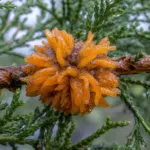
Good drainage, full sun, and air circulation prevent many problems. Watch for twig and tip blights, rust diseases, root rots, and cankers, especially where foliage stays wet or roots remain saturated. Remove and discard affected material during dry weather, disinfect tools between cuts, and avoid overhead irrigation. Do not plant susceptible junipers near known rust alternate hosts where local disease pressure is high.
Pests
Common issues include juniper scale, spider mites, aphids, bagworms, and occasional shoot or bark borers. Inspect inner foliage and branch tips regularly, especially during hot, dry weather. Improve plant vigor with correct watering and avoid unnecessary insecticide use. Hand-pick bagworms, prune out infested shoots when practical, and use labeled horticultural oils or other targeted controls only when monitoring shows a meaningful problem.
Related diseases and pests
Only Plant Doctor profiles whose host data indicate this plant may be affected are shown here.

Toxicity and pollen
The fruits, foliage, and seeds contain volatile oils, including thujone. Small culinary quantities of correctly identified common juniper are used as flavoring, but eating larger amounts may cause gastrointestinal upset such as diarrhea and is not recommended. Keep concentrated oils and large quantities away from children and pets. Avoid medicinal or essential-oil use without qualified professional guidance.
- Typical season
- Usually spring in much of the United States; local timing varies
- Pollination / pollen
- Light, wind-dispersed pollen released from male cones
As a wind-pollinated conifer, common juniper releases airborne pollen from male cones. The species is not the same as every plant marketed as cedar, and regional pollen importance varies by abundance and climate. Sensitive people may experience seasonal symptoms during local release periods, so avoid placing male plants immediately beside frequently used outdoor living areas if pollen sensitivity is known.
Native habitat
Common juniper occupies dry, open, rocky, sandy, heath-like, maritime, woodland-edge, and high-elevation habitats. It is particularly successful on exposed slopes, dunes, plateaus, nutrient-poor soils, and sites where competition is limited. Across its broad range it may act as a colonizer after disturbance or persist as an understory plant in conifer and mixed forests.
Interesting fact
It is considered one of the most widely distributed trees or shrubs in the world. Its leaves remain needle-like throughout life. Female cones usually contain one to three seeds. Individual plants can live for more than 170 years. Birds are important agents of seed dispersal.
Frequently asked questions (FAQ)
The most relevant questions about this plant, with short and direct answers.
🌱Quick care
What is common juniper?⌄
Common juniper (Juniperus communis) is an evergreen conifer that grows as a low shrub, spreading ground cover, or small tree. It belongs to the cypress family, Cupressaceae, and is naturally adapted to many cool-temperate regions, including parts of the United States.
How large does common juniper get?⌄
Common juniper’s mature size varies widely by plant form and cultivar, from a low, spreading shrub to a much taller shrub or small tree. Check the nursery label for the specific selection before planting near paths, structures, or utilities.
🌤️Environment and placement
How much sun does common juniper need?⌄
Common juniper grows best in full sun, although it tolerates light shade. Plants receiving too little light may become less dense and develop weaker, more open growth.
What type of soil is best for common juniper?⌄
Common juniper tolerates sandy, loamy, rocky, and clay soils as long as drainage is reliable. It generally performs better in lean, well-drained soil than in heavy, persistently wet ground.
Is common juniper cold hardy?⌄
Yes, common juniper is exceptionally cold hardy and can survive severe winter conditions when properly established. Young plants may still benefit from protection against drying winds and frost heaving.
Can common juniper grow in shade?⌄
Common juniper can tolerate light shade, but it is not a good choice for deep shade. Full sun usually produces the densest, healthiest foliage and best berry-like cone production.
Is common juniper useful for wildlife?⌄
Yes, common juniper provides dense evergreen cover and its berry-like cones are eaten or dispersed by birds and some mammals. Its value is especially strong in open, windy, sandy, or otherwise difficult sites.
💧Care and problems
How often should I water common juniper?⌄
Water common juniper moderately during its first growing season, keeping the root zone evenly but not constantly wet. Once established, it is drought tolerant and usually needs supplemental water only during prolonged heat or drought.
Is common juniper drought tolerant?⌄
Yes, established common juniper is drought tolerant, particularly in well-drained soil and full sun. Water it deeply during extended drought, but allow the soil to dry somewhat between waterings.
Does common juniper need fertilizer?⌄
Common juniper usually needs little fertilizer when planted in reasonably fertile soil. If growth is weak or a soil test shows a deficiency, use a light, balanced fertilizer according to the product label rather than routine heavy feeding.
Should I mulch common juniper?⌄
Yes, a shallow layer of organic mulch can help conserve moisture and moderate soil temperatures. Keep mulch several inches away from the trunk and avoid thick, wet mulch around the crown.
Why is my common juniper turning brown?⌄
Brown foliage can result from drought, winter drying, poor drainage, spider mites, scale, or fungal twig and tip blights. Check whether branches are flexible and green beneath the bark, and remove clearly dead twigs before changing watering practices.
What pests commonly attack common juniper?⌄
Common juniper may be affected by scale insects, spider mites, aphids, bagworms, and other occasional pests. Stress from drought, poor drainage, or excessive irrigation can make problems more severe.
What diseases affect common juniper?⌄
Common juniper can develop tip blight, twig blight, and some rust diseases, including cedar-apple rust where conditions and alternate host plants permit. Good air circulation, proper watering, and removal of infected material help reduce disease pressure.
🪴Planting and repotting
Can common juniper grow in clay soil?⌄
Yes, common juniper can grow in clay soil if excess water drains away. Improve the planting area’s drainage rather than adding rich, moisture-retentive amendments that could keep the roots too wet.
When is the best time to plant common juniper?⌄
Plant common juniper in spring or fall when temperatures are moderate and soil moisture is dependable. Avoid planting into waterlogged soil or during extreme summer heat unless you can provide careful aftercare.
How do I plant common juniper?⌄
Plant common juniper with the root flare at soil level in a hole wider than the root ball, then water thoroughly. Do not bury the crown or keep mulch against the trunk and lower branches.
Can common juniper be grown in a container?⌄
Yes, compact or slow-growing forms of common juniper can be grown in containers with drainage holes and a sharply draining potting mix. Container plants need more frequent watering than plants in the ground and may need winter root protection in cold climates.
Can common juniper be transplanted?⌄
Common juniper can be transplanted successfully when moved while dormant and dug with a substantial, intact root ball. Replant it promptly, keep the roots moist, and provide regular watering during establishment.
✂️Propagation and pruning
How do I prune common juniper?⌄
Prune common juniper lightly to remove dead, damaged, diseased, or badly misplaced growth. Avoid cutting deeply into old, bare interior wood because junipers generally produce little or no new growth from that dead zone.
Can common juniper be cut back hard?⌄
No, common juniper usually should not be cut back hard into leafless old wood. Severe pruning can leave permanent bare patches, so reduce size gradually or replace an overgrown plant.
How do I propagate common juniper from seed?⌄
Common juniper can be propagated from seed, but germination is slow and irregular because the seeds have strong dormancy. Fall sowing or appropriate warm-and-cold pretreatment may be needed, and seedlings can take more than one season to establish.
Can common juniper grow from cuttings?⌄
Yes, common juniper can be propagated from softwood or hardwood cuttings, although rooting success varies among plants. Use clean cuttings, a well-drained rooting medium, steady moisture, and patience because rooting may be slow.
⚠️Toxicity and safety
Are common juniper berries edible?⌄
Common juniper’s ripe cones are used in small culinary quantities as a flavoring, but they should not be eaten in large amounts. Correct species identification is important because other juniper species and plant parts may differ in safety.
Is common juniper toxic to dogs and cats?⌄
Common juniper is generally considered low toxicity, but eating substantial amounts can cause gastrointestinal upset or other problems. Prevent pets from consuming large quantities of foliage or berry-like cones and contact a veterinarian if symptoms occur.
Is common juniper poisonous to people?⌄
Common juniper has low toxicity when small amounts of correctly identified ripe cones are used as flavoring, but eating large quantities can be harmful. Pregnant people, children, and anyone with kidney or medical conditions should avoid medicinal use unless advised by a qualified clinician.
🌸Flowering and special interest
Are common juniper berries actually berries?⌄
The blue, berry-like structures on common juniper are fleshy seed cones rather than true botanical berries. They develop on female plants and contain seeds.
Does common juniper have male and female plants?⌄
Yes, common juniper is typically dioecious, meaning male and female reproductive structures occur on separate plants. Female plants produce the familiar blue, berry-like seed cones, while male plants produce small pollen cones.
How can I tell whether a common juniper is male or female?⌄
A common juniper with blue, berry-like seed cones is female, while a plant with small pollen cones and no seed cones is male. Sex may be difficult to determine when a plant is young or not reproductively active.
Does common juniper flower?⌄
Common juniper does not produce showy flowers because it is a conifer. It forms small pollen and seed cones, with reproductive activity generally occurring in spring.
When do common juniper berries ripen?⌄
Common juniper’s berry-like seed cones generally take about two years to mature and turn blue-black with a waxy bloom. Green cones may remain on the same plant while older cones ripen.
Do I need both male and female common junipers to get berries?⌄
Usually, yes: a female common juniper needs pollen from a compatible male plant nearby to produce seed cones. A female may not develop berries if no male is flowering within effective pollination range.