
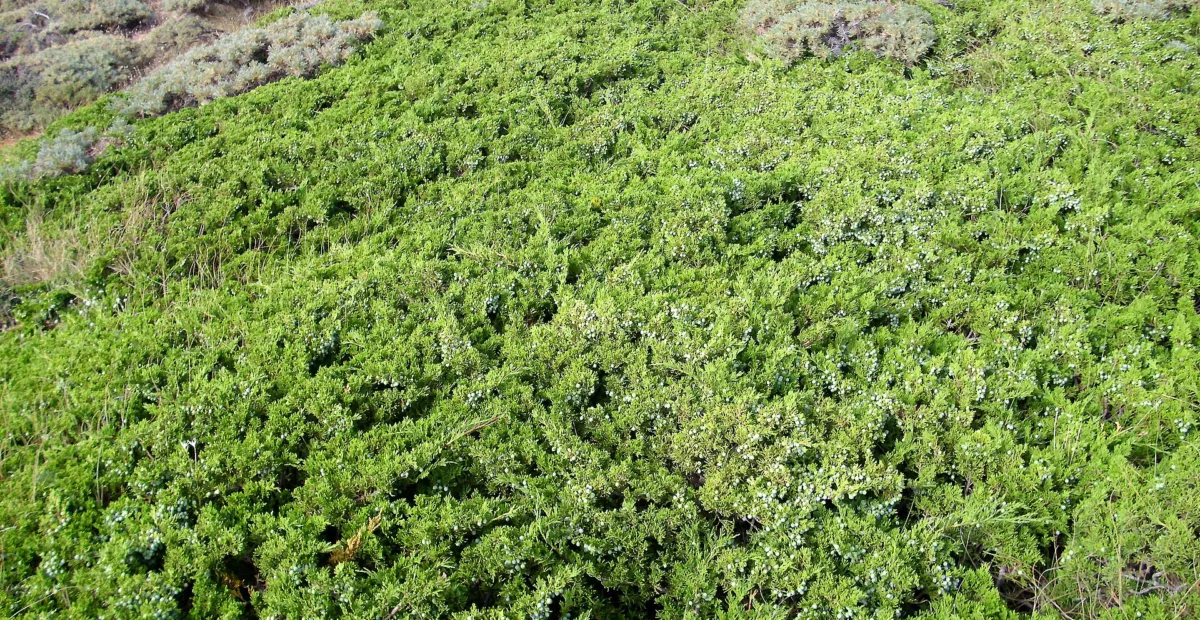
 Source:
 Savin juniper (Juniperus sabina) short overview
Savin juniper is a hardy evergreen conifer valued for aromatic, blue-green foliage and a versatile habit that may spread close to the ground or form a larger shrub. In full sun it tolerates drought, clay, salt spray, pollution, and soils from acidic to alkaline, provided drainage is reliable. It suits rock gardens, slopes, foundation plantings, and low screens, but its foliage, cones, and concentrated oils are toxic if eaten.
Taxonomic classification
Savin juniper (Juniperus sabina) care guide
Light and placement
Give full sun, ideally with unobstructed southern or western exposure and good air circulation. Plants become thinner and less vigorous in shade. Excessive reflected heat combined with drought may scorch foliage, while insufficient light commonly produces open growth and weaker color. Avoid permanently wet sites even though established plants tolerate occasional dry periods.
Watering and humidity
Water deeply and slowly when the upper few inches of soil begin to dry during establishment, then extend the interval as roots develop. Established plants usually need supplemental water only during prolonged heat or drought. Do not keep the root zone saturated. Water at the soil line rather than wetting dense foliage repeatedly.
Soil and growing medium
Use a well-drained soil with moderate moisture retention. Savin juniper tolerates clay, rocky ground, salt spray, and approximately pH 5.0–8.0, but waterlogged or compacted soil can cause decline. Improve drainage rather than adding rich organic matter to a heavy planting hole.
Feeding
Usually needs little fertilizer after establishment. Apply a thin compost mulch or a balanced slow-release fertilizer in early spring only if growth is weak or soil testing indicates a deficiency. Do not overfeed, especially with high nitrogen, and do not fertilize drought-stressed or newly transplanted plants until they recover.
Growth and habit
Habit is variable: plants may form a low, spreading groundcover, a broad shrub, or a more upright small tree depending on provenance and cultivar. Growth is generally slow to moderate. Avoid hard pruning into leafless older wood, because junipers often do not regenerate well from bare branches.
Planting and repotting
Plant container-grown stock in spring or fall, setting it at the same depth as in the nursery container. Water deeply during the first growing season and mulch lightly without covering the crown. Space according to the selected form; allow about 4–8 feet for many spreading landscape plants, with more room for larger forms.
Container plants should be shifted only when roots fill the pot, preferably in early spring. Preserve the root ball, avoid disturbing the fine roots, and use a sharply draining mix. Because larger specimens transplant poorly, choose the final container or planting site carefully.
Propagation and pruning
Propagation
Seed propagation is slow and unreliable because the seeds may have multiple dormancy requirements. Spring stem cuttings are the practical nursery method; research supports rooting treated cuttings in a porous perlite–cocopeat medium. Layering may also work for low, flexible branches. Use gloves when handling cut material.
Pruning
Prune lightly in late winter or early spring to remove dead, damaged, crossing, or poorly placed branches. Shape gradually with selective cuts rather than shearing deeply into old bare wood. Avoid removing more than necessary, because older interior stems may not resprout.
Overwintering
Outdoor plants are generally hardy through USDA Zone 3b when established. Water thoroughly before the ground freezes, maintain a light mulch over the root zone, and protect young plants from drying winter winds. Container plants need extra insulation because their roots are less protected than roots in the ground.
Uses
Use as an evergreen foundation plant, low screen, slope stabilizer, rock-garden subject, specimen shrub, or large-container plant. Its dense foliage provides year-round structure and cover. Do not use the cones, foliage, or essential oil as food or medicine; this species is not the culinary juniper normally associated with flavoring.
Appearance
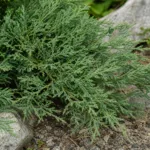
Dense evergreen foliage consists of scale-like leaves on mature shoots, with some juvenile needle-like foliage possible. Branches may layer, arch, or rise into a broad crown. Female plants carry small fleshy blue-black to dark seed cones, while bark on older stems becomes gray-brown and fibrous. The foliage is strongly aromatic when crushed.
Pollination and visitors
Pollination is primarily by wind rather than insects. Male plants release abundant airborne pollen, and female plants develop seed cones after pollination. No characteristic bee, butterfly, or other animal visitor group was sufficiently documented for this exact species.
Juniperus sabina photos
Click any photo for a larger view. Source, author and license are shown separately.
Diseases and pests
Diseases
Provide full sun, air movement, and well-drained soil. Watch for twig and tip blights, root problems in wet soil, and rust diseases where susceptible alternate hosts occur. Remove affected material, disinfect tools, and avoid overhead irrigation; confirm disease before applying a treatment.
Pests
Inspect for spider mites, scale insects, aphids, bagworms, and occasional juniper webworms. Encourage air circulation, avoid drought stress, and use targeted controls only when damage is significant. Remove heavily infested shoots and follow local extension guidance for product selection.
Related diseases and pests
Only Plant Doctor profiles whose host data indicate this plant may be affected are shown here.
 DiseasePear trellis rustGymnosporangium sabinae
 DiseaseHeterobasidion root diseaseHeterobasidion annosum
 DiseaseCedar-Apple RustGymnosporangium juniperi-virginianae Schwein.
 PestBrown Garden SnailCornu aspersum (Müller, 1774)
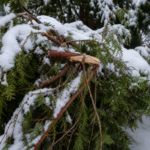 Environmental stressSnow Load Damage
 Environmental stressWind scorch
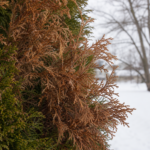 Environmental stressWinter desiccation (winter burn)
 Environmental stressRoot Anoxia
Toxicity and pollen
Juniperus sabina contains toxic essential-oil constituents including sabinene-related compounds and sabinyl derivatives. Ingestion of foliage, berry-like cones, or concentrated oil can cause severe gastrointestinal, neurologic, kidney, skin, and reproductive effects. Do not use internally or as a home remedy; avoid concentrated oils and seek poison-control or veterinary advice after ingestion.
- Typical season
- Typically late winter through spring, varying by region and weather.
- Pollination / pollen
- Abundant, wind-dispersed conifer pollen
Savin juniper is wind-pollinated and can release substantial airborne pollen. Recent Cupressales research found relatively high pollen production and allergenic potential for Juniperus sabina, but personal sensitivity varies. Avoid placing male plants beside frequently used outdoor seating if household members have conifer-pollen allergies.
Native habitat
The species is native across broad parts of Europe and temperate Asia, including Siberian and Caucasus regions. It occurs in dry, open, rocky, or mountainous settings and can tolerate alkaline or calcareous substrates. In cultivation it performs best where roots are not persistently waterlogged.
Interesting fact
The fleshy structures commonly called juniper berries are actually seed cones, not botanical berries. The species can range from a low, spreading shrub to a larger upright form. It tolerates salt spray, pollution, drought, and clay better than many ornamental shrubs. Juniperus sabina is also a parent of widely planted hybrid Pfitzer junipers.
Frequently asked questions (FAQ)
The most relevant questions about this plant, with short and direct answers.
🌱Quick care
What is savin juniper?⌄
Savin juniper is the evergreen shrub Juniperus sabina in the cypress family, Cupressaceae. It usually forms a spreading plant about 4–6 feet tall and 5–10 feet wide, although cultivated varieties range from low ground covers to larger shrubs.
How much sun does savin juniper need?⌄
Savin juniper grows best in full sun, with at least 6 hours of direct light daily. Good light helps maintain dense foliage and reduces problems associated with weak, shaded growth.
How often should I water savin juniper?⌄
Water savin juniper moderately while it is establishing, then allow the soil to dry somewhat between waterings. Established plants tolerate drought, but they still perform best when watered during prolonged heat or dry spells.
Is savin juniper evergreen?⌄
Yes, savin juniper is an evergreen conifer that keeps its foliage year-round. Its foliage is generally green to blue-green, and it can provide winter structure in the landscape.
How big does savin juniper get?⌄
The species commonly reaches about 4–6 feet tall and 5–10 feet wide. Size varies substantially by cultivar, with some forms staying near 1 foot tall while spreading several feet.
🌤️Environment and placement
What USDA hardiness zone is savin juniper?⌄
Savin juniper is generally hardy in USDA Zones 3–7, although the exact range can vary by cultivar and local conditions. Check the mature size and hardiness of the named variety before planting.
What type of soil does savin juniper prefer?⌄
Savin juniper prefers well-drained soil and tolerates loam, clay, rocky ground, and calcareous or alkaline soils. It does not tolerate consistently wet or poorly drained sites.
Can savin juniper grow in clay soil?⌄
Yes, savin juniper can grow in clay soil if drainage is adequate. Amend the planting site or use a raised location when clay remains saturated after rain.
Is savin juniper drought tolerant?⌄
Yes, established savin juniper is drought tolerant. Water it deeply during extended drought, especially if it is newly planted, growing in a container, or exposed to reflected heat.
Is savin juniper suitable for slopes and erosion control?⌄
Yes, spreading savin juniper cultivars can help cover sunny slopes and reduce soil exposure. Choose a cultivar whose mature spread fits the site, and avoid planting it where runoff leaves the soil constantly saturated.
Can savin juniper grow in a rock garden?⌄
Yes, savin juniper is well suited to sunny rock gardens because it tolerates rocky, dry, and relatively alkaline soils. Provide enough room for the plant’s eventual horizontal spread.
Can savin juniper tolerate salt and urban conditions?⌄
Savin juniper tolerates wind, some salt exposure, pollution, and many urban conditions. Even so, avoid sites where deicing salt accumulates heavily in the root zone or foliage.
💧Care and problems
Why is my savin juniper turning brown?⌄
Brown foliage can result from drought stress, winter injury, root rot, insect damage, or diseases such as tip blight. Check whether the soil is excessively dry or wet, inspect the twigs for dieback, and remove clearly dead growth.
What diseases affect savin juniper?⌄
Common problems include Phomopsis or Kabatina tip blight, cedar rust diseases, canker, and root rot. Good air circulation, well-drained soil, careful watering, and removal of diseased twigs during dry weather can reduce risk.
What pests attack savin juniper?⌄
Savin juniper may be affected by spider mites, scale, aphids, bagworms, webworms, borers, and twig girdlers. Inspect stressed plants regularly and identify the pest before choosing a treatment.
Does savin juniper need fertilizer?⌄
Usually, established savin juniper needs little fertilizer when planted in reasonably fertile soil. Fertilize only when a soil test or clear nutrient deficiency indicates a need, because excessive nitrogen can encourage weak growth.
When should I prune savin juniper?⌄
Prune savin juniper in late winter or early spring to improve shape and remove dead or diseased branches. Make selective cuts back to a live side branch, because bare interior wood may not produce replacement foliage.
Can you cut savin juniper back to bare wood?⌄
Avoid cutting savin juniper deeply into leafless old wood, because junipers often cannot regenerate foliage there. If a branch is bare and must be removed, cut it back to its base or to a green side branch.
Can savin juniper be sheared into a hedge?⌄
Savin juniper can be lightly shaped, but regular severe shearing is risky and can expose permanent brown interior sections. Select cultivars with a naturally suitable form and prune lightly while retaining green foliage beyond each cut.
🪴Planting and repotting
When is the best time to plant savin juniper?⌄
Plant savin juniper in spring or early fall when temperatures are moderate and soil moisture is dependable. Container-grown plants can be planted at other times if they are watered carefully during establishment.
How far apart should savin juniper be planted?⌄
Space savin juniper according to the cultivar’s mature spread, commonly allowing about 5–10 feet for species-sized plants. Low cultivars may need less spacing vertically but still require several feet of horizontal room.
Can savin juniper be grown in a container?⌄
Yes, smaller savin juniper cultivars can be grown in large containers with drainage holes and a sharply draining potting mix. Container plants need more frequent watering and may require winter protection for their roots.
Does savin juniper transplant well?⌄
Container-grown savin juniper generally transplants better than bare-root plants. Move it with as much intact root ball as possible, plant at the original depth, and keep the root zone evenly moist while it establishes.
✂️Propagation and pruning
How do you propagate savin juniper?⌄
Savin juniper is most commonly propagated from stem cuttings, especially named cultivars that must be kept true to type. Cuttings can be rooted in a clean, well-drained medium under protected, humid conditions.
Can savin juniper be grown from seed?⌄
Yes, savin juniper can be grown from seed, but germination may be slow and uneven because juniper seeds often have dormancy requirements. Seed-grown plants may not duplicate the form or foliage of a selected cultivar.
Can savin juniper be propagated from cuttings?⌄
Yes, savin juniper roots from suitable stem cuttings, and cuttings are generally preferred for propagating cultivars. Semi-mature or mature tip, heel, or mallet cuttings may be used with rooting medium and controlled moisture.
⚠️Toxicity and safety
Is savin juniper poisonous?⌄
Yes, savin juniper is highly toxic if eaten. Do not ingest its foliage, berry-like cones, or other plant parts, and keep plant material away from children, pets, and livestock.
Are savin juniper berries edible?⌄
No, savin juniper’s berry-like cones should not be eaten. They can be confused with edible-looking juniper fruits from other species, so never use unidentified juniper material for food or drink.
Is savin juniper safe around dogs, cats, or livestock?⌄
Savin juniper should be treated as unsafe around pets and livestock because ingestion can cause serious poisoning. Prevent animals from chewing the foliage or fruit and contact a veterinarian or poison service promptly if ingestion occurs.
Can savin juniper irritate the skin?⌄
Handling savin juniper may irritate sensitive skin because its foliage can be sharp and aromatic. Wear gloves and long sleeves when pruning, and wash exposed skin after handling the plant.
🌸Flowering and special interest
Does savin juniper have flowers?⌄
Savin juniper does not produce showy flowers; its reproductive structures are small, inconspicuous cones. Male and female cones are usually produced on separate plants.
Does savin juniper produce berries?⌄
Female savin junipers produce bluish-black, berry-like seed cones that typically mature during their second year. They are botanically cones rather than true berries, and fruiting requires a female plant.
Similar plants
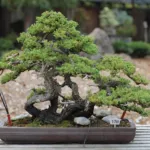 Dwarf Japanese garden juniper (Juniperus procumbens ‘Nana’)Juniperus procumbens 'Nana'
 Algerian Iris (Iris unguicularis) care guideIris unguicularis
 He Spanish iris (Iris xiphium) care guideIris xiphium
 Creeping juniper (Juniperus horizontalis) care guideJuniperus horizontalis
 Water Iris (Iris laevigata) care guideIris laevigata
 He blue flag (Iris versicolor) care guideIris versicolor