
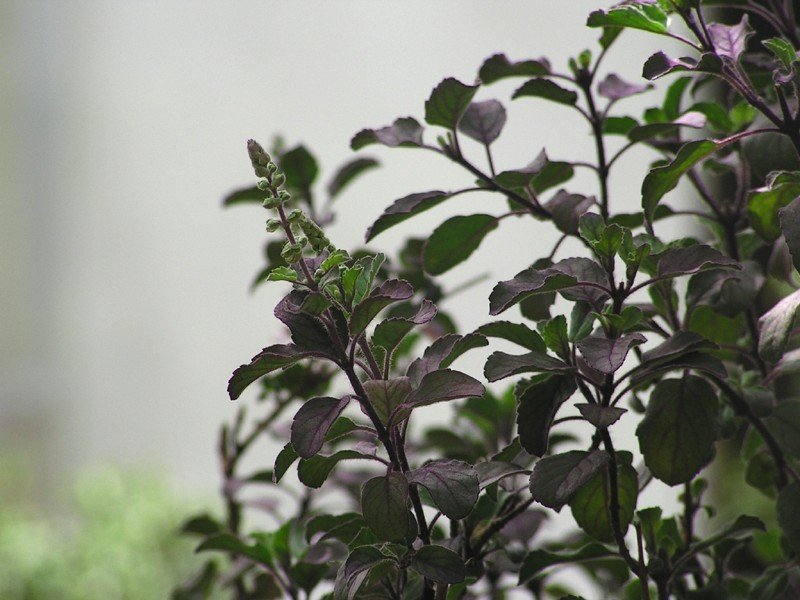
Holy Basil (Ocimum tenuiflorum) short overview
Holy basil is an aromatic, warm-climate perennial or subshrub in the mint family, grown in the United States as a summer herb, container plant, or indoor specimen. Its softly hairy stems, strongly scented leaves, and slender spikes of small white to purplish flowers make it both ornamental and useful. Give it full sun, warmth, fertile well-drained soil, and regular harvesting to maintain a compact, leafy form.
Taxonomic classification
Holy Basil (Ocimum tenuiflorum) care guide
Light and placement
Place outdoors where the plant receives at least 6 hours of direct sun, preferably with morning or all-day exposure and shelter from strong, drying wind. In very hot climates, light afternoon shade can prevent leaf scorch. Leggy stems, small leaves, and weak aroma usually indicate insufficient light; bleached patches or crisp margins suggest excessive heat, drought, or intense reflected sun.
Watering and humidity
Water thoroughly when the top inch of soil feels dry, then allow excess water to drain completely. Keep the root ball evenly moist during hot summer growth, but never leave the container standing in water. Reduce watering indoors and in cool weather, allowing more surface drying between applications. Humidity is not usually limiting if air circulation is good.
Soil and growing medium
Use fertile soil with plenty of organic matter but reliable drainage. A loam-based bed or high-quality potting mix amended with compost works well; avoid dense clay that stays wet around the roots. Slightly acidic through mildly alkaline soil is generally acceptable. Containers must have drainage holes, and saucers should not hold runoff.
Feeding
In containers, apply a balanced liquid fertilizer at half strength every 3–4 weeks during active summer growth, or use a controlled-release product according to its label. In the ground, incorporate compost before planting and feed only if growth is pale or weak. Do not fertilize during winter dormancy, immediately after severe drought, or when the root zone is waterlogged.
Growth and habit
Holy basil forms an upright, branching plant that becomes somewhat woody at the base in warm climates. Regular harvesting encourages lateral shoots and delays flowering, while neglected plants become taller, more open, and increasingly seed-producing. It can persist for several years where winters are frost-free but is commonly treated as an annual in colder regions.
Planting and repotting
Plant out only after frost danger has passed and the soil is warm. Choose a sunny site, loosen the root zone, and mix in compost without creating a water-retentive pocket. Set transplants at the same depth they occupied in their containers. Water thoroughly after planting and keep evenly moist while roots establish.
Move container plants into a pot only one size larger when roots fill the existing container or watering becomes unusually frequent. Use a fresh, fast-draining potting mix and ensure the root crown is not buried. Repot in spring or early summer, water once thoroughly, and protect the plant from intense midday stress until it resumes growth.
Propagation and pruning
Propagation
Sow fresh seed in warm, lightly moist mix at about 1/8 inch deep; germination is usually best with temperatures around 70–85°F. Stem cuttings root readily from nonflowering shoots in water or a clean, moist propagation medium. Transplant seedlings or rooted cuttings after they have developed several true leaves and outdoor temperatures are warm.
Pruning
Pinch shoot tips above a pair of leaves once plants are established, then harvest frequently to maintain branching. Remove weak, damaged, or overly woody stems with clean snips. Cut back by up to one-third after a major flush of flowering if a compact plant is desired; avoid removing so much foliage that recovery is slowed.
Overwintering
Holy basil is damaged or killed by frost. Before cold weather, take cuttings or move a healthy container plant indoors to the brightest available window. Keep it warm, reduce watering as growth slows, and watch for spider mites and whiteflies. In cold regions, treat the outdoor plant as an annual and save seed or cuttings for the next season.
Uses
Used as a fragrant culinary herb, tea ingredient, container herb, ornamental annual, and culturally important plant. Leaves and flowering shoots are harvested fresh or dried for flavoring. Traditional medicinal uses are documented, but therapeutic claims and concentrated preparations should not be treated as substitutes for professional medical advice.
Appearance
The stems are typically square and softly hairy, reflecting its mint-family identity. Leaves are opposite, oval to broadly elliptic, toothed, and aromatic when bruised; foliage may be green or carry purple tones depending on the cultivated form. Slender terminal and axillary spikes hold small two-lipped flowers above the foliage.
Flowering
Flowering begins as warm-season growth matures and may continue for weeks if the plant is not repeatedly pinched. The tiny flowers are arranged in whorls along elongated spikes and have the two-lipped structure typical of Lamiaceae. Removing developing spikes redirects energy toward leafy shoots but is not necessary when seed production is desired.
Pollination and visitors
The small nectar- and pollen-bearing flowers are visited by bees, bumblebees, hoverflies, and wasps. Allowing some flower spikes to remain can provide forage and supports seed production; heavy harvesting before bloom reduces the available floral resource.
Ocimum tenuiflorum photos
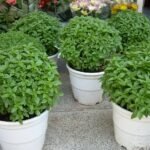
Click any photo for a larger view. Source, author and license are shown separately.
Diseases and pests
Diseases
Good drainage, airflow, clean tools, and watering at the soil surface help prevent problems. Watch for damping-off in crowded seedlings, root or crown rot in saturated soil, and occasional leaf spots in humid, poorly ventilated conditions. Remove affected tissue, improve spacing and drainage, and avoid overhead watering late in the day.
Pests
Aphids, whiteflies, spider mites, and occasionally Japanese beetles or other chewing insects may occur. Inspect leaf undersides and shoot tips regularly. Use a strong water spray for light infestations, remove badly affected growth, and apply insecticidal soap or horticultural oil only as labeled, testing first on a small area.
Toxicity and pollen
Holy basil has a long history of food and traditional use, but concentrated extracts, essential oils, and large amounts are not equivalent to normal culinary portions. Avoid applying essential oil internally or to children and pets. People who are pregnant, taking medication, or managing a medical condition should seek professional advice before using concentrated preparations.
- Typical season
- Typically June–September in much of the United States
- Pollination / pollen
- Insect-released pollen from exposed anthers
As an insect-pollinated herb, its pollen is mainly released at the flowers and is not typically dispersed as widely as wind-pollinated tree or grass pollen. Sensitive people can still react to flowering plants or plant handling, so avoid direct exposure if symptoms occur and remove spent flower spikes before indoor overwintering if desired.
Native habitat
The species is associated with tropical and subtropical regions that commonly experience warm temperatures and a pronounced dry season. It grows in disturbed ground, cultivated settings, village areas, and other open habitats rather than deep shade. In cultivation it prefers warmth, sun, fertile soil, and drainage between waterings.
Interesting fact
The accepted name is Ocimum tenuiflorum, while Ocimum sanctum is a widely encountered synonym. The plant is perennial or subshrubby in warm climates but behaves as a frost-tender annual across much of the United States. Its mint-family flowers develop in recognizable whorls along spikes, and regular cutting promotes leafy branching.
Frequently asked questions (FAQ)
The most relevant questions about this plant, with short and direct answers.
🌱Quick care
What is Holy Basil (Ocimum tenuiflorum)?⌄
Holy Basil is an aromatic herb in the mint family, Lamiaceae, grown for its spicy leaves, flowers, fragrance, and cultural or culinary uses. It is closely related to sweet basil but is generally shorter-lived and has smaller flowers.
Is Holy Basil easy to grow?⌄
Holy Basil is moderately easy to grow when it receives warmth, sunlight, regular moisture, and good drainage. It grows quickly during warm weather but is frost-tender and usually needs indoor protection in much of the United States.
How do you harvest Holy Basil?⌄
Harvest Holy Basil by cutting stems just above a pair of leaves, taking only part of the plant at a time. Frequent harvesting encourages branching; leaves and tender flower spikes can be used fresh or dried.
How do you overwinter Holy Basil indoors?⌄
Before frost, move a healthy Holy Basil plant indoors, inspect it for pests, and place it in the brightest warm location available. Reduce watering slightly in winter while maintaining moderate moisture, and prune leggy growth as needed.
🌤️Environment and placement
How much sunlight does Holy Basil need?⌄
Give Holy Basil full sun, ideally at least 6 hours of direct sunlight daily. Light partial shade can work in very hot locations, but insufficient light may produce weak, stretched growth.
Can Holy Basil grow indoors?⌄
Holy Basil can grow indoors in a bright, warm window or under a grow light. Choose a container with drainage, keep it away from cold drafts, and provide about 12–16 hours of strong light if natural light is limited.
What temperature is best for Holy Basil?⌄
Holy Basil grows best in warm conditions roughly between 70 and 90°F. Protect it when nighttime temperatures approach 50°F, and move it indoors before frost because freezing temperatures can kill the plant.
Can Holy Basil survive winter outdoors in the United States?⌄
Holy Basil usually cannot survive winter outdoors in regions that experience frost or freezing temperatures. Treat it as an annual outdoors, or overwinter it indoors in a bright, warm location.
What USDA hardiness zone is Holy Basil suitable for?⌄
Holy Basil is best grown outdoors as a warm-season annual in most USDA hardiness zones. It may persist as a perennial only in frost-free areas, while gardeners in colder zones should grow it in containers or bring it indoors.
💧Care and problems
How often should I water Holy Basil?⌄
Water Holy Basil when the top inch of soil feels dry, then water thoroughly until excess drains from the container. Keep the soil moderately moist but never waterlogged, because saturated roots can encourage root problems.
What type of soil does Holy Basil need?⌄
Use fertile, well-drained loam or a quality container mix enriched with organic matter. Avoid heavy soil that stays wet, and make sure containers have unobstructed drainage holes.
Does Holy Basil need fertilizer?⌄
Holy Basil benefits from light, regular feeding during active growth, especially in containers. Apply a balanced liquid fertilizer at a diluted rate according to the product label, since excessive fertilizer can produce lush but less flavorful growth.
Why are my Holy Basil leaves turning yellow?⌄
Yellow leaves commonly result from overwatering, poor drainage, low light, or normal aging of older foliage. Check that the soil drains freely, allow the surface to dry slightly between waterings, and move the plant to brighter light if needed.
Why is my Holy Basil plant wilting?⌄
Holy Basil may wilt from dry soil, excessive heat, root damage, or waterlogged conditions. Check the soil first, water if it is dry, and inspect the roots and drainage if the plant remains wilted after watering.
What pests commonly attack Holy Basil?⌄
Aphids, leafhoppers, and Japanese beetles can damage Holy Basil, while some insects may chew holes or skeletonize the leaves. Remove larger pests by hand and use a strong stream of water or an appropriately labeled treatment for persistent infestations.
What diseases affect Holy Basil?⌄
Holy Basil can develop fungal problems such as powdery mildew when air circulation is poor or foliage stays wet. Space plants adequately, water at the soil line, remove affected leaves, and avoid consistently soggy soil.
🪴Planting and repotting
When should I plant Holy Basil outdoors?⌄
Plant Holy Basil outdoors after the danger of frost has passed and nighttime temperatures remain reliably above about 50°F. In colder regions, start seeds indoors several weeks before the local average last frost date.
Can Holy Basil grow in a container?⌄
Holy Basil grows well in containers filled with fertile, well-drained potting mix. Use a pot with drainage holes and enough room for the plant’s mature root system, and expect to water more often during hot weather.
How large does Holy Basil get?⌄
Holy Basil commonly reaches about 2–3 feet tall and becomes bushy when regularly harvested. Size varies with cultivar, growing conditions, container volume, and whether the plant is grown as an annual or protected perennial.
✂️Propagation and pruning
How do you grow Holy Basil from seed?⌄
Sow Holy Basil seeds indoors or outdoors in warm, moist soil and barely cover them because they need light or shallow placement to germinate well. Keep the growing medium warm and evenly moist until seedlings emerge.
Can Holy Basil be propagated from cuttings?⌄
Holy Basil can be propagated from soft stem cuttings, although seed is the most commonly recommended method. Place a cutting with lower leaves removed in moist propagation medium or water, then transplant it after roots develop.
Should I pinch Holy Basil?⌄
Pinch the growing tips regularly to encourage branching and a fuller plant. Removing developing flower heads also helps maintain leafy growth, although allowing some flowers to remain is useful if you want seed.
⚠️Toxicity and safety
Is Holy Basil safe to eat?⌄
Holy Basil is generally considered a low-toxicity culinary herb when used in ordinary food or tea amounts. Wash fresh leaves, avoid consuming plants treated with non-food-safe chemicals, and use greater caution with concentrated extracts or supplements.
Can you drink Holy Basil tea?⌄
Holy Basil leaves are commonly used to prepare tea, but traditional use does not establish that it treats a medical condition. People who are pregnant, breastfeeding, taking medication, or managing a chronic condition should ask a healthcare professional before using concentrated preparations.
Can Holy Basil cause skin irritation?⌄
Holy Basil may cause skin reactions in sensitive people, particularly when concentrated oils or extracts contact the skin. Stop use and wash the area if irritation develops, and test topical products cautiously rather than applying essential oil directly.
Is Holy Basil toxic to pets?⌄
Reliable safety information for pets is limited, so do not assume that concentrated Holy Basil products are safe for animals. Keep essential oils, extracts, and large quantities of the plant away from pets and contact a veterinarian if ingestion causes concern.
🌸Flowering and special interest
When does Holy Basil flower?⌄
Holy Basil generally flowers during warm, bright growing conditions and may produce spikes of small white, pink, or purplish flowers. Flowering can occur sooner when the plant is stressed, crowded, root-bound, or exposed to long, bright days.
Should I let Holy Basil flower?⌄
Let Holy Basil flower if you want to support pollinators or collect seed, but pinch flower spikes to encourage continued leaf production. Leaves may become less tender or flavorful after flowering, so harvest regularly before and during bud formation.
Does Holy Basil produce seeds?⌄
Holy Basil produces small brown seeds after flowering and can often self-seed in warm climates. Allow flower spikes to dry on the plant, then collect the mature seed and store it in a cool, dry place.
Similar plants
 Hairy basil (Ocimum americanum) care guideOcimum americanum
 Basil (Ocimum basilicum) care guideOcimum basilicum
 Camphor basil (Ocimum kilimandscharicum) care guideOcimum kilimandscharicum
 Xkakaltun (Ocimum campechianum) care guideOcimum campechianum
 Wild basil (Ocimum gratissimum) care guideOcimum gratissimum
 Ocimum basilicum minimum care guideOcimum basilicum minimum