
 Source:
 Zebra-plant (Goeppertia zebrina) short overview
Zebra-plant, Goeppertia zebrina, is a tropical Brazilian perennial grown mainly for its velvety foliage rather than its flowers. Broad dark-green leaves carry pale zebra-like bands and often show rich purple undersides. Indoors, it prefers bright filtered light, steady warmth, high humidity, and soil that stays evenly moist but never waterlogged. With consistent conditions, this clumping prayer-plant relative makes a dramatic container specimen for homes, offices, and conservatories.
Taxonomic classification
Zebra-plant (Goeppertia zebrina) care guide
Light and placement
Provide bright filtered light, such as an east-facing window or a position several feet back from a bright south- or west-facing window. Gentle morning sun can be tolerated, but harsh midday rays may bleach or scorch the leaves. Too little light produces slower growth and less vigorous foliage; too much direct sun causes fading, crisp patches, and curling. Turn the container occasionally for even growth.
Watering and humidity
Water when the upper surface begins to feel slightly dry, then soak the mix thoroughly until excess drains away. Do not let the pot stand in water, and do not allow the root ball to become bone-dry. Use rainwater, distilled water, or low-mineral water where possible because fluoride and salts may contribute to brown tips. Water less often in winter while maintaining gentle moisture and high humidity.
Soil and growing medium
Use a loose, organic, peat-free or peat-based houseplant mix amended with perlite or fine bark so it holds moisture without becoming stagnant. A slightly acidic to near-neutral reaction is suitable. Containers must have drainage holes; dense, airless soil encourages root problems and can leave the rhizomes chronically wet.
Feeding
Feed monthly during active spring and summer growth with a balanced liquid houseplant fertilizer diluted to half strength. Apply to already-moist soil to reduce root stress. Reduce or stop feeding during low-light winter conditions, after repotting, or when the plant is stressed, wilted, or showing damaged roots.
Growth and habit
This rhizomatous perennial develops a basal clump of upright leaf stalks. Growth is strongest with warmth, filtered light, regular moisture, and humidity. Remove declining leaves at the base to keep the clump tidy, and rotate the pot occasionally for balanced presentation without disturbing the roots.
Planting and repotting
In the United States, grow it as an indoor container plant or place it outdoors only during warm, frost-free weather. Set the crown at the same depth as before and avoid burying the rhizomes deeply. Allow room for the clump to broaden rather than packing plants tightly against one another.
Repot in spring or early summer when roots fill the container or the mix breaks down. Move up only one pot size, preserve the root ball as much as practical, and water lightly after repotting. Division can be combined with repotting when a crowded clump needs separating.
Propagation and pruning
Propagation
Division is the dependable method. Separate a naturally divided clump in spring or early summer, keeping several healthy shoots and roots with each section. Pot divisions into lightly moist, airy mix and maintain warmth and humidity until new growth resumes. Seed propagation is uncommon in household horticulture.
Pruning
Little pruning is needed. Remove yellow, scorched, or badly damaged leaves at the base with clean scissors. Do not shear healthy foliage for shaping; trim individual leaves instead. Wipe blades between plants when removing diseased tissue.
Overwintering
Keep indoors before temperatures fall below 60°F, with a stable range around 65–75°F. Protect from cold windows, drafts, and heating vents. Winter light should remain bright but filtered; reduce watering frequency as growth slows without allowing prolonged drought. Avoid feeding during periods of weak winter growth.
Uses
Used primarily as an ornamental foliage houseplant, conservatory specimen, or shaded warm-season container plant. Its patterned leaves provide strong visual interest without relying on abundant flowers. It has no established culinary use in the sources reviewed, and it should not be promoted as a medicinal plant.
Appearance
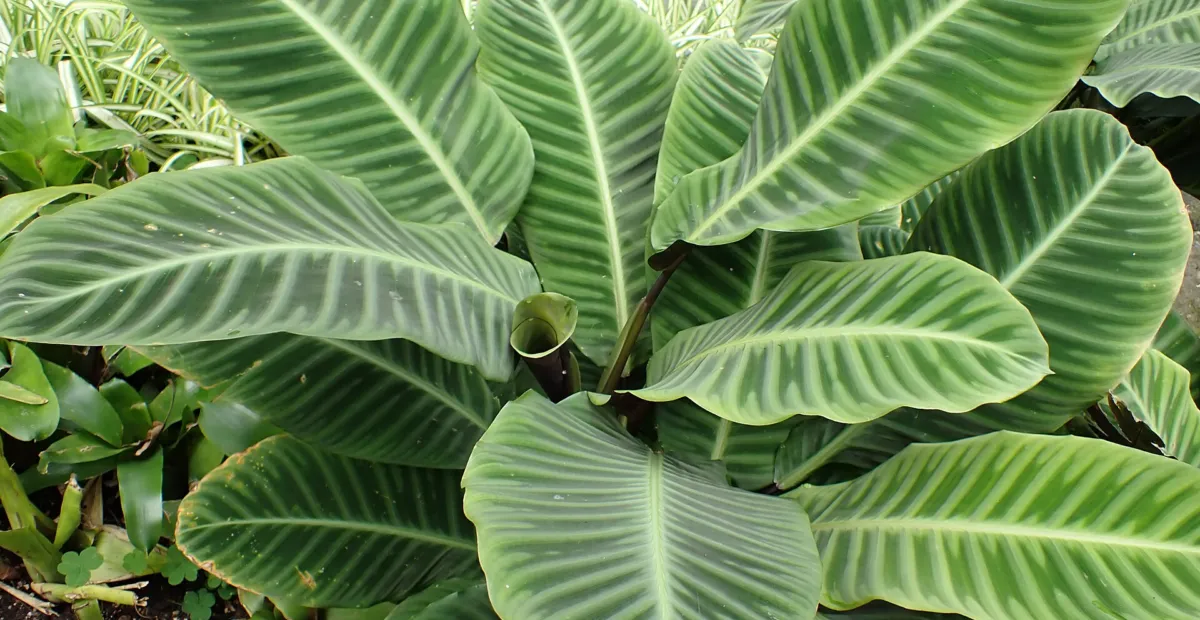
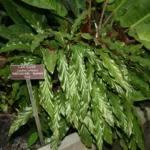
The plant is recognized by its broad, elliptic, velvety leaves carried on long upright stalks. Pale green bands radiate or arch across the dark green upper surface, creating a zebra pattern, while the lower surface is commonly reddish purple. Leaves arise from a rhizomatous clump rather than a woody stem, and drought stress may cause them to curl.
Flowering
Small tubular flowers may appear from the base of a mature, well-established clump, but flowering is infrequent in ordinary indoor conditions. Reports describe purple or white flowers. The foliage remains the primary ornamental feature, and no dependable United States flowering calendar is established for house-grown plants.
Pollination and visitors
The flowers are small and infrequently produced in cultivation, and reliable documentation of particular animal visitors for this species was not located. Pollinator attraction is therefore recorded as unknown rather than inferred from its membership in a flowering plant family.
Goeppertia zebrina photos
Click any photo for a larger view. Source, author and license are shown separately.
Diseases and pests
Diseases
The main risks are root or rhizome rots caused by persistently saturated media and poor airflow, with occasional leaf-spot problems under wet foliage. Use a clean, free-draining mix, empty saucers, water the soil rather than the leaves, remove damaged tissue, and isolate affected plants. Avoid routine fungicide use unless a diagnosis supports it.
Pests
Watch for spider mites, mealybugs, scale, and whitefly, especially in dry indoor air. Inspect leaf undersides and stem bases regularly. Improve humidity and airflow, remove light infestations with water or a cotton swab, and use a labeled houseplant treatment only as directed for heavier infestations.
Related diseases and pests
Only Plant Doctor profiles whose host data indicate this plant may be affected are shown here.
 PestCotton mealybugPhenacoccus solenopsis Tinsley
 PestCottony Cushion ScaleIcerya purchasi
 DiseaseRhizoctonia DiseasesRhizoctonia solani Kühn
 Environmental stressUnderwatering
 DiseaseRhizopus soft rotRhizopus stolonifer
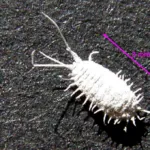 PestObscure mealybugPseudococcus viburni
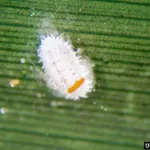 PestCitrus mealybugPlanococcus citri
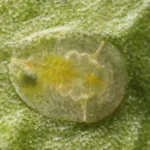 PestCitrus whiteflyDialeurodes citri
Toxicity and pollen
Available veterinary plant-safety references classify Calathea plants as non-toxic to dogs and cats, and Goeppertia zebrina is the accepted name for a plant long treated horticulturally as Calathea zebrina. Exact-species toxicology is not extensively documented, so prevent chewing as a general precaution; plant material may still cause mild stomach upset if eaten in quantity.
- Pollination / pollen
- Flower pollen; limited airborne exposure expected
As an angiosperm, the plant produces pollen when it flowers, but it is not documented as a significant source of airborne pollen in typical United States indoor horticulture. Flowering is uncommon indoors, so allergy exposure is expected to be low, though individual sensitivity cannot be ruled out.
Native habitat
The species is native to Brazil, from Bahia southward to Santa Catarina, and is associated with wet tropical environments. Its natural setting is warm, humid, and shaded or filtered rather than exposed to intense direct sun. Cultivation should replicate stable moisture, organic soil, and protection from cold.
Interesting fact
The species was formerly widely grown and sold under the name Calathea zebrina. Its leaves are velvety above and often purple beneath. Leaf curling can signal drought stress. It has received the Royal Horticultural Society Award of Garden Merit.
Frequently asked questions (FAQ)
The most relevant questions about this plant, with short and direct answers.
🌱Quick care
How do you care for Goeppertia zebrina indoors?⌄
Give Goeppertia zebrina bright filtered light, evenly moist soil, warm temperatures, and high humidity. Use an airy, moisture-retentive organic potting mix and protect it from drafts and direct afternoon sun. ([plants.ces.ncsu.edu](https://plants.ces.ncsu.edu/plants/goeppertia-zebrina/?utm_source=openai))
Is Goeppertia zebrina the same plant as Calathea zebrina?⌄
Yes. Goeppertia zebrina is the accepted botanical name, while Calathea zebrina is a commonly encountered former name. ([plants.ces.ncsu.edu](https://plants.ces.ncsu.edu/plants/goeppertia-zebrina/?utm_source=openai))
How much light does a Zebra-plant need?⌄
A Zebra-plant needs bright filtered or indirect light. Protect its leaves from strong direct sunlight, which can cause scorching and fading. ([plants.ces.ncsu.edu](https://plants.ces.ncsu.edu/plants/goeppertia-zebrina/?utm_source=openai))
How often should you water Goeppertia zebrina?⌄
Water Goeppertia zebrina whenever the surface begins to dry, keeping the mix consistently and evenly moist without leaving it waterlogged. Watering frequency varies with light, temperature, pot size, and indoor humidity. ([plants.ces.ncsu.edu](https://plants.ces.ncsu.edu/plants/goeppertia-zebrina/?utm_source=openai))
What water is best for a Zebra-plant?⌄
Rainwater or distilled water is often best for a Zebra-plant, especially where tap water is hard or fluoride-rich. Sensitive plants may develop brown leaf tips or margins when exposed to mineral buildup. ([plants.ces.ncsu.edu](https://plants.ces.ncsu.edu/plants/goeppertia-zebrina/?utm_source=openai))
🌤️Environment and placement
Where should I place Goeppertia zebrina in my home?⌄
Place it near a bright window covered by a sheer curtain or several feet from an unobstructed sunny window. A warm bathroom, greenhouse cabinet, or other humid, draft-free location can work well if adequate filtered light is available. ([plants.ces.ncsu.edu](https://plants.ces.ncsu.edu/plants/goeppertia-zebrina/?utm_source=openai))
What temperature is best for Goeppertia zebrina?⌄
Keep Goeppertia zebrina in a warm room, ideally around 65–75°F, and avoid sudden temperature changes and cold drafts. Protect it when temperatures approach 60°F because it is frost-tender. ([plants.ces.ncsu.edu](https://plants.ces.ncsu.edu/plants/goeppertia-zebrina/?utm_source=openai))
Does Goeppertia zebrina need high humidity?⌄
Yes. Goeppertia zebrina performs best in high humidity, and dry indoor air can cause curling and crispy brown leaf edges. A humidifier or naturally humid room is more reliable than occasional misting. ([plants.ces.ncsu.edu](https://plants.ces.ncsu.edu/plants/goeppertia-zebrina/?utm_source=openai))
Can Goeppertia zebrina grow outdoors in the United States?⌄
It can grow outdoors seasonally in warm, sheltered areas with filtered light, but it is not frost-hardy. Bring it indoors before temperatures fall below about 60°F, particularly in USDA zones with cool nights or freezing winters. ([plants.ces.ncsu.edu](https://plants.ces.ncsu.edu/plants/goeppertia-zebrina/?utm_source=openai))
💧Care and problems
Why are my Goeppertia zebrina leaves turning brown at the edges?⌄
Brown leaf edges usually indicate low humidity, inconsistent watering, or mineral and fluoride buildup from tap water. Increase humidity, keep the soil evenly moist, and consider using rainwater or distilled water. ([plants.ces.ncsu.edu](https://plants.ces.ncsu.edu/plants/goeppertia-zebrina/?utm_source=openai))
Why are Goeppertia zebrina leaves curling?⌄
Curling leaves commonly result from dry soil, low humidity, cold drafts, or excessive light. Check the root-zone moisture and room conditions before increasing watering, because persistently wet soil can also damage roots. ([plants.ces.ncsu.edu](https://plants.ces.ncsu.edu/plants/goeppertia-zebrina/?utm_source=openai))
Why is my Zebra-plant losing its leaf color?⌄
Leaves may lose color when the plant receives insufficient light, while strong direct sun can bleach or scorch them. Move it gradually to brighter filtered light rather than exposing it suddenly to intense sunlight. ([plants.ces.ncsu.edu](https://plants.ces.ncsu.edu/plants/goeppertia-zebrina/?utm_source=openai))
Why are my Goeppertia zebrina leaves turning yellow?⌄
Yellow leaves can result from overwatering, poor drainage, aging foliage, or stressful changes in light and temperature. Check that the pot drains freely and that the mix stays moist but not soggy before adjusting the watering routine. ([plants.ces.ncsu.edu](https://plants.ces.ncsu.edu/plants/goeppertia-zebrina/?utm_source=openai))
How do I prevent root rot in Goeppertia zebrina?⌄
Prevent root rot by using a draining pot and an airy mix, then watering thoroughly without allowing the plant to sit in excess water. Keep the soil moist, not saturated, and reduce watering during slower winter growth. ([plants.ces.ncsu.edu](https://plants.ces.ncsu.edu/plants/goeppertia-zebrina/?utm_source=openai))
What pests commonly affect Goeppertia zebrina?⌄
Common pests include spider mites, mealybugs, aphids, scale insects, and greenhouse whiteflies. Inspect leaf undersides and stems regularly, especially when the plant is stressed by dry air or inconsistent watering. ([plants.ces.ncsu.edu](https://plants.ces.ncsu.edu/plants/goeppertia-zebrina/?utm_source=openai))
How should I fertilize a Zebra-plant?⌄
Feed a Zebra-plant with a balanced liquid fertilizer about monthly during active growth. Avoid heavy feeding when growth slows in winter, and apply fertilizer to already-moist soil to reduce the risk of root damage. ([plants.ces.ncsu.edu](https://plants.ces.ncsu.edu/plants/goeppertia-zebrina/?utm_source=openai))
🪴Planting and repotting
What soil is best for Goeppertia zebrina?⌄
Use a moisture-retentive but airy organic potting mix that drains well, such as a quality peat-free or peat-based houseplant mix amended for aeration. The soil should hold moisture without becoming dense or waterlogged. ([plants.ces.ncsu.edu](https://plants.ces.ncsu.edu/plants/goeppertia-zebrina/?utm_source=openai))
When should I repot Goeppertia zebrina?⌄
Repot Goeppertia zebrina in spring or when its roots have filled the container and watering becomes unusually frequent. Moving it into a pot only slightly larger than the root ball helps prevent excess wet soil. ([plants.ces.ncsu.edu](https://plants.ces.ncsu.edu/plants/goeppertia-zebrina/?utm_source=openai))
Does Goeppertia zebrina need a pot with drainage holes?⌄
Yes. A pot with drainage holes is essential because the plant needs consistent moisture but does not tolerate stagnant, waterlogged soil. Empty any saucer or cachepot after watering. ([plants.ces.ncsu.edu](https://plants.ces.ncsu.edu/plants/goeppertia-zebrina/?utm_source=openai))
✂️Propagation and pruning
How do you propagate Goeppertia zebrina?⌄
Propagate Goeppertia zebrina by division when repotting, separating naturally formed clumps while keeping roots and several healthy stems with each division. Division is the established practical method for this species. ([plants.ces.ncsu.edu](https://plants.ces.ncsu.edu/plants/goeppertia-zebrina/?utm_source=openai))
Can you propagate a Zebra-plant from a leaf cutting?⌄
No. A single leaf or leaf cutting generally cannot produce a new Goeppertia zebrina because new growth must include part of the plant’s rhizome or crown. Propagate by dividing established clumps instead. ([plants.ces.ncsu.edu](https://plants.ces.ncsu.edu/plants/goeppertia-zebrina/?utm_source=openai))
Does Goeppertia zebrina need pruning?⌄
Goeppertia zebrina does not require routine pruning. Remove fully dead or badly damaged leaves at the base with clean scissors, while leaving healthy foliage in place. ([rhs.org.uk](https://www.rhs.org.uk/plants/357248/goeppertia-zebrina/details?utm_source=openai))
⚠️Toxicity and safety
Is Goeppertia zebrina toxic to cats and dogs?⌄
Goeppertia zebrina has a non-toxic classification for cats and dogs. Nevertheless, prevent pets from eating it because plant material can still cause choking, stomach upset, or irritation in individual animals. ([plants.ces.ncsu.edu](https://plants.ces.ncsu.edu/plants/goeppertia-zebrina/?utm_source=openai))
Is Goeppertia zebrina safe for children?⌄
Goeppertia zebrina is generally regarded as non-toxic to pets, but it should not be treated as edible. Keep plants and potting materials away from young children to prevent ingestion or choking hazards.
🌸Flowering and special interest
Does Goeppertia zebrina flower indoors?⌄
Yes, Goeppertia zebrina can produce small white or purple flowers, but it rarely blooms as a houseplant. Consistently warm, humid conditions and suitable filtered light may encourage flowering, though foliage is its main ornamental feature. ([plants.ces.ncsu.edu](https://plants.ces.ncsu.edu/plants/goeppertia-zebrina/?utm_source=openai))
Why is my Goeppertia zebrina not flowering?⌄
Lack of flowers is normal because Goeppertia zebrina rarely blooms indoors. Focus on stable warmth, bright filtered light, evenly moist soil, and high humidity rather than forcing flowering with heavy fertilizer. ([plants.ces.ncsu.edu](https://plants.ces.ncsu.edu/plants/goeppertia-zebrina/?utm_source=openai))
Why do Goeppertia zebrina leaves move at night?⌄
The leaves may fold upward in the evening and reopen in the morning as part of the plant’s natural nyctinastic movement. Changes in light and temperature influence this characteristic prayer-plant behavior. ([plants.ces.ncsu.edu](https://plants.ces.ncsu.edu/plants/goeppertia-zebrina/?utm_source=openai))
Similar plants
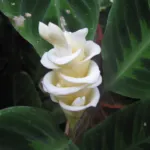 Goeppertia warscewiczii care guideGoeppertia warscewiczii
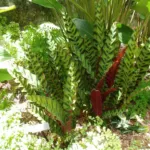 Rattlesnake-plant (Goeppertia insignis) care guideGoeppertia insignis
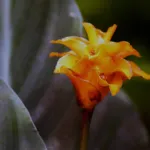 Eternal Flame (Goeppertia crocata) care guideGoeppertia crocata
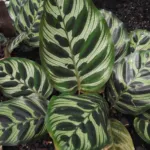 Peacock plant or cathedral windows (Goeppertia makoyana) care guideGoeppertia makoyana
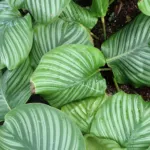 Goeppertia orbifolia care guideGoeppertia orbifolia
 Due to its fuzzy (Goeppertia rufibarba) care guideGoeppertia rufibarba