
 Source:
 Eternal Flame (Goeppertia crocata) short overview
Eternal Flame (Goeppertia crocata) is a tropical perennial from the wet forests of eastern Brazil, grown in the United States mainly as a warm, humid houseplant. Its glossy green leaves have darker maroon-purple undersides, while upright flower stalks carry long-lasting yellow-orange bracts that resemble small flames. Provide bright filtered light, evenly moist but well-drained soil, steady warmth, and protection from cold drafts for the best foliage and flowering.
Taxonomic classification
Eternal Flame (Goeppertia crocata) care guide
Light and placement
Provide bright filtered light or gentle partial shade. An east-facing window is often suitable; near a south- or west-facing window, use a sheer curtain or place the plant several feet back. Too much direct sun can bleach, scorch, or curl leaves, while too little light produces weak growth and may reduce flowering.
Watering and humidity
Water when the surface just begins to dry, soaking the mix thoroughly and allowing excess water to drain. Keep the root zone evenly moist but never saturated. Check more often during active summer growth and less often in dim winter conditions. Use room-temperature low-mineral water when possible, and do not let the pot stand in water.
Soil and growing medium
Use a loose, moisture-retentive but well-drained indoor mix based on peat or coco coir with fine bark and perlite. A mildly acidic to neutral reaction is suitable. Avoid dense, waterlogged soil, which restricts oxygen around the roots and increases the risk of rot. If tap water leaves mineral deposits, occasional flushing with rainwater, filtered water, or distilled water can reduce buildup.
Feeding
Feed during active spring and summer growth with a balanced liquid houseplant fertilizer diluted to about half the label strength every 3–4 weeks. Water first if the mix is dry to reduce root stress. Reduce or stop feeding in dim winter conditions or after repotting until new growth resumes; excess fertilizer can cause brown margins and salt buildup.
Growth and habit
This evergreen perennial forms a dense clump of upright leaf stalks from a short underground rhizome. New leaves emerge rolled and gradually expand. Consistent warmth, humidity, and even moisture support steady growth; stress commonly appears as curling, crisp margins, stalled leaves, or loss of older foliage.
Planting and repotting
In the United States, grow outdoors only in frost-free locations or seasonally in containers. Plant or pot during warm weather, setting the crown at the same depth as before. Allow roughly 12–18 inches of space for air circulation and mature spread. Acclimate gradually when moving between indoor and outdoor light levels.
Repot in spring or early summer when roots fill the container or growth slows from crowded roots. Move up only one pot size and keep the crown at its original depth. Use a container with drainage holes and water thoroughly after repotting, then maintain stable warmth and humidity while the plant re-establishes.
Propagation and pruning
Propagation
Division is the standard practical method. Separate a mature clump during repotting, ensuring each division has healthy roots and several growing points. Pot divisions in a warm, airy, moisture-retentive mix and keep them evenly moist while they recover. Seed propagation is uncommon in ordinary houseplant culture.
Pruning
Remove yellow, damaged, or fully spent leaves at the base with clean scissors. Cut spent flower stalks close to the soil once the bracts decline. Avoid shearing healthy foliage, since the plant regenerates from its clump rather than from woody stems.
Overwintering
Bring containers indoors before temperatures approach 60°F, and certainly before frost. Keep the plant in bright filtered light away from drafts, radiators, and cold windows. Water slightly less often in winter but do not allow the mix to become bone dry; maintain humidity around the plant without creating stagnant air.
Uses
Primarily used as an ornamental indoor foliage and flowering plant, especially in containers, warm conservatories, terrariums, and humidity-controlled displays. It is not documented here as an edible or medicinal plant, and no culinary or therapeutic use should be assumed.
Appearance
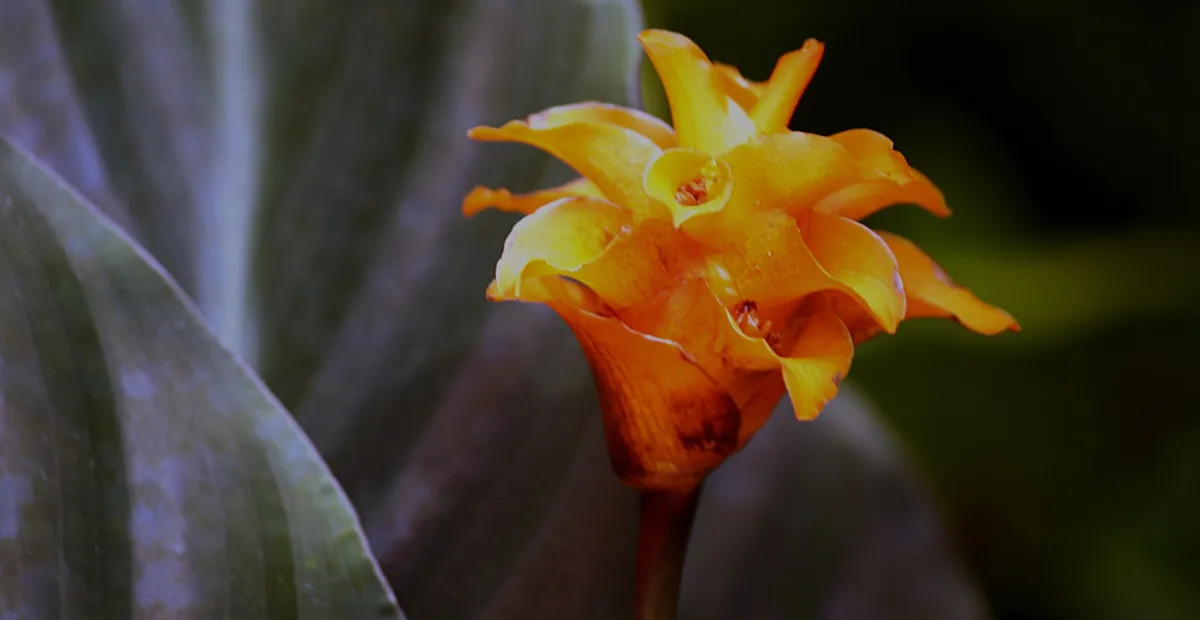
Leaves are simple, elliptic, glossy, dark green, slightly ridged, and edged with gentle waves. Their reddish-purple to maroon undersides become visible as leaves move. Upright flowering stalks extend above the foliage and carry vivid saffron-yellow to orange bracts, creating the plant’s flame-like appearance.
Flowering
The showy structures are upright inflorescences with yellow to orange bracts enclosing small tubular true flowers. They rise above the foliage and may remain decorative for several weeks to about three months under favorable conditions. In the United States, flowering is commonly reported in spring and summer; indoor plants may flower outside that period when warmth, light, and nutrition are consistent.
Pollination and visitors
No dependable exact-species record was located for a principal animal pollinator or visitor group. The tubular flowers are structurally compatible with insect visitation, but a specific pollinator should not be assigned without stronger documentation.
Goeppertia crocata photos
Click any photo for a larger view. Source, author and license are shown separately.
Diseases and pests
Diseases
Root rot is the main concern when soil stays saturated or drainage is poor. Brown leaf margins can also follow mineral accumulation or chronic moisture stress. Use a porous mix, empty drainage saucers, improve air movement, and remove badly affected roots during repotting. Avoid wetting foliage repeatedly in cool, stagnant conditions, where leaf-spot problems can spread.
Pests
Spider mites and mealybugs are the most commonly reported pests. Inspect leaf undersides, petioles, and crowded centers regularly. Isolate infested plants, wipe or rinse foliage, and use insecticidal soap or horticultural oil according to the label, repeating as needed. Improve humidity and reduce plant stress, but avoid leaving foliage constantly wet.
Related diseases and pests
Only Plant Doctor profiles whose host data indicate this plant may be affected are shown here.
 Environmental stressPoor drainage stress (waterlogging)
 DiseaseEuropean brown rotMonilinia fructigena
 DiseaseBrown Rot of Stone FruitMonilinia fructicola
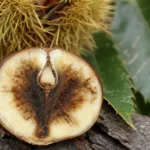 DiseaseChestnut brown rotGnomoniopsis smithogilvyi
 DiseaseAlternaria leaf spot and fruit rotAlternaria alternata
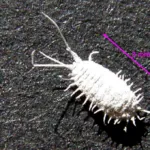 PestObscure mealybugPseudococcus viburni
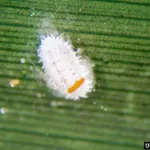 PestCitrus mealybugPlanococcus citri
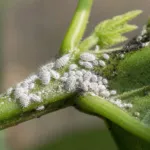 PestCotton mealybugPhenacoccus solenopsis Tinsley
Toxicity and pollen
Reliable exact-species toxicity data are limited. Goeppertia and commonly sold Calathea relatives are generally treated in horticultural references as non-poisonous ornamental plants, but absence of documented toxicity is not proof of complete safety. Keep plant material away from children and pets, and seek professional advice if ingestion causes symptoms.
- Pollination / pollen
- Pollen is contained in insect-associated flowers; airborne release significance is not established
This is an insect-pollinated flowering plant, but published exact-species information about airborne pollen levels and allergy significance is sparse. The conspicuous bracts are not themselves airborne pollen sources. People with serious pollen sensitivity should avoid assuming zero risk and can limit exposure during handling or flowering.
Native habitat
Kew records the species as native to Bahia and Espírito Santo in Brazil, where it occurs in wet tropical environments. Its natural setting is warm, humid, and shaded or filtered by surrounding vegetation, explaining its preference for moisture-retentive soil, stable temperatures, and protection from intense direct sun.
Interesting fact
The species is accepted by Kew under Goeppertia crocata, although it is still widely sold under the former name Calathea crocata. Its orange-yellow bracts, rather than the small true flowers alone, create the flame-like display behind the common name Eternal Flame. The leaves show nyctinastic movement, folding upward at night and opening again in daylight.
Frequently asked questions (FAQ)
The most relevant questions about this plant, with short and direct answers.
🌱Quick care
How do you care for an Eternal Flame plant, Goeppertia crocata?⌄
Give Goeppertia crocata bright filtered light, evenly moist well-drained soil, warmth, and moderate to high humidity. Protect it from direct hot sun, cold drafts, and waterlogged soil.
Is Goeppertia crocata a Calathea?⌄
Goeppertia crocata is the accepted botanical name formerly associated with Calathea crocata. Many U.S. plant labels and care guides still use the older Calathea name.
Is Eternal Flame a good houseplant?⌄
Yes, Eternal Flame is a striking indoor plant if you can provide consistent moisture, bright indirect light, warmth, and humidity. It is more demanding than many low-maintenance houseplants.
🌤️Environment and placement
How much light does an Eternal Flame plant need?⌄
Goeppertia crocata grows best in bright filtered or indirect light and can tolerate partial shade. Avoid strong direct afternoon sun, which may scorch or fade the leaves.
Can Goeppertia crocata grow in low light?⌄
It can survive in lower light, but growth and flowering may decline. Move it closer to a bright east- or north-facing window, or diffuse stronger light with a sheer curtain.
What temperature is best for an Eternal Flame plant?⌄
Keep Goeppertia crocata warm, ideally around 65–80°F, and protect it from sudden temperature changes. Avoid cold windows, heating vents, air-conditioning drafts, and temperatures near frost.
How much humidity does Goeppertia crocata need?⌄
It prefers moderate to high humidity, with about 60% humidity being helpful for attractive foliage. A humidifier is generally more effective than occasional misting, especially during dry U.S. winters.
Can I grow Eternal Flame outdoors?⌄
Eternal Flame can grow outdoors year-round only in warm, frost-free areas roughly corresponding to USDA Zones 10–11. In cooler parts of the United States, grow it in a container and bring it indoors before cold weather.
💧Care and problems
How often should I water an Eternal Flame plant?⌄
Water when the surface of the mix begins to dry, keeping the root zone evenly moist but never soggy. Water thoroughly until excess drains from the pot, then empty the saucer.
What type of water is best for Goeppertia crocata?⌄
Filtered, distilled, or rainwater is often best because Goeppertia crocata can react poorly to minerals and fluoride in some tap water. If using tap water, letting it sit does not reliably remove fluoride.
Why are my Eternal Flame plant leaves turning brown?⌄
Brown leaf tips or edges commonly result from dry air, inconsistent watering, mineral buildup, or fluoride-sensitive foliage. Improve humidity, keep moisture more consistent, and consider switching to filtered or distilled water.
Why are the leaves on my Goeppertia crocata curling?⌄
Leaf curling usually indicates moisture stress, low humidity, cold exposure, or excessive direct light. Check the root-zone moisture, raise humidity, and move the plant away from drafts and harsh sun.
Why is my Eternal Flame plant drooping?⌄
Drooping may be caused by dry soil, root damage from overwatering, cold temperatures, or transplant stress. Check the soil and roots before watering again, because adding water to waterlogged soil can worsen the problem.
Why does my Goeppertia crocata have yellow leaves?⌄
Yellow leaves often indicate overwatering, poor drainage, aging foliage, or stress from unsuitable light or temperature. Let excess water drain freely and inspect the roots if several leaves yellow at once.
What pests attack Eternal Flame plants?⌄
Spider mites and mealybugs are the main pests to watch for on Goeppertia crocata. Inspect leaf undersides and leaf joints regularly, isolate affected plants, and treat promptly with a suitable houseplant pest control method.
Should I mist my Eternal Flame plant?⌄
Misting may provide only brief humidity and is not a dependable substitute for a humidifier. Good airflow is important because persistently wet foliage can encourage leaf disease.
Should I fertilize Goeppertia crocata?⌄
Feed during active spring and summer growth with a balanced houseplant fertilizer diluted to half strength. Avoid heavy fertilization when the plant is dormant, stressed, or growing in dry soil.
🪴Planting and repotting
What soil is best for an Eternal Flame plant?⌄
Use a moisture-retentive but well-drained loam-based or peat- or coir-based potting mix. The mix should hold some moisture while allowing air to reach the roots and excess water to escape.
Does Goeppertia crocata need a drainage hole?⌄
Yes, plant it in a container with drainage holes. A decorative cachepot can be used, but standing water should be poured out after watering.
When should I repot an Eternal Flame plant?⌄
Repot when roots crowd the container, water runs through unusually quickly, or the mix has broken down. Spring or early summer is usually the least stressful time, and the new pot should be only slightly larger.
Can I grow Goeppertia crocata in a terrarium?⌄
Yes, a terrarium or covered display can help maintain the warmth and humidity this plant prefers. Provide filtered light and ventilation so the mix and foliage do not remain excessively wet.
✂️Propagation and pruning
How do you propagate an Eternal Flame plant?⌄
The most reliable method is division during repotting. Separate naturally formed clumps while keeping healthy roots and several leaves with each division, then keep the new plants warm and humid while they establish.
Can you propagate Goeppertia crocata from leaf cuttings?⌄
No, a leaf cutting alone generally cannot produce a new Goeppertia crocata plant. Division is the practical home-propagation method because new growth develops from the plant’s rhizomatous clumps.
Can Eternal Flame plants be grown from seed?⌄
Seed propagation is possible in principle but is uncommon and unreliable for home growers. Division is much more practical, while commercial production commonly uses specialized propagation methods.
Should I cut off dead Eternal Flame flowers?⌄
Yes, remove spent flower stalks at their base with clean scissors. This improves the plant’s appearance and redirects energy toward foliage and new growth.
⚠️Toxicity and safety
Is Goeppertia crocata toxic to cats and dogs?⌄
The exact-species toxicity status of Goeppertia crocata is not firmly established in the provided evidence, so do not assume it is completely safe. Keep pets from chewing it and contact a veterinarian or pet poison service if ingestion causes concern.
Is Eternal Flame plant safe for children?⌄
A definitive human-toxicity profile for Goeppertia crocata is not firmly established. Keep the plant out of reach of young children, and seek medical advice if plant material is swallowed or causes irritation.
🌸Flowering and special interest
How often does Goeppertia crocata flower?⌄
Goeppertia crocata can flower indoors, usually during spring and summer when light, warmth, moisture, and humidity are suitable. Flowering may be reduced after purchase or when growing conditions change.
Why is my Eternal Flame plant not blooming?⌄
Insufficient light is a common reason for poor flowering, although low humidity, temperature stress, immaturity, and inconsistent care can also contribute. Provide bright filtered light and stable warm, moist conditions without overwatering.
Are the orange parts of an Eternal Flame flower actually petals?⌄
The vivid orange structures are mainly bracts, or modified leaves, that surround the small true flowers. Their upright, flame-like appearance gives Goeppertia crocata its common name.
How long do Eternal Flame flowers last?⌄
The showy flower structures can remain attractive for weeks and, under favorable conditions, may last for several months. Individual blooms and bracts naturally fade at different rates.
Similar plants
 Due to its fuzzy (Goeppertia rufibarba) care guideGoeppertia rufibarba
 Goeppertia warscewiczii care guideGoeppertia warscewiczii
 Goeppertia orbifolia care guideGoeppertia orbifolia
 Rattlesnake-plant (Goeppertia insignis) care guideGoeppertia insignis
 Goeppertia veitchiana care guideGoeppertia veitchiana
 Peacock plant or cathedral windows (Goeppertia makoyana) care guideGoeppertia makoyana