
 Source:
 Goeppertia warscewiczii short overview
Goeppertia warscewiczii is a tropical, rhizomatous perennial grown in the United States as a foliage-focused houseplant. Its large, soft leaves combine deep green surfaces with pale feather-like markings and striking purplish undersides. With steady warmth, filtered light, evenly moist but airy soil, and high humidity, it can form a lush clump and may produce cream-colored tubular flowers indoors—an uncommon reward among cultivated Goeppertia.
Taxonomic classification
Goeppertia warscewiczii care guide
Light and placement
Provide bright filtered light or gentle partial shade. An east- or north-facing window is suitable; use a sheer curtain at brighter south or west exposures. Too much direct sun bleaches or scorches the leaves, while insufficient light produces slower growth, smaller leaves, and reduced flowering. Rotate the pot periodically for even growth.
Watering and humidity
Water when the surface begins to dry but before the root ball becomes dry, thoroughly moistening the mix and allowing excess water to drain. Use room-temperature distilled, rain, or filtered water when possible because fluoride and salts in some tap water can brown the margins. Water somewhat less during cool, low-light winter conditions without allowing prolonged dryness.
Soil and growing medium
Use a loose, organic, peat- or coco-based mix amended with perlite or fine bark. The substrate should retain consistent moisture while draining freely; compacted or saturated soil encourages root decline. A slightly acidic to neutral reaction is suitable, approximately pH 5.5–7.0.
Feeding
Feed during spring and summer with a balanced liquid houseplant fertilizer diluted to half strength about monthly. Apply only to already-moist soil, and reduce or stop feeding during slow winter growth. Flush the pot occasionally to limit salt buildup, particularly when leaf tips brown.
Growth and habit
This evergreen perennial develops a rhizomatous clump and upright leafy stems. Growth is fastest with warmth, steady moisture, filtered light, and high humidity. Consistent conditions help preserve full leaves; sudden dryness, cold, or salt accumulation commonly results in curling and brown margins.
Planting and repotting
In the United States, grow this tropical perennial outdoors only in frost-free conditions, generally USDA Zones 11–12. Plant or set outdoors after nights remain reliably above 60°F. Keep it sheltered from direct midday sun, wind, and drying exposures.
Repot in spring or early summer when roots have filled the container or the mix has broken down. Move up only one pot size, keep the rhizome at its previous depth, and water thoroughly after repotting. Avoid unnecessary root disturbance.
Propagation and pruning
Propagation
Divide established rhizomatous clumps in spring or early summer, ensuring each section has healthy roots and several growth points. Pot divisions into a porous moist mix and keep them warm, shaded, and humid until new growth resumes. Seed propagation is uncommon in routine houseplant culture.
Pruning
Remove yellow, damaged, or fully brown leaves at the base with clean scissors. Do not routinely cut healthy foliage; trimming damaged tissue improves appearance but cannot restore a browned leaf.
Overwintering
Keep indoors year-round in most of the United States. Maintain temperatures around 65–75°F, protect from cold drafts and windows that become chilly at night, and keep humidity stable. Reduce fertilizer in winter, but continue watering whenever the upper mix begins to dry.
Uses
Primarily used as an ornamental indoor foliage plant, conservatory specimen, or shaded tropical container plant. Its patterned leaves provide visual interest even when it is not flowering. It has no well-supported culinary or medicinal use for household gardening.
Appearance
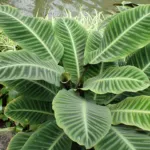
The plant forms an upright clump of large, soft, velvety leaves carried on long purplish-green stems. Pale green markings radiate from the midrib in a feather-like pattern, while the lower leaf surfaces are distinctly purple and woolly. These contrasting textures and colors are key identification features.
Flowering
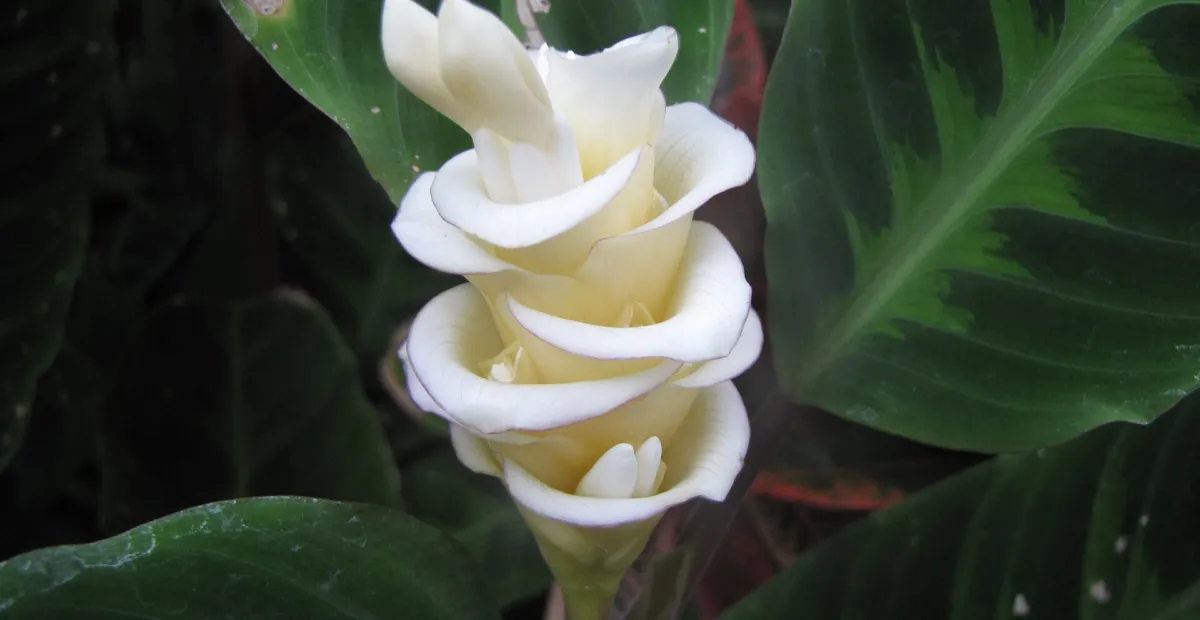
The terminal inflorescence is composed of spirally arranged bracts with small tubular flowers. Flowers emerge creamy white and may mature through yellowish to pinkish tones. Flowering is possible indoors but is not reliably seasonal under household conditions.
Pollination and visitors
No reliable species-specific pollinator record was located for routine horticultural use. The small tubular flowers may be visited by insects in suitable tropical conditions, but attraction strength and visitor identity remain uncertain.
Diseases and pests
Diseases
Prevent disease by avoiding waterlogged soil, wetting the foliage late in the day, and maintaining gentle air movement. Root and rhizome rot is the main concern when moisture remains stagnant. Remove collapsed tissue, correct drainage, and isolate affected plants.
Pests
Watch for spider mites, mealybugs, thrips, and scale, especially in dry indoor air. Inspect leaf undersides and new growth regularly. Improve humidity and plant vigor first; remove pests with water, a damp cloth, insecticidal soap, or horticultural oil used according to the label.
Related diseases and pests
Only Plant Doctor profiles whose host data indicate this plant may be affected are shown here.
 DiseaseRhizopus soft rotRhizopus stolonifer
 DiseaseRhizoctonia DiseasesRhizoctonia solani Kühn
 Environmental stressWaterlogging
 PestOnion thripsThrips tabaci Lindeman
 PestMelon thripsThrips palmi Karny
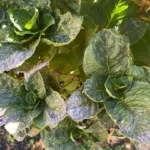 PestChilli thripsScirtothrips dorsalis Hood
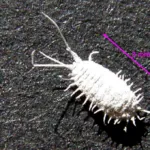 PestObscure mealybugPseudococcus viburni
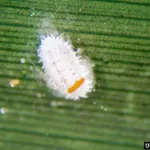 PestCitrus mealybugPlanococcus citri
Toxicity and pollen
ASPCA lists Calathea species as non-toxic to dogs and cats. Species-specific human toxicity evidence is limited, but ordinary contact is not considered a poisoning hazard. Prevent chewing of any plant material because ingestion can still cause transient stomach upset in some individuals.
- Pollination / pollen
- Limited airborne release expected from insect-pollinated flowers
This is an insect-pollinated flowering plant, but no evidence indicates a significant airborne pollen burden from normal indoor cultivation. Flowering is uncommon indoors, so allergy exposure is expected to be low rather than absent.
Native habitat
Native to wet tropical Central America, including Costa Rica, El Salvador, Honduras, Nicaragua, and Panama. It is associated with humid forest environments where moisture is dependable, light is filtered by vegetation, and soils are organic yet free draining.
Interesting fact
The species can flower indoors, which is unusual among cultivated Goeppertia.
Its leaves have a soft velvety texture and purple, hairy undersides.
The plant was formerly widely grown under the genus name Calathea.
Its native range lies in humid tropical Central America.
Frequently asked questions (FAQ)
The most relevant questions about this plant, with short and direct answers.
🌱Quick care
How do you care for Goeppertia warscewiczii indoors?⌄
Give Goeppertia warscewiczii bright filtered light, evenly moist soil, warm stable temperatures, and humidity above 60 percent. Protect it from direct sun, cold drafts, and completely dry soil.
Is Goeppertia warscewiczii a good beginner houseplant?⌄
Goeppertia warscewiczii is better suited to an attentive beginner than to someone seeking a drought-tolerant plant. Consistent moisture, humidity, and water quality are the main challenges.
Is Goeppertia warscewiczii the same plant as Calathea warscewiczii?⌄
Goeppertia warscewiczii is the accepted name used here, while Calathea warscewiczii is a widely encountered former name or synonym. Plant retailers and care searches may use either name for the same plant.
🌤️Environment and placement
How much light does Goeppertia warscewiczii need?⌄
Place Goeppertia warscewiczii in bright, filtered or indirect light, or partial shade. Too much direct sun can scorch the velvety leaves, while very low light may fade the leaf pattern.
Can Goeppertia warscewiczii tolerate low light?⌄
Goeppertia warscewiczii can tolerate moderate shade, but it grows more slowly and may lose some foliage color. Move it closer to a bright window if growth becomes weak or the pattern fades.
What temperature is best for Goeppertia warscewiczii?⌄
Keep Goeppertia warscewiczii in a warm, stable room, ideally around 65–75°F. Protect it from temperatures below 60°F, cold windows, drafts, and direct blasts from air conditioners.
How much humidity does Goeppertia warscewiczii need?⌄
Aim for at least 60 percent humidity, with higher levels often producing better foliage. A humidifier, plant grouping, or a suitable pebble tray can help in dry U.S. homes.
Can Goeppertia warscewiczii grow outdoors in the United States?⌄
Goeppertia warscewiczii can grow outdoors year-round only in warm, frost-free locations with shade and high humidity. In most of the United States, grow it in a container and bring it indoors before temperatures fall below 60°F.
💧Care and problems
How often should you water Goeppertia warscewiczii?⌄
Water Goeppertia warscewiczii whenever the upper layer of mix begins to dry, then water thoroughly until excess drains from the pot. Do not follow a rigid calendar because indoor light, temperature, and humidity change watering needs.
What type of water is best for Goeppertia warscewiczii?⌄
Distilled, rain, or filtered water is generally safest for Goeppertia warscewiczii because fluoride and mineral buildup in some tap water can brown the leaf tips. Room-temperature water helps avoid temperature shock.
Why are the leaves of my Goeppertia warscewiczii turning brown?⌄
Brown edges or tips usually result from dry air, inconsistent watering, direct sun, or sensitivity to minerals and fluoride in tap water. Check humidity and soil moisture first, then consider switching to distilled or rainwater.
Why are Goeppertia warscewiczii leaves curling?⌄
Curling leaves commonly indicate underwatering, low humidity, or cold stress. Check the root-zone moisture and room conditions, but also inspect for pests if curling continues after care is corrected.
Why is my Goeppertia warscewiczii drooping?⌄
Drooping can follow dry soil, low humidity, cold exposure, or root problems caused by waterlogged soil. Feel the mix before watering and check that the pot drains freely.
Why are Goeppertia warscewiczii leaves turning yellow?⌄
Yellow leaves are often associated with overwatering, poor drainage, or aging foliage. Allow excess water to drain, check the roots for rot, and avoid keeping the mix continuously saturated.
Why are the leaves of Goeppertia warscewiczii losing their pattern?⌄
Fading or dull leaf patterns usually indicate insufficient light, although aging leaves may also lose color naturally. Provide brighter filtered light without exposing the plant to harsh direct sun.
What pests attack Goeppertia warscewiczii?⌄
Spider mites, mealybugs, aphids, and scale can affect Goeppertia warscewiczii, especially when indoor air is dry. Inspect leaf undersides and stems regularly, isolate affected plants, and treat promptly with an appropriate houseplant pest control method.
How should you fertilize Goeppertia warscewiczii?⌄
Feed Goeppertia warscewiczii lightly with a balanced liquid fertilizer during active spring and summer growth. Avoid heavy applications because concentrated fertilizer can damage sensitive roots and leaf margins.
Should you mist Goeppertia warscewiczii?⌄
Misting may provide only brief humidity and is not a dependable substitute for a humidifier or naturally humid room. Avoid leaving the velvety leaves wet for long periods, since poor air circulation can encourage leaf spots.
🪴Planting and repotting
What soil is best for Goeppertia warscewiczii?⌄
Use a loose, organic, moisture-retentive but well-drained mix with components such as peat or coco coir, fine bark, and perlite. The mix should hold even moisture without becoming dense or waterlogged.
Does Goeppertia warscewiczii need a pot with drainage holes?⌄
Yes, Goeppertia warscewiczii should be planted in a container with drainage holes. Without reliable drainage, its consistently moist soil can become saturated and increase the risk of root rot.
When should you repot Goeppertia warscewiczii?⌄
Repot Goeppertia warscewiczii when roots crowd the container, water runs through unusually quickly, or the potting mix has broken down. Move it into a slightly larger pot during active growth rather than making a large jump in container size.
✂️Propagation and pruning
How do you propagate Goeppertia warscewiczii?⌄
The most reliable method is division of a mature clump during repotting. Separate sections that have their own roots and shoots, then pot them in an airy, evenly moist mix.
Can you propagate Goeppertia warscewiczii from a leaf cutting?⌄
A leaf cutting alone cannot reliably produce a new Goeppertia warscewiczii plant because new growth develops from rhizomes or divisions with growing points. Propagate by dividing a rooted clump instead.
Should you prune Goeppertia warscewiczii?⌄
Prune only damaged, completely brown, or declining leaves by cutting them at the base with clean scissors. Routine shaping is usually unnecessary because the plant naturally forms an upright clump.
⚠️Toxicity and safety
Is Goeppertia warscewiczii toxic to cats and dogs?⌄
Goeppertia warscewiczii is considered non-toxic to cats and dogs. Eating plant material can still cause stomach upset, so prevent pets from chewing it and contact a veterinarian if symptoms are concerning.
Is Goeppertia warscewiczii safe for children?⌄
Goeppertia warscewiczii is generally regarded as non-poisonous, but children should not eat houseplants. Even non-toxic foliage can cause choking or mild stomach irritation when chewed.
🌸Flowering and special interest
Does Goeppertia warscewiczii flower indoors?⌄
Yes, mature Goeppertia warscewiczii can produce upright, cone-like flowers indoors, although flowering is not guaranteed. Stable warmth, adequate filtered light, consistent moisture, and high humidity improve the likelihood.
What do Goeppertia warscewiczii flowers look like?⌄
The flowers emerge in upright tubular or cone-like clusters and may progress from creamy white to yellowish and pinkish tones as they age. The plant is grown mainly for its patterned, velvety foliage.
Why is my Goeppertia warscewiczii not flowering?⌄
Indoor plants may fail to flower because they are young, receive insufficient light, or experience irregular moisture, low humidity, or temperature stress. Lack of flowers is normal and does not necessarily indicate a care problem.
Similar plants
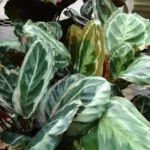 Goeppertia veitchiana care guideGoeppertia veitchiana
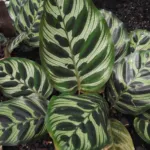 Peacock plant or cathedral windows (Goeppertia makoyana) care guideGoeppertia makoyana
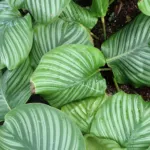 Goeppertia orbifolia care guideGoeppertia orbifolia
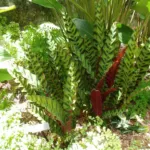 Rattlesnake-plant (Goeppertia insignis) care guideGoeppertia insignis
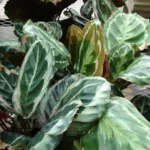 Goeppertia roseopicta care guideGoeppertia roseopicta
 Zebra-plant (Goeppertia zebrina) care guideGoeppertia zebrina