
 Source:
 Goeppertia veitchiana short overview
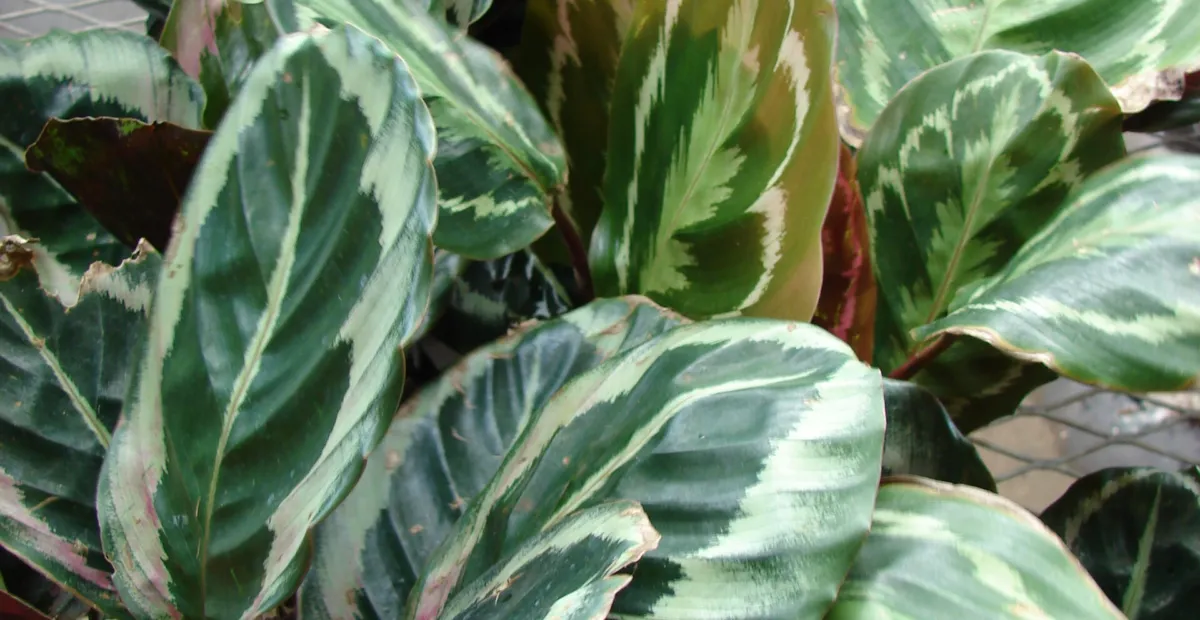
Goeppertia veitchiana is a tropical, rhizomatous perennial from Ecuador grown indoors for its large, rounded, boldly patterned leaves. It prefers bright filtered light, evenly moist well-drained soil, warm temperatures and high humidity. Flowers are rarely produced in cultivation, while burgundy leaf undersides and brushstroke-like lime and cream markings provide its main ornamental appeal. A slow-growing tropical foliage perennial with rounded, medallion-like leaves marked in deep green, lime and creamy white, with burgundy undersides.
Taxonomic classification
Goeppertia veitchiana care guide
Light and placement
Provide bright filtered light or partial shade. An east- or north-facing window is usually suitable; use a sheer curtain or distance from strong south- or west-facing sun. Too much direct light can scorch or fade leaves, while too little light may produce slower growth and less pronounced patterning. Avoid sharp changes in exposure.
Watering and humidity
Keep the mix evenly moist but never saturated. Water thoroughly when the surface just begins to dry, then empty excess water from the saucer. Use room-temperature rainwater, distilled water or low-mineral water when possible because fluoride and salts in some tap water can brown leaf edges. Reduce frequency slightly in winter while maintaining humidity.
Soil and growing medium
Use a loose, moisture-retentive but well-drained potting mix. A quality houseplant medium amended with fine bark, coco coir or another aerating component helps prevent compaction while retaining moisture. Slightly acidic to neutral conditions are suitable. Avoid both waterlogged soil and rapidly drying, coarse mixes.
Feeding
Feed monthly in spring and summer with a balanced liquid houseplant fertilizer diluted to half strength, applied to already moist soil. Reduce or stop feeding during slow winter growth and after repotting until roots recover. Flush the container occasionally to limit salt buildup, especially when using fertilizer regularly.
Growth and habit
This is a slow-growing, upright, clump-forming rhizomatous perennial. New leaves arise from the base, so the plant gradually becomes fuller rather than forming a woody stem. Consistent warmth, moisture and humidity support better leaf expansion; stress commonly shows first as curling, crisp margins or stalled new growth.
Planting and repotting
In the United States, grow this tropical perennial as a houseplant or seasonal container specimen rather than as a frost-tolerant outdoor plant. Set it at the same depth as before, keep the rhizome covered but not buried deeply, and allow several weeks of even moisture while it establishes.
Repot in spring when roots have filled the container or the mix has broken down. Move up only one pot size, preserve the rootball where possible, and use a drainage hole. Re-establish gradually with consistent moisture and protection from direct sun.
Propagation and pruning
Propagation
Division is the most practical method. Separate a healthy established clump during repotting, ensuring each division has viable roots and at least one growing point. Pot divisions into lightly moist mix and keep them warm, humid and shaded until new growth confirms establishment.
Pruning
Remove yellow, badly damaged or fully declining leaves at the base with clean scissors. Routine shaping is unnecessary. Trim only damaged tissue rather than cutting healthy leaves, since each leaf contributes substantially to the plant’s ornamental value.
Overwintering
Keep indoors year-round outside frost-free tropical climates. Maintain temperatures around 65–85°F, protect from drafts and cold windows, and keep foliage away from heat vents. Winter growth may slow, so reduce fertilizer and water only as needed to keep the mix from becoming dry.
Uses
Used primarily as an indoor foliage accent in homes, offices, conservatories and warm shaded containers. Its patterned leaves suit bathrooms, kitchens and other humid rooms with adequate filtered light. It is not documented here as an edible, medicinal or outdoor landscape plant for most of the United States.
Appearance
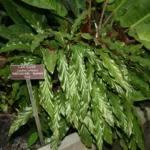
The plant forms an upright clump of broad, rounded to oval leaves. Upper surfaces are deep green with feathered brushstroke markings in lime green and creamy white; undersides are deep burgundy. Margins are gently wavy. The rhizomatous base produces leaves directly from the clump, and the species is distinctive for retaining its leaves rather than folding them at night.
Flowering
Small tubular flowers may appear on short inflorescences, but flowering is rarely seen in cultivation. This species is primarily valued for its foliage rather than for a predictable bloom display. No dependable flowering calendar is established for indoor culture in the United States.
Pollination and visitors
Species-specific visitor records were not located in the reviewed authoritative sources. The flowers are rarely produced in cultivation, so a reliable pollinator or visitor profile cannot be assigned.
Goeppertia veitchiana photos
Click any photo for a larger view. Source, author and license are shown separately.
Diseases and pests
Diseases
Root rot is the main disease risk when soil remains saturated. Leaf spots are more likely when foliage stays wet or air circulation is poor. Improve drainage, water the mix rather than repeatedly wetting leaves, remove badly affected tissue with clean tools, and isolate plants showing spreading symptoms.
Pests
Watch for spider mites, thrips, aphids, mealybugs and scale. Inspect leaf undersides and new growth regularly, especially in dry indoor air. Improve humidity and plant vigor first; remove small infestations manually or use an appropriately labeled insecticidal soap, following the product directions.
Related diseases and pests
Only Plant Doctor profiles whose host data indicate this plant may be affected are shown here.
 PestMealy Plum AphidHyalopterus pruni (Geoffroy, 1762)
 DiseaseAlternaria leaf spot and fruit rotAlternaria alternata
 PestOnion thripsThrips tabaci Lindeman
 PestMelon thripsThrips palmi Karny
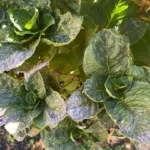 PestChilli thripsScirtothrips dorsalis Hood
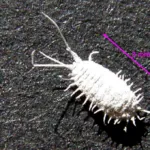 PestObscure mealybugPseudococcus viburni
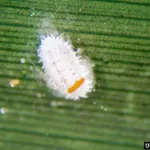 PestCitrus mealybugPlanococcus citri
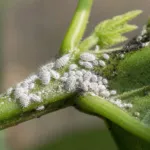 PestCotton mealybugPhenacoccus solenopsis Tinsley
Toxicity and pollen
No authoritative species-specific toxicity assessment was located for Goeppertia veitchiana in the reviewed sources. Do not treat the absence of a listing as proof of safety. Keep plant material away from children and pets, and contact a medical professional or veterinarian after ingestion or if symptoms occur.
- Pollination / pollen
- Not sufficiently documented
This species is a flowering angiosperm, but reliable species-specific information about airborne pollen release and allergy importance was not found. Because flowering is uncommon indoors and pollen exposure is not well characterized, the allergy classification is left uncertain rather than presented as zero risk.
Native habitat
Kew records the species as native to Ecuador and associated with wet tropical vegetation; Singapore’s National Parks Board also records Peru in its native distribution. Its cultural requirements reflect humid, warm rainforest conditions with filtered light, organic soil and dependable moisture.
Interesting fact
The accepted name was published in 2012 after the species was transferred from Calathea.
The specific epithet veitchiana honors horticulturist Sir Harry Veitch.
Its rounded leaves resemble medallions and have burgundy undersides.
Unlike many prayer plants, it is reported not to fold its leaves at night.
Frequently asked questions (FAQ)
The most relevant questions about this plant, with short and direct answers.
🌱Quick care
What is Goeppertia veitchiana?⌄
Goeppertia veitchiana is a tropical, rhizomatous houseplant in the Marantaceae family, commonly sold under the older name Calathea veitchiana or Calathea Medallion. It is grown mainly for its large, patterned leaves and burgundy undersides.
Is Goeppertia veitchiana easy to grow indoors?⌄
Goeppertia veitchiana is moderately demanding indoors because it needs steady moisture, warm temperatures, and relatively high humidity. It usually performs well when protected from direct sun, drafts, and dry air.
How much light does Goeppertia veitchiana need?⌄
Give Goeppertia veitchiana bright filtered light to partial shade. Avoid strong direct afternoon sun, which can scorch or fade the leaves, while very dim light may slow growth.
How often should I water Goeppertia veitchiana?⌄
Water Goeppertia veitchiana when the upper inch or two of potting mix feels slightly dry, then let excess water drain completely. Keep the mix evenly moist but never constantly soggy.
What water is best for Goeppertia veitchiana?⌄
Rainwater, distilled water, or filtered water is generally the safest choice for Goeppertia veitchiana. Sensitive plants may develop brown tips or margins when exposed repeatedly to mineral-rich, fluoridated, or softened tap water.
🌤️Environment and placement
What humidity does Goeppertia veitchiana need?⌄
Goeppertia veitchiana prefers humidity above about 50 percent, with higher humidity often producing better leaf quality. A humidifier is more reliable than misting for keeping indoor air consistently humid.
What temperature is best for Goeppertia veitchiana?⌄
Keep Goeppertia veitchiana warm, ideally around 65–85°F. Protect it from temperatures below about 55°F, cold drafts, sudden temperature changes, and direct airflow from heating or cooling vents.
Can Goeppertia veitchiana grow in low light?⌄
Goeppertia veitchiana tolerates lower indoor light but grows best in bright, indirect or filtered light. In very low light, growth may become slow and the foliage may lose some of its strong patterning.
Can Goeppertia veitchiana grow outdoors in the United States?⌄
Goeppertia veitchiana can grow outdoors year-round only in warm, frost-free areas roughly corresponding to USDA Zones 10–11. In colder regions, grow it in a container and bring it indoors before temperatures fall.
💧Care and problems
Why are the leaves of my Goeppertia veitchiana turning brown?⌄
Brown leaf tips or edges usually result from dry air, inconsistent watering, mineral-heavy water, or excess fertilizer. Correct the underlying condition, but do not expect damaged tissue to turn green again.
Why are Goeppertia veitchiana leaves curling?⌄
Curling leaves commonly indicate dry potting mix, low humidity, cold stress, or excessive light. Check the soil and room conditions first, because persistent curling is usually an environmental response rather than a normal feature.
Why are the leaves of my Goeppertia veitchiana turning yellow?⌄
Yellow leaves often indicate overly wet soil or declining roots, although an occasional older leaf may yellow naturally. Check drainage, allow the surface to dry slightly between waterings, and inspect the roots if the problem continues.
Why is my Goeppertia veitchiana drooping?⌄
Drooping can be caused by dry soil, low humidity, cold temperatures, or root damage from waterlogged soil. Check moisture at the roots rather than watering automatically, then correct the specific condition.
Why is my Goeppertia veitchiana losing leaves?⌄
Some loss of older outer leaves is normal, but widespread leaf drop usually signals watering problems, cold stress, low humidity, pests, or root trouble. New healthy growth should continue if the growing conditions are corrected.
What pests attack Goeppertia veitchiana?⌄
Goeppertia veitchiana may be affected by spider mites, thrips, mealybugs, aphids, and fungus gnats. Inspect leaf undersides and new growth regularly, isolate affected plants, and use an appropriate houseplant treatment according to its label.
How do I clean Goeppertia veitchiana leaves?⌄
Wipe the leaves gently with a soft, damp cloth to remove dust and improve light absorption. Support each leaf while cleaning, and avoid abrasive products or heavy oil-based leaf shine.
Does Goeppertia veitchiana need fertilizer?⌄
Feed Goeppertia veitchiana lightly during active spring and summer growth with a balanced liquid houseplant fertilizer diluted according to the label. Reduce or stop feeding when growth slows in winter, and avoid fertilizing dry soil.
🪴Planting and repotting
What soil is best for Goeppertia veitchiana?⌄
Use a loose, moisture-retentive, well-drained houseplant mix with added perlite, fine bark, or another aerating component. The mix should hold moisture without staying saturated around the roots.
What type of pot does Goeppertia veitchiana need?⌄
Choose a pot with drainage holes that is only slightly larger than the root ball. An oversized container can hold excess moisture and increase the risk of root rot.
When should I repot Goeppertia veitchiana?⌄
Repot Goeppertia veitchiana in spring or early summer when roots fill the container, drainage becomes poor, or growth is restricted. Move it up only one pot size and disturb the roots as little as practical.
✂️Propagation and pruning
How do you propagate Goeppertia veitchiana?⌄
The most reliable method is division during repotting. Separate sections of the rhizomatous clump only when each division has viable roots and growing points, then pot them in lightly moist, well-drained mix.
Can Goeppertia veitchiana be propagated from leaf cuttings?⌄
No, a leaf cutting alone generally cannot produce a new Goeppertia veitchiana plant. Propagation requires a division containing part of the rhizome or crown with roots and an active growth point.
Should I cut off damaged leaves from Goeppertia veitchiana?⌄
Remove fully brown, yellow, or badly damaged leaves with clean scissors at the base of the leaf stalk. Partially damaged leaves can remain if they still contribute healthy tissue, although trimmed edges will not regrow.
⚠️Toxicity and safety
Is Goeppertia veitchiana toxic to cats and dogs?⌄
Species-specific toxicity evidence for Goeppertia veitchiana is insufficient, so it should not be assumed completely safe. Keep it away from pets and children who chew plants, and contact a veterinarian or poison-control service if plant material is swallowed.
🌸Flowering and special interest
Does Goeppertia veitchiana flower indoors?⌄
Goeppertia veitchiana can flower, but it rarely blooms indoors and is primarily grown for its foliage. Warmth, adequate filtered light, mature growth, and consistent care may encourage flowering, but blooms are not guaranteed.
What do Goeppertia veitchiana flowers look like?⌄
The flowers are relatively small and pale, appearing on clustered flower stalks rather than matching the plant’s dramatic foliage. They are generally considered less ornamental than the large patterned leaves.
Similar plants
 Zebra-plant (Goeppertia zebrina) care guideGoeppertia zebrina
 Rattlesnake-plant (Goeppertia insignis) care guideGoeppertia insignis
 Goeppertia roseopicta care guideGoeppertia roseopicta
 Goeppertia warscewiczii care guideGoeppertia warscewiczii
 Due to its fuzzy (Goeppertia rufibarba) care guideGoeppertia rufibarba
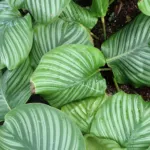 Goeppertia orbifolia care guideGoeppertia orbifolia